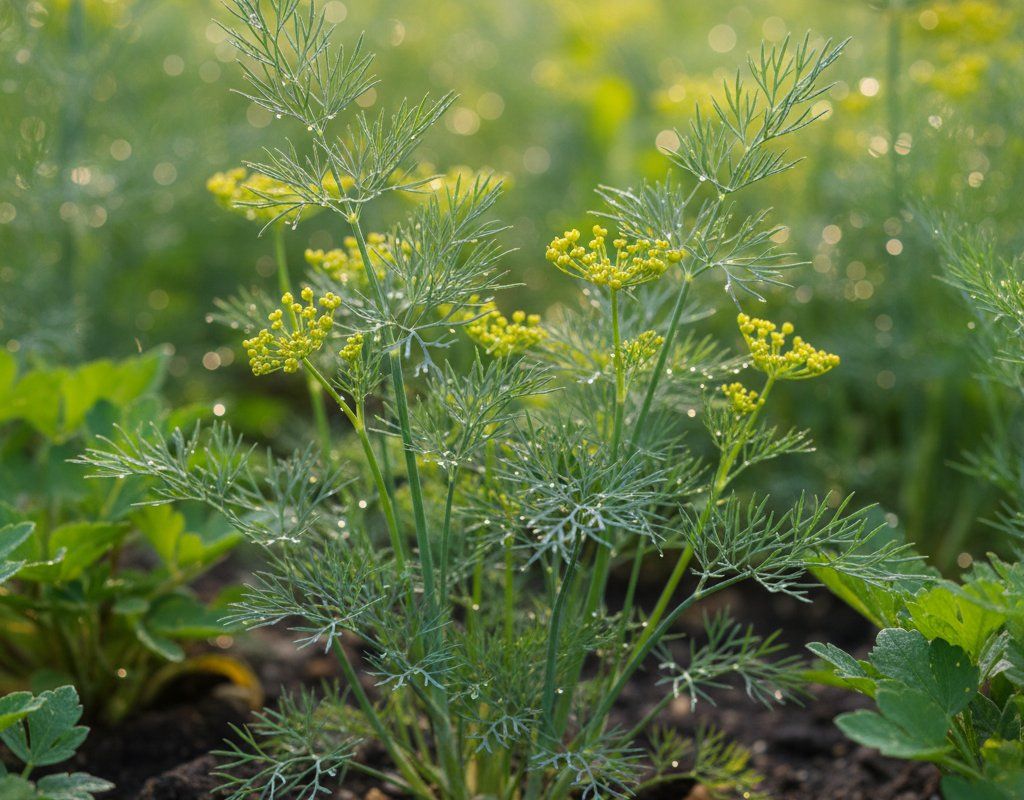
Dill in Zone 10A — Desert Southwest
Anethum graveolens · Your Complete 2026 Planting Guide
Harvest Time!
Your Dill should be producing now!
Harvest Tips
Harvest in the morning after dew dries for the best flavor.
How to Plant Dill in Zone 10A — Desert Southwest
Here are all your options for getting dill in the ground, from the easiest method to more advanced approaches.
Direct Sow Seeds
RecommendedMid January through early November
around January 20
Consider succession planting every 2-3 weeks for continuous harvest.
Dill has a taproot and prefers direct sowing, but transplants work if handled carefully.
Start Seeds Indoors
RecommendedLate December through mid January
around December 30
Then transplant: Late January through early March
Start seeds 4-6 weeks before transplanting outdoors.
Buy Starts
Works WellLate January through early March
around January 27
Plant purchased starts after last frost (January 20).
Transplant Outdoors
Timing InfoLate January through early March
around January 27
Can tolerate light frost, but wait for soil to be workable.
You have a nice window — no need to rush.
Fall Planting
Late October through late November
November 13 ideal · Direct sow for fall harvest
Plant a second crop in mid-summer for fall harvest. Dill actually prefers the cooling temperatures of fall.
Overview
Dill transforms your Desert Southwest kitchen with its bright, tangy flavor that's perfect for cooling summer dishes and hearty winter soups. In our Zone 10A climate, dill thrives during our two distinct growing seasons, giving you fresh herbs when store-bought versions are expensive and lackluster. The feathery foliage and eventual seed heads add texture to your garden beds while providing continuous harvests for months.
Our extreme summer heat and 339-day growing season mean timing is everything with dill. Plant it during our mild winters and early spring, then again in fall when temperatures drop below that brutal summer peak. With proper timing, you'll avoid the quick bolting that destroys dill's tender leaves, instead enjoying steady harvests from late January through late November.
Starting Seeds Indoors
Starting dill indoors isn't typically necessary in our mild Desert Southwest winters, but it can give you an edge if you want earlier harvests or more control over timing. Start seeds in late December through mid-January, about four weeks before you plan to transplant outdoors. Our very early spring means you can get transplants out while other regions are still dealing with hard freezes.
Use seed trays with good drainage and bottom watering to prevent damping off in our dry air. Dill seedlings need bright light and temperatures around 65-70°F, which is easy to maintain indoors during our winter months. The main advantage of starting indoors is getting a jump on the season, but direct sowing works just as well once outdoor conditions are right.
Keep in mind that dill has a long taproot and doesn't love being transplanted, so handle seedlings gently and transplant while they're still small. If you're growing for succession harvests, indoor starting lets you stagger plantings more precisely.
Transplanting Outdoors
Transplant your dill seedlings outdoors from late January through early March, when our last frost risk has passed and soil temperatures stay consistently above 50°F. In the Desert Southwest, this timing takes advantage of our mild winter-to-spring transition before the extreme heat arrives.
Harden off seedlings gradually over one week by placing them outside for increasing periods daily, starting with just a few hours in morning sun. Our intense UV and low humidity can shock tender indoor-grown plants if moved outside abruptly. Choose a location with morning sun and some afternoon protection during the transition.
Space transplants 12 inches apart to allow for good air circulation in our arid climate. Plant them at the same depth they were growing in their containers, and water thoroughly after transplanting. The key is getting them established before our temperatures climb into the 90s, when dill starts thinking about bolting to seed.
Direct Sowing
Direct sowing is actually dill's preferred method since it develops a long taproot that doesn't like disturbance. In the Desert Southwest, you can direct sow from mid-January through early November, skipping the hottest summer months when seeds struggle to germinate and plants bolt immediately.
Prepare your soil by working in compost to improve drainage and water retention—both crucial in our desert conditions. Dill seeds need soil temperatures between 60-70°F to germinate well, which happens naturally during our winter and fall planting windows. Sow seeds ¼ inch deep and space them about 12 inches apart, or plant closer and thin later.
Your best success comes from succession planting every 2-3 weeks during the cooler months. This gives you continuous harvests and prevents the feast-or-famine cycle that happens when all your dill bolts at once. Fall plantings from late October through late November often produce the most tender, flavorful leaves since they mature during our mildest weather.
Watering Dill in Zone 10A (Desert Southwest)
Dill needs moderate, consistent moisture but can't handle waterlogged soil—a balance that requires attention in our desert climate. Water deeply when the top 2 inches of soil feel dry, which typically means every 2-3 days during our mild winter growing season and potentially daily during hot spring weather.
Provide about 1 inch of water per week, adjusting for our monsoon moisture when it arrives. Water at the base of plants rather than overhead to prevent fungal issues and reduce water loss to evaporation in our arid air. Morning watering works best, allowing plants to take up moisture before our intense afternoon sun kicks in.
Watch for signs of stress in our extreme heat: wilting despite moist soil usually means the plant is bolting, while crispy leaf edges indicate insufficient water or too much direct sun. Yellowing lower leaves often signals overwatering, which is easy to do when trying to combat our dry conditions.
A thin layer of organic mulch helps retain soil moisture and keeps roots cooler, but don't pile it against plant stems where it can hold too much moisture. During our summer survival period, even well-watered dill will bolt quickly, so focus your growing efforts on our two optimal seasons.
🧪Fertilizing Dill
Feeding Schedule
Organic Fertilizer Options
Harvest Time
Your first dill harvest begins in early March if you planted in late January, continuing through early January of the following year with succession plantings. The 40-day maturity means you'll see harvestable feathery leaves within 6 weeks of planting during our cool season, faster in warmer weather.
Harvest the young, tender leaves anytime by pinching or cutting stems just above a set of leaves. This encourages bushier growth and delays flowering. Take leaves in the morning after the dew dries but before our afternoon heat arrives—they'll have the best flavor and texture. Regular harvesting keeps plants productive longer before they bolt.
For dill seeds, let some plants flower and wait until the seed heads turn brown and papery, usually 2-3 weeks after flowering. Cut the entire head and shake seeds into a paper bag. In our climate, this usually happens in late spring before summer heat or during fall as cooler weather arrives.
As our late December frost approaches, harvest all remaining leaves and hang entire plants upside down indoors to dry. Our low humidity makes air-drying easy, giving you dried dill to last until your next planting season. Plan your final fall seeding for late November to get one more harvest before winter.
Common Problems in Zone 10A (Desert Southwest)
Bolting shows up as a tall central flower stalk shooting up from the center of your dill plant, with leaves becoming bitter and sparse. The feathery foliage turns coarser and the plant focuses all energy on producing flowers and seeds rather than tender leaves. In the Desert Southwest, this happens fast once temperatures consistently hit the mid-80s, which is why timing your plantings around our extreme heat is crucial. Prevent bolting by planting during our cooler months, providing afternoon shade during warm spells, and keeping soil consistently moist. Choose slow-bolt varieties and succession plant every few weeks rather than one large planting.
Aphids appear as clusters of tiny green, black, or white soft-bodied insects on stem tips and leaf undersides, often leaving sticky honeydew residue that attracts ants. New growth may curl or become distorted, and heavily infested plants look stunted. Our warm spring weather and low humidity stress can trigger aphid population explosions on tender dill growth. Knock them off with a strong spray from your hose in the morning, encourage beneficial insects like ladybugs with diverse plantings, and use insecticidal soap for heavy infestations. Avoid high-nitrogen fertilizers that promote the soft growth aphids love.
Caterpillars, particularly parsley worms (black swallowtail larvae), create distinctive damage by munching holes in dill's feathery leaves, leaving behind dark droppings on foliage. These striped caterpillars can defoliate plants quickly but will eventually become beautiful butterflies. In our region, they're most active during fall plantings when butterfly populations peak. Hand-pick small numbers or use Bt (Bacillus thuringiensis) for larger infestations, though many Desert Southwest gardeners choose to share their dill with these beneficial pollinators and plant extra for both harvest and habitat.
Desert Southwest Specific Challenges: Our extreme summer heat causes immediate bolting regardless of water, while our alkaline soils can lock up nutrients dill needs for healthy growth. The intense UV radiation can sunscald tender leaves even with adequate moisture, and our low humidity stresses plants that prefer more moderate conditions. Focus on our two growing seasons and provide afternoon shade during temperature swings for best results.
Best Companions for Dill
Plant these nearby for healthier Dill and better harvests.


Keep Away From
Companion Planting Details
Dill makes an excellent companion for cool-season crops that share its preference for our mild Desert Southwest winters. Plant it near cabbage family crops like kale, broccoli, and cauliflower—dill repels cabbage worms while the larger brassicas provide some afternoon shade for dill's delicate foliage. Cucumbers growing on trellises create perfect partial shade for dill planted underneath, while dill's flowers attract beneficial insects that help with cucumber pollination.
Onions and lettuce work well nearby since they all prefer similar watering schedules and can be succession planted together during our two growing seasons. Avoid planting dill near carrots, as they can cross-pollinate and create off-flavors, and keep it away from tomatoes which prefer our warmer weather when dill struggles. The strong scent of mature dill can also inhibit the growth of nearby plants, so give it adequate spacing in your winter garden beds.
🌸Best Flowers to Plant with Dill
These flowers protect your Dill from pests and attract pollinators for better harvests.
For Pest Control




Get a Reminder When It's Time to Plant
We'll email you when key planting windows open for your zone.