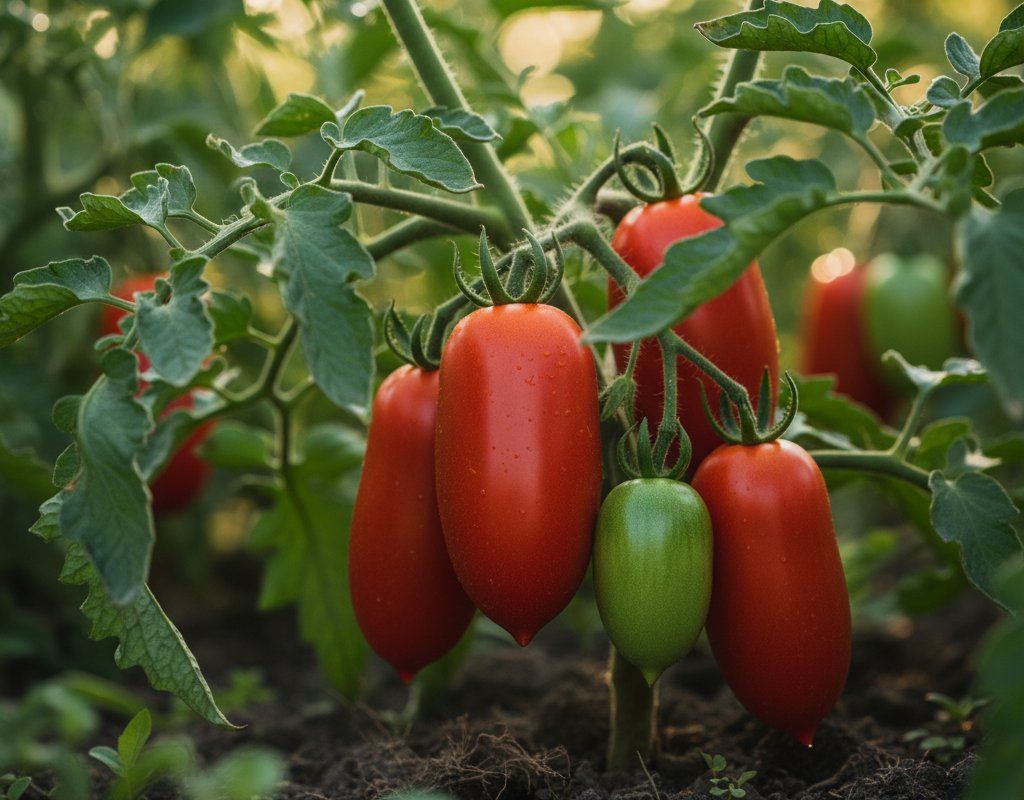
San Marzano Tomatoes in Zone 6B — Midwest
Solanum lycopersicum · Your Complete 2026 Planting Guide
Planning Ahead — Great!
You’re ahead of the season. Here’s when to start.
Mark Your Calendar
How to Plant San Marzano Tomatoes in Zone 6B — Midwest
Here are all your options for getting san marzano tomatoes in the ground, from the easiest method to more advanced approaches.
Start Seeds Indoors
RecommendedMid March through early April
around March 18
Then transplant: Late April through late May
Start seeds 6-8 weeks before transplanting outdoors.
Buy Starts
Works WellLate April through late May
around April 29
Plant purchased starts after last frost (April 15).
Direct Sow Seeds
ChallengingDirect sowing is not typical for San Marzano Tomatoes.
Transplant Outdoors
Timing InfoLate April through late May
around April 29
Wait until nighttime temperatures stay above 50°F.
You have a nice window — no need to rush.
Overview
San Marzano tomatoes bring restaurant-quality paste tomato flavor to your Midwest garden, with their sweet, low-acid flesh perfect for authentic sauces and canning. These Italian heirlooms thrive in our Zone 6B summers, producing elongated fruits with minimal seeds and thick walls that cook down beautifully — a far cry from the watery grocery store versions that dissolve into mush.
While our variable spring weather and occasional summer heat spells require some planning, San Marzanos are surprisingly well-suited to Midwest conditions. Our 183-day growing season gives them plenty of time to mature, and our fertile soil and adequate rainfall support their vigorous growth habit once temperatures settle.
Starting Seeds Indoors
Start your San Marzano seeds indoors from mid-March through early April, about 6 weeks before your planned transplant date. This timing lets you work around our unpredictable spring weather while ensuring strong seedlings that can handle Midwest conditions.
Set up seed trays in a warm spot (70-75°F) with good light — a south-facing window or grow lights work well. Plant seeds ¼ inch deep in quality seed starting mix, and use bottom watering to keep soil consistently moist without waterlogging. Your seeds should germinate in 7-10 days.
Once seedlings emerge, provide 12-14 hours of light daily and keep nighttime temperatures around 60-65°F. This mimics our moderate-to-late spring progression and helps develop sturdy stems that won't shock when transplanted outside.
Transplanting Outdoors
Transplant your San Marzano seedlings outdoors from late April through late May, after soil has warmed and nighttime temperatures consistently stay above 50°F. Don't rush this step — our Midwest springs can still surprise you with late cold snaps even after Memorial Day.
Harden off seedlings gradually over a full week, starting with 2-3 hours of morning sun and extending outdoor time daily. This process is crucial in our climate since indoor-grown plants need time to adjust to wind, temperature swings, and direct sunlight.
Space plants 24-36 inches apart in full sun locations that receive 6-8 hours of direct light. The wider spacing helps with air circulation during our humid summer months and gives these indeterminate vines room to spread as they climb their supports.
Watering San Marzano Tomatoes in Zone 6B (Midwest)
San Marzanos demand consistent moisture throughout the growing season, making water management critical in our moderate-to-humid Midwest climate. These paste tomatoes are particularly prone to blossom end rot when watering becomes inconsistent, so establish a regular routine early.
Provide about 1-1.5 inches of water weekly through deep, infrequent watering sessions. Check soil moisture by inserting your finger 2 inches deep — if it's dry at that level, it's time to water. Our clay-heavy Midwest soils can hold moisture well but also create drainage issues, so avoid daily light watering that keeps surface soil soggy.
Water at the base of plants rather than overhead to prevent foliar diseases that thrive in our moderate-to-humid summer conditions. Morning watering works best, allowing leaves to dry before evening and reducing disease pressure. During summer heat spells when temperatures climb above 85°F, you may need to water every other day.
Apply 2-3 inches of organic mulch around plants to maintain even soil moisture and reduce watering frequency. This is especially important in our climate where summer storms can alternate with dry periods, creating the inconsistent moisture conditions that trigger blossom end rot in San Marzanos.
Supporting Your San Marzano Tomatoes
Install sturdy support systems at planting time since San Marzanos are vigorous indeterminate varieties that can reach 6-8 feet tall by season's end. Heavy-duty tomato cages (at least 6 feet tall) or strong stakes with ties work best for supporting these productive plants loaded with clusters of elongated fruits.
For staking, use 6-8 foot tall stakes driven 18 inches into the ground, then tie the main stem loosely every 12-18 inches as it grows. Use soft ties or strips of fabric to avoid cutting into stems, especially important as plants sway in our frequent Midwest thunderstorms.
Start training early by gently directing the main stem upward and removing any growth that wants to sprawl along the ground. San Marzanos produce heavy fruit clusters that can snap unsupported branches, so check and adjust ties weekly throughout the growing season.
Pruning & Maintaining San Marzano Tomatoes
Remove suckers (shoots growing between main stem and branches) weekly to focus the plant's energy on fruit production and improve air circulation. In our moderate-to-humid Midwest summers, good airflow helps prevent fungal diseases that can devastate tomato plants.
Prune off lower leaves that touch the ground and any yellowing foliage throughout the season, but avoid excessive pruning that removes too much leaf area. San Marzanos need adequate foliage to protect developing fruits from sunscald during summer heat spells.
As first frost approaches in mid-October, top the plants by pinching growing tips in early to mid-September. This redirects energy into ripening existing fruits rather than producing new flowers that won't have time to mature in our 183-day growing season.
🧪Fertilizing San Marzano Tomatoes
Feeding Schedule
Organic Fertilizer Options
Harvest Time
Expect your first San Marzano harvests from mid-July through early August, about 80 days from transplant in our Zone 6B growing season. The fruits are ready when they develop their characteristic deep red color, feel firm but give slightly to pressure, and detach easily from the stem with a gentle twist.
These elongated paste tomatoes reach 3-4 inches long when fully ripe and should have uniform color with no green shoulders. Unlike slicing tomatoes, San Marzanos hold their shape well even when fully ripe, so you can let them reach peak flavor on the vine.
Harvest regularly every 2-3 days once production begins to encourage continued flowering and fruit set. Each plant typically produces 10-15 pounds of fruit over the season, with peak production in August during our warmest weather.
As mid-October approaches and first frost threatens, harvest any fruits that have begun to turn color — San Marzanos ripen well indoors when placed in a paper bag or on a sunny windowsill. Green fruits can also be used for fried green tomatoes or pickles rather than letting them freeze on the vine.
Common Problems in Zone 6B (Midwest)
Blossom End Rot Dark, sunken patches appear on the bottom (blossom end) of fruits, starting small and expanding into leathery brown or black areas. This typically affects the first fruits of the season most severely.
Blossom end rot stems from calcium deficiency caused by inconsistent watering, not actual lack of calcium in soil. Our clay soils often have plenty of calcium, but drought-flood cycles prevent proper uptake by roots.
Maintain consistent soil moisture through regular deep watering and heavy mulching. Avoid over-fertilizing with nitrogen, which can interfere with calcium absorption. Remove affected fruits to redirect plant energy into healthy production.
Early Blight Brown spots with distinctive concentric rings (bullseye pattern) appear on lower leaves first, gradually spreading upward. Affected leaves yellow and drop, eventually defoliating the plant from bottom to top.
This fungal disease thrives in our warm, humid Midwest summers and spreads through soil splash onto lower leaves during watering or rain. Clay soil holds moisture that creates ideal conditions for spore development.
Remove and destroy affected leaves immediately (never compost diseased material). Water at soil level to prevent splash, improve air circulation through proper spacing, and apply mulch to create a barrier between soil and foliage. Copper-based fungicides can slow progression if applied early.
Fusarium Wilt Wilting begins on one side of the plant and spreads, with yellowing leaves following the same pattern. Cut stems show brown streaking inside, and the plant eventually dies despite adequate watering.
This soil-borne fungus persists for years in garden soil and enters through root systems, favored by warm soil temperatures common in our Midwest summers. Once established, it's extremely difficult to eliminate.
No cure exists for infected plants — remove and destroy them immediately. Plant resistant varieties marked with 'F' on seed packets, rotate tomato family crops every 4 years, and maintain soil pH above 6.5 to suppress fungal activity.
Midwest Specific Challenges Our moderate-to-humid summers create ideal conditions for foliar diseases, while inconsistent spring and fall weather can stress plants into disease susceptibility. Focus on consistent watering, good air circulation, and prompt removal of any diseased plant material to keep San Marzanos healthy in our climate.
Best Companions for San Marzano Tomatoes
Plant these nearby for healthier San Marzano Tomatoes and better harvests.
View Full Companion Planting Chart →



Companion Planting Details
Plant basil alongside San Marzanos for both culinary convenience and pest deterrence — the strong scent helps repel aphids and hornworms while complementing tomato flavors perfectly in your kitchen. Carrots make excellent understory companions since their deep roots don't compete with tomato root systems, and parsley attracts beneficial insects that prey on tomato pests common in Midwest gardens.
Avoid planting brassicas like cabbage or broccoli near San Marzanos, as they can stunt tomato growth through allelopathic effects and compete for nutrients in our fertile but sometimes heavy soils. Keep fennel and corn at a distance too — fennel inhibits tomato growth, while corn attracts similar pests and creates shade that reduces fruit production in these sun-loving plants.
🌸Best Flowers to Plant with San Marzano Tomatoes
These flowers protect your San Marzano Tomatoes from pests and attract pollinators for better harvests.
For Pest Control

Get a Reminder When It's Time to Plant
We'll email you when key planting windows open for your zone.