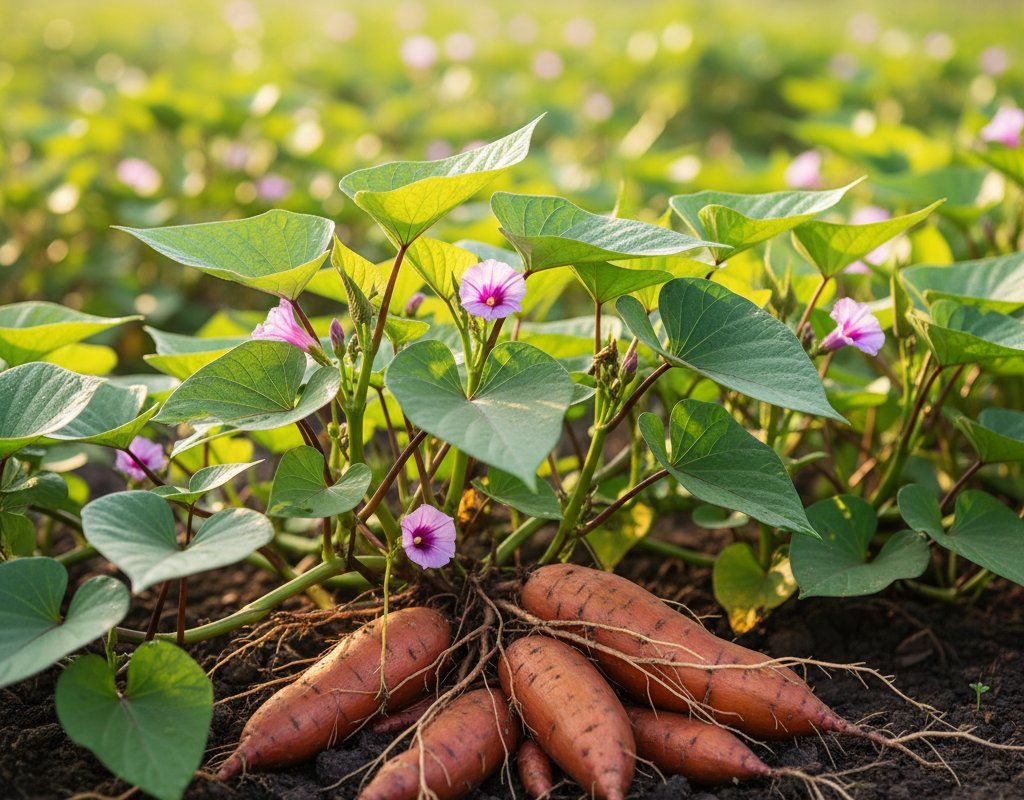
Sweet Potato in Zone 6B — Midwest
Ipomoea batatas · Your Complete 2026 Planting Guide
Ideal Time: Start Seeds Indoors!
This is the perfect time for the biggest, best harvest.
Start Seeds Now
- Start seeds in trays or pots with seed-starting mix
- Keep soil moist and warm (70-80°F)
- Transplant outdoors Early to late May
Not Starting from Seed?
Buy starts around May 6 — that works great too!
How to Plant Sweet Potato in Zone 6B — Midwest
Here are all your options for getting sweet potato in the ground, from the easiest method to more advanced approaches.
Buy Starts
RecommendedEarly to late May
around May 6
Plant purchased starts after last frost (April 15).
Plant slips (rooted sprouts) after soil is warm. Buy slips or grow your own from a sweet potato.
Start Seeds Indoors
Works WellEarly to late March
around March 11
Then transplant: Early to late May
Start seeds 8-10 weeks before transplanting outdoors.
Direct Sow Seeds
ChallengingDirect sowing is not typical for Sweet Potato.
Transplant Outdoors
Timing InfoEarly to late May
around May 6
Wait until nighttime temperatures stay above 50°F.
Plan to transplant within a few weeks of your target date.
Overview
Sweet potato brings something special to Midwest gardens — those rich, orange tubers that store beautifully through our cold winters and provide incredible versatility in the kitchen. While our moderate-to-hot summers and fertile soil create excellent growing conditions, you'll get sweeter, more flavorful tubers than anything from the grocery store. The vining habit also makes them perfect for covering ground or trailing over garden edges.
Growing sweet potatoes in Zone 6B does require some planning since they need warm soil and a long season, but our 183-day growing season gives you plenty of time to get a good harvest. The key is starting with slips (rooted sprouts) rather than seeds, and timing your planting after the soil warms up in late spring.
Starting Seeds Indoors
Starting sweet potatoes from seed isn't the typical approach — most gardeners use slips instead. However, if you want to try growing from seed, start indoors during early to late March, about 8 weeks before you plan to transplant outside.
Sweet potato seeds need consistent warmth (75-80°F) to germinate well, so use a heat mat under your seed trays. Set up your usual indoor seed-starting setup with good grow lights, and use the bottom watering method to keep soil evenly moist without creating soggy conditions. Given our moderate-to-late spring character here in the Midwest, this indoor start gives you a head start on the growing season.
Keep in mind that most gardeners have better success buying certified disease-free slips from reputable suppliers, or growing their own slips from a sweet potato tuber starting in mid-March.
Transplanting Outdoors
Transplant your sweet potato slips outdoors during early to late May, once soil temperatures consistently stay above 60°F and nighttime lows are reliably above 50°F. Don't rush this timing — sweet potatoes are extremely tender and even a brief temperature dip can set them back significantly.
Harden off your plants gradually over a week before transplanting, starting with just an hour or two outside and building up to full days. Space slips 12-18 inches apart in rows, or give vining types more room to spread. Plant slips deep, burying about two-thirds of the stem to encourage strong root development.
Watch Midwest weather patterns carefully during transplant time — late May cold snaps aren't uncommon, and having row covers ready can save your planting. The variable spring weather we experience makes flexibility important, so don't feel locked into exact dates.
Watering Sweet Potato in Zone 6B (Midwest)
Sweet potatoes need moderate water to get established, but they're actually quite drought-tolerant once their root systems develop. During the first few weeks after transplanting, keep soil consistently moist but not soggy — check by sticking your finger 2 inches deep into the soil.
Once established, sweet potatoes typically need about 1 inch of water per week. With our 30-40 inches of annual rainfall and often humid summers, you may need to water less frequently than you'd expect. Water at the base of plants rather than overhead to reduce disease issues in our moderate-to-humid conditions.
The most critical watering tip for sweet potatoes is to reduce watering 3-4 weeks before harvest. This helps concentrate sugars in the tubers and prevents them from becoming too watery. During our late summer heat spells, resist the urge to overwater — these plants handle drought much better than excess moisture.
Apply mulch around plants to maintain even soil moisture and reduce the need for frequent watering. In our fertile clay soil, good drainage is often more important than frequent irrigation.
🧪Fertilizing Sweet Potato
Feeding Schedule
Organic Fertilizer Options
Harvest Time
Expect your first sweet potatoes to be ready from mid-August through late September, depending on when you planted and which variety you're growing. The 100-day maturity means slips planted in late May will be ready by early September, giving you a comfortable window before our first frost around mid-October.
Unlike many vegetables, sweet potatoes don't give obvious visual cues when they're ready. The best indicator is simply counting days from transplant and doing some careful digging to check size. Tubers should be well-formed and have reached good size — usually 3-4 inches long for most varieties.
Harvest carefully using a garden fork, starting about 12 inches away from the plant and working inward. Sweet potato skins are tender and easily damaged, so handle them gently. Even small nicks can lead to storage problems later.
Plan to harvest all sweet potatoes before our first frost hits in mid-October, even if they could use more time. Cold temperatures damage the tubers underground. After digging, cure them in a warm (80-85°F), humid location for 1-2 weeks to toughen the skins and improve flavor before long-term storage.
Common Problems in Zone 6B (Midwest)
Sweet Potato Weevils Look for small holes in tubers and tunneling damage inside the flesh, often with a bitter taste. Adult weevils are dark-colored, about 1/4 inch long with a distinctive long snout. This pest can be particularly problematic during warm, humid periods common in Midwest summers.
Sweet potato weevils thrive in our moderate-to-humid conditions and attack both foliage and tubers. They're more common when the same area is planted with sweet potatoes repeatedly. Rotate crops to different areas of your garden each year, and remove all plant debris after harvest. Consider using certified disease-free slips from reputable suppliers rather than saving your own.
Wireworms These are thin, hard, yellowish-brown larvae about 1 inch long that tunnel into tubers, creating holes that make storage difficult. You might notice plants wilting unexpectedly or find the characteristic holes when harvesting. Our fertile Midwest soil can harbor these pests, especially in areas that were previously lawn or pasture.
Wireworms are beetle larvae that live in soil for several years, particularly in clay soil that retains moisture. They're attracted to organic matter and can persist in garden soil for years. Avoid planting sweet potatoes in newly converted lawn areas if possible, and consider beneficial nematodes as a biological control option.
Cracking Sweet potatoes can develop splits or cracks in their skin, either as circular rings or lines radiating outward. This typically happens after periods of heavy rain following dry spells, which we often experience during summer heat spells. The flesh absorbs water faster than the skin can expand, causing splits that can lead to rot.
Maintain consistent soil moisture throughout the growing season by mulching heavily and watering regularly during dry periods. Our variable summer weather patterns make this especially important — avoid the feast-or-famine watering cycle. Harvest promptly when tubers reach maturity rather than leaving them in fluctuating soil conditions.
Midwest Specific Challenges: Our moderate-to-hot summers with periodic heat spells, combined with moderate-to-humid conditions and wet-summer rainfall patterns, create an environment where fungal issues and pest pressure can build quickly. The key is maintaining good air circulation around plants and avoiding overhead watering during humid periods.
Best Companions for Sweet Potato
Plant these nearby for healthier Sweet Potato and better harvests.


Keep Away From
Companion Planting Details
Sweet potatoes work well with corn, beans, and squash in a traditional three sisters-style planting, though they need more space than typical companions. The corn provides vertical structure, beans fix nitrogen that sweet potatoes can use, and all three have similar water and sun requirements that match our Midwest growing conditions.
Plant beans near sweet potatoes to help improve soil nitrogen naturally — sweet potatoes aren't heavy nitrogen feeders, but they appreciate the boost. Avoid planting sweet potatoes too close to aggressive spreaders like winter squash, as both will compete for ground space. Give sweet potatoes room to vine freely, as their trailing habit helps suppress weeds naturally once established.
🌸Best Flowers to Plant with Sweet Potato
These flowers protect your Sweet Potato from pests and attract pollinators for better harvests.
For Pest Control




Get a Reminder When It's Time to Plant
We'll email you when key planting windows open for your zone.