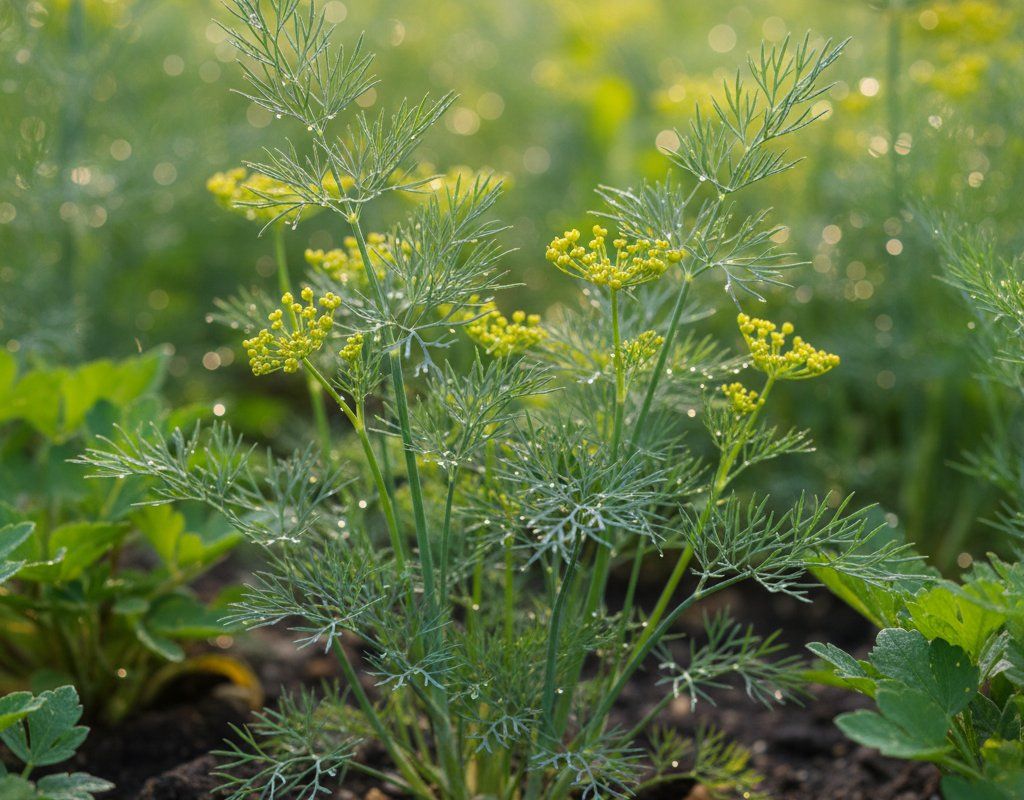
Dill in Zone 3A — Great Plains
Anethum graveolens · Your Complete 2026 Planting Guide
Planning Ahead — Great!
You’re ahead of the season. Here’s when to start.
Mark Your Calendar
How to Plant Dill in Zone 3A — Great Plains
Here are all your options for getting dill in the ground, from the easiest method to more advanced approaches.
Direct Sow Seeds
RecommendedLate May through mid July
around May 25
Consider succession planting every 2-3 weeks for continuous harvest.
Dill has a taproot and prefers direct sowing, but transplants work if handled carefully.
Start Seeds Indoors
RecommendedLate April through mid May
around May 4
Then transplant: Early June through mid July
Start seeds 4-6 weeks before transplanting outdoors.
Buy Starts
Works WellEarly June through mid July
around June 1
Plant purchased starts after last frost (May 25).
Transplant Outdoors
Timing InfoEarly June through mid July
around June 1
Can tolerate light frost, but wait for soil to be workable.
You have a nice window — no need to rush.
Fall Planting
Mid July through mid August
July 30 ideal · Direct sow for fall harvest
Plant a second crop in mid-summer for fall harvest. Dill actually prefers the cooling temperatures of fall.
Overview
Dill transforms from grocery store afterthought to garden essential once you taste fresh feathery fronds in your potato salad or pickles. Here in the Great Plains, dill thrives in our intense sunshine and low disease pressure, producing aromatic leaves and eventually flavorful seeds for your spice rack. The quick 40-day maturity means you'll have harvest-ready dill well before our short growing season becomes a limiting factor.
Our Zone 3A climate brings challenges — wind that can topple plants, temperature swings that stress herbs, and our compressed 108-day season — but dill's hardy nature handles Plains weather better than most herbs. Time your plantings right, and you'll enjoy fresh dill from early July through first frost in early September.
Starting Seeds Indoors
Starting dill indoors makes sense when you want an early harvest or need to work around our variable spring weather. Start seeds in late April through mid-May, about 4 weeks before your planned transplant date. Use seed trays with good drainage since dill doesn't tolerate soggy roots.
Keep the soil warm (around 65°F) for best germination, and provide strong light once seedlings emerge. Bottom watering works well to prevent damping-off disease — set your trays in shallow water and let the soil absorb moisture from below. Since Plains springs can swing from snow to 70°F in the same week, indoor starting gives you control over those early critical weeks.
Handle seedlings carefully since dill has a taproot that doesn't love disturbance. Start in deeper cells or peat pots that can go directly in the ground to minimize root disruption.
Transplanting Outdoors
Move your dill seedlings outdoors from early June through mid-July, once nighttime temperatures stay consistently above 45°F. Harden them off gradually over a week, starting with a few hours of morning sun and building up to full outdoor exposure.
Space plants 12 inches apart to give them room to develop their upright growth habit without crowding. Our Plains winds can be brutal on young transplants, so choose a protected location or install temporary windbreaks until plants establish. Plant on a calm day if possible — transplant shock plus wind stress can set plants back significantly.
Water thoroughly after transplanting and keep soil evenly moist for the first two weeks. The combination of our intense sun and low humidity can stress newly transplanted herbs quickly.
Direct Sowing
Direct sowing works well for dill since it has a taproot that prefers to grow undisturbed. Sow seeds from late May through mid-July when soil temperatures reach at least 60°F. Work compost into your prairie soil to improve drainage, as dill won't tolerate waterlogged conditions.
Plant seeds ¼ inch deep and 12 inches apart, or sow more densely and thin to proper spacing once seedlings emerge. Our variable rainfall means consistent watering is crucial during germination — seeds need steady moisture for 7-10 days to sprout reliably.
Direct-sown dill often outperforms transplants once established, developing stronger root systems that better handle our drought conditions and wind exposure. Succession plant every 2-3 weeks through mid-July for continuous harvest throughout the growing season.
Watering Dill in Zone 3A (Great Plains)
Dill needs moderate but consistent moisture — about 1 inch of water per week including rainfall. In our Plains climate with variable precipitation ranging from 15-35 inches annually, you'll need to supplement irrigation most summers. Check soil moisture by sticking your finger 2 inches deep; water when it feels dry at that depth.
Water at soil level rather than overhead to reduce disease risk and water waste in our low-to-moderate humidity. Our hot summers with typical highs around 93°F can stress dill quickly, so maintain even soil moisture to prevent the plant from bolting prematurely. Inconsistent watering — wet then dry cycles — triggers flowering and makes leaves bitter.
Apply 2-3 inches of organic mulch around plants to conserve moisture and moderate soil temperature swings. Grass clippings or shredded leaves work well in our prairie conditions. During heat waves, provide afternoon shade if possible since dill prefers cooler conditions for best leaf production.
Watch for signs of stress: drooping during the day (underwatered) or yellowing lower leaves (overwatered). Adjust your watering schedule based on our notoriously unpredictable rainfall patterns, backing off during wet spells and increasing frequency during dry stretches.
🧪Fertilizing Dill
Feeding Schedule
Organic Fertilizer Options
Harvest Time
Expect your first dill harvest in early July through mid-September, about 40 days after planting. Start harvesting feathery leaves when plants reach 6-8 inches tall by snipping outer stems with scissors. Cut stems near the base, leaving the growing center intact for continued production.
Harvest in the morning after dew dries for the best flavor concentration. Regular picking encourages new growth and delays flowering — once dill bolts and produces those yellow umbrella flowers, leaf production slows and flavor becomes more bitter. For seed harvest, let some plants flower and wait until the seed heads turn brown and dry, then shake seeds into a paper bag.
Our short growing season means timing matters. Make your heaviest leaf harvests by late August, as plants will shift energy to seed production as day length shortens. For seed collection, choose plants that flowered by early August to ensure seeds mature before our early September frost arrives.
Keep succession plantings going through mid-July to extend your harvest window. Each planting provides 3-4 weeks of prime leaf harvest before bolting becomes an issue in our heat.
Common Problems in Zone 3A (Great Plains)
Bolting shows up as a tall flower stalk shooting from the plant center, with leaves becoming bitter or sparse. In the Great Plains, our combination of long summer days, temperature swings, and heat stress triggers premature flowering. Our intense sunshine and hot afternoons push dill into survival mode, shifting energy from leaf production to seed formation. Prevent bolting by choosing a spot with morning sun but afternoon protection, maintaining consistent soil moisture, and succession planting every 2-3 weeks rather than relying on one large planting.
Aphids appear as clusters of tiny green or black insects on stem tips and leaf undersides, often with sticky honeydew residue coating leaves. Our dry Plains air actually helps control aphid populations compared to humid regions, but they still multiply rapidly during warm spells. Knock them off with a strong water spray in early morning, encourage beneficial insects like ladybugs by planting diverse flowers nearby, and avoid over-fertilizing with nitrogen which creates tender growth aphids love.
Caterpillars, particularly parsleyworms (the larvae of swallowtail butterflies), create holes in leaves and can strip plants quickly. These large green caterpillars with black stripes are common on dill and related plants in the Plains. Hand-pick larger caterpillars in the morning when they're less active, or use Bt spray for heavy infestations while protecting beneficial pollinators.
Great Plains Specific Challenges: Our hot summers and low-to-moderate humidity create perfect conditions for rapid bolting, while sudden temperature swings stress plants into defensive flowering. Wind damage weakens stems, making plants more susceptible to pest problems, and our intense UV exposure can scorch leaves if plants become water-stressed.
Best Companions for Dill
Plant these nearby for healthier Dill and better harvests.


Keep Away From
Companion Planting Details
Plant dill near cabbage family crops like broccoli and kale — dill's flowers attract beneficial wasps that prey on cabbage worms, while the herb's strong scent may confuse pest insects. Cucumbers benefit from dill's presence since both plants have similar water needs and dill flowers bring pollinators that improve cucumber fruit set. Lettuce makes an excellent neighbor since it provides some ground-level shade that helps keep dill's roots cool during our hot afternoons.
Avoid planting dill near carrots since both are in the same plant family and compete for similar nutrients in our prairie soils. Keep tomatoes away from dill as well — some gardeners report that mature dill can inhibit tomato growth, and their different watering needs (tomatoes prefer deeper, less frequent watering) make them poor garden partners in our variable rainfall climate.
🌸Best Flowers to Plant with Dill
These flowers protect your Dill from pests and attract pollinators for better harvests.
For Pest Control




Get a Reminder When It's Time to Plant
We'll email you when key planting windows open for your zone.