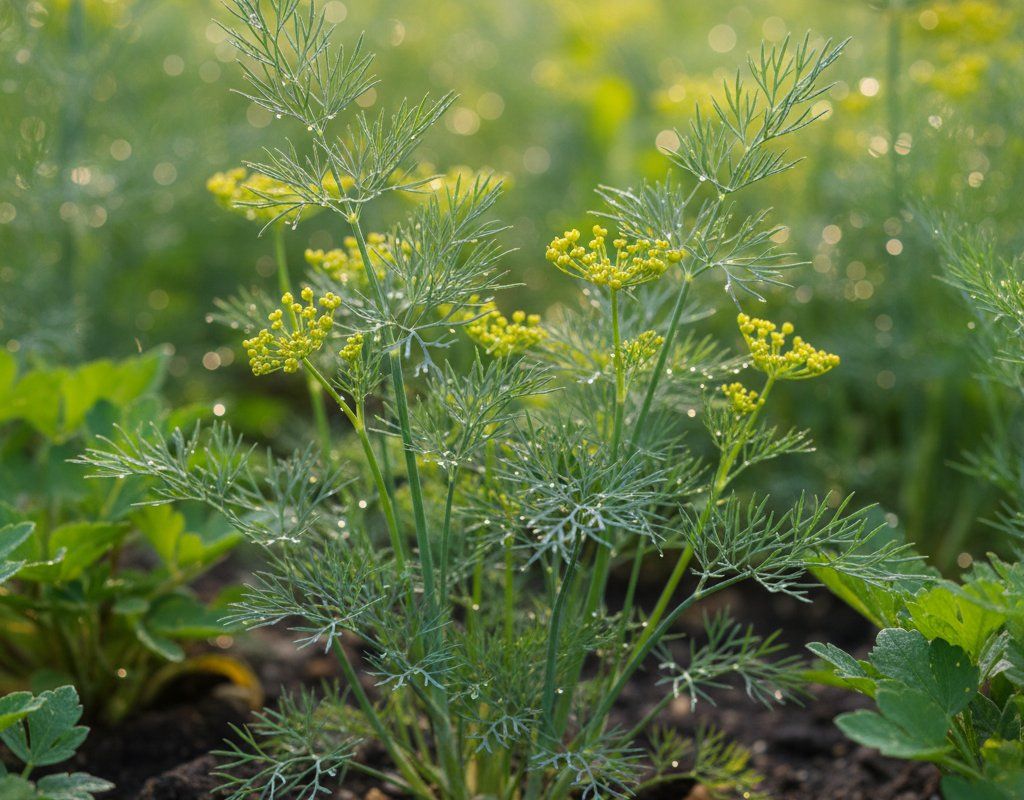
Dill in Zone 4A — Midwest
Anethum graveolens · Your Complete 2026 Planting Guide
Planning Ahead — Great!
You’re ahead of the season. Here’s when to start.
Mark Your Calendar
How to Plant Dill in Zone 4A — Midwest
Here are all your options for getting dill in the ground, from the easiest method to more advanced approaches.
Direct Sow Seeds
RecommendedMid May through late July
around May 15
Consider succession planting every 2-3 weeks for continuous harvest.
Dill has a taproot and prefers direct sowing, but transplants work if handled carefully.
Start Seeds Indoors
RecommendedMid April through early May
around April 24
Then transplant: Late May through early July
Start seeds 4-6 weeks before transplanting outdoors.
Buy Starts
Works WellLate May through early July
around May 22
Plant purchased starts after last frost (May 15).
Transplant Outdoors
Timing InfoLate May through early July
around May 22
Can tolerate light frost, but wait for soil to be workable.
You have a nice window — no need to rush.
Fall Planting
Late July through late August
August 9 ideal · Direct sow for fall harvest
Plant a second crop in mid-summer for fall harvest. Dill actually prefers the cooling temperatures of fall.
Overview
Dill transforms your Midwest garden into a culinary powerhouse, offering both fresh feathery foliage and aromatic seeds that capture the essence of summer preserving season. Here in Zone 4A, our fertile soil and adequate rainfall create perfect conditions for this herb's rapid 40-day growth cycle, while our warm-to-hot summers provide ideal curing conditions for those prized dill seeds that make pickle-making a true regional tradition.
Our Midwest weather can be tricky with its variable spring temperatures and occasional summer heat spells, but dill's hardy nature and flexible planting windows work beautifully with our 128-day growing season. You can start early for fresh leaves in late spring, succession plant through summer, or time a fall crop for seed harvest before our mid-September frost arrives.
Starting Seeds Indoors
Starting dill indoors isn't the most common approach since this herb prefers direct sowing, but it makes sense if you want an early harvest or better control during our unpredictable spring weather. Start your seeds from mid-April through early May, about 4 weeks before you plan to transplant outdoors.
Set up seed trays with good drainage and keep them at 65-70°F for best germination. Dill seedlings appreciate bottom watering since their delicate stems can be prone to damping off in overly moist surface conditions. Provide bright light from a south-facing window or grow lights once they sprout.
The main advantage here in the Midwest is getting a jump on the season when late May weather might still be variable. However, dill's taproot doesn't love transplant shock, so handle seedlings carefully and don't let them get rootbound in their trays.
Transplanting Outdoors
Transplant your dill seedlings outdoors from late May through early July, timing it for after our typical Memorial Day frost-free mark. Since dill develops a taproot quickly, transplant while seedlings are still young - ideally when they're 2-3 inches tall with just their first true leaves.
Harden off seedlings gradually over a week, starting with a few hours of morning sun and building up to full outdoor exposure. Our Midwest spring winds can be harsh on tender transplants, so choose a calm day for the final move. Space plants 12 inches apart in loose, well-draining soil.
Watch the weather during transplant time since late spring storms and temperature swings are common here. A light row cover can protect newly transplanted dill if unexpected cool nights threaten, though established plants handle our climate fluctuations well.
Direct Sowing
Direct sowing is dill's preferred method and works beautifully in our Midwest conditions from mid-May through late July. Wait until soil temperatures reach at least 60°F - usually safe after Memorial Day when our spring soil has properly warmed.
Prepare a sunny spot with loose soil since dill's taproot needs room to grow straight down. Our clay soil benefits from adding compost or working in some coarse sand for better drainage. Sow seeds ¼ inch deep and space them about 12 inches apart, or plant more densely and thin later.
The beauty of direct sowing dill here is taking advantage of our fertile soil and reliable summer rainfall. Seeds germinate quickly in warm soil, and you avoid any transplant shock. For continuous harvest, succession plant every 2-3 weeks through mid-July - any later and you'll run up against our September frost before seeds mature.
Watering Dill in Zone 4A (Midwest)
Dill thrives with moderate watering in our Midwest climate, appreciating consistent moisture without getting waterlogged in our clay soil. Check soil moisture by inserting your finger 2 inches deep - water when it feels dry at that depth, which typically means about 1 inch of water per week including rainfall.
Our 30-40 inches of annual rainfall usually covers dill's needs during spring and early summer, but watch for dry spells during July heat waves when temperatures climb toward 86°F. Water deeply at the base of plants rather than overhead - our moderate-to-humid conditions can encourage fungal problems if leaves stay wet too long.
During summer heat spells, dill will bolt quickly if stressed by drought, so maintaining consistent soil moisture becomes crucial for leaf production. However, avoid overwatering in our clay soil, which can lead to root rot. Signs of underwatering include wilting and premature bolting, while overwatering shows as yellowing leaves and stunted growth.
A 2-inch layer of straw mulch helps retain moisture and keeps roots cool during hot Midwest summers. This is especially valuable since dill doesn't tolerate drought well and our summer heat can stress plants that aren't consistently watered.
🧪Fertilizing Dill
Feeding Schedule
Organic Fertilizer Options
Harvest Time
Your first dill harvest will be ready from late June through late September, depending on your planting timing and whether you're after leaves or seeds. For fresh leaves, you can start harvesting feathery foliage anytime after plants reach 4-6 inches tall, usually about 40 days from seeding.
Harvest leaves by cutting outer stems first, leaving the center to continue growing. Cut stems about 2 inches above soil level to encourage new growth. For dill seeds, wait until flower heads turn brown and dry - usually late August through September in our climate. Test readiness by gently shaking the seed head; ripe seeds will fall easily into your hand.
Keep harvesting leaves regularly to prevent premature bolting during summer heat spells. Once plants flower, leaf production slows and flavor changes, so time your harvests accordingly. If you want both leaves and seeds, let some plants go to flower while keeping others trimmed for leaf production.
As our first frost approaches in mid-September, harvest any remaining seed heads and hang them upside down in a dry location to finish curing. Green seeds will continue ripening off the plant for about a week if harvested just before frost hits.
Common Problems in Zone 4A (Midwest)
Bolting appears when dill suddenly sends up tall flower stalks and stops producing tender leaves. You'll notice the feathery foliage becoming coarse and bitter as the plant shifts energy to seed production. In our Midwest climate, summer heat spells combined with long July days trigger this response, especially if plants face drought stress in our clay soil. Prevent bolting by providing afternoon shade during heat waves, keeping soil consistently moist, and succession planting every few weeks rather than relying on one large planting.
Aphids show up as clusters of tiny green, black, or white insects on stems and leaf undersides, often accompanied by sticky honeydew residue and curled new growth. Our warm, humid Midwest summers create ideal breeding conditions for these sap-suckers, and they multiply rapidly during July and August heat. Knock them off with a strong spray from your hose in early morning, encourage beneficial insects like ladybugs with diverse plantings, and apply insecticidal soap for heavy infestations. Avoid over-fertilizing with nitrogen, which attracts aphids to tender new growth.
Caterpillars from various moths and butterflies chew irregular holes in dill foliage, with parsley worms (swallowtail butterfly larvae) being particularly fond of this herb family. You'll spot the damage as missing leaf sections and may see the caterpillars themselves - green with black stripes for parsley worms. Hand-pick larger caterpillars when you spot them, encourage birds with nearby shrubs and water sources, or use Bt (Bacillus thuringiensis) spray for severe infestations.
Midwest Specific Challenges: Our moderate-to-hot summers with high humidity can stress dill plants, making them more susceptible to all these problems. The combination of clay soil that drains poorly after our frequent summer thunderstorms, followed by heat spells that stress plants, creates perfect conditions for both disease and pest pressure on this otherwise hardy herb.
Best Companions for Dill
Plant these nearby for healthier Dill and better harvests.


Keep Away From
Companion Planting Details
Dill makes an excellent companion for cabbage family crops, cucumbers, and lettuce in your Midwest garden. Plant it near cabbage, broccoli, and brussels sprouts - dill's strong scent helps repel cabbage moths and other brassica pests that are common during our humid summers. Cucumbers benefit from dill's pest-deterrent properties while both crops appreciate similar moderate watering needs in our clay soil.
Avoid planting dill near carrots and tomatoes in your Midwest garden. Dill can stunt carrot growth and alter their flavor, while tomatoes may suffer reduced growth when planted too close to dill. The spacing issue becomes more critical in our fertile soil where plants grow vigorously - keep these incompatible plants at least 3 feet apart to prevent competition and negative interactions.
🌸Best Flowers to Plant with Dill
These flowers protect your Dill from pests and attract pollinators for better harvests.
For Pest Control




Get a Reminder When It's Time to Plant
We'll email you when key planting windows open for your zone.