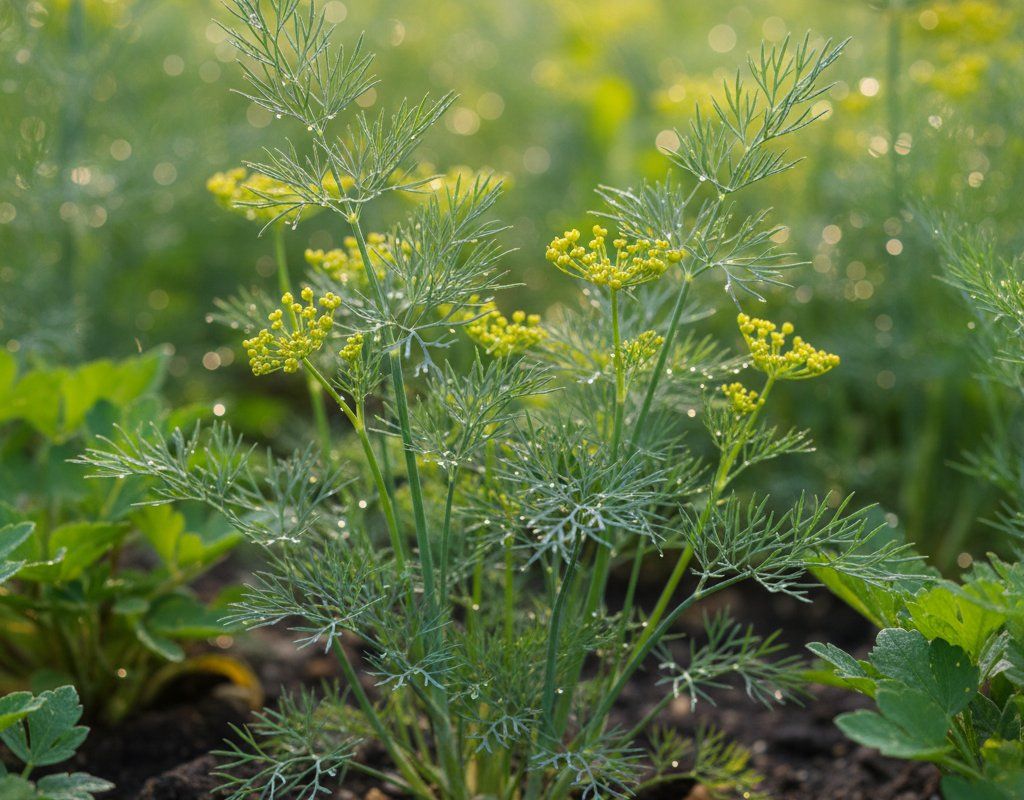
Dill in Zone 4A — Northeast
Anethum graveolens · Your Complete 2026 Planting Guide
Planning Ahead — Great!
You’re ahead of the season. Here’s when to start.
Mark Your Calendar
How to Plant Dill in Zone 4A — Northeast
Here are all your options for getting dill in the ground, from the easiest method to more advanced approaches.
Direct Sow Seeds
RecommendedMid May through late July
around May 15
Consider succession planting every 2-3 weeks for continuous harvest.
Dill has a taproot and prefers direct sowing, but transplants work if handled carefully.
Start Seeds Indoors
RecommendedMid April through early May
around April 24
Then transplant: Late May through early July
Start seeds 4-6 weeks before transplanting outdoors.
Buy Starts
Works WellLate May through early July
around May 22
Plant purchased starts after last frost (May 15).
Transplant Outdoors
Timing InfoLate May through early July
around May 22
Can tolerate light frost, but wait for soil to be workable.
You have a nice window — no need to rush.
Fall Planting
Late July through late August
August 9 ideal · Direct sow for fall harvest
Plant a second crop in mid-summer for fall harvest. Dill actually prefers the cooling temperatures of fall.
Overview
Dill thrives in our Northeast climate, offering that distinctive feathery foliage and aromatic seeds that transform pickles, fish dishes, and summer salads. Our moderate summers and cool nights actually improve dill's flavor intensity compared to hotter regions, and the plant appreciates our consistent rainfall patterns. You'll find dill particularly rewarding here since it grows quickly and doesn't mind our rocky New England soil once established.
With our 128-day growing season and tendency for late spring frosts, timing your dill plantings becomes crucial but manageable. The key is working with our cool spring and taking advantage of succession planting through summer. Since dill bolts quickly in heat, our moderate summer temperatures actually work in your favor for extending the harvest window.
Starting Seeds Indoors
Starting dill indoors makes sense if you want the earliest possible harvest or need to work around our unpredictable late spring weather. Sow seeds in seed trays from mid-April through early May, about 4 weeks before you plan to transplant outdoors. Dill seeds germinate best with bottom heat around 65-70°F, so place your trays on a heat mat if your house runs cool.
Keep the soil consistently moist using bottom watering - fill a tray beneath your seed containers rather than watering from above. This prevents the delicate seedlings from getting knocked over and reduces the chance of damping off in our humid spring conditions. Once seedlings emerge, they'll need strong light from a grow light or sunny south-facing window.
The main downside is that dill develops a taproot and doesn't love transplanting. Handle seedlings carefully and transplant while still young to minimize root disturbance.
Transplanting Outdoors
Transplant your dill seedlings outdoors from late May through early July, once nighttime temperatures consistently stay above 45°F. Our late spring frosts can linger into mid-May, so don't rush this step even if days feel warm. Start hardening off seedlings a full week before transplanting by placing them outside for increasing periods daily.
Space plants 12 inches apart in well-draining soil - this gives their upright growth habit room to develop without crowding. In our rocky New England soil, work in some compost if drainage seems poor, as dill won't tolerate wet feet during our spring rains.
Watch the weather forecast closely during transplant week. Those sudden temperature swings we're known for can shock newly planted seedlings, so be ready to cover them if an unexpected cool snap threatens.
Direct Sowing
Direct sowing works beautifully for dill from mid-May through late July, and it's actually the preferred method since dill's taproot dislikes disturbance. Wait until soil temperature reaches 60°F consistently - usually around the time our last frost danger passes in mid-May. Your soil should crumble easily in your hand rather than forming muddy clumps.
Sow seeds ¼ inch deep and 12 inches apart, or broadcast more densely and thin later. Dill seeds are small and can wash away in heavy rain, so cover lightly with soil and consider a light mulch if thunderstorms are forecast. Our consistent rainfall usually provides enough moisture for germination without additional watering.
The advantage of direct sowing here is avoiding transplant shock entirely, plus you can succession plant every 2-3 weeks through summer for continuous harvest. This works particularly well in our climate since our moderate summer heat won't stress the plants as much as in hotter regions.
Watering Dill in Zone 4A (Northeast)
Dill needs consistent moisture but not soggy conditions, which aligns perfectly with our typical 40-50 inches of annual rainfall. During normal Northeast summers, you'll likely only need to supplement watering during dry spells lasting more than a week. Check soil moisture by inserting your finger 2 inches deep - water when it feels dry at that depth.
When you do water, provide about an inch per week including rainfall. Water at the base of plants early morning to avoid our moderate-to-humid air promoting fungal issues on wet foliage. During our typical summer pattern of afternoon thunderstorms, let nature do most of the work but keep an eye on prolonged dry periods in July and August.
Overwatering shows up as yellowing lower leaves or stunted growth, while underwatered dill will bolt prematurely to seed. The key is steady, moderate moisture - dill bolt quickly when stressed by drought, but our generally consistent precipitation helps prevent this problem. A thin layer of organic mulch helps maintain even soil moisture without creating the soggy conditions dill dislikes.
In late summer when temperatures can spike into the 80s, extra attention to watering becomes important since stressed dill will bolt immediately. This is when that moderate humidity actually helps by reducing water loss from leaves.
🧪Fertilizing Dill
Feeding Schedule
Organic Fertilizer Options
Harvest Time
Your first dill harvest typically comes in late June through late September, about 40 days from seeding. Start snipping the feathery foliage once plants reach 6-8 inches tall - cut individual stems or pinch leaves as needed for fresh use. The more you harvest, the more the plant produces, so don't be shy about regular cutting.
For fresh leaves, harvest in the morning after dew dries but before the heat of the day. Cut stems just above a leaf node to encourage bushier growth. You can keep harvesting leaves until the plant sends up its characteristic umbrella-shaped flower head. At that point, leaves become less flavorful as the plant shifts energy to seed production.
If you want dill seed for pickling, let some plants flower and wait until the seed heads turn brown and dry - usually in late summer. Cut the entire seed head into a paper bag and shake to release seeds. This timing works well in our climate since you'll have mature seeds before our first frost typically arrives in mid-September.
As fall approaches, harvest becomes a race against that first frost. Dill is hardy but won't survive freezing temperatures, so plan a final major harvest when frost warnings appear. You can hang whole plants upside down indoors to finish ripening any green seed heads.
Common Problems in Zone 4A (Northeast)
Bolting shows up as a tall central stalk shooting up with umbrella-shaped flower clusters, causing leaves to become bitter and sparse. In our Northeast climate, this typically happens during hot spells in July or August when temperatures climb into the upper 80s for several consecutive days. Extended daylight hours also trigger bolting, which is why succession planting works better than trying to keep one planting productive all season.
Keep soil consistently moist during heat waves and consider providing afternoon shade if possible. Choose early varieties that mature quickly, and succession plant every 2-3 weeks rather than expecting one planting to last all summer. Our moderate summer temperatures actually help prevent premature bolting compared to hotter regions.
Aphids appear as clusters of tiny green, black, or white insects on stems and undersides of leaves, often accompanied by sticky honeydew residue and curled new growth. These sap-suckers multiply rapidly during warm, humid weather - exactly what we get during Northeast summer thunderstorm patterns. Ants farming the aphids for honeydew are often the first sign of trouble.
Blast them off with a strong spray from the garden hose in early morning, which works well with our moderate humidity levels. Encourage beneficial insects like ladybugs and lacewings by planting flowers nearby. For persistent infestations, insecticidal soap works effectively in our climate without harming beneficial insects.
Caterpillars, particularly parsley worms (black swallowtail butterfly larvae), can strip dill plants overnight. These green caterpillars with black stripes and yellow spots are actually quite beautiful but devastating to small dill plants. They're more active during our warm, humid summer evenings and can be hard to spot until damage appears.
Hand-picking works well for small infestations - check plants in early morning or evening. Bt (Bacillus thuringiensis) provides organic control if populations get overwhelming. Since these caterpillars become beautiful butterflies, consider planting extra dill specifically to support them while protecting your main harvest plants.
Northeast Specific Challenges: Our moderate heat and moderate-to-humid conditions actually favor dill compared to hotter, drier regions, but the consistent moisture can promote fungal issues if plants stay wet too long. The short growing season means succession planting becomes essential for continuous harvest, and our rocky soil requires good drainage preparation to prevent root rot during spring rains.
Best Companions for Dill
Plant these nearby for healthier Dill and better harvests.


Keep Away From
Companion Planting Details
Dill makes an excellent companion for cabbage family crops, cucumbers, and lettuce in our Northeast gardens. Plant it near cabbage, broccoli, and Brussels sprouts to attract beneficial wasps that control cabbage worms - particularly valuable here where these pests can devastate cool-season crops during our brief growing window. Dill's strong scent also helps mask the smell that attracts cabbage moths in the first place.
Cucumbers benefit from dill's ability to attract pollinators and predatory insects, while our consistent rainfall means both crops thrive under similar watering regimes. Dill and lettuce work well together since both prefer cooler conditions and can be succession planted through our moderate summers. However, avoid planting dill near carrots (it can stunt carrot growth) or tomatoes (dill may inhibit tomato fruit production, though this matters less in our climate where tomatoes already struggle with cool nights).
🌸Best Flowers to Plant with Dill
These flowers protect your Dill from pests and attract pollinators for better harvests.
For Pest Control




Get a Reminder When It's Time to Plant
We'll email you when key planting windows open for your zone.