Oregano in Zone 7A — Southeast
Origanum vulgare · Your Complete 2026 Planting Guide
Missed Seed Starting? No Problem!
Wait for starts to become available.
What to Do
Starts will be available at nurseries in 21 days (around March 25).
How to Plant Oregano in Zone 7A — Southeast
Here are all your options for getting oregano in the ground, from the easiest method to more advanced approaches.
Buy Starts
RecommendedLate March through early May
around March 25
Plant purchased starts after last frost (March 25).
Easy from seed but slow. Starts give faster results.
Start Seeds Indoors
Works WellLate January through mid February
around January 28
Then transplant: Late March through early May
Start seeds 8-10 weeks before transplanting outdoors.
Direct Sow Seeds
Works WellLate March through early September
around March 25
Consider succession planting every 2-3 weeks for continuous harvest.
Transplant Outdoors
Timing InfoLate March through early May
around March 25
Can tolerate light frost, but wait for soil to be workable.
You have a nice window — no need to rush.
Overview
Oregano transforms from that dried herb in your spice rack into a powerhouse of Mediterranean flavor when you grow it fresh in our Southeast gardens. In Zone 7A, you get the perfect balance—our long 225-day growing season lets oregano establish deep roots and develop those intense essential oils, while our hot summers concentrate the flavor that makes homegrown oregano so much more potent than anything store-bought. You'll have fresh sprigs for pizza, pasta, and grilling all season long.
Our hot, humid summers and clay soil can stress some herbs, but oregano actually thrives in these conditions once established. The key is getting your timing right and understanding that this Mediterranean native prefers our well-draining spots over our typical heavy clay. With proper placement and a little attention to spacing for air circulation, you'll have aromatic oregano from late spring through your first frost in early November.
Starting Seeds Indoors
Starting oregano seeds indoors isn't the most common approach, but it makes sense if you want specific varieties or enjoy the full seed-to-harvest experience. Start seeds in late January through mid-February, about 8 weeks before your last frost. Our moderate spring weather gives you flexibility in transplant timing, unlike regions with unpredictable late freezes.
Set up seed trays with good drainage and keep them at 65-70°F for germination. Bottom watering works best—oregano seedlings hate wet leaves, and our humid conditions make damping-off a real concern. Once they've germinated, give them bright light and gradually reduce moisture. The seedlings grow slowly at first, so don't expect quick results.
Keep in mind that oregano from seed takes time to develop the flavor intensity you want. Many Southeast gardeners prefer buying small plants from the nursery for faster results, especially since oregano transplants so easily in our climate.
Transplanting Outdoors
Transplanting oregano works beautifully in our Zone 7A climate, with a transplant window from late March through early May. This timing avoids both our last frost risk and the intense summer heat that can stress newly planted herbs. Most garden centers stock oregano starts right when you need them.
Harden off your transplants—whether homegrown or store-bought—for about a week before planting. Our spring weather can swing from cool mornings to warm afternoons, so gradually increase their outdoor time. Plant them 12-18 inches apart to ensure good air circulation; this spacing is crucial in our humid climate to prevent fungal issues.
Choose your sunniest, best-draining spot. If you're dealing with heavy clay soil like most of us, work in some compost or plant in a raised area. The roots need to breathe, especially during our wet spring weather and afternoon thunderstorms.
Direct Sowing
Direct sowing oregano seeds works well in the Southeast, especially for succession planting throughout the season. You can sow from late March through early September, giving you multiple opportunities to establish new plants. Spring sowing works best for a main crop, while late summer sowing can give you fresh plants for fall harvest.
Wait until soil temperatures reach at least 60°F consistently—usually by early April in our area. Prepare a fine seedbed in full sun, working compost into clay soil for better drainage. Scatter seeds lightly and barely cover them; oregano seeds need light to germinate well.
Space your sowings about 12-18 inches apart, knowing that germination can be spotty in hot weather. Summer sowings benefit from some afternoon shade initially, as our 92°F days can be tough on tiny seedlings. Keep the soil consistently moist until germination, then back off—oregano prefers to dry out between waterings.
Watering Oregano in Zone 7A (Southeast)
Oregano's drought tolerance makes it perfect for our hot Southeast summers, but getting the watering right takes some understanding of our unique climate patterns. Once established, oregano actually performs better with less water—overwatering in our humid conditions leads to bland flavor and root problems. The key is deep, infrequent watering rather than light, frequent sprinkles.
During establishment (first 4-6 weeks), water when the top 2 inches of soil feel dry to your finger. This usually means every 3-4 days in spring, but during our wet summer period with afternoon thunderstorms, you might not need to water at all for weeks. Mature plants can handle dry spells beautifully, often thriving during those hot, dry stretches in late summer.
Always water at the base rather than overhead—our high humidity means wet leaves invite fungal problems. Aim for about an inch per week total from rain and irrigation, but let the soil dry out between waterings. In our clay soil, this might mean watering twice a week rather than daily light sprinkles that just puddle on the surface.
A thin layer of mulch helps regulate moisture without keeping the soil too wet. In our humid climate, pull mulch back slightly from the plant stem to improve air circulation. Watch for yellowing leaves (usually overwatering) or wilted, crispy edges (severe underwatering, though this is rare with established oregano).
Pruning & Maintaining Oregano
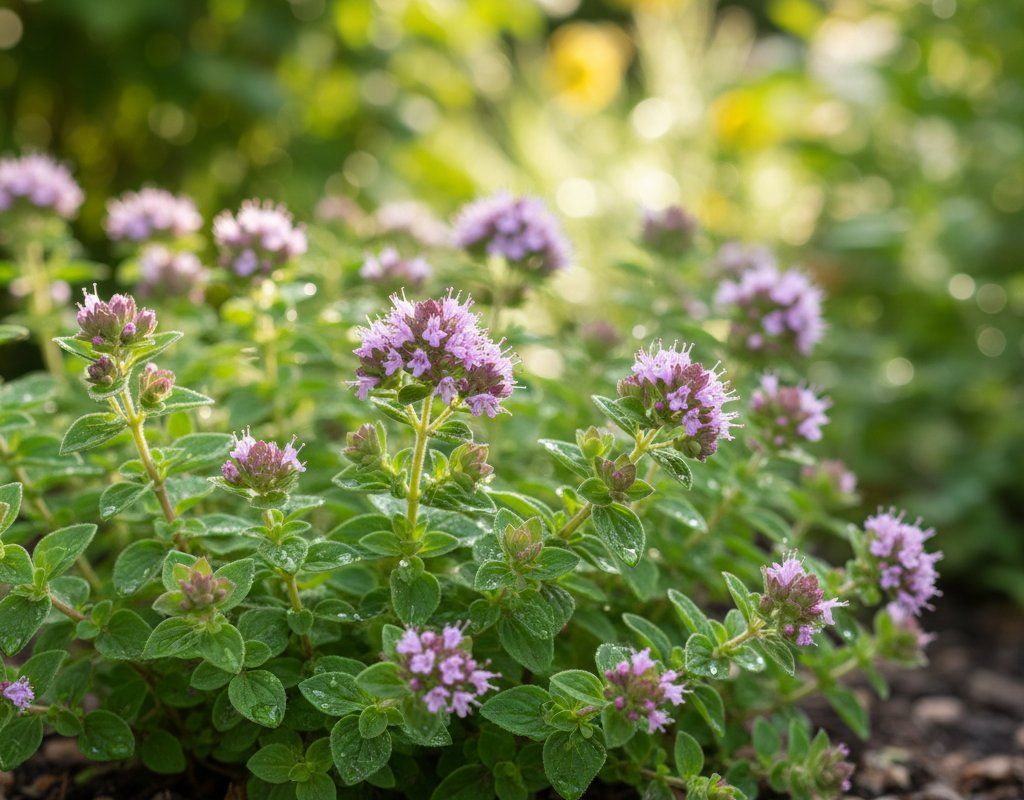
Oregano needs minimal pruning, but a few strategic cuts keep your plants productive and compact in our long growing season. Pinch off flower buds as they appear if you want the strongest leaf flavor—once oregano flowers, the leaves become slightly bitter. However, if you let some flowers develop, they're beautiful and attract beneficial insects to your garden.
Cut back about one-third of the plant in midsummer, typically in July when growth gets leggy in our heat. This encourages fresh, tender growth for fall harvest and prevents the woody stems that can develop in our long season. Make your cuts just above a leaf pair to encourage branching.
In late fall, after your first frost hits in early November, cut the entire plant back to about 2 inches above ground. Oregano is hardy in our Zone 7A and will return next spring, often spreading to fill in bare spots. This fall pruning prevents winter damage and gives you a cleaner start the following season.
🧪Fertilizing Oregano
Feeding Schedule
Organic Fertilizer Options
Harvest Time
Your first oregano harvest typically begins in early May, about 45 days after transplanting or when direct-sown plants reach 4+ inches tall. The beauty of oregano is continuous harvest—the more you cut, the more it produces throughout our long growing season until the first frost in early November.
Harvest sprigs by cutting stems just above a leaf pair, which encourages branching and bushier growth. For the most intense flavor, harvest in the morning after the dew dries but before the heat of the day. The essential oils are strongest just before the plant flowers, so regular harvesting keeps the flavor at peak intensity.
You can harvest individual leaves for immediate use or cut longer stems for drying. Take no more than one-third of the plant at any single harvest, allowing it to recover between cuttings. In our hot summers, oregano may slow its growth during the hottest weeks, but it bounces back with vigorous growth in early fall.
As your first frost approaches in early November, harvest heavily for drying and winter storage. Oregano dries beautifully when hung in bundles in a dry, airy location—perfect for preserving that intense summer flavor through our mild winter months.
Common Problems in Zone 7A (Southeast)
Root Rot Yellowing leaves starting from the bottom, black or mushy roots, and plants that wilt even in moist soil indicate root rot. Our heavy clay soil and humid conditions create perfect conditions for this fungal problem, especially when combined with poor drainage or overwatering. Improve drainage by adding compost to clay soil, plant in raised beds or mounds, and water less frequently but more deeply. Once root rot sets in, it's usually fatal—prevention is key.
Aphids Look for clusters of tiny green, black, or white soft-bodied insects on stems and leaf undersides, often accompanied by sticky honeydew residue and curled new growth. These sap-sucking pests multiply rapidly in our warm, humid weather and are often tended by ant colonies. Knock them off with a strong water spray daily for a week, encourage beneficial insects like ladybugs, or use insecticidal soap for heavy infestations. Avoid over-fertilizing with nitrogen, which makes plants more attractive to aphids.
Spider Mites Fine stippling on leaves (tiny white dots), bronze or yellowing foliage, and fine webbing on leaf undersides signal spider mites. These microscopic pests thrive during hot, dry periods and can explode in population during drought stress, even in our typically wet climate. Combat them with daily strong water sprays to increase humidity around plants, apply neem oil or insecticidal soap, and avoid broad-spectrum pesticides that kill their natural predators.
Southeast Specific Challenges Our hot, humid summers create unique disease pressure that oregano handles better than most herbs, but proper spacing and air circulation remain critical. Japanese beetles occasionally nibble oregano but rarely cause serious damage. The biggest challenge is balancing our wet-summer rainfall with oregano's preference for well-draining soil—focus on soil improvement and avoid overwatering during our naturally wet periods.
Best Companions for Oregano
Plant these nearby for healthier Oregano and better harvests.

Keep Away From
Companion Planting Details
Oregano makes an excellent companion for heat-loving crops that share its need for full sun and good drainage. Plant it near tomatoes, peppers, and eggplant—oregano's strong scent helps deter aphids and other soft-bodied pests that commonly attack these vegetables in our humid climate. The herb also pairs well with beans and squash, providing ground-level pest deterrence while the vegetables offer some beneficial shade during our hottest afternoon hours.
Avoid planting oregano near moisture-loving crops like lettuce or herbs that prefer consistently moist soil. In our clay soil conditions, these different watering needs can create problems—oregano needs to dry out between waterings while other plants may need constant moisture. The Mediterranean-style herbs (rosemary, thyme, sage) make perfect neighbors since they all thrive in our well-draining, sunny spots and handle summer heat beautifully.
🌸Best Flowers to Plant with Oregano
These flowers protect your Oregano from pests and attract pollinators for better harvests.
For Pest Control




Get a Reminder When It's Time to Plant
We'll email you when key planting windows open for your zone.