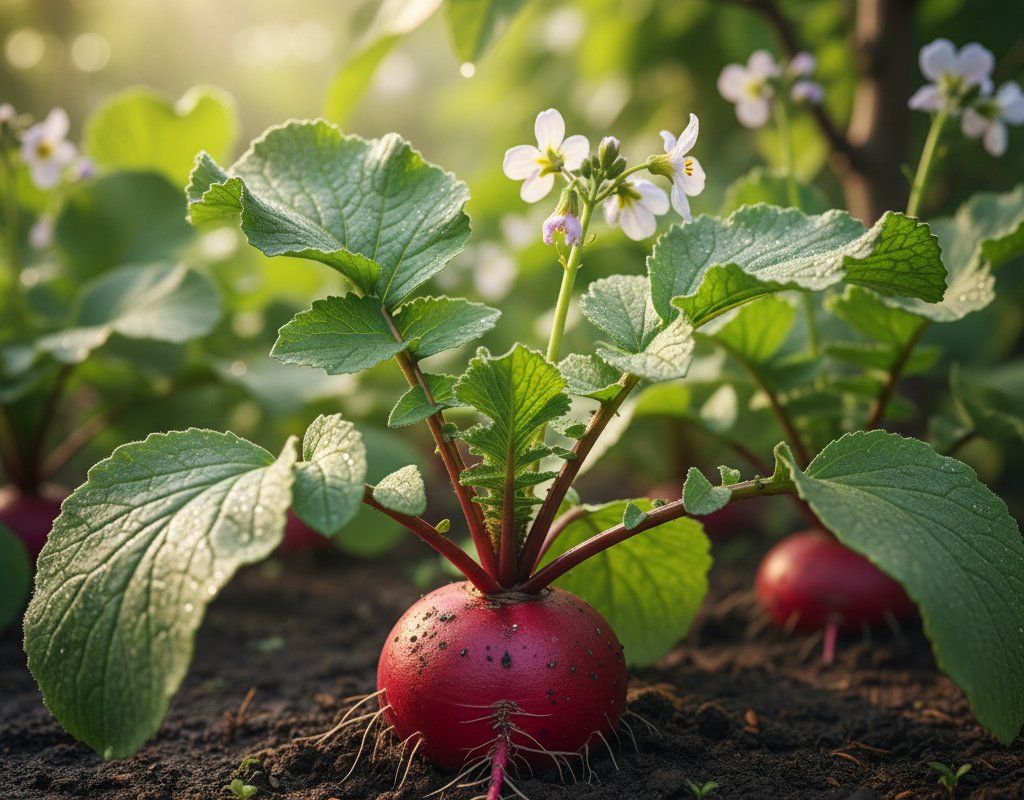
Radish in Zone 10A — Southern California
Raphanus sativus · Your Complete 2026 Planting Guide
Harvest Time!
Your Radish should be producing now!
Harvest Tips
Check size by brushing soil away from crown. Pull when ready.
How to Plant Radish in Zone 10A — Southern California
Here are all your options for getting radish in the ground, from the easiest method to more advanced approaches.
Direct Sow Seeds
RecommendedMid December through late November
around December 18
Consider succession planting every 2-3 weeks for continuous harvest.
Fast-growing and easy. No reason to start indoors.
Buy Starts
Works WellMid December through late January
around December 18
Plant purchased starts after last frost (January 15).
Start Seeds Indoors
ChallengingThis plant is typically not started indoors.
Transplant Outdoors
Timing InfoMid December through late January
around December 18
Can tolerate light frost, but wait for soil to be workable.
You have a nice window — no need to rush.
Fall Planting
Early November through early December
November 18 ideal · Direct sow for fall harvest
Plant a second crop in mid-summer for fall harvest. Radish actually prefers the cooling temperatures of fall.
Overview
Radishes are the perfect gateway crop for Southern California gardeners, delivering crisp, peppery roots in just 25 days from seed to harvest. In our mild Mediterranean climate, you can grow these quick-maturing beauties nearly year-round, making them ideal for filling gaps between slower crops or satisfying that instant gratification every gardener craves. Their versatility shines here—from classic Cherry Belle varieties that thrive in our winter cool season to heat-tolerant types that can handle our transition periods.
While our intense summer heat and occasional Santa Ana winds can stress many vegetables, radishes sidestep these challenges with smart timing. With 349 growing days at our disposal, you have multiple windows throughout the year to succession plant these fast crops. The key is working with our natural seasons rather than fighting them—avoiding the peak summer months while maximizing our excellent fall and winter growing periods.
Transplanting Outdoors
While radishes can technically be transplanted, it's rarely worth the effort for such a fast-growing crop. If you do start seeds indoors, transplant your seedlings outdoors from mid-December through late January when soil temperatures stay consistently cool and our winter rains provide natural moisture.
Before transplanting, harden off seedlings gradually over one week by increasing their outdoor exposure daily. Space transplants 2-4 inches apart in rows, giving them room to develop their characteristic round or elongated roots without crowding.
Keep in mind that transplanted radishes may not develop the perfect shape that direct-sown varieties achieve. Our mild winter temperatures during transplant season mean less shock, but the taproot can still become forked or stunted when disturbed.
Direct Sowing
Direct sowing is absolutely the way to go with radishes—it's faster, easier, and produces better-shaped roots. You can sow seeds from mid-December through late November, essentially year-round except during our hottest summer months when they'll bolt immediately or become unbearably hot and woody.
Prepare your soil by working in compost to improve drainage, since radishes need loose, well-draining soil to develop properly. Sow seeds ¼ to ½ inch deep, spacing them 2-4 inches apart in rows or broadcasting them in wide bands. The beauty of radishes is their speed—no need for perfect spacing since they'll be harvested before they seriously compete with each other.
Cool soil temperatures between 45-65°F are ideal, which matches our winter and early spring conditions perfectly. Seeds germinate in just 3-7 days in these conditions, and you'll see the first true leaves within a week of germination.
Watering Radish in Zone 10A (Southern California)
Radishes need consistent, moderate moisture throughout their short 25-day growing cycle—this is absolutely critical for developing crisp, mild roots. In Southern California's semi-arid climate, this means supplemental watering even during our winter wet season, since our 10-20 inches of annual rainfall isn't evenly distributed.
During our cool growing season (fall through early spring), water when the top 2 inches of soil feel dry to your finger. This typically means watering 2-3 times per week, providing about 1 inch total per week through deep soaking rather than frequent shallow watering. Water at the base of plants rather than overhead—our low to moderate humidity means less disease pressure, but consistent soil moisture is still key.
Drought stress is radishes' worst enemy, causing roots to become pithy, fibrous, and unbearably hot even in mild varieties. Conversely, inconsistent watering—wet then dry cycles—can cause roots to split or become tough. Since these are such quick crops, maintaining that steady moisture for just 3-4 weeks makes all the difference.
A thin layer of organic mulch helps retain soil moisture between waterings, especially important during our dry spells and when Santa Ana winds increase evaporation rates. Watch for signs of stress: wilted leaves indicate underwatering, while yellowing foliage often signals overwatering in our clay-heavy soils.
🧪Fertilizing Radish
Feeding Schedule
Organic Fertilizer Options
Harvest Time
Your first radish harvest typically arrives in mid to late January when sown during optimal cool-season timing, though succession plantings give you harvests throughout the growing season. Most varieties are ready in 25-30 days, making them perfect for impatient gardeners wanting quick results.
Look for the telltale signs of maturity: the radish shoulders push above the soil surface, and the roots reach about 1 inch in diameter for round varieties or appropriate length for elongated types. Gently brush away soil to check size rather than guessing. Pull radishes while they're still young and tender—waiting too long results in woody, overly pungent roots that are unpleasant to eat.
Harvest by grasping the foliage close to the soil line and pulling straight up with a gentle twisting motion. The entire plant comes up easily when properly grown in loose, well-prepared soil. Don't delay once they reach maturity; radishes don't hold well in the ground and deteriorate quickly in quality.
As our first frost approaches in late December, harvest any remaining radishes since they won't survive freezing temperatures despite being relatively cold-hardy. The good news is that in Southern California, you can start your next succession planting almost immediately, keeping fresh radishes coming nearly year-round.
Common Problems in Zone 10A (Southern California)
Flea Beetles You'll recognize flea beetle damage by the tiny round holes scattered across radish leaves, creating a distinctive shot-hole pattern. These small, dark beetles jump like fleas when disturbed and cause the most damage to young seedlings when leaves are tender. In Southern California's mild winters, flea beetles remain active longer than in colder regions.
The problem peaks during warm spells in our typically mild winter growing season, when beetles become more active. Protect vulnerable seedlings with lightweight row covers during their first 2-3 weeks of growth. Once plants are established, they typically outgrow the damage. Interplanting with aromatic herbs like basil can help deter these pests naturally.
Root Maggots Root maggot damage appears as tunnels or brown scars on radish roots, often accompanied by stunted growth or wilting plants despite adequate moisture. These are the larvae of small flies that lay eggs at the base of brassica family plants, including radishes.
The problem is worse in cool, moist conditions—exactly when we're growing radishes in Southern California. Crop rotation helps, since the flies overwinter in soil where brassicas grew the previous year. Use row covers immediately after seeding to prevent adult flies from laying eggs, or apply beneficial nematodes to the soil as a biological control.
Pithy Roots Pithy, spongy radish roots result from inconsistent watering, excessive heat, or leaving radishes in the ground too long. Instead of crisp, solid flesh, you'll find dry, fibrous centers that are unpalatable and often extremely hot-tasting.
This is especially common during our transition seasons when temperatures fluctuate wildly or when Santa Ana winds create dry conditions. Maintain consistent soil moisture and harvest promptly at maturity. If growing during warmer periods, choose heat-tolerant varieties and provide afternoon shade during unexpected warm spells.
Southern California Specific Challenges: Our hot, dry summers make radish growing challenging during peak heat, while winter's irregular rainfall patterns require careful irrigation management. Santa Ana winds can rapidly dry out soil, stressing these moisture-loving plants and contributing to pithy root development.
Best Companions for Radish
Plant these nearby for healthier Radish and better harvests.


Keep Away From
Companion Planting Details
Radishes make excellent companions for carrots—their quick germination breaks soil crust for slower-sprouting carrot seeds, while their harvest timing means they're out of the way before carrots need the space. Plant them alongside lettuce and other leafy greens during our cool season, where radishes help break up soil and their peppery scent may deter some pests from these tender crops.
Peas and radishes work well together since both prefer cool weather and radishes mature before pea vines need support structures. Cucumbers benefit from radish companions later in the season—the radishes are long harvested before cucumbers sprawl, and some gardeners believe radishes help deter cucumber beetles. Avoid planting near hyssop, which can inhibit radish growth and development, though this is rarely an issue in most Southern California home gardens where hyssop isn't commonly grown.
🌸Best Flowers to Plant with Radish
These flowers protect your Radish from pests and attract pollinators for better harvests.



Get a Reminder When It's Time to Plant
We'll email you when key planting windows open for your zone.