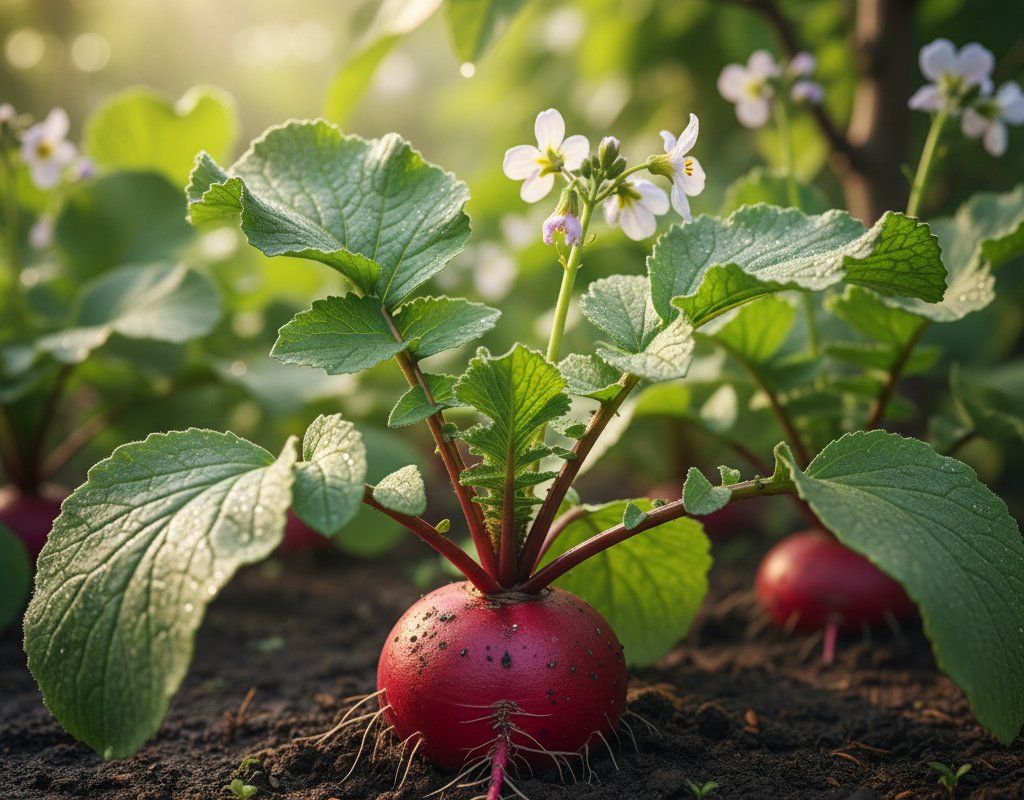
Radish in Zone 10B — Southern California
Raphanus sativus · Your Complete 2026 Planting Guide
Harvest Time!
Your Radish should be producing now!
Harvest Tips
Check size by brushing soil away from crown. Pull when ready.
How to Plant Radish in Zone 10B — Southern California
Here are all your options for getting radish in the ground, from the easiest method to more advanced approaches.
Direct Sow Seeds
RecommendedMid December through late November
around December 13
Consider succession planting every 2-3 weeks for continuous harvest.
Fast-growing and easy. No reason to start indoors.
Buy Starts
Works WellMid December through late January
around December 13
Plant purchased starts after last frost (January 10).
Start Seeds Indoors
ChallengingThis plant is typically not started indoors.
Transplant Outdoors
Timing InfoMid December through late January
around December 13
Can tolerate light frost, but wait for soil to be workable.
You have a nice window — no need to rush.
Fall Planting
Early November through early December
November 19 ideal · Direct sow for fall harvest
Plant a second crop in mid-summer for fall harvest. Radish actually prefers the cooling temperatures of fall.
Overview
Radishes are the perfect gateway crop for Southern California gardeners, delivering crisp, peppery satisfaction in just 25 days from seed to table. Our mild winters and year-round growing season mean you can enjoy fresh radishes almost continuously, especially during those cooler months when other regions are buried under snow. The quick turnaround makes them ideal for succession planting, and their vibrant colors and peppery bite add a perfect counterpoint to winter salads when tomatoes are taking a break.
While our hot summer heat inland can make radish growing challenging during peak season, our 355-day growing season gives you incredible flexibility to time plantings for success. The key is working with our natural rhythm of winter-wet, summer-dry conditions rather than fighting against it. With proper timing, you'll discover that radishes are one of the most reliable crops in the Southern California garden.
Transplanting Outdoors
While radishes can be transplanted, it's rarely the best choice since they develop quickly from seed and prefer not to have their taproots disturbed. If you do choose to transplant nursery starts, your window runs from mid-December through late January when our mild winter weather provides ideal conditions.
Harden off transplants gradually over a week, starting with just an hour or two of morning sun and building up to full exposure. Our winter sun can still be intense, especially inland, so don't rush this process. Space transplants 2-4 inches apart in well-draining soil.
Watch for those occasional warm spells in January that can stress young transplants. A bit of afternoon shade during these temperature swings will help them establish without bolting prematurely.
Direct Sowing
Direct sowing is absolutely the way to go with radishes in Southern California. You can sow from mid-December through late November, essentially year-round except for our hottest summer months. The beauty of direct sowing is that you avoid any transplant shock and get the strongest, most flavorful roots.
Prepare your soil by working in some compost and ensuring good drainage – radishes hate waterlogged conditions. Sow seeds about half an inch deep and 2-4 inches apart in rows or scatter them in blocks. In our mild winter weather, seeds germinate quickly, often within a week. The cool soil temperatures from December through February are perfect for encouraging steady, non-stressed growth.
For continuous harvests, sow new rows every two weeks during the cooler months. Skip the hottest part of summer inland (July through September) as the heat stress will make your radishes woody and unbearably hot. Resume sowing in early fall as temperatures start to drop.
Watering Radish in Zone 10B (Southern California)
Radishes need consistent moisture to develop those crisp, mild roots we're after – drought stress will leave you with woody, fiery-hot disappointments. In Southern California's semi-arid climate, this means staying on top of irrigation even though these are quick-growing crops.
During our winter growing season, aim for about an inch of water per week, adjusting based on rainfall. Our winter-wet pattern helps, but don't rely on sporadic storms alone. Use the finger test – stick your finger 2 inches into the soil, and if it's dry at that depth, it's time to water. Water at soil level rather than overhead to conserve water and prevent leaf diseases, which can be an issue even in our low-to-moderate humidity.
Summer radish attempts require more frequent watering – potentially every other day inland where temperatures hit 92°F or higher. The key is keeping soil evenly moist but not soggy. Watch for wilting leaves (underwatering) or split roots (overwatering after dry periods). A thin layer of mulch helps retain moisture and keeps roots cool, but don't pile it thick or you'll encourage pests.
Santa Ana winds can dry out soil surprisingly quickly, so check moisture levels more frequently during wind events. Signs of water stress include pithiness, excessive heat in the roots, and premature bolting.
🧪Fertilizing Radish
Feeding Schedule
Organic Fertilizer Options
Harvest Time
Your first radishes will be ready in early January if you planted in mid-December, though exact timing depends on variety and growing conditions. Most radishes are ready in 25-30 days when you can see their shoulders pushing up above the soil surface. Spring radish types are perfect when they reach about 1 inch in diameter.
Pull radishes by grasping the leaves close to the root and tugging straight up with a slight twist. Don't leave them in the ground too long after they're ready – our warm Southern California soil will quickly turn them woody and hollow. If you're not sure about timing, pull one as a test rather than losing the whole crop.
Harvest in the morning when they're crisp from cool nighttime temperatures. Unlike many vegetables, radishes don't continue ripening after harvest, so timing is everything. As you approach late December and our typical first frost window, harvest any remaining radishes since they won't survive the cold snap.
The leaves are edible too – use young, tender leaves in salads or sauté older ones like any leafy green. This gives you two harvests from one planting, maximizing your garden space.
Common Problems in Zone 10B (Southern California)
Flea Beetles Small, round holes that look like someone used a tiny shotgun on your radish leaves are the calling card of flea beetles. These tiny, dark beetles jump like fleas when disturbed and can quickly devastate young seedlings. They're particularly troublesome during warm spells in our mild winters.
The beetles overwinter in garden debris and emerge when temperatures warm up, making young radish plants their first target. In Southern California, they can be active year-round but peak during those warm January and February days. Row covers are your best defense during the vulnerable seedling stage. You can also try kaolin clay coatings or interplanting with basil, which seems to confuse them.
Root Maggots If your radishes are stunted and the roots are riddled with tunnels, root maggots are likely the culprit. These white, legless larvae burrow into developing roots, making them inedible. You'll often find the damage when you pull up what should be a perfect radish only to discover it's been hollowed out.
Root maggots thrive in cool, moist conditions – exactly what we provide during our winter growing season. The adult flies lay eggs at the base of plants in early spring. Prevention is key: use row covers immediately after seeding, rotate your brassica crops, and avoid planting in areas where you've had problems before. Yellow sticky traps can help catch the adult flies.
Pithy Roots Radishes that look perfect on the outside but are dry, spongy, and flavorless inside have gone pithy. This happens when radishes grow too slowly due to drought stress or are left in the ground too long. In our heat, even a few extra days can ruin a crop.
Our hot inland summers and water restrictions make this especially challenging. Consistent watering is crucial – let them dry out even briefly and you'll get pithy results. Plant varieties suited to your specific microclimate and harvest promptly when they reach size. During heat waves, provide afternoon shade and increase watering frequency.
Southern California Specific Challenges Our combination of hot inland temperatures, low-to-moderate humidity, and winter-wet rainfall creates unique challenges for radish growing. The dry air can quickly desiccate young plants, while our intense sun can stress them even in winter. Time your plantings for the cooler months and be prepared to provide extra water during Santa Ana wind events and unexpected warm spells.
Best Companions for Radish
Plant these nearby for healthier Radish and better harvests.


Keep Away From
Companion Planting Details
Radishes make excellent companions for carrots in Southern California gardens – the quick-growing radishes break up heavy soil for the slower carrots and are harvested long before the carrots need the space. Plant them together in late fall for a perfect winter harvest succession. Lettuce also pairs beautifully with radishes since both thrive in our cool season and have similar water needs.
Peas and radishes work well together because peas fix nitrogen that benefits the radishes, while the radishes help deter root maggots that might otherwise attack pea roots. Cucumbers planted nearby benefit from radishes' ability to repel cucumber beetles, though you'll need to time this carefully in our climate since cucumbers prefer warmer weather. Avoid planting radishes near hyssop, which can stunt their growth and affect their flavor development.
🌸Best Flowers to Plant with Radish
These flowers protect your Radish from pests and attract pollinators for better harvests.



Get a Reminder When It's Time to Plant
We'll email you when key planting windows open for your zone.