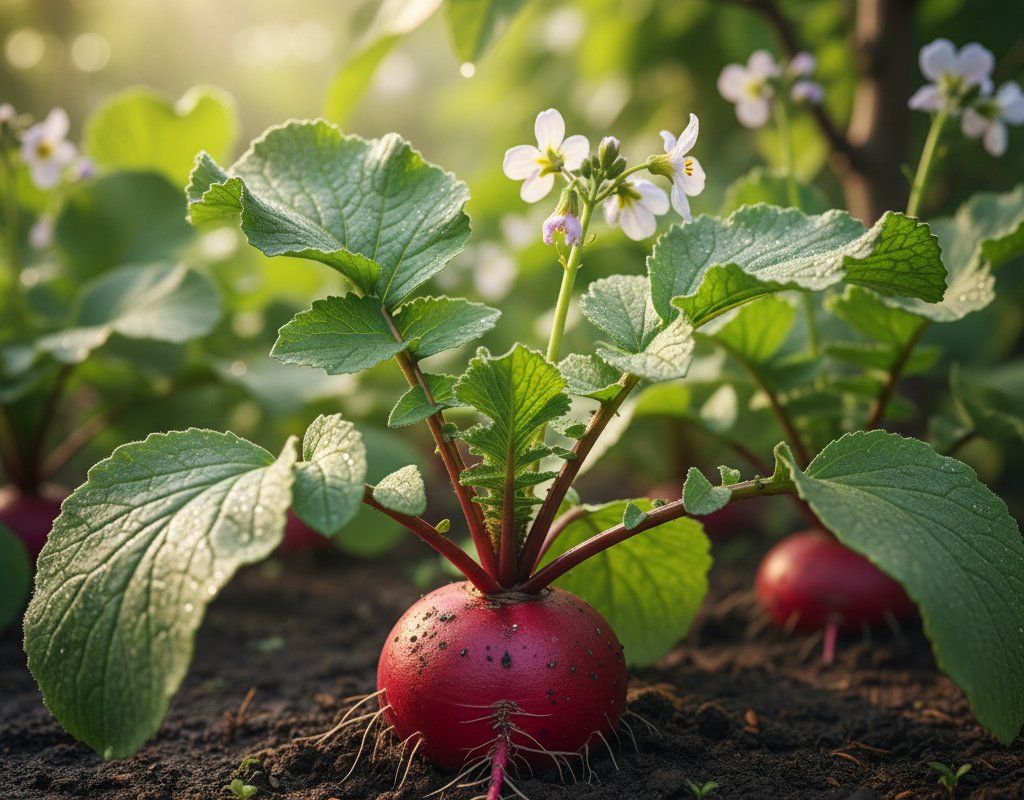
Radish in Zone 4A — Midwest
Raphanus sativus · Your Complete 2026 Planting Guide
Planning Ahead — Great!
You’re ahead of the season. Here’s when to start.
Mark Your Calendar
How to Plant Radish in Zone 4A — Midwest
Here are all your options for getting radish in the ground, from the easiest method to more advanced approaches.
Direct Sow Seeds
RecommendedMid April through mid August
around April 17
Consider succession planting every 2-3 weeks for continuous harvest.
Fast-growing and easy. No reason to start indoors.
Buy Starts
Works WellMid April through late May
around April 17
Plant purchased starts after last frost (May 15).
Start Seeds Indoors
ChallengingThis plant is typically not started indoors.
Transplant Outdoors
Timing InfoMid April through late May
around April 17
Can tolerate light frost, but wait for soil to be workable.
You have a nice window — no need to rush.
Fall Planting
Late July through late August
August 9 ideal · Direct sow for fall harvest
Plant a second crop in mid-summer for fall harvest. Radish actually prefers the cooling temperatures of fall.
Overview
Radishes are the perfect gateway crop for Midwest gardeners, delivering crisp, peppery satisfaction in just 25 days from seed to table. Our fertile prairie soil and reliable spring rains create ideal conditions for these fast-growing roots, while the moderate summer heat keeps them tender through our 128-day growing season. You can succession plant every two weeks from mid-April through August, ensuring a steady supply of fresh radishes from late spring through fall.
While our variable spring weather and occasional summer heat spells can challenge some crops, radishes actually thrive in these conditions with proper timing. Their quick maturity means you can dodge weather problems, and their cold tolerance lets you start early when other warm-season crops are still waiting for Memorial Day. Even if late frost threatens, these hardy roots bounce back quickly.
Transplanting Outdoors
While radishes can be transplanted, it's rarely necessary given their lightning-fast growth from seed. If you do choose to transplant seedlings started indoors, wait until mid-April through late May when soil has warmed and the risk of hard frost has passed.
Harden off seedlings gradually over one week, starting with just an hour outdoors in filtered light and building up to full days outside. Space transplants 2-4 inches apart in rows, giving them room to develop their characteristic round or oval roots.
Keep in mind that our unpredictable Midwest spring weather can stress transplanted seedlings. A warm spell followed by a cold snap won't kill them, but direct-sown radishes typically establish faster and with less fuss than transplants.
Direct Sowing
Direct sowing is absolutely the way to go with radishes in the Midwest - they're so fast and easy there's no reason to fuss with indoor starting. Begin sowing in mid-April when soil temperature reaches about 40°F, which usually coincides with when you can work our clay soil without creating brick-hard clumps.
Plant seeds ½ inch deep and 2-4 inches apart in rows, or scatter them more densely and thin later. Our fertile Midwest soil needs minimal prep - just work in some compost if you're dealing with heavy clay. The beauty of radishes is their speed; you can succession plant every two weeks through mid-August for continuous harvests.
Take advantage of their cool-weather preference by planting your main crop in early spring and again in late July through August for fall harvest. Summer plantings will need consistent moisture and some afternoon shade during heat spells, but spring and fall crops practically grow themselves in our moderate climate.
Watering Radish in Zone 4A (Midwest)
Radishes need consistent, moderate moisture throughout their short 25-day growing season - drought stress quickly turns them pithy and fiery-hot instead of crisp and mildly peppery. Our typical Midwest rainfall of 30-40 inches annually helps, but you'll still need to supplement during dry spells.
Check soil moisture using the finger test: stick your finger 2 inches down, and if it's dry, it's time to water. Aim for about 1 inch of water per week, including rainfall. Water deeply at soil level rather than overhead to avoid encouraging fungal issues in our moderate-to-humid climate, especially during muggy summer stretches.
Spring radishes benefit most from our natural rainfall patterns, while summer plantings need more attention during heat spells when temperatures hit the mid-80s. Watch for wilting leaves or cracking roots as signs of inconsistent watering - these fast-growing crops can't recover from water stress like slower-maturing vegetables.
A light mulch of grass clippings or chopped leaves helps retain moisture in our clay soil and keeps roots cool during summer heat. Just keep mulch pulled back slightly from the stems to prevent pest problems and allow easy harvesting when those shoulders start pushing above ground.
🧪Fertilizing Radish
Feeding Schedule
Organic Fertilizer Options
Harvest Time
Your first spring radishes will be ready for harvest from mid-May onward, just 25 days after sowing. Watch for the characteristic shoulders pushing above the soil surface - this is your cue that they've reached harvestable size, typically about 1 inch in diameter for round varieties.
Pull radishes by grasping the leaves close to the root and tugging straight up with a gentle twist. Harvest in the morning when they're crisp from cool overnight temperatures. Don't leave mature radishes in the ground too long - they quickly become woody and develop an unpleasantly sharp bite, especially during our summer heat spells.
For continuous harvest, pull every few radishes as needed rather than waiting for the entire row to mature. This works well through our long growing season, with succession plantings providing fresh roots from late spring through September.
As our first frost approaches in mid-September, harvest any remaining fall radishes promptly. While they can handle light frost, a hard freeze will damage the texture. Store harvested radishes in the refrigerator with tops removed - they'll stay crisp for several weeks, perfect for extending your harvest season.
Common Problems in Zone 4A (Midwest)
Flea Beetles You'll recognize flea beetle damage by the tiny round holes (shot-hole pattern) peppered across young radish leaves, along with small, dark beetles that jump like fleas when you disturb the plants. These pests are most destructive to seedlings during our cool, damp spring weather when young plants are most vulnerable.
Small jumping beetles that overwinter in garden debris cause this damage, emerging when soil warms in spring - perfectly timed to attack your earliest radish sowings. Our variable spring weather, with its warm spells followed by cool, moist periods, creates ideal conditions for flea beetle populations to explode.
Protect seedlings with lightweight row covers during their first few weeks, removing them once plants are established. You can also delay planting until late April when plants grow faster, or try kaolin clay dust as a barrier. Interplanting with basil or catnip helps repel these pests naturally.
Pithy Roots Pithy radishes feel spongy instead of crisp and taste woody or overly hot instead of pleasantly peppery. This disappointing condition shows up as white, cottony areas inside the root when you slice it open.
Hot weather combined with inconsistent watering causes this problem - exactly what happens during our Midwest summer heat spells when temperatures spike into the upper 80s. Our clay soil compounds the issue by either holding too much water after rains or becoming concrete-hard during dry periods.
Plant radishes for spring and fall harvest to avoid summer heat stress. Ensure consistent moisture with regular watering and mulching, and choose heat-tolerant varieties like Cherry Belle for summer plantings. If roots start pushing up early, harvest immediately rather than waiting for them to size up.
Root Maggots These white, legless larvae tunnel through radish roots, leaving brown scars and making them inedible. You'll often discover the damage only at harvest when you find riddled, rotting roots.
Cool, moist conditions in late spring - typical of our Midwest climate - encourage the flies that lay eggs near radish stems. Our heavy clay soil retains moisture longer, creating perfect breeding conditions for these pests.
Use row covers during egg-laying periods in late spring, and avoid fresh manure which attracts egg-laying flies. Crop rotation helps break the pest cycle, and beneficial nematodes applied to soil can control larvae naturally.
Midwest Specific Challenges Our moderate-to-humid summers with wet-season rainfall create ideal conditions for fungal problems, while clay soil can lead to waterlogged roots during heavy rains followed by drought stress during heat spells. Time plantings for spring and fall to work with rather than against our climate patterns.
Best Companions for Radish
Plant these nearby for healthier Radish and better harvests.


Keep Away From
Companion Planting Details
Radishes make excellent companions for carrots in Midwest gardens - they break up clay soil as they grow quickly, making it easier for slower carrots to develop straight roots. Plant radishes between carrot rows; they'll be harvested long before carrots need the space. Lettuce and radishes work well together too, with radishes providing just enough soil disturbance to help lettuce roots establish in our sometimes-compacted clay.
Peas and radishes complement each other perfectly in spring plantings, as peas fix nitrogen that radishes can use for quick leaf growth. Cucumbers benefit from radishes planted nearby as a trap crop for cucumber beetles and flea beetles. Avoid planting near hyssop, which can stunt radish growth and interfere with their rapid development - particularly problematic when you're trying to beat summer heat with quick succession plantings.
🌸Best Flowers to Plant with Radish
These flowers protect your Radish from pests and attract pollinators for better harvests.



Get a Reminder When It's Time to Plant
We'll email you when key planting windows open for your zone.