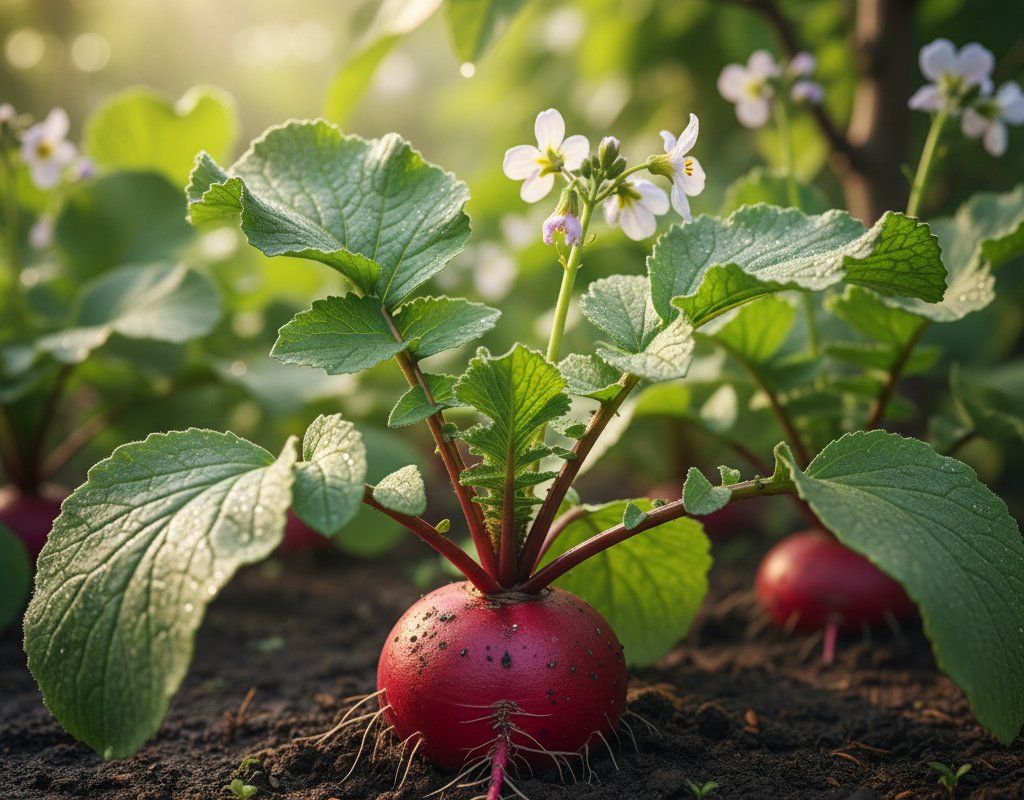
Radish in Zone 6A — Midwest
Raphanus sativus · Your Complete 2026 Planting Guide
Planning Ahead — Great!
You’re ahead of the season. Here’s when to start.
Mark Your Calendar
How to Plant Radish in Zone 6A — Midwest
Here are all your options for getting radish in the ground, from the easiest method to more advanced approaches.
Direct Sow Seeds
RecommendedLate March through early September
around March 23
Consider succession planting every 2-3 weeks for continuous harvest.
Fast-growing and easy. No reason to start indoors.
Buy Starts
Works WellLate March through early May
around March 23
Plant purchased starts after last frost (April 20).
Start Seeds Indoors
ChallengingThis plant is typically not started indoors.
Transplant Outdoors
Timing InfoLate March through early May
around March 23
Can tolerate light frost, but wait for soil to be workable.
You have a nice window — no need to rush.
Fall Planting
Mid August through mid September
September 3 ideal · Direct sow for fall harvest
Plant a second crop in mid-summer for fall harvest. Radish actually prefers the cooling temperatures of fall.
Overview
Radishes are the perfect gateway crop for Midwest gardeners, delivering satisfying crunch and peppery bite in just 25 days from seed to table. Our fertile Midwest soil and reliable spring rains create ideal conditions for these fast-growing roots, while their cold tolerance means you can get them in the ground weeks before your tomatoes and peppers. You'll be pulling crisp radishes by mid-April when winter feels like a distant memory.
The variable spring weather we're famous for here in the Midwest can throw curveballs at many crops, but radishes actually thrive in our cool, unpredictable conditions. With our 178-day growing season, you have multiple planting windows from early spring through fall, making radishes a reliable producer when other crops are struggling with temperature swings or late frosts.
Transplanting Outdoors
While radishes can be transplanted, it's rarely worth the effort since they mature so quickly from direct-sown seed. If you do choose to transplant seedlings you've started indoors, plan to move them outdoors from late March through early May, after hardening them off for about a week.
Give transplanted radishes the full week of gradual outdoor exposure, starting with just morning sun and bringing them in during our unpredictable spring nights. Space transplants 2-4 inches apart in rows, planting them at the same depth they were growing in their containers.
The main challenge with transplanting in our Midwest springs is timing around those last temperature swings. Even though radishes are frost-hardy, newly transplanted seedlings need a few days to establish before facing a hard freeze.
Direct Sowing
Direct sowing is absolutely the way to go with radishes – they're one of the easiest crops to grow from seed and actually prefer not being disturbed. You can start sowing from late March through early September, taking advantage of our long growing season for multiple plantings.
Prepare your soil by working in some compost if you're dealing with heavy clay, which many of us have here in the Midwest. Radishes aren't picky about soil temperature – they'll germinate in soil as cool as 45°F, making them perfect for those eager early spring plantings. Sow seeds about ½ inch deep and 2-4 inches apart, or scatter them and thin later.
For continuous harvests, plant new rows every 2-3 weeks through summer. The beauty of radishes is that they're fast enough to squeeze into any gap in your garden plan, and they'll actually help break up clay soil as their roots push through.
Watering Radish in Zone 6A (Midwest)
Radishes need consistent moisture throughout their short 25-day growing cycle – any drought stress will turn your mild, crisp roots into woody, fiery disappointments. The key is keeping the soil evenly moist but not waterlogged, which can be tricky with our heavy Midwest soils and variable spring rains.
During our typical wet springs, you may need very little supplemental watering, but watch for dry spells and water deeply when the top 2 inches of soil feel dry to your finger. Aim for about 1 inch of water per week, including rainfall. Our moderate-to-humid summers mean you can water at soil level without worrying too much about leaf diseases, but avoid overhead watering during the hottest part of the day.
Summer heat spells can stress radishes quickly since they're shallow-rooted and fast-growing. During those stretches when we hit the upper 80s and beyond, check soil moisture daily and provide afternoon shade if possible. A thin layer of grass clippings or chopped leaves as mulch helps retain moisture and keeps roots cool.
Signs of underwatering include wilted leaves and roots that crack or become pithy and overly spicy. Overwatering in our clay soils shows up as yellowing leaves and roots that split or rot. The fast turnaround of radishes means you need to stay on top of watering – there's no time to recover from stress.
🧪Fertilizing Radish
Feeding Schedule
Organic Fertilizer Options
Harvest Time
Your first radishes will be ready for harvest from mid-April through late October, depending on when you planted. With our reliable spring conditions, that first planting usually delivers crisp roots about 25 days after sowing, just as the garden is really waking up from winter.
Watch for the shoulders of the radishes to push above the soil surface – this is your cue that they're sizing up nicely. Most spring varieties are perfect when they reach about 1 inch in diameter, while smaller salad types might be ready at ½ inch. Don't wait too long or they'll become woody and overly hot, especially during our summer heat spells.
Harvest by grasping the leaves close to the root and pulling straight up with a gentle twisting motion. The loose, fertile Midwest soil usually releases them easily. If you encounter resistance, loosen the soil around the root with your fingers first to avoid breaking off the tops.
As our first frost approaches in mid-October, harvest any remaining radishes regardless of size. They won't improve after frost damages the leaves, and unlike root vegetables that store well, radishes are best used fresh. Consider succession planting through late August for a final fall harvest before winter sets in.
Common Problems in Zone 6A (Midwest)
Flea Beetles Those tiny round holes that look like someone took a shotgun to your radish leaves are the calling card of flea beetles – small, dark, jumping insects that can devastate young seedlings. You'll see the most damage during warm, dry spells in late spring when the beetles emerge and your radishes are still small and tender.
Flea beetles thrive in our variable spring weather, especially during those warm stretches that bring them out of winter hiding. Row covers are your best defense during the vulnerable seedling stage – just remove them once plants are established and growing strongly. Delaying planting until soil warms up also helps, since larger plants can outgrow the damage.
Root Maggots If your radish roots have tunnels and brown, slimy areas, you're dealing with root maggots – the larvae of small flies that lay eggs at the base of plants. This problem is worse in cool, moist conditions, which describes many of our Midwest springs perfectly.
These pests are attracted to freshly worked soil with organic matter, so they often show up in well-amended garden beds. Crop rotation helps break the cycle, and row covers prevent the adult flies from laying eggs. Beneficial nematodes applied to the soil can also reduce populations.
Pithy Roots When radishes develop that dry, cotton-like texture instead of crisp flesh, they've gone pithy – usually from inconsistent watering or being left in the ground too long. Our clay soils can make this worse by creating uneven moisture conditions.
Hot weather accelerates this problem, so during summer heat spells, harvest radishes as soon as they're mature rather than letting them sit. Consistent watering and succession planting every few weeks ensures you're always harvesting at peak quality rather than letting roots get overmature.
Midwest Specific Challenges Our moderate-to-hot summers and occasional heat spells can push radishes past their prime quickly, while heavy clay soils in many areas can lead to uneven moisture and misshapen roots. The humid conditions during wet summers can also encourage leaf diseases if you're overhead watering, though the fast growing cycle usually gets you to harvest before major problems develop.
Best Companions for Radish
Plant these nearby for healthier Radish and better harvests.


Keep Away From
Companion Planting Details
Radishes make excellent companions for carrots since they mature quickly and help break up the soil for the slower-developing carrot roots. Plant them in the same rows – by the time your carrots need the space, the radishes will be long harvested. Lettuce and peas also pair well since they all prefer the cool conditions of our Midwest springs and can be succession planted together.
Cucumbers benefit from radishes planted nearby because the radishes mature and are harvested just as cucumber vines start sprawling and need more room. Avoid planting radishes near hyssop, which can inhibit their growth and development. The key in our fertile Midwest soil is using these quick-growing radishes to maximize space between slower crops and break up clay areas for better drainage.
🌸Best Flowers to Plant with Radish
These flowers protect your Radish from pests and attract pollinators for better harvests.



Get a Reminder When It's Time to Plant
We'll email you when key planting windows open for your zone.