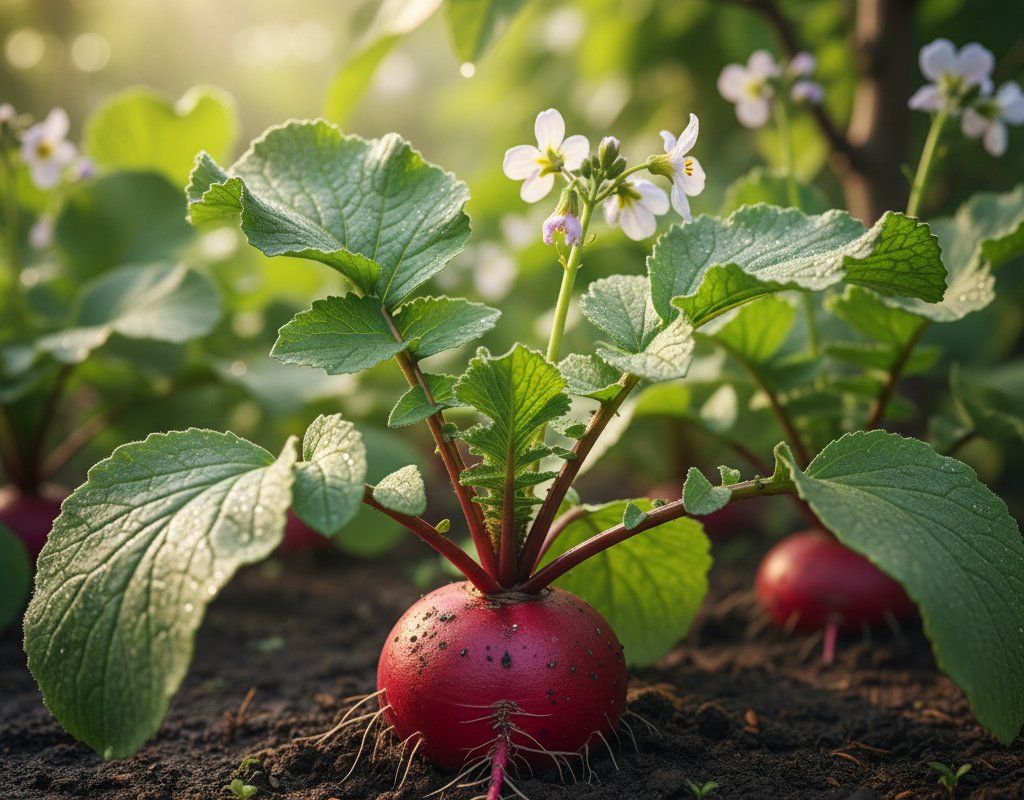
Radish in Zone 9A — Northern California
Raphanus sativus · Your Complete 2026 Planting Guide
Harvest Time!
Your Radish should be producing now!
Harvest Tips
Check size by brushing soil away from crown. Pull when ready.
How to Plant Radish in Zone 9A — Northern California
Here are all your options for getting radish in the ground, from the easiest method to more advanced approaches.
Direct Sow Seeds
RecommendedLate January through late October
around January 23
Consider succession planting every 2-3 weeks for continuous harvest.
Fast-growing and easy. No reason to start indoors.
Buy Starts
Works WellLate January through early March
around January 23
Plant purchased starts after last frost (February 20).
Start Seeds Indoors
ChallengingThis plant is typically not started indoors.
Transplant Outdoors
Timing InfoLate January through early March
around January 23
Can tolerate light frost, but wait for soil to be workable.
You have a nice window — no need to rush.
Fall Planting
Early October through early November
October 24 ideal · Direct sow for fall harvest
Plant a second crop in mid-summer for fall harvest. Radish actually prefers the cooling temperatures of fall.
Overview
Radishes are the perfect gateway crop for Northern California gardeners, delivering crisp, peppery roots in just 25 days from seed. Our Mediterranean climate gives you an incredibly long planting window — nearly year-round — letting you enjoy fresh radishes from your first spring sowings through late fall harvests. The cool mornings and mild winters here create ideal conditions for these fast-growing brassicas, producing tender roots without the bitter heat stress that plagues gardeners in harsher climates.
While our dry summers and occasional heat waves can challenge moisture-loving crops, radishes are so quick that proper timing sidesteps most problems. With our 288-day growing season, you can easily fit multiple successions into your garden plan, timing plantings to avoid the peak summer heat when needed. The key is working with our seasonal patterns rather than against them.
Transplanting Outdoors
Radish transplants outdoors best during our cooler months from late January through early March, taking advantage of Northern California's mild winter temperatures. Since radishes are quite frost-hardy, you can transplant even when nighttime temperatures still dip into the upper 30s. Space transplants 2-4 inches apart in rows, giving them room to develop their characteristic round or cylindrical roots.
Harden off transplants gradually over a week before planting, starting with just a few hours of outdoor exposure and building up to full days. Watch for those temperature swings we often get in late winter — a warm spell followed by a cold snap can stress young plants if they haven't been properly acclimated.
That said, there's really no compelling reason to transplant radishes when direct sowing is so reliable and fast. The extra handling can disturb their taproots, and you'll harvest just as quickly from direct-sown seeds without the transplant shock.
Direct Sowing
Direct sowing is absolutely the way to go with radishes in Northern California — they're fast, reliable, and much prefer growing undisturbed from seed to harvest. You can sow from late January straight through late October, though you'll want to avoid the hottest part of summer unless you're in a coastal microclimate with natural cooling.
Prepare loose, well-draining soil and sow seeds about half an inch deep, spacing them 2-4 inches apart. The soil doesn't need to be particularly warm — radish seeds germinate happily in our cool spring and fall temperatures, often popping up within a week. For succession planting, sow new rows every two weeks to maintain a steady harvest.
Fall planting from early October through early November gives you some of the sweetest radishes, as our cooling temperatures slow the plants' metabolism and concentrate flavors. The mild winter weather lets you harvest well into December before the first frost arrives.
Watering Radish in Zone 9A (Northern California)
Even moisture is absolutely critical for radishes in Northern California's dry-summer climate — drought stress turns these normally mild roots into fiery, woody disappointments. During our rainless summers, you'll need to provide about an inch of water per week, checking soil moisture with the finger test about 2 inches deep. The soil should feel consistently damp but never waterlogged.
Water at soil level rather than overhead, especially during summer when our low humidity means water evaporates quickly from leaves. This also helps prevent foliar diseases that can develop when wet leaves sit in warm conditions. Early morning watering works best, giving plants time to absorb moisture before the day heats up.
Watch for signs of water stress: leaves that wilt during the heat of the day (even with adequate soil moisture) indicate the plant can't take up water fast enough. Overwatering shows up as yellowing leaves and soft, split roots. Since radishes mature so quickly — just 25 days — consistent watering is more important than deep, infrequent soaks.
A thin layer of mulch helps retain soil moisture during our dry months, but keep it light around these small plants. Straw or shredded leaves work well, helping bridge the gap between waterings while your radishes race toward harvest time.
🧪Fertilizing Radish
Feeding Schedule
Organic Fertilizer Options
Harvest Time
Your first radish harvest typically arrives mid-February through mid-December, depending on when you planted and which variety you're growing. The classic round spring radishes are ready when their shoulders push above the soil surface and reach about an inch in diameter — usually right around that 25-day mark from sowing.
Pull radishes promptly when they reach size; they don't improve with age and quickly become woody or develop hollow centers if left in the ground too long. Gently grasp the leaves near the base and pull straight up — the roots should come out cleanly from our typically loose, well-draining soils. Harvest in the cool morning hours when possible, as roots pulled during hot afternoons can be more peppery and less crisp.
For continuous harvests, pull every other radish when they reach size, letting the remaining ones size up over the next few days. This gives you the longest harvest window from each planting. Trim off the leafy tops right after pulling — they draw moisture from the roots and cause them to go limp quickly.
As your first frost approaches in early December, harvest any remaining radishes regardless of size. They won't survive a hard freeze, but even small roots are perfectly edible and often quite tender. Store harvested radishes in the refrigerator for up to a week, keeping them crisp in a plastic bag or container.
Common Problems in Zone 9A (Northern California)
Flea Beetles
Small, round holes peppered across radish leaves — looking like someone took a tiny shotgun to your plants — signal flea beetles at work. These pinhead-sized, dark beetles jump like fleas when disturbed, hence the name. They're most damaging to young seedlings, sometimes completely shredding tender first leaves before plants can establish.
Our warm, dry conditions in late spring and summer create perfect flea beetle weather, with populations building through the season. They overwinter in garden debris and emerge as temperatures warm, targeting young brassicas like radishes, arugula, and kale.
Row covers during the first 2-3 weeks after germination protect vulnerable seedlings until they're large enough to outgrow damage. You can also delay planting until plants will be larger when beetle populations peak. Kaolin clay creates a barrier that deters feeding, while interplanting with basil or catnip provides some natural repellent effects.
Root Maggots
Stunted, yellowing plants that easily pull from the soil often have root maggots — small white larvae tunneling through developing radish roots. These are the offspring of small gray flies that lay eggs at the base of brassica plants, particularly during cool, moist conditions in spring and fall.
The flies prefer our mild spring weather for egg-laying, making early plantings most susceptible. Damaged roots become riddled with brown tunnels and often rot completely, making the harvest inedible.
Row covers prevent adult flies from laying eggs near plants. Yellow sticky traps help monitor fly populations. Beneficial nematodes applied to soil target the larval stage, while good garden sanitation — removing plant debris where flies overwinter — reduces next year's problems.
Pithy Roots
Radishes that feel spongy or have hollow, fibrous centers instead of crisp, solid flesh have gone "pithy" — essentially over-mature. This happens when roots are left in the ground too long or when inconsistent watering stresses plants during development.
Our variable spring weather, with warm spells followed by cool periods, can trigger early flowering (bolting) that diverts energy from root development. Hot summer conditions accelerate this process, making timing crucial for quality roots.
Harvest promptly when radishes reach size — usually around 25 days from sowing. Maintain consistent soil moisture throughout the growing period, and choose appropriate planting times to avoid extreme heat. For summer growing, focus on heat-tolerant varieties and provide afternoon shade in hot microclimates.
Northern California Specific Challenges
Our Mediterranean climate's combination of moderate-to-hot summers, low humidity, and dry conditions means water management becomes the primary challenge for radish growing. The lack of summer rainfall requires vigilant irrigation, while our intense sun and low humidity can stress these moisture-loving plants quickly. However, our mild winters and long growing season offer excellent opportunities for fall and winter radish growing when these challenges are minimized.
Best Companions for Radish
Plant these nearby for healthier Radish and better harvests.


Keep Away From
Companion Planting Details
Radishes make excellent companions for carrots in Northern California gardens — the quick-growing radishes help break up soil for slower-germinating carrots while marking the rows. Harvest the radishes just as carrots need more space, creating a perfect succession. Lettuce pairs beautifully with radishes too, as both crops prefer cool weather and consistent moisture, making irrigation planning simpler during our dry months.
Plant radishes near peas and other legumes to take advantage of the nitrogen fixation, which helps fuel quick radish growth. Cucumbers benefit from radish companionship as the radishes' peppery compounds may help deter cucumber beetles. However, avoid planting radishes near hyssop, as this aromatic herb can inhibit radish germination and growth — particularly problematic when you're trying to time quick successions in our long growing season.
🌸Best Flowers to Plant with Radish
These flowers protect your Radish from pests and attract pollinators for better harvests.



Get a Reminder When It's Time to Plant
We'll email you when key planting windows open for your zone.