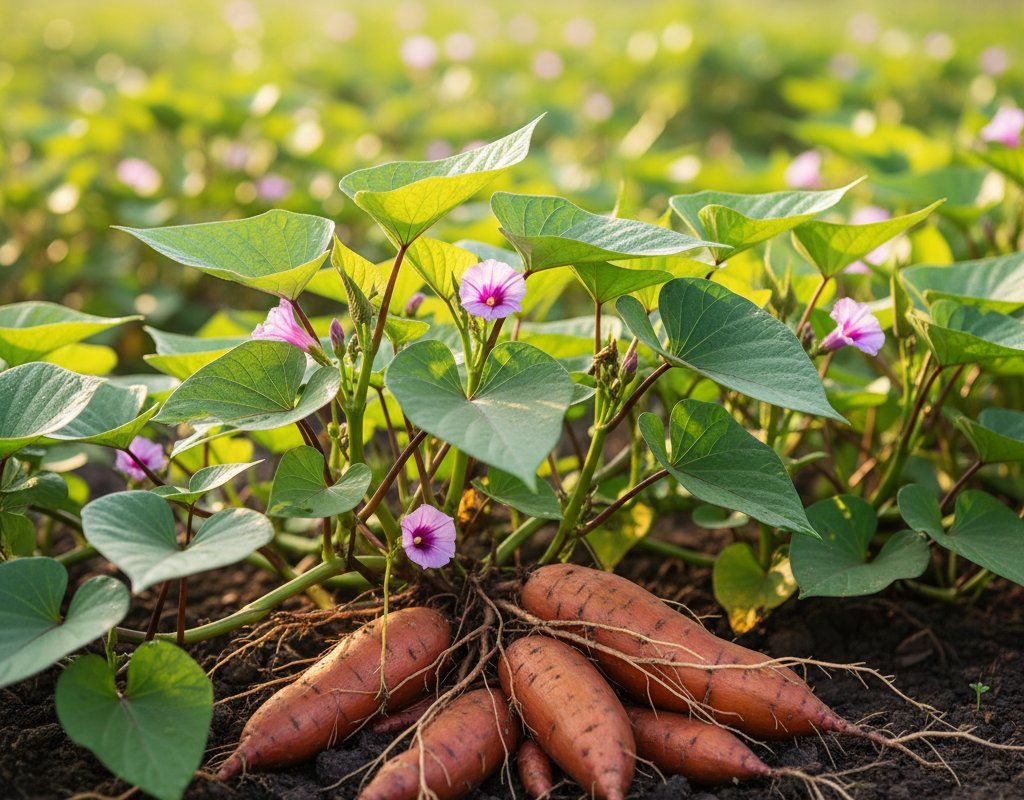
Sweet Potato in Zone 4A — Northeast
Ipomoea batatas · Your Complete 2026 Planting Guide
Planning Ahead — Great!
You’re ahead of the season. Here’s when to start.
Mark Your Calendar
How to Plant Sweet Potato in Zone 4A — Northeast
Here are all your options for getting sweet potato in the ground, from the easiest method to more advanced approaches.
Buy Starts
RecommendedEarly to mid June
around June 5
Plant purchased starts after last frost (May 15).
Plant slips (rooted sprouts) after soil is warm. Buy slips or grow your own from a sweet potato.
Start Seeds Indoors
Works WellEarly to late April
around April 10
Then transplant: Early to mid June
Start seeds 8-10 weeks before transplanting outdoors.
Direct Sow Seeds
ChallengingDirect sowing is not typical for Sweet Potato.
Transplant Outdoors
Timing InfoEarly to mid June
around June 5
Wait until nighttime temperatures stay above 50°F.
Timing is critical in your zone — don’t delay!
Overview
Sweet potatoes offer Northeast gardeners something special — a nutrient-dense root crop that thrives in our moderate summer heat and actually improves in flavor when stored properly through our long winters. Unlike regular potatoes, sweet potatoes develop their signature sweetness during the curing process, making them perfect for storage in root cellars or cool basements that are common in older Northeast homes. The vines also provide excellent ground cover that helps suppress weeds in your garden beds.
Growing sweet potatoes in Zone 4A does require some planning around our famously short growing season, but with 128 days from our mid-May last frost to mid-September first frost, you have just enough time to grow this heat-loving crop successfully. The key is starting with slips (rooted sprouts) rather than direct seeding, and being patient until soil temperatures warm up consistently in early summer.
Starting Seeds Indoors
While most Northeast gardeners buy sweet potato slips from suppliers, you can grow your own from a grocery store sweet potato if you start early to late April, about 8 weeks before transplanting. This timing works well with our late spring character — by the time your slips are ready, soil temperatures should be consistently warm enough for transplanting.
Set up a warm spot (75-80°F) with good light for your seed trays. Sweet potatoes need consistent warmth and moisture to sprout, so consider using a heat mat and covering with plastic until sprouting begins. Use bottom watering to keep the soil consistently moist without creating fungal problems — this is especially important in our moderate-to-humid spring conditions.
The process takes patience, as sweet potato slips develop slowly compared to other vegetable starts. Each sweet potato can produce multiple slips that you'll carefully twist off once they develop their own roots, usually 6-8 weeks after starting the parent tuber.
Transplanting Outdoors
Wait until early to mid June to transplant your sweet potato slips outdoors — this timing ensures soil temperatures stay consistently above 60°F, which is crucial for sweet potato establishment. Even though our last frost typically passes in mid-May, sweet potatoes are extremely sensitive to cool soil and will sulk or die in temperatures below 55°F.
Harden off your slips gradually over a week by increasing outdoor exposure daily. Our Northeast spring weather can be unpredictable with cool nights even in early June, so don't rush this process. Space slips 12-18 inches apart in full sun locations — sweet potatoes need every bit of our moderate summer heat to develop properly.
Plant slips slightly deeper than they were growing in their containers, burying about two-thirds of the stem. This encourages strong root development in our sometimes rocky New England soil. Water well at planting and consider using row covers for the first week if nighttime temperatures drop below 55°F.
Watering Sweet Potato in Zone 4A (Northeast)
Sweet potatoes need moderate, consistent watering during their first month while establishing, but they're surprisingly drought-tolerant once their root systems develop. In our Northeast climate with 40-50 inches of even rainfall distribution, you'll often rely more on managing excess moisture than providing supplemental water, especially during humid summer periods.
Use the finger test — stick your finger 2 inches into the soil near the plants. If it's dry at that depth, provide about 1 inch of water per week through deep, infrequent watering sessions. Water at the base of plants rather than overhead to reduce fungal issues that can develop in our moderate-to-humid summer conditions.
During mid-summer, sweet potato vines spread extensively and help shade their own root zones, reducing water needs significantly. The key is avoiding the wet-dry cycle that can stress plants and reduce tuber development. A 2-3 inch layer of straw or grass clipping mulch helps maintain even moisture while keeping weeds down.
Stop watering entirely 3-4 weeks before your expected harvest in mid-September. This signals the plants to focus energy on tuber development rather than vine growth, and prevents tubers from becoming waterlogged before harvest and curing.
🧪Fertilizing Sweet Potato
Feeding Schedule
Organic Fertilizer Options
Harvest Time
Your sweet potatoes will be ready for harvest in mid-September after about 100 days of growth, but timing is critical in Zone 4A since you must harvest before our first frost hits. Sweet potatoes are extremely frost-sensitive — even a light frost will damage both vines and tubers, making storage impossible.
Check tuber development by carefully digging around one plant in early September. Mature sweet potatoes should be 3-6 inches long with well-developed skin that doesn't easily scratch off with your fingernail. The vines may start yellowing slightly as energy moves into tuber development, but don't wait for significant vine dieback.
Harvest on a dry, sunny day when soil isn't muddy. Use a garden fork to carefully dig tubers, starting 12 inches away from the plant center to avoid puncturing roots. Sweet potato roots can extend surprisingly far from the main plant, so dig wide rather than deep in our rocky soils.
Handle tubers gently during harvest — any cuts or bruises will lead to rot during storage. Brush off excess soil but don't wash until ready to use. Immediately cure harvested sweet potatoes in a warm (80-85°F), humid location for 7-10 days to toughen skins and convert starches to sugars before moving to long-term storage.
Common Problems in Zone 4A (Northeast)
Sweet Potato Weevils Small, dark beetles with elongated snouts that create round holes in tubers and stems. Adult weevils are about 1/4 inch long with metallic blue-black coloring. You'll see small holes in tubers at harvest, often with larvae tunnels throughout the flesh.
These pests are less common in the Northeast due to our cold winters, but they can arrive on infected slips from southern suppliers. Prevention is key — buy certified disease-free slips from reputable sources and inspect all planting material carefully. Remove and destroy any affected tubers immediately to prevent spread.
Wireworms Thin, yellowish-brown larvae about 1/2 to 1 inch long that bore small holes into sweet potato tubers. These are actually click beetle larvae that live in soil for several years. You'll notice small, round entry holes in harvested tubers, often with dark tunnels throughout.
Wireworms thrive in our rocky New England soils, especially in areas that were previously in grass or weeds. Rotate sweet potatoes away from former lawn areas, and work compost into planting areas to encourage beneficial soil organisms that prey on wireworms. Harvest promptly when tubers mature to minimize damage time.
Cracking Splits in sweet potato skin that appear as surface cracks or deeper fissures, usually developing during the final weeks before harvest. Cracked tubers are prone to rot during curing and storage, making this a serious storage issue.
Heavy rainfall or watering after dry periods causes tubers to absorb water faster than their skin can expand, leading to splitting. Our even rainfall distribution helps, but late summer dry spells followed by September rains can trigger cracking. Maintain consistent soil moisture with mulch, and reduce watering 3-4 weeks before harvest to minimize this problem.
Northeast Specific Challenges: Our moderate summer temperatures and moderate-to-humid conditions actually favor sweet potato health compared to hotter regions, but the short growing season means every week counts. Focus on soil warming techniques like black plastic mulch early in the season, and be prepared to protect plants from unexpected cool snaps that can set back growth significantly.
Best Companions for Sweet Potato
Plant these nearby for healthier Sweet Potato and better harvests.


Keep Away From
Companion Planting Details
Sweet potatoes work well with corn and pole beans in a modified three-sisters planting — the sweet potato vines spread along the ground while beans climb the corn stalks, maximizing space usage in our compact Northeast growing seasons. The beans fix nitrogen that benefits both companion crops, while the sprawling sweet potato vines suppress weeds and conserve soil moisture. Space corn stalks about 3 feet apart with sweet potato slips planted between them.
Avoid planting sweet potatoes near tomatoes or other nightshade family crops, not because of direct competition, but because they have different watering and fertility needs that can make management complicated. Sweet potatoes prefer less nitrogen than most vegetables — too much promotes excessive vine growth at the expense of tuber development, which is particularly problematic given our short growing season where every bit of energy needs to go toward root production.
🌸Best Flowers to Plant with Sweet Potato
These flowers protect your Sweet Potato from pests and attract pollinators for better harvests.
For Pest Control




Get a Reminder When It's Time to Plant
We'll email you when key planting windows open for your zone.