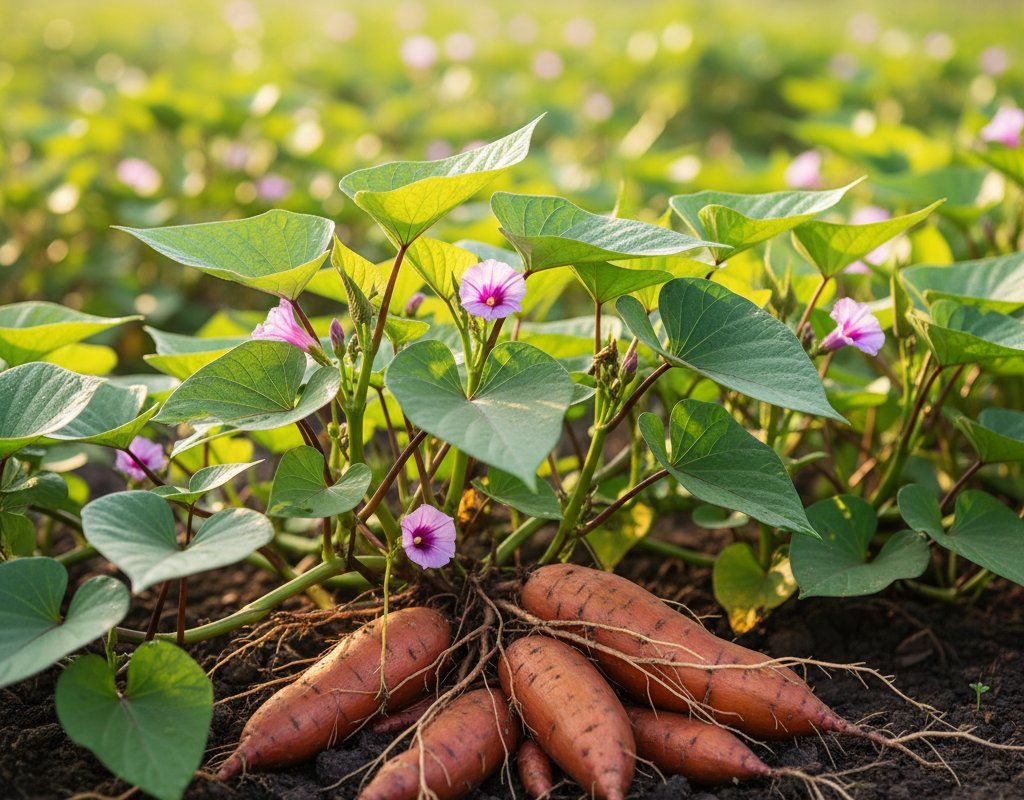
Sweet Potato in Zone 9B — Texas
Ipomoea batatas · Your Complete 2026 Planting Guide
Time to Buy Starts!
Seed starting window passed, but starts are available now.
Buy Starts Now
Head to your local nursery, Home Depot, or farmers market for transplants.
- Look for stocky plants with dark green leaves
- Avoid leggy seedlings or plants already flowering
- Check that roots aren't circling the pot (rootbound)
How to Plant Sweet Potato in Zone 9B — Texas
Here are all your options for getting sweet potato in the ground, from the easiest method to more advanced approaches.
Buy Starts
RecommendedLate February through mid March
around February 26
Plant purchased starts after last frost (February 5).
Plant slips (rooted sprouts) after soil is warm. Buy slips or grow your own from a sweet potato.
Start Seeds Indoors
Works WellLate December through mid January
around January 1
Then transplant: Late February through mid March
Start seeds 8-10 weeks before transplanting outdoors.
Direct Sow Seeds
ChallengingDirect sowing is not typical for Sweet Potato.
Transplant Outdoors
Timing InfoLate February through mid March
around February 26
Wait until nighttime temperatures stay above 50°F.
Plan to transplant within a few weeks of your target date.
Overview
Sweet potatoes are one of the most rewarding crops you can grow in Texas, offering nutritious tubers that store beautifully through our mild winters. These heat-loving vines thrive in our long, hot summers and actually benefit from the Texas heat that stresses many other crops. You'll get substantial harvests from relatively small plantings, and the sweet, creamy flesh beats anything you'll find at the grocery store.
While our unpredictable weather and extreme heat can challenge many crops, sweet potatoes are remarkably well-suited to Texas conditions. Your 308-day growing season gives you plenty of time to grow these 100-day crops, and timing your planting right helps you avoid the worst weather extremes while maximizing your harvest.
Starting Seeds Indoors
Growing sweet potatoes from seeds isn't the typical approach most Texas gardeners take, but it's possible if you want to try specific varieties unavailable as slips. You'll need to start seeds indoors from late December through mid-January, about 8 weeks before transplanting outdoors.
Set up seed trays with good seed-starting mix and keep them warm—around 75-80°F works best. Provide strong light once seedlings emerge, either from a sunny south-facing window or grow lights. Use bottom watering to avoid fungal issues that can develop in our variable humidity.
Since sweet potato slips are widely available and much easier to work with, most Texas gardeners skip seed starting altogether. If you do start from seed, expect slower initial growth compared to slips, but you'll still get a good harvest if you provide consistent warmth and light during our early spring.
Transplanting Outdoors
Sweet potato slips go into the ground from late February through mid-March, after your soil has warmed to at least 60°F consistently. In Texas, this timing puts you ahead of the brutal summer heat while giving plants time to establish strong root systems.
Harden off your slips or seedlings gradually over a week, starting with just an hour or two outside and building up to full days. This step is crucial with our intense Texas sun and unpredictable spring weather swings. Plant slips 12-18 inches apart in full sun, burying about two-thirds of the stem to encourage strong rooting.
Watch for late cold snaps through early March—have row covers ready if temperatures threaten to drop below 50°F. Your transplants will slow their growth significantly in cool weather, but they'll bounce back quickly once consistent warmth returns.
Watering Sweet Potato in Zone 9B (Texas)
Sweet potatoes need moderate water to get established, but they're surprisingly drought-tolerant once their roots spread through your soil. During the first month after transplanting, water deeply twice a week, providing about 1-1.5 inches total. Check soil moisture with your finger—it should feel damp 2 inches down but not soggy.
As summer heat builds and the vines spread, you can reduce watering frequency but increase the amount each time. During our hottest months, one deep watering per week is usually sufficient unless you're dealing with extended drought. The extensive vine system helps shade the soil and retain moisture naturally.
Your biggest watering challenge comes from Texas's unpredictable rainfall patterns. In wet years, make sure your planting area drains well to prevent root rot. During drought periods, focus water at the base of plants rather than overhead watering, which wastes water in our low humidity and encourages disease.
Stop watering entirely 3-4 weeks before harvest time to concentrate sugars in the tubers and prevent them from rotting in storage. A 2-3 inch layer of organic mulch helps maintain consistent soil moisture through both wet and dry spells while protecting roots from temperature extremes.
🧪Fertilizing Sweet Potato
Feeding Schedule
Organic Fertilizer Options
Harvest Time
Your first sweet potatoes will be ready from early June through mid-July, roughly 100 days after transplanting. Unlike many vegetables, sweet potatoes don't give obvious visual cues when they're ready—you'll need to carefully dig around one plant to check tuber size.
Start harvesting when tubers reach 3-4 inches long, though you can leave them in the ground longer for larger potatoes. Use a fork or spade to carefully dig around the plant, working outward from the center to avoid puncturing the tubers. Sweet potatoes can extend 2-3 feet from the main plant, so dig a wide area.
In Texas, you have until early December before your first frost threatens, giving you a long harvest window. However, don't wait too long—tubers left in cooling soil may not cure properly. Brush off soil but don't wash the potatoes immediately after digging.
Cure your harvest in a warm (80-85°F), humid location for 1-2 weeks before storage. This process heals minor cuts and concentrates sugars, improving both storage life and flavor. After curing, store in a cool, dark place where they'll keep for months through your mild Texas winter.
Common Problems in Zone 9B (Texas)
Sweet Potato Weevils These small, dark beetles create tunnels through your tubers, leaving behind bitter-tasting channels and holes. Adult weevils are about 1/4 inch long with a metallic blue-black color and distinctive snout. You'll notice small holes in tubers at harvest, and the damage often continues in storage.
The weevils thrive in our warm Texas climate and overwinter in crop debris or stored tubers. They lay eggs in stems and developing tubers throughout the growing season. Prevent problems by rotating crops annually, cleaning up all plant debris after harvest, and inspecting stored tubers regularly. Remove any damaged potatoes immediately to prevent spread.
Wireworms These slender, yellowish larvae bore perfectly round holes into developing sweet potatoes, creating tunnels that invite rot and secondary pests. The damage typically shows up as small, clean holes at harvest time, often with brown staining around the entry points.
Wireworms are actually click beetle larvae that live in soil for several years, especially in areas that were previously in grass or weeds. Our unpredictable Texas rainfall can drive them deeper into soil where they encounter sweet potato tubers. Control them by tilling soil thoroughly before planting and avoiding areas recently converted from pasture or lawn.
Cracking Sweet potato tubers split lengthwise or develop circular cracks around their middle, exposing the flesh to rot and pest damage. This typically happens during periods of rapid growth following dry spells—common with our unpredictable Texas rainfall patterns.
Heavy rain or irrigation after drought causes tubers to absorb water faster than their skin can expand. Maintain consistent soil moisture with regular watering and 2-3 inches of mulch to buffer against our extreme weather swings. Harvest promptly when tubers reach full size rather than leaving them in variable soil conditions.
Texas Specific Challenges Our extreme heat and unpredictable rainfall create the perfect storm for sweet potato problems. Fire ants often damage tubers by creating galleries, while flash floods can split developing roots and invite fungal issues. The key to success is consistent care—steady watering, good drainage, and prompt harvest before weather extremes stress your plants.
Best Companions for Sweet Potato
Plant these nearby for healthier Sweet Potato and better harvests.


Keep Away From
Companion Planting Details
Sweet potatoes pair beautifully with beans and corn in Texas gardens, creating a modified "three sisters" planting that works well in our climate. Beans fix nitrogen that sweet potato vines can use, while the sprawling sweet potato foliage helps suppress weeds around corn stalks. This combination also maximizes your space usage during our long growing season.
Avoid planting sweet potatoes near other root crops like regular potatoes or carrots, as they'll compete for the same soil space and nutrients. The vigorous sweet potato vines can also overwhelm smaller plants, so give them plenty of room or pair them only with tall, sturdy companions that won't be smothered by the spreading foliage.
🌸Best Flowers to Plant with Sweet Potato
These flowers protect your Sweet Potato from pests and attract pollinators for better harvests.
For Pest Control




Get a Reminder When It's Time to Plant
We'll email you when key planting windows open for your zone.