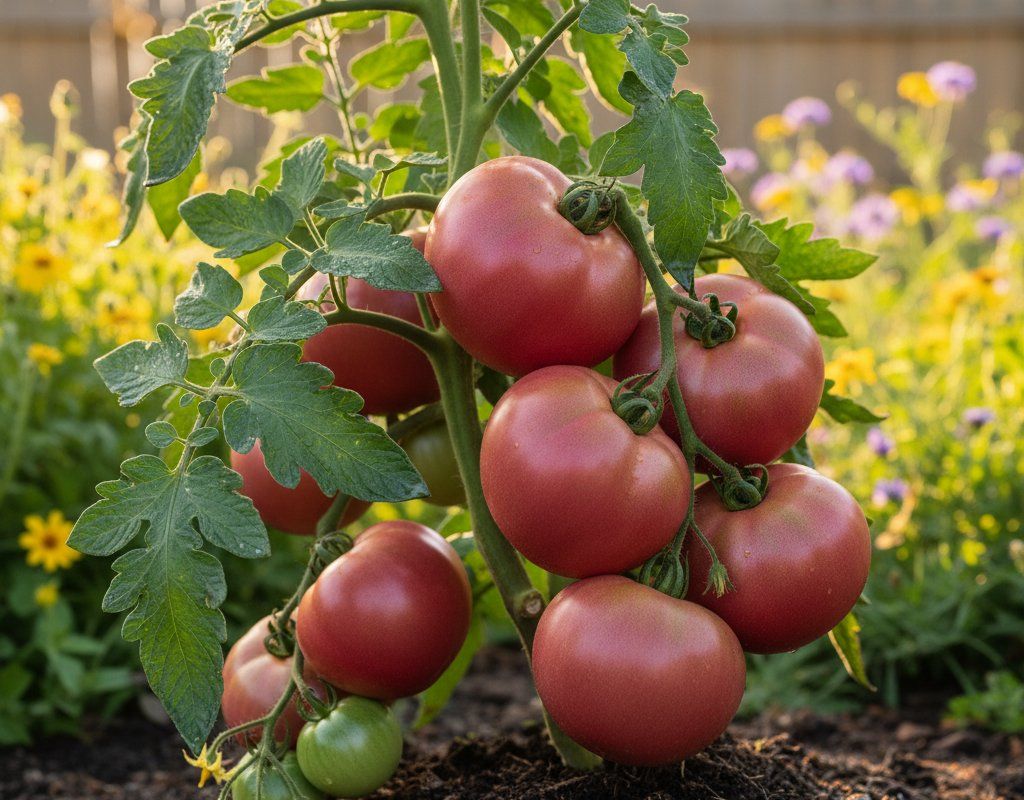
Brandywine Tomatoes in Zone 4A — Great Plains
Solanum lycopersicum · Your Complete 2026 Planting Guide
Planning Ahead — Great!
You’re ahead of the season. Here’s when to start.
Mark Your Calendar
How to Plant Brandywine Tomatoes in Zone 4A — Great Plains
Here are all your options for getting brandywine tomatoes in the ground, from the easiest method to more advanced approaches.
Start Seeds Indoors
RecommendedEarly to late April
around April 12
Then transplant: Late May through mid June
Start seeds 6-8 weeks before transplanting outdoors.
Buy Starts
Works WellLate May through mid June
around May 24
Plant purchased starts after last frost (May 10).
Direct Sow Seeds
ChallengingDirect sowing is not typical for Brandywine Tomatoes.
Transplant Outdoors
Timing InfoLate May through mid June
around May 24
Wait until nighttime temperatures stay above 50°F.
Plan to transplant within a few weeks of your target date.
Overview
Brandywine tomatoes deliver the kind of rich, complex flavor that makes you understand why people garden in the first place. These pink beefsteak heirlooms from the 1880s offer that perfect balance of sweet and tangy that store-bought tomatoes simply can't match, making every slice worth the effort in our challenging Plains climate. With our intense prairie sunshine and fertile soil, you can grow Brandywines that rival anything from warmer zones.
Yes, our 138-day growing season and unpredictable spring weather require some planning, but the timing actually works in your favor. Starting seeds indoors during our variable April weather keeps them protected from those sudden temperature swings, and transplanting in late May gives you the full benefit of our hot summers without the stress of early-season cold snaps.
Starting Seeds Indoors
Start your Brandywine seeds indoors during early to late April, about six weeks before you plan to transplant outside. This timing protects your seedlings from our notoriously variable spring weather while giving them the head start they need for our shorter growing season.
Set up seed trays with quality seed-starting mix and keep them warm—around 70-75°F works best for germination. Place them under grow lights or in your sunniest south-facing window, and use bottom watering to keep the soil consistently moist without waterlogging the seeds. Bottom watering also prevents damping-off disease, which can devastate tomato seedlings.
Once your seedlings develop their second set of true leaves, transplant them into individual 4-inch pots. Keep them indoors under lights until outdoor nighttime temperatures consistently stay above 50°F, which usually happens by late May in our zone.
Transplanting Outdoors
Plan to transplant your Brandywine seedlings outdoors from late May through mid-June, once soil temperatures reach 60°F and nighttime temperatures stay consistently above 50°F. This timing avoids our last frost risk while ensuring your plants won't be shocked by cold soil.
Harden off your seedlings for a full week before transplanting by gradually exposing them to outdoor conditions. Start with just a few hours in a protected spot, then increase exposure daily until they're outside full-time. Our Plains wind can be particularly harsh on tender seedlings, so choose a calm day for the final transplant.
Space your Brandywine plants 36-48 inches apart—these indeterminate varieties get large and need excellent air circulation in our variable humidity. Dig deep holes and bury two-thirds of the stem, which encourages strong root development and helps anchor plants against our persistent winds.
Watering Brandywine Tomatoes in Zone 4A (Great Plains)
Consistent watering is absolutely critical for Brandywines, more so than for hybrid varieties that tolerate moisture fluctuations better. These heirlooms need about 1-2 inches of water per week, but our variable Plains rainfall means you'll be supplementing regularly, especially during our hot July and August stretches when temperatures hit 93°F or higher.
Water deeply at soil level rather than overhead—our low-to-moderate humidity means foliar diseases aren't as problematic as in humid climates, but targeted watering conserves precious moisture and reduces waste. Use the finger test: stick your finger 2 inches into the soil near the plant base, and water when it feels dry at that depth.
Watch for signs of inconsistent watering, which Brandywines show more dramatically than other varieties. Underwatering causes wilting and blossom end rot, while irregular watering leads to fruit cracking—Brandywines split more easily than hybrids when they get too much water after being dry. Overwatering shows up as yellowing lower leaves and poor fruit development.
Apply 2-3 inches of organic mulch around plants to maintain steady soil moisture in our often-droughty conditions. Grass clippings or shredded leaves work well here, helping retain what moisture you do provide while moderating soil temperature swings that can stress these moisture-sensitive plants.
Supporting Your Brandywine Tomatoes
Install heavy-duty cages or stakes at planting time—Brandywines produce large fruit on vigorous indeterminate vines that can easily reach 6-8 feet tall in our intense sunshine. Standard tomato cages often prove inadequate; invest in 6-foot tall cages or use sturdy wooden stakes with soft ties to support the weight.
These plants need extra wind protection beyond just staking. Position tall plants or structures on the windward side of your tomato patch, or create a temporary windbreak with landscape fabric during the first month after transplanting. Our persistent Plains winds can snap even well-supported branches when they're loaded with large fruit.
Train the main stems upward and tie them loosely every 12-18 inches as they grow. Brandywines have potato-leaf foliage that provides less natural shade than regular-leaf varieties, so the open structure actually helps in our intense sun while improving air circulation around developing fruit.
Pruning & Maintaining Brandywine Tomatoes
Remove suckers—the shoots that emerge between the main stem and branches—throughout the growing season to focus the plant's energy on fruit production. Brandywines benefit from moderate pruning more than some heirlooms because they're naturally vigorous growers and can become unwieldy in our windy conditions.
Pinch or cut suckers when they're small (2-3 inches), and remove the lowest set of leaves once fruit begins forming to improve air circulation. This is particularly important for Brandywines since they're more disease-susceptible than modern hybrids, and our variable humidity can create pockets of stagnant air around dense foliage.
As first frost approaches in late September, top the plants by pinching off the growing tips. This redirects energy into ripening existing fruit rather than producing new flowers that won't have time to mature. Also remove any small green tomatoes that clearly won't ripen and focus the plant's final energy on the larger fruits that still have a chance.
🧪Fertilizing Brandywine Tomatoes
Feeding Schedule
Organic Fertilizer Options
Harvest Time
Your first Brandywine tomatoes should ripen from late August through late September, about 90 days from transplanting. Look for fruits that turn from green to pink-red with a slight softness when gently squeezed—the shoulders may stay somewhat green, which is normal for this variety and doesn't indicate underripeness.
Harvest in the morning when fruits are cool and firm, twisting gently while supporting the fruit's weight to avoid damaging the vine. Brandywines continue producing until frost, so regular harvesting encourages more fruit development. Check plants every 2-3 days once harvest begins, as ripe fruit can quickly become overripe in our hot late-summer temperatures.
As late September approaches and frost threatens, harvest any fruits showing the first blush of pink color. Brandywines ripen well off the vine when kept at room temperature—place them stem-end down in a single layer, and they'll continue developing that complex flavor even after picking.
Consider covering plants with row covers or old sheets if a light frost is predicted but warmer weather is expected to return. Our Plains weather often gives us several more warm weeks after the first light frost, extending your harvest significantly if you protect the plants through those initial cold snaps.
Common Problems in Zone 4A (Great Plains)
Fruit Cracking Deep splits appear in the tomato skin, either as concentric circles around the stem end or as lines radiating outward from the stem. Brandywines are particularly prone to this problem, and cracked fruit often develops rot where the skin splits open.
Heavy watering or sudden rainfall after dry periods causes fruit to absorb water faster than the skin can expand. Our variable Plains rainfall—from drought to downpour—creates perfect conditions for this problem, especially when combined with Brandywines' naturally thin skin.
Maintain consistent soil moisture with deep, regular watering and mulching to prevent the dry-wet cycle that triggers cracking. Water slowly and deeply rather than quick surface watering, and harvest fruits promptly when they show first color rather than waiting for full ripeness on the vine.
Low Yields Plants appear healthy but produce far fewer tomatoes than expected, sometimes just a handful of fruit per plant despite vigorous green growth. This frustrates many gardeners who expect prolific harvests from large, healthy-looking plants.
Heirloom varieties like Brandywine naturally produce fewer fruits than modern hybrids, focusing energy on size and flavor rather than quantity. Excessive nitrogen from over-fertilizing creates lush foliage at the expense of fruit, and inconsistent pollination during our hot July weather can also reduce fruit set.
Accept that Brandywines trade quantity for quality—each fruit offers exceptional flavor worth the wait. Fertilize lightly with balanced fertilizer rather than high-nitrogen formulas, ensure adequate spacing for air circulation, and consider hand-pollinating during extreme heat when natural pollination may fail.
Disease Susceptibility Leaves develop brown or black spots, yellowing, or wilting despite adequate watering. Multiple disease issues often appear throughout the season, making plants look increasingly unhealthy as summer progresses.
Heirloom varieties lack the disease resistance genes bred into modern hybrids, making them more vulnerable to fungal and bacterial diseases common in our region. Poor air circulation in our variable humidity conditions can exacerbate these problems.
Space plants wider than recommended (48 inches minimum), prune lower leaves for better air circulation, and consider preventive organic fungicide applications during humid periods. Remove affected foliage immediately and avoid overhead watering to reduce disease pressure.
Catfacing Tomatoes develop deep crevices, scars, and lumpy deformities around the blossom end, making them look misshapen and unmarketable. Large fruits are most severely affected, sometimes becoming completely distorted.
Cool nighttime temperatures below 55°F during flowering cause incomplete pollination, leading to abnormal fruit development. Our spring temperature swings make this particularly common with early plantings, and large-fruited varieties like Brandywine are most susceptible.
Avoid transplanting too early when nights are still cool, and use row covers for protection if unexpected cool weather occurs during flowering. The deformed fruits are perfectly edible despite their appearance—just cut away the affected areas and enjoy the rest.
Great Plains Specific Challenges Our combination of intense summer heat, persistent winds, and variable rainfall creates unique stress for moisture-loving Brandywines. The hot, dry air can cause rapid water loss just when these plants need consistent moisture most, while sudden storms can trigger cracking in fruits that have been stressed by dry conditions.
Best Companions for Brandywine Tomatoes
Plant these nearby for healthier Brandywine Tomatoes and better harvests.
View Full Companion Planting Chart →



Companion Planting Details
Plant basil near your Brandywines—it reportedly improves flavor while deterring aphids and hornworms with its strong scent. Carrots make excellent ground-level companions since their deep taproots don't compete with tomato roots, and they help break up our sometimes-compacted prairie soils. Parsley attracts beneficial insects that prey on tomato pests, while marigolds provide natural pest deterrence and add color to your tomato patch.
Avoid planting brassicas like cabbage or broccoli near tomatoes, as they can stunt each other's growth and compete for similar nutrients in our fertile but sometimes limited soil moisture. Skip fennel entirely—it inhibits tomato growth through allelopathy—and keep corn at a distance since both crops attract similar pests and can overwhelm each other in our windy conditions where proper spacing is crucial.
🌸Best Flowers to Plant with Brandywine Tomatoes
These flowers protect your Brandywine Tomatoes from pests and attract pollinators for better harvests.
For Pest Control

Get a Reminder When It's Time to Plant
We'll email you when key planting windows open for your zone.