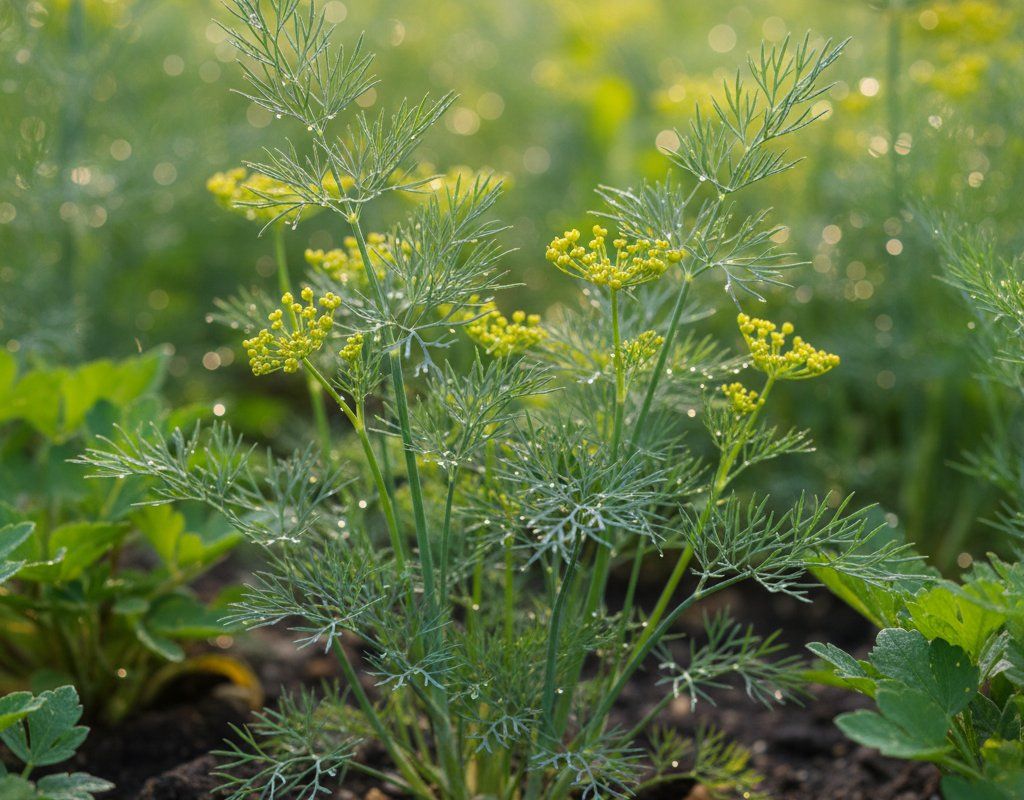
Dill in Zone 4B — Great Plains
Anethum graveolens · Your Complete 2026 Planting Guide
Planning Ahead — Great!
You’re ahead of the season. Here’s when to start.
Mark Your Calendar
How to Plant Dill in Zone 4B — Great Plains
Here are all your options for getting dill in the ground, from the easiest method to more advanced approaches.
Direct Sow Seeds
RecommendedEarly May through early August
around May 5
Consider succession planting every 2-3 weeks for continuous harvest.
Dill has a taproot and prefers direct sowing, but transplants work if handled carefully.
Start Seeds Indoors
RecommendedEarly to late April
around April 14
Then transplant: Mid May through late June
Start seeds 4-6 weeks before transplanting outdoors.
Buy Starts
Works WellMid May through late June
around May 12
Plant purchased starts after last frost (May 5).
Transplant Outdoors
Timing InfoMid May through late June
around May 12
Can tolerate light frost, but wait for soil to be workable.
You have a nice window — no need to rush.
Fall Planting
Early August through early September
August 20 ideal · Direct sow for fall harvest
Plant a second crop in mid-summer for fall harvest. Dill actually prefers the cooling temperatures of fall.
Overview
Dill thrives in our Great Plains climate, offering that distinctive sharp, tangy flavor that transforms pickles, potato salad, and fresh fish dishes. Unlike the mild dill you'll find in grocery stores, home-grown dill packs incredible intensity thanks to our region's abundant sunshine and low humidity. The feathery foliage grows quickly in our prairie soil, and you can harvest continuously from the same plants throughout the growing season.
Our 149-day growing season and variable spring weather might seem challenging for this cool-season herb, but dill actually handles our extreme temperature swings better than most herbs. The key is working with our climate patterns—starting early when conditions are cool, then succession planting through late summer to avoid the worst heat. With proper timing, you'll have fresh dill from early summer through your first hard frost in early October.
Starting Seeds Indoors
Starting dill seeds indoors makes sense mainly if you want an early harvest or if late spring storms threaten your direct-sown beds. Sow seeds in seed trays during early to late April, about 4 weeks before you plan to transplant outdoors. Dill seeds germinate quickly in warm conditions—keep them at 65-70°F and they'll sprout within a week.
Use bottom watering to keep seedlings from getting leggy, and provide strong light once they emerge. Our variable spring weather makes indoor starting appealing since you can control conditions completely. However, dill develops a taproot quickly and doesn't love root disturbance, so many Plains gardeners skip this step entirely.
If you do start indoors, transplant carefully and don't let seedlings get root-bound. The controlled environment gives you a head start, but direct sowing often produces sturdier plants that handle our wind and temperature swings better.
Transplanting Outdoors
Transplant your indoor-started dill seedlings from mid May through late June, once soil temperatures consistently reach 60°F and your last frost threat has passed. Harden off seedlings gradually over a full week—our intense sunshine and constant wind can shock plants that haven't been gradually acclimated to outdoor conditions.
Space transplants 12 inches apart in full sun locations with some wind protection if possible. Dill's feathery foliage catches wind easily, and young transplants can struggle until their root systems establish. Plant on a calm day if you can manage it, and water thoroughly at planting time.
Handle the root system gently since dill doesn't recover well from root damage. Transplants often bolt faster than direct-sown plants, especially if they experience transplant shock during our temperature swings. Despite these challenges, transplants give you more control over spacing and timing in established garden beds.
Direct Sowing
Direct sowing works exceptionally well for dill in the Great Plains and is honestly the preferred method for most gardeners here. Sow seeds directly in the garden from early May through early August, spacing them 12 inches apart in full sun. The soil should be at least 60°F for good germination—our prairie soil warms up quickly in late spring.
Dill's taproot develops immediately and grows straight down into our deep prairie soil, which gives direct-sown plants better drought tolerance and stability in wind. Seeds germinate in 7-10 days when conditions are right, and plants establish faster than transplants since there's no root disturbance.
For continuous harvest, succession plant every 2-3 weeks through mid-summer. The plants handle our temperature swings better when they're established in place from seedling stage. Direct sowing also lets you plant exactly where you want mature plants without worrying about spacing adjustments later.
Watering Dill in Zone 4B (Great Plains)
Dill needs moderate, consistent moisture but absolutely cannot tolerate waterlogged soil. In our Great Plains climate with variable rainfall, plan to provide about 1 inch of water per week through deep, infrequent watering sessions. Check soil moisture with your finger—when the top 2 inches feel dry, it's time to water.
During our hot summers with typical highs around 93°F, dill benefits from morning watering at the base of plants. Our low to moderate humidity means foliage dries quickly, so overhead watering won't cause disease problems like it would in humid regions. However, watering at soil level conserves moisture better in our windy conditions.
Watch for signs of stress during heat waves—wilted foliage in morning hours means you need to increase watering frequency. Dill bolts quickly when stressed by drought combined with heat, so maintaining consistent soil moisture through summer is crucial. Underwatered plants send up flower stalks prematurely and develop bitter-tasting leaves.
Apply 2-3 inches of mulch around plants to conserve moisture and buffer against our extreme temperature swings. Grass clippings or shredded leaves work well and help maintain the consistent moisture levels that keep dill producing tender foliage instead of rushing to flower.
🧪Fertilizing Dill
Feeding Schedule
Organic Fertilizer Options
Harvest Time
Your first dill harvest begins around mid June, about 40 days after planting, and continues through early October until hard frost hits. Start harvesting when plants reach 6-8 inches tall by cutting individual feathery stems near the base. The more you harvest, the more new growth the plant produces.
For fresh dill leaves, harvest early in the morning when essential oils are concentrated and flavors are strongest. Cut outer stems first and work your way toward the center, leaving the growing point intact. This encourages continued leaf production rather than premature flowering.
If you want dill seeds for pickling, let some flower heads develop and mature until they turn brown and papery—usually by late summer. Cut the entire seed head into a paper bag and shake to release seeds. You can harvest both leaves and seeds from the same plant by cutting selectively.
As our first frost approaches in early October, harvest heavily and preserve what you can't use fresh. Plants stop producing new growth once temperatures consistently drop below 50°F, so late September is your last chance for significant harvests. Young plants often survive light frosts but won't recover from the hard freezes that follow.
Common Problems in Zone 4B (Great Plains)
Bolting shows up as tall flower stalks shooting up from the center of your dill plants, often seemingly overnight. Once this happens, leaf production stops and the remaining foliage turns bitter and tough. In our Great Plains climate, bolting usually triggers during heat waves combined with long summer days, especially when plants experience drought stress during our variable rainfall patterns.
Prevent bolting by succession planting every 2-3 weeks rather than growing one large planting. Provide consistent moisture during hot spells and consider afternoon shade during heat waves over 95°F. Choose slow-bolt varieties if available, and harvest frequently to keep plants focused on leaf production rather than seed formation.
Aphids appear as clusters of tiny green, black, or white insects on stem tips and the undersides of leaves, leaving behind sticky honeydew residue. You'll notice new growth becoming curled and distorted. Our hot summers create perfect breeding conditions, and populations can explode seemingly overnight during warm, calm weather periods.
Control aphids with strong water sprays in the morning—this works especially well in our low humidity since plants dry quickly. Encourage beneficial insects like ladybugs and lacewings by avoiding broad-spectrum pesticides. For heavy infestations, use insecticidal soap or neem oil, applying during cooler morning hours to avoid leaf burn in intense Plains sunshine.
Caterpillars, particularly parsley worms (swallowtail butterfly larvae), can strip dill plants quickly. These large, colorful caterpillars have voracious appetites and often appear in late summer. While they're beautiful and beneficial as future butterflies, they can devastate small dill plantings in just a few days.
Hand-picking works well for small infestations—relocate them to wild carrot plants if possible. For larger problems, Bt (Bacillus thuringiensis) provides effective, organic control. Plant extra dill if you want to support both your kitchen needs and butterfly populations.
Great Plains Specific Challenges: Our extreme temperature swings stress dill plants and trigger early bolting, while constant wind can dry out soil faster than expected. The intense sunshine that makes our dill so flavorful also accelerates plant maturity, so succession planting becomes even more critical here than in milder climates.
Best Companions for Dill
Plant these nearby for healthier Dill and better harvests.


Keep Away From
Companion Planting Details
Dill makes an excellent companion for cabbage family crops, deterring cabbage worms and other pests with its strong fragrance. Plant it near cucumbers where it reportedly improves growth and flavor while attracting beneficial insects that control cucumber beetles. The tall, feathery foliage provides light shade for lettuce during our intense summer heat, helping extend the lettuce season.
Onions and dill work well together since both prefer similar growing conditions and watering schedules. The onions help repel some of the pests that bother dill, while dill's flowers attract beneficial predatory insects when allowed to bloom. Avoid planting dill near carrots since they're in the same family and can cross-pollinate, potentially affecting flavor. Also keep dill away from tomatoes—some gardeners report that dill can stunt tomato growth and alter fruit flavor.
🌸Best Flowers to Plant with Dill
These flowers protect your Dill from pests and attract pollinators for better harvests.
For Pest Control




Get a Reminder When It's Time to Plant
We'll email you when key planting windows open for your zone.