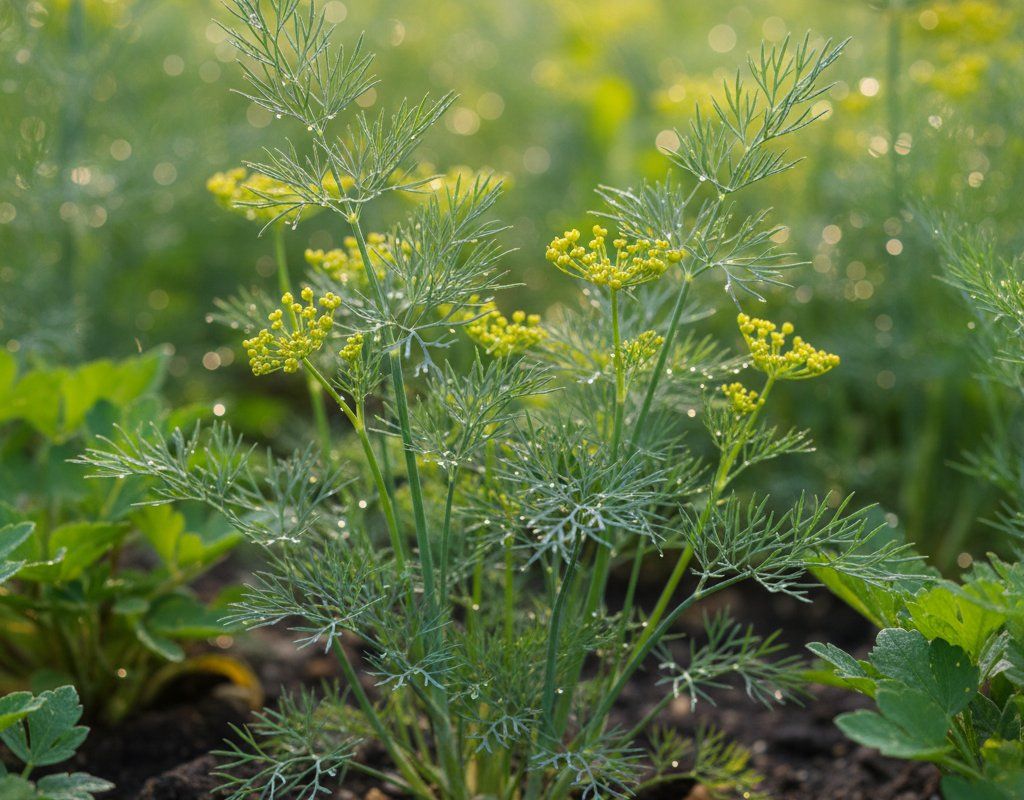
Dill in Zone 5B — Mid-Atlantic
Anethum graveolens · Your Complete 2026 Planting Guide
Planning Ahead — Great!
You’re ahead of the season. Here’s when to start.
Mark Your Calendar
How to Plant Dill in Zone 5B — Mid-Atlantic
Here are all your options for getting dill in the ground, from the easiest method to more advanced approaches.
Direct Sow Seeds
RecommendedMid April through late August
around April 20
Consider succession planting every 2-3 weeks for continuous harvest.
Dill has a taproot and prefers direct sowing, but transplants work if handled carefully.
Start Seeds Indoors
RecommendedLate March through mid April
around March 30
Then transplant: Late April through early June
Start seeds 4-6 weeks before transplanting outdoors.
Buy Starts
Works WellLate April through early June
around April 27
Plant purchased starts after last frost (April 20).
Transplant Outdoors
Timing InfoLate April through early June
around April 27
Can tolerate light frost, but wait for soil to be workable.
You have a nice window — no need to rush.
Fall Planting
Mid August through mid September
September 3 ideal · Direct sow for fall harvest
Plant a second crop in mid-summer for fall harvest. Dill actually prefers the cooling temperatures of fall.
Overview
Dill brings that distinctive fresh flavor that transforms Mid-Atlantic summer cooking—from cucumber salads to homemade pickles using our abundant local cucumbers. In our humid summers and reliable growing season, dill thrives as both a leafy herb and seed producer, giving you weeks of fresh fronds followed by aromatic seeds for year-round seasoning. The plant's feathery texture adds beautiful contrast to vegetable gardens, and it self-sows readily in our four-season climate.
While our variable spring weather and humid summers can challenge some herbs, dill actually prefers our moderate conditions over extreme heat. With our 178-day growing season, you can succession plant from mid-spring through late summer for continuous harvests. The key is working with our climate patterns—starting when soil warms up but before the peak summer heat hits.
Starting Seeds Indoors
Starting dill indoors works in the Mid-Atlantic, though it's not the preferred method since dill develops a taproot that resents disturbance. You'll want to start seeds late March through mid-April, about 4 weeks before your last transplant date. This timing works well with our moderate spring start, giving seedlings time to establish before our humid summer weather arrives.
Use individual cells or biodegradable pots to minimize root disturbance at transplant time. Dill seeds germinate quickly in warm soil—keep them at 65-70°F and use bottom watering to prevent damping off in our naturally humid conditions. Provide bright light once they emerge, either from a south-facing window or grow lights.
The main advantage of indoor starting here is getting a jump on the season, especially for that first spring harvest. But direct sowing often gives stronger plants that handle our summer conditions better.
Transplanting Outdoors
Transplant your indoor-started dill seedlings late April through early June, after our last frost risk passes. Handle the root system carefully—dill's taproot makes it more transplant-sensitive than other herbs. If you used biodegradable pots, plant the whole thing to minimize disturbance.
Harden off seedlings gradually over a week, starting with a few hours of morning sun and building up to full outdoor conditions. Our variable spring weather means you might need to bring them in if temperatures drop unexpectedly. Space plants 12 inches apart to allow for good air circulation—important in our humid summers.
Choose a sunny spot with well-draining soil, which can be challenging in our clay-heavy region. If your soil holds water, consider raised beds or work in compost to improve drainage. The timing window gives you flexibility to work around our spring weather swings.
Direct Sowing
Direct sowing is dill's preferred method since it avoids transplant shock and lets that taproot develop naturally. You can sow mid-April through late August in the Mid-Atlantic, giving you multiple planting opportunities. The extended window works perfectly with our long growing season and even rainfall patterns.
Prepare your soil by working in compost if you're dealing with heavy clay—common in our region. Dill seeds need soil temperatures around 60°F to germinate reliably, which usually happens by mid-April here. Sow seeds ¼ inch deep and space them about 12 inches apart, or sow more densely and thin later.
For continuous harvests, succession plant every 2-3 weeks through mid-summer. Stop planting in late August for fall crops that will mature before our first frost in mid-October. Direct-sown plants typically handle our humid summers better than transplants, developing stronger root systems that cope with heat stress.
Watering Dill in Zone 5B (Mid-Atlantic)
Dill needs moderate, consistent moisture in our Mid-Atlantic climate—about 1 inch per week including rainfall. Our average 40-50 inches of annual precipitation helps, but summer dry spells still require supplemental watering. Check soil moisture by sticking your finger 2 inches deep; water when it feels dry at that level.
Water at the base of plants rather than overhead watering, especially important in our humid summers where wet foliage invites fungal problems. Early morning watering works best, giving plants time to dry before our warm, humid nights. A soaker hose or drip irrigation system works particularly well for dill's moderate water needs.
Watch for signs of stress during our typical 88°F summer highs—wilting leaves signal immediate water needs, while yellowing lower leaves often indicate overwatering in our clay soils. Dill is quick to bolt in heat and drought, so consistent moisture is key to keeping leaves tender and flavorful.
Apply 2-3 inches of organic mulch around plants to retain moisture and regulate soil temperature. This is especially valuable in our humid climate where mulch also helps prevent soil-borne diseases from splashing up onto leaves during heavy rains.
🧪Fertilizing Dill
Feeding Schedule
Organic Fertilizer Options
Harvest Time
You can start harvesting dill leaves about 40 days after planting, typically late May for spring sowings in the Mid-Atlantic. Cut feathery foliage anytime once plants reach 6-8 inches tall, taking outer leaves first to encourage continued growth. The best flavor comes from young, tender leaves before the plant flowers.
For continuous leaf production, pinch off flower heads as they appear—this keeps energy going into leaf growth rather than seed production. However, if you want dill seeds for pickling, let some plants flower and mature. The seeds are ready when flower heads turn brown and dry, usually by late summer in our climate.
Harvest in early morning after dew evaporates but before the day's heat builds up. Cut stems just above a leaf node to encourage new growth. During our humid summers, dill can bolt quickly once temperatures consistently hit the upper 80s, so harvest frequently during peak season.
As our first frost approaches in mid-October, harvest remaining leaves for drying or freezing. Dill doesn't overwinter here, but it often self-sows readily in our four-season climate, giving you volunteer plants the following spring.
Common Problems in Zone 5B (Mid-Atlantic)
Bolting shows up as a sudden flower stalk shooting up from the center of your dill plant, with leaves becoming bitter and tough. In the Mid-Atlantic, this typically happens during our humid summer heat waves when temperatures stay consistently above 85°F. Our long days combined with heat stress trigger this premature flowering, shifting the plant's energy from leaf production to seed production.
Combat bolting by succession planting every 2-3 weeks rather than one large planting. Provide afternoon shade during our hottest summer weeks, and keep soil consistently moist—drought stress accelerates bolting. Plant your main crops in early spring and again in late summer when our cooler temperatures naturally slow the process.
Aphids appear as clusters of tiny green, black, or white insects on stem tips and leaf undersides, often leaving sticky honeydew residue. These sap-sucking pests multiply rapidly in our warm, humid conditions, especially during those muggy July and August stretches. You'll notice curled or distorted new growth where they've been feeding.
Strong morning water sprays knock aphids off effectively, and our humid conditions help this method work well. Encourage natural predators like ladybugs by avoiding broad-spectrum insecticides. For heavy infestations, insecticidal soap works well in our climate—apply in early morning to avoid leaf burn during hot afternoons.
Caterpillars, particularly parsleyworms (black swallowtail larvae), can strip dill plants quickly. These green caterpillars with black stripes and yellow spots are actually beneficial butterfly larvae, but they can demolish small plantings. Hand-picking works for small numbers, or use Bt (Bacillus thuringiensis) for larger infestations.
Mid-Atlantic Specific Challenges: Our combination of humid summers and variable spring weather creates perfect conditions for fungal issues if plants stay wet too long. Space plants properly for air circulation, avoid overhead watering, and consider raised beds if you're dealing with our region's heavy clay soils that retain moisture.
Best Companions for Dill
Plant these nearby for healthier Dill and better harvests.


Keep Away From
Companion Planting Details
Dill makes excellent companions for cabbage family crops, deterring cabbage worms and flea beetles that commonly plague brassicas in our Mid-Atlantic gardens. Plant it near cucumbers—the dill attracts beneficial insects that help with cucumber beetle control, and both plants thrive in our moderate growing conditions. Onions and dill work well together since onions help repel aphids that can bother dill during our humid summers.
Lettuce and dill make good seasonal companions for spring and fall plantings, as both prefer cooler weather and consistent moisture. However, avoid planting dill near carrots—they can cross-pollinate and affect flavor, plus they compete for similar soil nutrients. Keep dill away from tomatoes too, as dill can inhibit tomato growth and the plants have different watering needs that don't match well in our climate.
🌸Best Flowers to Plant with Dill
These flowers protect your Dill from pests and attract pollinators for better harvests.
For Pest Control




Get a Reminder When It's Time to Plant
We'll email you when key planting windows open for your zone.