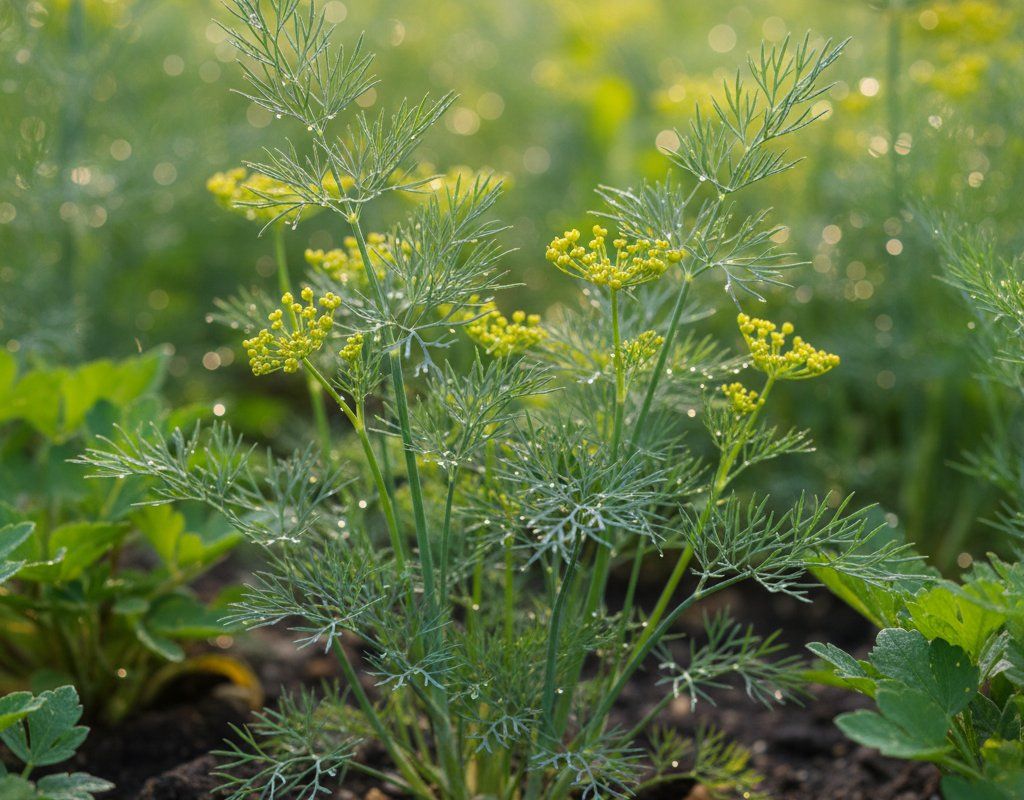
Dill in Zone 5B — Mountain West
Anethum graveolens · Your Complete 2026 Planting Guide
Planning Ahead — Great!
You’re ahead of the season. Here’s when to start.
Mark Your Calendar
How to Plant Dill in Zone 5B — Mountain West
Here are all your options for getting dill in the ground, from the easiest method to more advanced approaches.
Direct Sow Seeds
RecommendedEarly May through early August
around May 5
Consider succession planting every 2-3 weeks for continuous harvest.
Dill has a taproot and prefers direct sowing, but transplants work if handled carefully.
Start Seeds Indoors
RecommendedEarly to late April
around April 14
Then transplant: Mid May through late June
Start seeds 4-6 weeks before transplanting outdoors.
Buy Starts
Works WellMid May through late June
around May 12
Plant purchased starts after last frost (May 5).
Transplant Outdoors
Timing InfoMid May through late June
around May 12
Can tolerate light frost, but wait for soil to be workable.
You have a nice window — no need to rush.
Fall Planting
Early August through early September
August 20 ideal · Direct sow for fall harvest
Plant a second crop in mid-summer for fall harvest. Dill actually prefers the cooling temperatures of fall.
Overview
Dill thrives in our Mountain West climate, making it one of the most rewarding herbs you can grow here in Zone 5B. The intense sun at high altitude develops exceptional flavor concentration in the feathery leaves, while our cool nights prevent the bitter compounds that plague dill grown in hotter regions. You'll harvest fresh dill for pickling, cooking, and seasoning throughout our growing season, plus gather seeds for winter use.
Our short 149-day season and late spring start might seem challenging for herbs, but dill actually prefers our cool conditions over blazing heat. The key is working with our temperature swings and intense UV rather than fighting them. With proper timing, you'll enjoy continuous harvests from mid-June through early October.
Starting Seeds Indoors
Starting dill indoors isn't the most common approach, but it makes sense when you want an early jump on the season or need transplants for specific garden spots. Start seeds in early to late April, about four weeks before you plan to transplant outdoors. Use seed trays with good drainage and keep them in a warm spot until germination.
Bottom watering works best for dill seedlings since the delicate foliage can be damaged by overhead watering. Our late Mountain spring means indoor starting gives you a head start when outdoor soil is still too cold. Keep seedlings under grow lights or in a sunny window, but watch for stretching in our intense high-altitude sun.
Dill develops a taproot quickly, so don't let seedlings get too large before transplanting. Handle them gently and transplant while young to avoid root disturbance.
Transplanting Outdoors
Transplant your dill seedlings outdoors from mid-May through late June, once soil has warmed and the threat of hard frost has passed. Our spring nights can still dip surprisingly low even after warm days, so wait until nighttime temperatures consistently stay above freezing.
Harden off seedlings for a full week before transplanting by gradually increasing their outdoor exposure. Start with just a few hours of morning sun, then work up to full days outside. This prevents shock from our intense UV and temperature swings.
Space transplants 12 inches apart in loose, well-draining soil. Dill's taproot doesn't appreciate heavy clay or waterlogged conditions, which can be an issue in some Mountain garden spots after snowmelt.
Direct Sowing
Direct sowing is actually dill's preferred method since the taproot develops without disturbance. Sow seeds from early May through early August, giving you multiple succession plantings throughout the season. Wait until soil temperature reaches at least 50°F, which typically happens in early May at our altitude.
Prepare your soil by loosening it to at least 8 inches deep - our often-alkaline Mountain soil benefits from some compost worked in. Sow seeds about ¼ inch deep and space them 12 inches apart, or sow more thickly and thin later. Seeds germinate best when soil stays consistently moist but not waterlogged.
The advantage of direct sowing here is that plants develop stronger root systems to handle our temperature fluctuations and occasional dry spells. Plants started this way also tend to be less likely to bolt prematurely in summer heat.
Watering Dill in Zone 5B (Mountain West)
Dill needs moderate but consistent moisture throughout our dry Mountain growing season. With only 10-20 inches of annual rainfall, you'll need to supplement regularly. Check soil moisture by sticking your finger 2 inches deep - if it's dry at that level, it's time to water.
Provide about 1 inch of water per week, either from rainfall or irrigation. Water deeply at the base of plants rather than overhead, especially important in our low humidity where wet foliage can lead to problems. Our intense sun and dry air mean plants lose moisture quickly, but overwatering in heavy soil can cause root issues.
Watch for signs of stress: wilting in the heat of the day despite adequate soil moisture often means the plant needs more water. Yellowing lower leaves can indicate both over and underwatering, so use the finger test to determine which. Mulch lightly around plants to conserve moisture and moderate soil temperature swings.
During hot spells, even our moderate Mountain temperatures can stress dill. Provide extra water during these periods, and consider afternoon shade if plants start to bolt prematurely.
🧪Fertilizing Dill
Feeding Schedule
Organic Fertilizer Options
Harvest Time
You can start harvesting dill leaves about 40 days after sowing, typically by mid-June for spring plantings. The feathery foliage is ready anytime it looks full and green - cut individual stems or snip leaves as needed. Morning harvest after the dew dries but before the intense midday sun gives you the best flavor concentration.
For continuous production, harvest regularly but never take more than one-third of the plant at once. Cut stems just above where new growth is emerging to encourage branching. Fresh leaves have the best flavor, but our cool nights help maintain quality even as plants mature.
If you want dill seeds for pickling, let some plants flower and go to seed. The flower heads turn brown and dry by late summer - shake seeds directly into a paper bag when they're ready. Seeds store well through our dry winter months.
As first frost approaches in early October, harvest remaining plants completely. You can hang whole plants to dry in a well-ventilated area, taking advantage of our low humidity for natural preservation.
Common Problems in Zone 5B (Mountain West)
Bolting shows up as a sudden flower stalk shooting up from the center of the plant, with leaves becoming bitter and tough afterward. In our Mountain climate, this usually happens during hot spells in mid-summer or when plants experience drought stress. Our intense high-altitude sun can trigger early bolting even at moderate temperatures. Prevent bolting by providing consistent moisture, succession planting every 2-3 weeks, and choosing heat-tolerant varieties. Some afternoon shade during the hottest part of summer helps extend the harvest period.
Aphids appear as clusters of tiny green, black, or white insects on stems and leaf undersides, leaving sticky honeydew and causing new growth to curl. These multiply rapidly during warm weather and seem to love the tender new growth of dill. Our dry conditions can stress plants and make them more susceptible. Knock aphids off with a strong water spray, or use insecticidal soap for heavy infestations. Encourage beneficial insects like ladybugs - our low humidity actually helps beneficial predators more than it helps aphids.
Caterpillars, particularly parsley worms (black swallowtail butterfly larvae), can strip dill plants quickly. These bright green caterpillars with black stripes and yellow spots are actually beautiful but devastating to small herb plants. Hand-pick them if you only have a few plants, or use Bt (Bacillus thuringiensis) for organic control. Consider leaving a few plants for the butterflies if you have space - they're beneficial pollinators.
Mountain West Specific Challenges: Our intense UV can stress dill during peak summer, leading to premature bolting even at moderate temperatures. The combination of dry air and temperature swings means plants need consistent watering but excellent drainage. Hail can shred the delicate foliage, so consider row covers during storm season.
Best Companions for Dill
Plant these nearby for healthier Dill and better harvests.


Keep Away From
Companion Planting Details
Dill makes an excellent companion for cabbage family plants, helping repel cabbage worms while attracting beneficial insects that prey on aphids and other pests. Plant it near cucumbers where it can help deter cucumber beetles, or alongside lettuce where both crops appreciate similar cool-season growing conditions and moderate moisture needs.
Avoid planting dill near carrots, as they can cross-pollinate and affect flavor, or close to tomatoes where the dill may inhibit tomato growth. In our intense Mountain sun, dill can actually provide light afternoon shade for more delicate companions like lettuce during hot spells.
🌸Best Flowers to Plant with Dill
These flowers protect your Dill from pests and attract pollinators for better harvests.
For Pest Control




Get a Reminder When It's Time to Plant
We'll email you when key planting windows open for your zone.