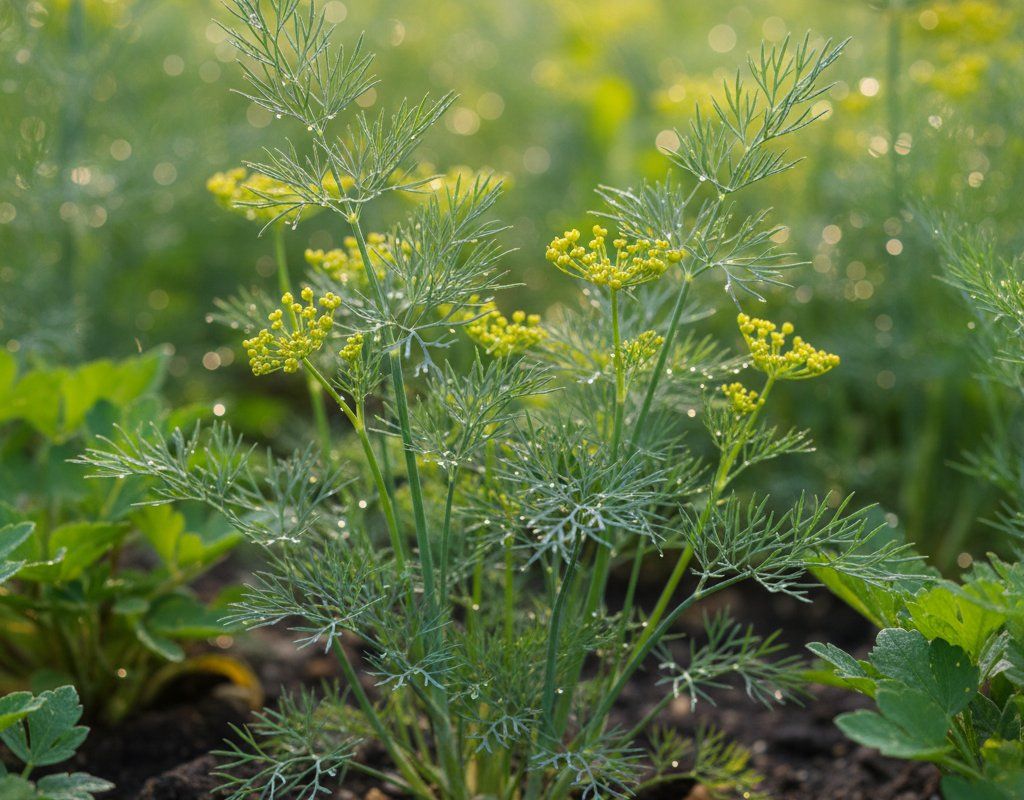
Dill in Zone 9B — Desert Southwest
Anethum graveolens · Your Complete 2026 Planting Guide
Time to Buy Starts!
Seed starting window passed, but starts are available now.
Buy Starts Now
Head to your local nursery, Home Depot, or farmers market for transplants.
- Look for stocky plants with dark green leaves
- Avoid leggy seedlings or plants already flowering
- Check that roots aren't circling the pot (rootbound)
How to Plant Dill in Zone 9B — Desert Southwest
Here are all your options for getting dill in the ground, from the easiest method to more advanced approaches.
Direct Sow Seeds
RecommendedEarly February through late October
around February 5
Consider succession planting every 2-3 weeks for continuous harvest.
Dill has a taproot and prefers direct sowing, but transplants work if handled carefully.
Start Seeds Indoors
RecommendedEarly to late January
around January 15
Then transplant: Mid February through late March
Start seeds 4-6 weeks before transplanting outdoors.
Buy Starts
Works WellMid February through late March
around February 12
Plant purchased starts after last frost (February 5).
Transplant Outdoors
Timing InfoMid February through late March
around February 12
Can tolerate light frost, but wait for soil to be workable.
You have a nice window — no need to rush.
Fall Planting
Mid October through mid November
November 3 ideal · Direct sow for fall harvest
Plant a second crop in mid-summer for fall harvest. Dill actually prefers the cooling temperatures of fall.
Overview
Dill thrives in our Desert Southwest climate, offering both delicate feathery foliage and aromatic seeds that elevate everything from pickles to roasted vegetables. This hardy herb handles our alkaline soil well and gives you two distinct growing seasons—spring and fall—when the extreme heat won't force it to bolt immediately.
Our 313-day growing season means you can enjoy fresh dill from mid-March through late December with proper timing. While the extreme heat and low humidity present challenges, dill's quick 40-day maturity and frost tolerance make it surprisingly manageable here. Plant it during our mild winters and early spring, then again in fall when temperatures drop.
Starting Seeds Indoors
Starting dill indoors makes sense mainly for getting an earlier spring harvest or protecting fall seedlings from unexpected heat spells. Sow seeds in early to late January, about four weeks before you plan to transplant outdoors. Use standard seed starting trays with good drainage—dill doesn't appreciate waterlogged roots.
Keep your seed trays at 65-70°F and provide bright light once seedlings emerge. Bottom watering works best to prevent damping off, which can be problematic in our low humidity. Since our spring arrives very early compared to other Zone 9B regions, indoor starting gives you a head start on the growing season.
Handle seedlings carefully during transplant since dill has a taproot that doesn't appreciate disturbance. Most Desert Southwest gardeners find direct sowing more reliable, but indoor starting works if you're patient with the process.
Transplanting Outdoors
Transplant your indoor-started dill seedlings from mid-February through late March, after nighttime temperatures consistently stay above 25°F. This timing catches our mild winter-to-spring transition perfectly, before the extreme heat arrives.
Harden off seedlings gradually over a week, starting with morning sun only and building up to full exposure. Our intense Desert Southwest sun can shock transplants, even in late winter. Space plants 12 inches apart to allow good air circulation—important in our arid climate where fungal issues are rare but heat stress is common.
Choose your planting spot carefully during this window. What feels mild in February can become blazing hot by May, so consider areas that get afternoon shade during summer months, even though dill prefers full sun during its active growing period.
Direct Sowing
Direct sowing is actually dill's preferred method since it develops a long taproot that resents transplanting. You have a generous window from early February through late October, but timing within this range makes all the difference in our desert climate.
Sow seeds when soil temperatures reach 60-65°F, which happens quickly here in late winter. Plant seeds ¼ inch deep and 12 inches apart in well-draining soil—our caliche layer means raised beds or containers often work better than ground-level planting. The alkaline soil common here doesn't bother dill at all.
For spring planting, sow from early February through mid-March to harvest before summer heat arrives. Skip summer sowing entirely unless you can provide shade cloth. Resume sowing from mid-October through mid-November for fall crops that will carry you through winter.
Watering Dill in Zone 9B (Desert Southwest)
Dill needs consistent moisture but not soggy conditions—tricky in our arid Desert Southwest climate where extremes are common. During spring growing season, provide about 1 inch of water weekly through deep, infrequent watering sessions. The finger test works well: stick your finger 2 inches into soil, and water when it feels dry at that depth.
Water at soil level rather than overhead to conserve moisture in our low humidity environment. Morning watering gives plants time to absorb moisture before our intense afternoon sun hits. During fall growing season, reduce watering frequency but maintain the same deep-watering approach as cooler temperatures slow evaporation.
Watch for stress signs carefully in our extreme conditions. Wilting during afternoon heat is normal, but morning wilting means you need more water. Yellowing lower leaves often signal overwatering, while premature bolting usually means the plant is stressed from inconsistent moisture or heat.
A 2-3 inch layer of organic mulch helps retain soil moisture and keeps roots cooler during warm spells. In our desert climate, every bit of moisture conservation matters, especially during the transition seasons when temperatures can swing dramatically.
🧪Fertilizing Dill
Feeding Schedule
Organic Fertilizer Options
Harvest Time
You can start harvesting dill's feathery foliage anytime after plants reach 6 inches tall, typically beginning mid-March for spring plantings. Cut outer leaves first, leaving the center growing point intact for continued production. Fresh leaves have the best flavor before the plant flowers.
For dill seeds, wait until flower heads turn brown and dry—usually about 2-3 weeks after flowering. In our Desert Southwest climate, this happens quickly once summer heat arrives. Cut entire flower heads and shake seeds into a paper bag, then store them in a cool, dry place.
Succession plant every 2-3 weeks during cool seasons for continuous harvest. Once extreme heat arrives in late May, your spring dill will bolt rapidly no matter what you do. Plan accordingly by harvesting heavily just before summer or starting your fall succession plantings in mid-October.
As first frost approaches around mid-December, harvest remaining foliage and seeds. Our mild winters mean you can often keep fall-planted dill producing through January with minimal protection, giving you fresh herbs when most other regions are dormant.
Common Problems in Zone 9B (Desert Southwest)
Bolting appears as a tall flower stalk shooting up from the center, with leaves becoming bitter and tough. In our extreme Desert Southwest heat, bolting happens fast once temperatures consistently hit the 90s. This heat stress triggers the plant's survival mode, shifting energy from leaf production to seed formation. Prevent bolting by planting during cool seasons only, providing afternoon shade during warm spells, and maintaining consistent soil moisture. Choose bolt-resistant varieties and succession plant for continuous harvest rather than fighting the heat.
Aphids show up as clusters of tiny green or black insects on stem tips and leaf undersides, leaving sticky honeydew residue and causing curled growth. These sap-suckers multiply rapidly in our warm spring weather, especially when plants are drought-stressed. Blast them off with strong water spray in early morning—they won't survive our afternoon heat and low humidity once dislodged. Encourage native predators like ladybugs, which thrive in our desert climate. For heavy infestations, use insecticidal soap in evening to avoid leaf burn.
Caterpillars, particularly parsley worms (swallowtail butterfly larvae), create large holes in foliage and can defoliate plants quickly. These bright green caterpillars with black stripes are more active during our mild winter growing season. Hand-pick when you spot them—they're large and easy to see. Bt (Bacillus thuringiensis) spray works well for severe infestations, applied in evening to protect beneficial insects.
Desert Southwest Specific Challenges: Our extreme heat and arid conditions mean timing is everything with dill. The low humidity that prevents many fungal diseases also stresses plants quickly when moisture runs low. Alkaline soil and caliche layers can create drainage issues, while intense UV radiation can sunscald tender foliage even in winter. Success here means working with our two growing seasons rather than fighting summer heat.
Best Companions for Dill
Plant these nearby for healthier Dill and better harvests.


Keep Away From
Companion Planting Details
Dill pairs beautifully with cool-season crops that share similar growing windows in our Desert Southwest climate. Plant it near cabbage family crops—the dill's flowers attract beneficial wasps that control cabbage worms, while its taproot doesn't compete with shallow-rooted brassicas. Cucumbers benefit from dill's pest-repelling properties, and both crops appreciate similar watering schedules during our spring growing season.
Lettuce and onions make excellent companions since they mature quickly and can be interplanted for efficient space use during our limited cool-weather windows. Avoid planting dill near carrots—they're both in the carrot family and attract the same pests, plus their root systems compete. Keep dill away from tomatoes too, as dill can actually stunt tomato growth, and they have completely different seasonal preferences in our desert climate anyway.
🌸Best Flowers to Plant with Dill
These flowers protect your Dill from pests and attract pollinators for better harvests.
For Pest Control




Get a Reminder When It's Time to Plant
We'll email you when key planting windows open for your zone.