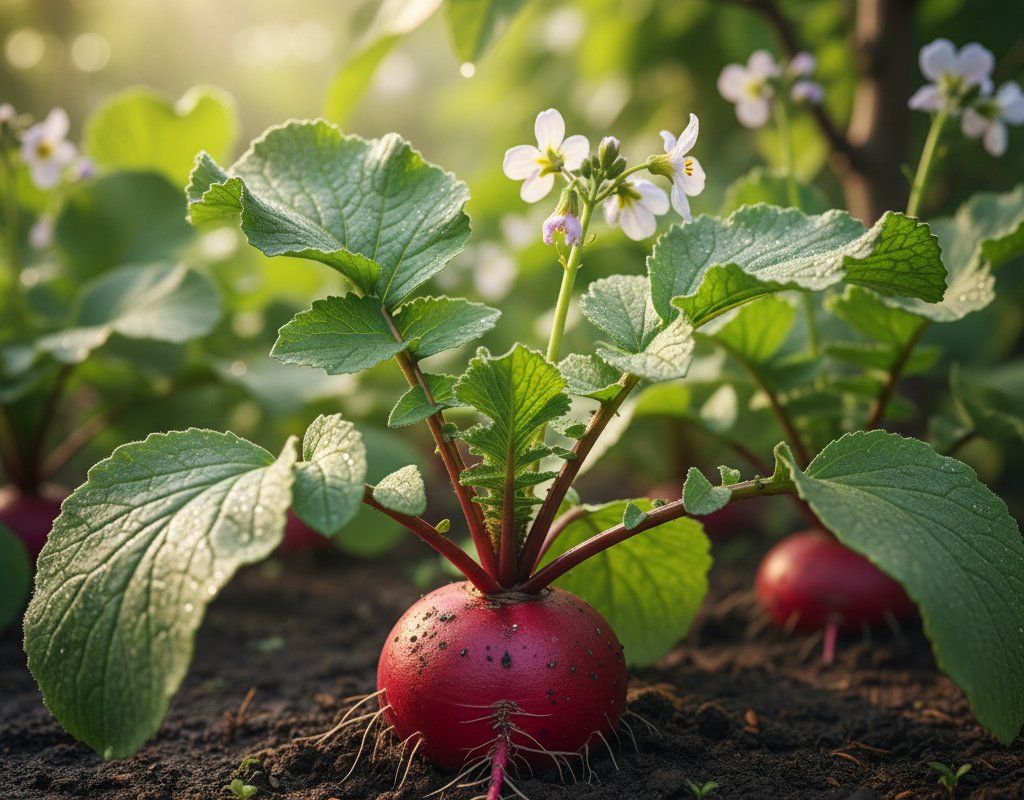
Radish in Zone 4A — Great Plains
Raphanus sativus · Your Complete 2026 Planting Guide
Planning Ahead — Great!
You’re ahead of the season. Here’s when to start.
Mark Your Calendar
How to Plant Radish in Zone 4A — Great Plains
Here are all your options for getting radish in the ground, from the easiest method to more advanced approaches.
Direct Sow Seeds
RecommendedMid April through mid August
around April 12
Consider succession planting every 2-3 weeks for continuous harvest.
Fast-growing and easy. No reason to start indoors.
Buy Starts
Works WellMid April through late May
around April 12
Plant purchased starts after last frost (May 10).
Start Seeds Indoors
ChallengingThis plant is typically not started indoors.
Transplant Outdoors
Timing InfoMid April through late May
around April 12
Can tolerate light frost, but wait for soil to be workable.
You have a nice window — no need to rush.
Fall Planting
Late July through late August
August 14 ideal · Direct sow for fall harvest
Plant a second crop in mid-summer for fall harvest. Radish actually prefers the cooling temperatures of fall.
Overview
Radishes are one of the most rewarding crops you can grow here on the Great Plains, delivering crisp, peppery crunch in just 25 days from seed to table. Our intense prairie sunshine and fertile soil create perfect conditions for these quick-growing roots, while the low disease pressure means fewer headaches compared to more humid regions. You can squeeze multiple plantings into our 138-day growing season, making them perfect for succession planting and gap-filling in your garden.
While our extreme temperature swings and variable rainfall can challenge many crops, radishes are forgiving enough to handle the Plains climate when you time them right. The key is working with our season—planting early enough to beat the worst summer heat, then again for fall harvest before our first frost arrives in late September.
Transplanting Outdoors
While radishes can be transplanted, there's honestly little reason to bother with this extra step when direct sowing works so well in our prairie soil. If you do choose to transplant—perhaps you started them indoors during a late spring cold snap—you can move them outdoors from mid-April through late May.
Give transplants a full week of hardening off, gradually increasing their outdoor exposure. Our Plains winds can shock tender seedlings, so start with just a few hours of morning sun and work up to full days. Space transplants 2-4 inches apart, with closer spacing for smaller varieties and wider spacing for larger storage types.
Watch the weather closely during transplant time, as late spring can bring sudden temperature swings and even hail. Having row covers ready helps protect young plants during those unpredictable Plains weather events that can hit without much warning.
Direct Sowing
Direct sowing is absolutely the way to go with radishes in our region—they're so fast-growing that there's no advantage to starting them indoors. You can sow from mid-April through mid-August, giving you multiple harvest windows throughout our growing season. Start your first planting as soon as the soil can be worked in spring, typically when soil temperatures reach 40°F.
Work some compost into your prairie soil if it's heavy clay, as radishes need loose soil for proper root development. Sow seeds ¼ inch deep and space them 2-4 inches apart, depending on variety. The closer spacing works fine for small spring radishes, while larger storage types need the full 4 inches. Our intense sunshine means they'll germinate quickly—often within 3-4 days in warm soil.
For succession planting, sow new rows every 2-3 weeks until mid-summer, then resume in late July for fall harvest. This timing helps you avoid the worst heat stress while maximizing your harvest window before that first frost in late September.
Watering Radish in Zone 4A (Great Plains)
Radishes need consistent moisture throughout their short 25-day growing cycle, and this is especially critical in our Plains climate where hot, dry winds can quickly stress plants. Unlike drought-tolerant crops, radishes turn pithy and fiery-hot when water-stressed—the opposite of what you want in a crisp, mild radish. Check soil moisture with the finger test, pushing down 2 inches to feel for dampness.
Provide about 1 inch of water per week, either from rainfall or irrigation, adjusting for our variable precipitation patterns. During typical Plains summer heat with temperatures reaching 93°F and low-to-moderate humidity, you'll likely need to water every 2-3 days. Water at the base of plants rather than overhead—our dry air means foliar diseases aren't usually a problem, but efficient water use matters when rainfall is unpredictable.
Watch for signs of water stress: leaves becoming dull and wilted, especially during afternoon heat. Overwatering shows up as yellowing leaves and soft, mushy roots. A thin layer of grass clippings or straw mulch helps retain moisture and keeps soil temperatures more stable during our temperature swings.
Since radishes are ready so quickly, maintaining consistent moisture is a short-term commitment that pays off with sweet, crisp roots. Don't let up on watering as harvest approaches—those final two weeks are when roots size up most rapidly.
🧪Fertilizing Radish
Feeding Schedule
Organic Fertilizer Options
Harvest Time
Your first spring radishes will be ready for harvest in early May, just 25 days after sowing in mid-April. Look for the shoulders of the radish pushing above the soil surface—this is your cue that they're sizing up. For spring varieties, pull them when they reach about 1 inch in diameter; larger types can go up to 2 inches before becoming woody.
Don't leave radishes in the ground too long, especially as our Plains heat intensifies through summer. They'll quickly become pithy and overly pungent once mature. Harvest in the cool morning hours when possible, as afternoon heat can make them temporarily soft and less crisp. Pull the entire plant, brush off soil, and trim the greens if desired—those are edible too and add peppery bite to salads.
For succession plantings, you'll have harvest opportunities from early May through early October with proper timing. Late summer and fall radishes often have the best flavor, as cool nights and warm days create ideal growing conditions. Keep harvesting regularly to make room for new plantings.
As first frost approaches in late September, harvest all remaining radishes regardless of size. Unlike some root crops, radishes don't improve with cold weather and won't store well in the ground through Plains winters. Pull everything and enjoy the last of the season's crisp harvest.
Common Problems in Zone 4A (Great Plains)
Flea Beetles Small, round holes appearing in leaves like someone shot them with tiny pellets is the classic sign of flea beetles. You'll see small, dark beetles that jump like fleas when you disturb the plants, and they're most destructive to young seedlings. Our windy Plains conditions can actually help spread these pests from plant to plant, making early protection crucial.
These tiny jumping beetles love brassicas and are most damaging when plants are small and vulnerable. Row covers work excellently during the first few weeks after emergence—just remove them once plants are established since radishes don't need pollination. You can also delay planting until later in spring when beetles are less active, or try interplanting with basil which seems to deter them naturally.
Root Maggots If your radish roots have tunnels and are riddled with small white maggots, you're dealing with root maggot flies. Plants may look stunted or yellowish above ground while the roots are being destroyed below. This problem tends to be worse in cool, moist springs—exactly the conditions we often get here in the Plains during late April and May.
The adult flies lay eggs at the base of plants, and the larvae tunnel into developing roots. Prevention is key: row covers during early growth prevent adults from laying eggs. Avoid planting in areas where you've had problems before, and don't use fresh manure which can attract the flies.
Pithy Roots When radishes become spongy, dry, and woody instead of crisp and juicy, they've gone pithy. This is often the result of stress from heat, drought, or simply leaving them in the ground too long. Our Plains heat can accelerate this problem, especially during sudden temperature spikes that push plants into survival mode rather than quality root development.
Consistent watering and timely harvest prevent most pithy root issues. Don't let radishes sit in the ground once mature—they deteriorate quickly in hot weather. Choose heat-tolerant varieties for summer plantings, and consider skipping mid-summer sowings during the hottest weeks of July and August.
Great Plains Specific Challenges: Our combination of intense heat, variable rainfall, and drying winds creates unique stress conditions for radishes. The key is maintaining consistent soil moisture despite unpredictable weather, using wind protection for young plants, and timing plantings to avoid the most extreme temperature periods while maximizing our excellent growing conditions in spring and fall.
Best Companions for Radish
Plant these nearby for healthier Radish and better harvests.


Keep Away From
Companion Planting Details
Radishes make excellent companions for slower-growing crops in Plains gardens, where maximizing space efficiency matters in our relatively short growing season. Plant them alongside carrots—the radishes will be harvested long before carrots need the space, and they help break up soil for the carrot roots. Lettuce and peas also work well, as all three prefer cooler weather and can share space during spring and fall growing windows.
Cucumbers benefit from radish companions because radishes may help deter cucumber beetles, while the quick harvest means they're out of the way before cucumber vines need to spread. Avoid planting radishes near hyssop, which can inhibit their growth and affect flavor development—not ideal when you're trying to grow the crispest, mildest radishes possible in our challenging Plains climate.
🌸Best Flowers to Plant with Radish
These flowers protect your Radish from pests and attract pollinators for better harvests.



Get a Reminder When It's Time to Plant
We'll email you when key planting windows open for your zone.