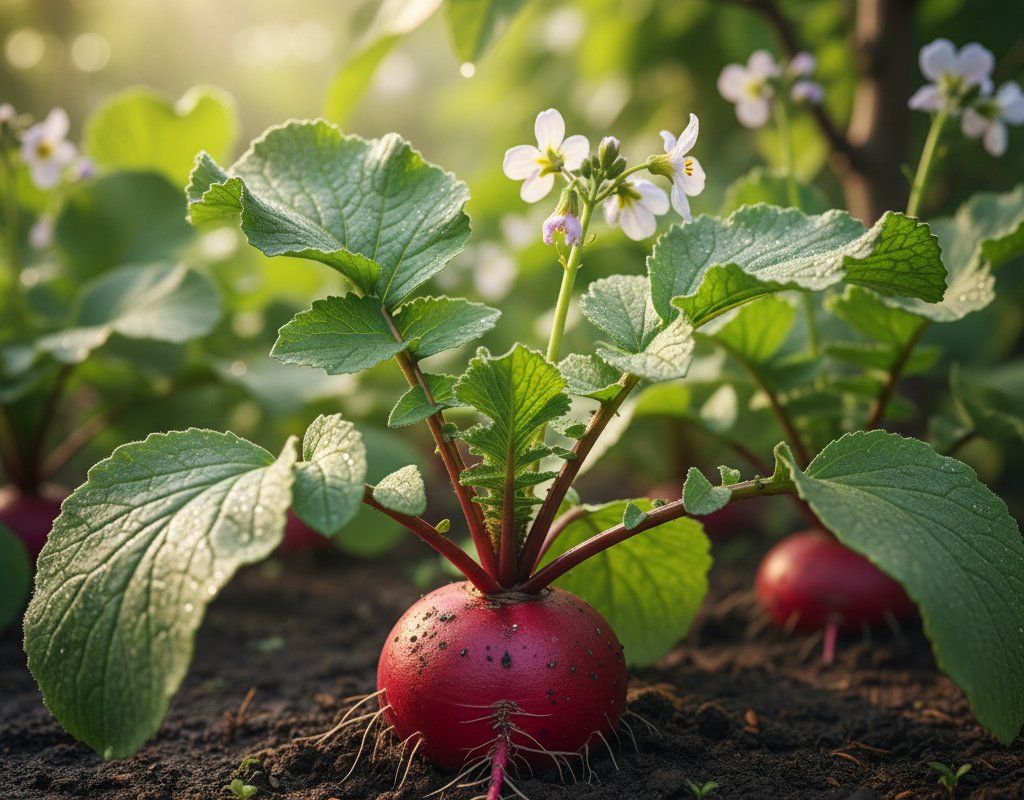
Radish in Zone 5B — Northeast
Raphanus sativus · Your Complete 2026 Planting Guide
Planning Ahead — Great!
You’re ahead of the season. Here’s when to start.
Mark Your Calendar
How to Plant Radish in Zone 5B — Northeast
Here are all your options for getting radish in the ground, from the easiest method to more advanced approaches.
Direct Sow Seeds
RecommendedLate March through early September
around March 28
Consider succession planting every 2-3 weeks for continuous harvest.
Fast-growing and easy. No reason to start indoors.
Buy Starts
Works WellLate March through early May
around March 28
Plant purchased starts after last frost (April 25).
Start Seeds Indoors
ChallengingThis plant is typically not started indoors.
Transplant Outdoors
Timing InfoLate March through early May
around March 28
Can tolerate light frost, but wait for soil to be workable.
You have a nice window — no need to rush.
Fall Planting
Mid August through mid September
August 29 ideal · Direct sow for fall harvest
Plant a second crop in mid-summer for fall harvest. Radish actually prefers the cooling temperatures of fall.
Overview
Radishes are the ultimate Northeast spring crop – they thrive in our cool nights and moderate summers, delivering crisp, peppery roots in just 25 days. While other regions struggle with heat-stressed, pithy radishes, our Zone 5B climate produces consistently tender, mild roots with that perfect snap. You can plant them early when the soil barely thaws, then keep succession planting through summer for continuous harvests until fall frost.
With our 168-day growing season, radishes fit perfectly into those transition periods when warm-season crops aren't ready and cool-season crops need company. Our late spring frosts and early October freeze dates might seem limiting, but radishes actually love this climate – they'll handle a light frost and give you multiple harvests between our bookend cold snaps.
Transplanting Outdoors
While radishes can be transplanted, most Northeast gardeners skip this step entirely. If you do start them indoors (perhaps to get a jump on the season), you can transplant them outdoors from late March through early May. Give seedlings a full week of hardening off, gradually increasing their outdoor time – our spring temperature swings can shock tender transplants.
Space transplants 2-4 inches apart in well-draining soil. The main challenge with transplanting radishes in our region is timing around those late April cold snaps that can still hit even hardened-off plants. Row covers offer good insurance during that tricky transition period.
Really though, radishes grow so quickly from seed that transplanting adds unnecessary steps. Direct sowing is far more practical for our Northeast conditions.
Direct Sowing
Direct sowing is absolutely the way to go with radishes in our climate. You can start sowing from late March through early September, making them one of our most flexible crops. As soon as your soil can be worked in spring (even if it's still quite cool), scatter those seeds – radishes actually prefer the cool conditions.
Prepare your planting area by loosening that rocky New England soil and mixing in some compost if you have it. Radish seeds don't need warm soil like tomatoes do – they'll germinate happily in 45°F soil. Sow seeds ¼ to ½ inch deep, spacing them 2-4 inches apart. The beauty of radishes is their speed – you'll see sprouts within a week and harvest-ready roots in just over three weeks.
For continuous harvests, plant a new row every two weeks through summer. Stop your final plantings by mid-August to ensure they mature before our first frost in early October.
Watering Radish in Zone 5B (Northeast)
Radishes need consistent moisture to develop those crisp, mild roots we're after – drought stress turns them woody and fiery hot. In our moderate Northeast climate with typically even rainfall, you'll need to supplement natural precipitation during dry spells, especially in July and August when afternoon temperatures reach the low 80s.
Check soil moisture using the finger test – stick your finger 2 inches down, and if it's dry, it's time to water. Aim for about an inch of water per week, including rainfall. Our moderate-to-humid summers mean you won't need the intensive watering schedules required in drier regions, but don't let that 40-50 inches of annual rainfall fool you into neglecting irrigation during dry stretches.
Water at the base of plants rather than overhead – our humidity levels can encourage fungal issues on wet foliage. A soaker hose or careful hand watering works well. Signs of underwatering include small, pithy roots and excessive heat in the flavor. Overwatering shows up as splitting roots and soft, mushy texture.
A light mulch of grass clippings helps retain moisture without creating the overly damp conditions that slug populations love in our climate. Since radishes mature so quickly, consistent watering for just 3-4 weeks isn't a huge commitment.
🧪Fertilizing Radish
Feeding Schedule
Organic Fertilizer Options
Harvest Time
Your first spring radishes will be ready from late April through early May, just 25 days after that late March sowing. You'll know they're ready when the shoulders start pushing above the soil surface – this is your visual cue that the root has reached good size below ground.
Pull radishes when they reach about 1 inch in diameter for spring varieties. Don't wait too long thinking they'll get better – radishes past their prime become woody and unpleasantly hot, even in our moderate climate. The window between perfect and overripe is surprisingly narrow, maybe just a week.
Harvest by grasping the greens close to the soil and pulling straight up. If your rocky soil makes pulling difficult, loosen the area first with a hand fork. The entire plant comes up – roots, greens, and all.
As we approach first frost in early October, harvest any remaining radishes promptly. Unlike root vegetables such as carrots that can handle a freeze, radishes become mushy and inedible after frost damage. Your succession plantings should give you fresh radishes right up until that first hard freeze hits.
Common Problems in Zone 5B (Northeast)
Flea Beetles These show up as tiny round holes scattered across radish leaves, creating a distinctive shot-hole pattern. You'll see small dark beetles (about 1/8 inch) that jump like fleas when disturbed – they're most destructive to young seedlings when leaves are tender.
Small jumping beetles feed on brassica family plants, and they're particularly problematic during our cool, damp springs when seedlings emerge slowly. The beetles overwinter in garden debris and emerge just as your early radish plantings are most vulnerable.
Row covers during the first 2-3 weeks protect seedlings during their most vulnerable stage. You can also delay planting until late April when plants establish more quickly in warmer soil. Kaolin clay coating makes leaves less appealing, while interplanting with basil or catnip provides natural deterrent.
Root Maggots You'll discover these when you pull radishes and find small white maggots tunneling through the roots, making them inedible. Above ground, plants may look stunted or wilted despite adequate water.
The cabbage root maggot fly lays eggs at the base of brassica plants during our cool spring weather – exactly when radishes are getting established. The larvae tunnel into developing roots, causing the damage you see at harvest.
Yellow sticky traps near plantings catch adult flies. Row covers prevent egg-laying if applied immediately after seeding. Delay plantings until late May to avoid peak fly activity, though this means giving up that early spring crop we love.
Pithy Roots Radishes develop tough, fibrous centers with little flavor – they're essentially inedible despite looking fine on the outside. This happens more frequently during hot spells, even our moderate summer heat.
Inconsistent watering stresses the plants, causing rapid, uneven growth. Hot weather (even our mild 82°F days) combined with irregular moisture creates the perfect conditions for pithy development.
Maintain consistent soil moisture throughout the 25-day growing period. Plant in partial shade during summer months, and choose heat-tolerant varieties for mid-summer sowings. Our cool nights help, but consistent care during the day makes the difference.
Northeast Specific Challenges Our moderate heat and moderate-to-humid conditions actually favor radishes compared to hotter regions, but our rocky soil can cause root deformation. Work in compost annually and consider raised beds for the best root development. The even rainfall pattern means less irrigation stress, though summer dry spells still require attention.
Best Companions for Radish
Plant these nearby for healthier Radish and better harvests.


Keep Away From
Companion Planting Details
Radishes make excellent companions for carrots in our Northeast gardens – they germinate quickly and break up soil for the slower-emerging carrots while marking the rows. Plant them with lettuce and peas for efficient space use during our cool spring season, as all three crops prefer similar conditions and timing. The radishes will be harvested just as lettuce and peas need more room to mature.
Cucumbers benefit from radish companions because radishes are said to deter cucumber beetles, though they'll be long harvested before cucumber season peaks in our short summers. Avoid planting radishes near hyssop, which can stunt their growth and affect flavor development – not something you want when working with our limited growing season.
🌸Best Flowers to Plant with Radish
These flowers protect your Radish from pests and attract pollinators for better harvests.


Get a Reminder When It's Time to Plant
We'll email you when key planting windows open for your zone.