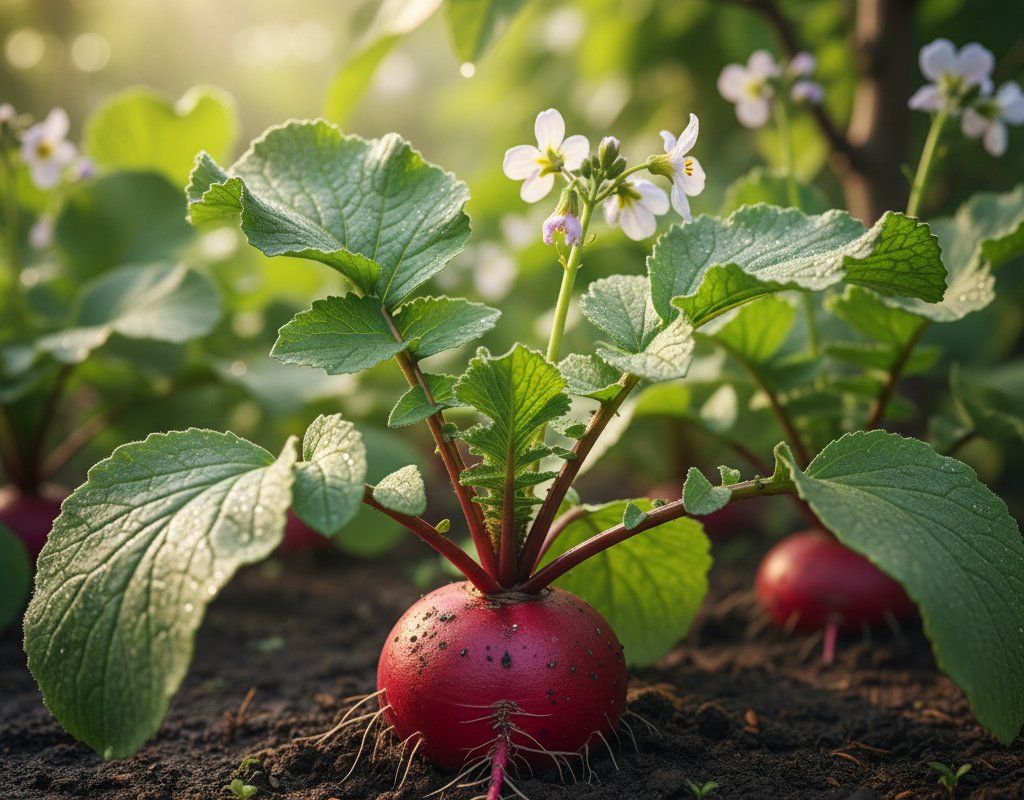
Radish in Zone 9A — Southern California
Raphanus sativus · Your Complete 2026 Planting Guide
Harvest Time!
Your Radish should be producing now!
Harvest Tips
Check size by brushing soil away from crown. Pull when ready.
How to Plant Radish in Zone 9A — Southern California
Here are all your options for getting radish in the ground, from the easiest method to more advanced approaches.
Direct Sow Seeds
RecommendedEarly January through mid November
around January 4
Consider succession planting every 2-3 weeks for continuous harvest.
Fast-growing and easy. No reason to start indoors.
Buy Starts
Works WellEarly January through mid February
around January 4
Plant purchased starts after last frost (February 1).
Start Seeds Indoors
ChallengingThis plant is typically not started indoors.
Transplant Outdoors
Timing InfoEarly January through mid February
around January 4
Can tolerate light frost, but wait for soil to be workable.
You have a nice window — no need to rush.
Fall Planting
Late October through late November
November 8 ideal · Direct sow for fall harvest
Plant a second crop in mid-summer for fall harvest. Radish actually prefers the cooling temperatures of fall.
Overview
Radishes are the perfect crop for Southern California's 322-day growing season, delivering crisp, peppery roots in just 25 days from seed to harvest. Our mild winters and year-round growing weather mean you can enjoy fresh radishes from your garden almost continuously, making multiple sowings from early January through mid-November for non-stop harvests.
While our hot, dry summers and occasional Santa Ana winds can stress these cool-season crops, strategic timing lets you work around the heat. The key is understanding when to plant for the sweetest, most tender radishes that take advantage of our region's cooler months and spring weather.
Transplanting Outdoors
Radishes can be transplanted outdoors from early January through mid-February, though this isn't the preferred method since they're so quick from seed. If you do choose to transplant, start seeds indoors about 2-3 weeks before your planned transplant date.
Harden off seedlings gradually over a week, starting with just 2-3 hours of morning sun and building up to full outdoor exposure. This early transplant window in Southern California typically offers mild, stable weather perfect for getting young radishes established.
Space transplants 2-4 inches apart in well-draining soil. Watch for unexpected warm spells during this period that can stress newly transplanted seedlings - provide afternoon shade if temperatures spike above 80°F.
Direct Sowing
Direct sowing is definitely the way to go with radishes in Southern California - they're fast-growing and don't appreciate root disturbance. You can sow seeds from early January through mid-November, though you'll get the best results during our cooler months from fall through spring.
Prepare your soil by working in compost and ensuring good drainage. Radish seeds germinate quickly in soil temperatures as low as 40°F, making them perfect for our mild winter weather. Sow seeds ½ inch deep and 2-4 inches apart, or broadcast thinly and thin later.
The beauty of our long growing season means you can make successive sowings every 2-3 weeks for continuous harvests. Skip plantings during the hottest part of summer (July through early September) unless you're in a coastal area with cooling marine influence.
Watering Radish in Zone 9A (Southern California)
Radishes need consistent, even moisture throughout their short 25-30 day growing cycle - this is crucial in Southern California's dry climate. Inconsistent watering in our low-humidity conditions will give you woody, pithy roots that are unpleasantly hot and bitter instead of crisp and mildly peppery.
During our winter growing season (November through February), natural rainfall often provides adequate moisture, but check soil regularly since we typically get only 10-20 inches annually. Use the finger test - soil should feel moist 2 inches down. In spring and fall, you'll need to water more frequently as temperatures rise and our dry air pulls moisture from the soil quickly.
Provide about 1 inch of water per week, watering at soil level rather than overhead. Our low-to-moderate humidity means leaves dry quickly, reducing disease risk, but ground-level watering is still more efficient in our drought-prone region. During hot spells, daily light watering may be needed to prevent stress.
Apply a thin layer of mulch around plants to conserve moisture and keep soil temperatures stable during temperature swings. Watch for signs of stress: wilting during the day indicates underwatering, while yellowing leaves often signal overwatering in our well-draining soils.
🧪Fertilizing Radish
Feeding Schedule
Organic Fertilizer Options
Harvest Time
Your first radishes will be ready for harvest from late January through late December, depending on your planting timing. Most varieties mature in 25 days, with some ready in as little as 20 days during optimal spring growing conditions in Southern California.
Look for radish shoulders pushing up above the soil surface - this is your visual cue that they're sizing up. Pull a test radish when it reaches about 1 inch in diameter for spring types. The roots should feel firm and crisp when you harvest them in the cool morning hours.
Don't leave radishes in the ground too long, especially during warmer weather. Our intense sun and heat can quickly turn sweet, crisp radishes woody and overly pungent. Once they reach maturity, harvest within a week for best quality.
Since radishes don't store well in the garden and our first frost doesn't typically arrive until mid-December, you have flexibility with fall plantings. Plan your last sowing about 30 days before you expect the first frost to ensure full maturity before winter weather arrives.
Common Problems in Zone 9A (Southern California)
Flea Beetles Tiny round holes appearing like a shot-hole pattern in your radish leaves indicate flea beetles - small, dark, jumping insects that target brassicas. You'll see the worst damage on young seedlings, especially during warm, dry spells that are common in Southern California's spring weather.
These beetles thrive in our Mediterranean climate and can quickly devastate young plants. Cover seedlings with row covers during their vulnerable first few weeks, or wait to plant until the weather cools slightly in fall. Kaolin clay spray provides a physical barrier, while interplanting with basil or catnip helps repel them naturally.
Root Maggots Stunted growth and wilting plants may indicate root maggot damage - small white larvae that tunnel through radish roots, leaving brown, rotting channels. This problem often worsens during our mild, moist winter months when adult flies lay eggs in the soil.
Poor drainage exacerbates root maggot issues in Southern California's clay soils. Improve soil drainage with compost and avoid overwatering. Row covers during the vulnerable seedling stage prevent adult flies from laying eggs near your plants.
Pithy Roots Hot, dry conditions cause radishes to become pithy - spongy and bitter instead of crisp and mild. This is especially common during Southern California's heat waves and Santa Ana wind events that can quickly stress plants and accelerate root development.
Consistent watering is critical to prevent this problem in our arid climate. Plant during cooler months, provide afternoon shade during heat spells, and harvest promptly once roots reach maturity. Quick succession planting works better than trying to extend harvest from stressed plants.
Southern California Specific Challenges Our hot summers, low-to-moderate humidity, and limited winter rainfall create unique challenges for radishes. The combination of intense heat and dry air can quickly stress these moisture-loving crops, while our long, dry summers limit the best growing windows to fall through spring. Water restrictions may also limit your ability to provide the consistent moisture radishes need, making efficient watering techniques and mulching essential for success.
Best Companions for Radish
Plant these nearby for healthier Radish and better harvests.


Keep Away From
Companion Planting Details
Radishes make excellent companions for carrots in Southern California gardens - they break up compacted soil with their quick taproot growth, making it easier for slower-germinating carrots to establish. Plant lettuce nearby to take advantage of the light shade radishes provide during our intense spring sun, and both crops appreciate similar cool-season growing conditions.
Peas work well as radish companions since their nitrogen-fixing ability improves soil for the following crop rotation, while cucumbers can follow radishes in the same bed as weather warms. Avoid planting radishes near hyssop, which can inhibit their growth and reduce the crisp texture that makes homegrown radishes so worthwhile in our dry climate.
🌸Best Flowers to Plant with Radish
These flowers protect your Radish from pests and attract pollinators for better harvests.



Get a Reminder When It's Time to Plant
We'll email you when key planting windows open for your zone.