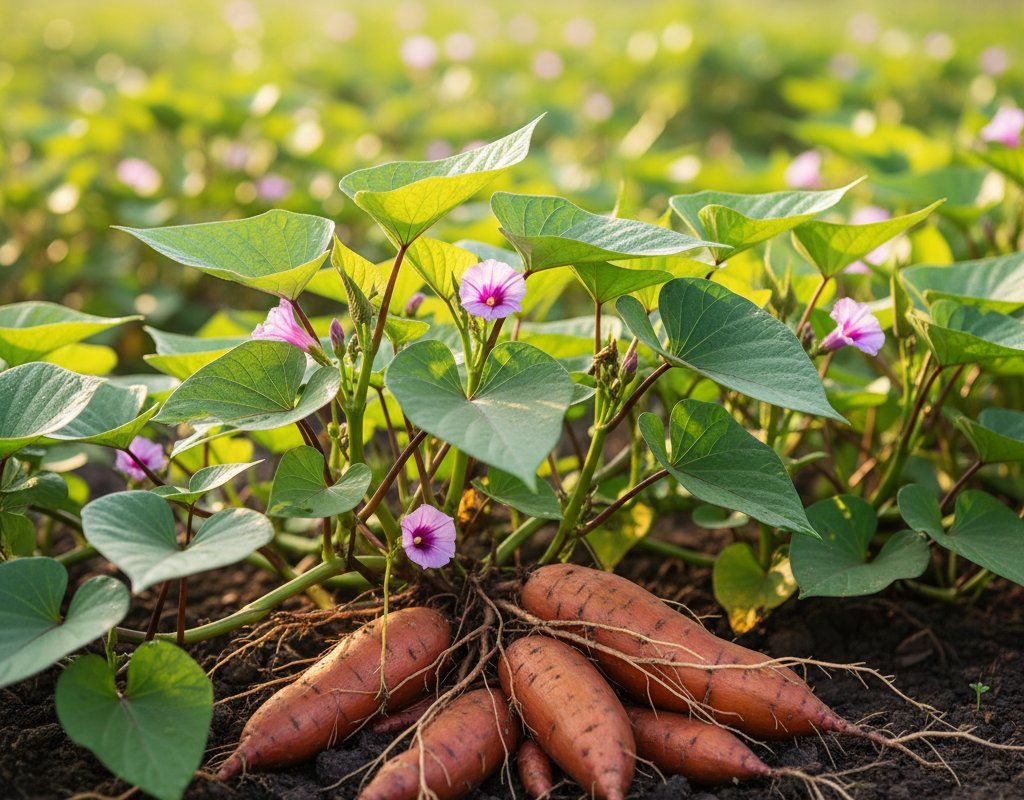
Sweet Potato in Zone 5B — Mid-Atlantic
Ipomoea batatas · Your Complete 2026 Planting Guide
Planning Ahead — Great!
You’re ahead of the season. Here’s when to start.
Mark Your Calendar
How to Plant Sweet Potato in Zone 5B — Mid-Atlantic
Here are all your options for getting sweet potato in the ground, from the easiest method to more advanced approaches.
Buy Starts
RecommendedMid May through early June
around May 11
Plant purchased starts after last frost (April 20).
Plant slips (rooted sprouts) after soil is warm. Buy slips or grow your own from a sweet potato.
Start Seeds Indoors
Works WellEarly to late March
around March 16
Then transplant: Mid May through early June
Start seeds 8-10 weeks before transplanting outdoors.
Direct Sow Seeds
ChallengingDirect sowing is not typical for Sweet Potato.
Transplant Outdoors
Timing InfoMid May through early June
around May 11
Wait until nighttime temperatures stay above 50°F.
Plan to transplant within a few weeks of your target date.
Overview
Sweet potatoes thrive in our Mid-Atlantic Zone 5B climate, producing nutritious, storage-friendly tubers that taste far better than anything you'll find in stores. With our reliable 40-50 inches of annual rainfall and long 178-day growing season, you have excellent conditions for these heat-loving vines to develop full-sized tubers. The humid summers that challenge some crops actually work in sweet potatoes' favor, providing the moisture they need during their peak growing months.
While sweet potatoes need warm soil and frost-free conditions, our moderate spring startup gives you time to prepare slips properly, and the consistent summer heat ensures good tuber development. Yes, you'll need to start with slips rather than direct seeding, and timing matters with our mid-October first frost, but the 100-day growing window fits well within our season.
Starting Seeds Indoors
Starting sweet potatoes from seed isn't the typical approach for most Mid-Atlantic gardeners, though it's possible if you want to try specific varieties not available as slips. You'd need to start seeds in early to late March, about 8 weeks before your mid-May transplant window. The challenge is that sweet potato seeds need consistent warmth (75-80°F) and take 2-3 weeks just to germinate.
If you do start from seed, use seed-starting trays with a heat mat and provide 12-14 hours of grow light daily. Bottom watering works best to prevent fungal issues in the humid conditions these seeds prefer. However, most successful Mid-Atlantic sweet potato growers either buy slips in late spring or grow their own slips from stored sweet potatoes.
The reality is that purchasing slips or creating your own from a sweet potato gives you a much better head start, especially with our moderate spring character that can include unexpected cool snaps.
Transplanting Outdoors
Transplant sweet potato slips outdoors from mid-May through early June, after soil temperatures reach 65°F consistently and nighttime lows stay above 55°F. In our Mid-Atlantic climate, this timing usually coincides with when you're confident the risk of late frost has passed. You have about a 3-week window to get slips in the ground while still allowing the full 100 days before our typical mid-October first frost.
Harden off slips gradually over 5-7 days, starting with 2-3 hours of morning sun and working up to full-day exposure. This is especially important in our region where spring weather can swing between cool and surprisingly warm. Space slips 12-18 inches apart in rows, planting them deeper than you might expect – bury about two-thirds of the stem, leaving just the top leaves exposed.
Plant in well-draining soil since sweet potatoes hate wet feet, which can be a challenge in our clay soil areas. If you're dealing with heavy clay, consider raised rows or beds to improve drainage, especially important given our even rainfall throughout the growing season.
Watering Sweet Potato in Zone 5B (Mid-Atlantic)
Sweet potatoes need moderate, consistent watering once established, but they're actually more drought-tolerant than many gardeners realize. In our Mid-Atlantic climate with its reliable 40-50 inches of annual rainfall, you'll often find that natural precipitation handles much of the watering, especially during our humid summers. During establishment (first 3-4 weeks), provide about 1 inch of water weekly if rainfall doesn't cover it.
Use the finger test – stick your finger 2 inches into the soil, and water when it feels dry at that depth. Water at the base of plants rather than overhead, since our humid conditions can promote fungal issues if foliage stays wet too long. Our typical summer highs around 88°F combined with humidity mean the soil doesn't dry out as quickly as in drier climates.
Here's the key timing for our region: during July and August when tubers are actively forming, maintain steady moisture with about 1-1.5 inches per week (including rain). But reduce watering significantly during the final 3-4 weeks before harvest in late September. This prevents the tubers from becoming too watery and improves storage quality.
Mulch around plants with straw or shredded leaves to maintain even moisture levels, which is especially helpful in our variable late summer weather. Signs of underwatering include wilting vines during the heat of the day that don't recover by evening. Overwatering shows up as yellowing leaves and poor tuber development – remember, these plants prefer slightly dry conditions over soggy soil.
🧪Fertilizing Sweet Potato
Feeding Schedule
Organic Fertilizer Options
Harvest Time
Your first sweet potatoes will be ready from mid-August through late September, typically 100 days after transplanting. Unlike regular potatoes, you can't tell ripeness by looking at the vines – sweet potatoes are ready when they've had their full growing time and before our first frost threatens in mid-October. The tubers will have reached good size by late summer, and you'll want to harvest them while soil temperatures are still warm.
Harvest sweet potatoes carefully by digging with a garden fork, starting about 18 inches from the base of the plant to avoid stabbing the tubers. Work your way closer, loosening soil gently. The skins are tender when freshly dug, so handle them like eggs. Brush off soil but don't wash them – wet sweet potatoes are prone to rot during curing.
Time your harvest for a dry day when soil isn't muddy, which can be tricky in our region's even rainfall pattern. If an early frost threatens before your 100 days are up, harvest immediately – even slightly immature sweet potatoes will store better than frost-damaged ones.
After digging, cure your sweet potatoes in a warm (80-85°F), humid place for 1-2 weeks. A basement room with a humidifier works well in our Mid-Atlantic climate. This curing process converts starches to sugars and toughens the skin for long-term storage. Properly cured sweet potatoes will keep for months in cool (55-60°F) storage.
Common Problems in Zone 5B (Mid-Atlantic)
Sweet potato weevils appear as small, dark beetles on vines and create tunnels in tubers, making them inedible. You'll see small holes in sweet potatoes and dark, winding channels inside when you cut them open. These pests overwinter in stored tubers and plant debris, becoming more problematic in our humid Mid-Atlantic summers where they thrive. Prevent weevils by using certified clean slips, rotating crops annually, and cleaning up all plant debris after harvest. If you spot damage, destroy affected tubers immediately and don't save any for next year's slips.
Wireworms are the larvae of click beetles – small, yellow-brown, segmented worms that bore neat holes into developing tubers. You'll find smooth, round holes about pencil-width in your sweet potatoes, sometimes with the worm still inside. Our clay soils can harbor these pests, especially in areas that were previously in grass or weedy. Reduce wireworm problems by avoiding planting where sod was recently turned over, and consider beneficial nematodes applied to soil before planting.
Cracking shows up as splits in the sweet potato skin, either as circles around the tuber or lines radiating from one end. While not as common in sweet potatoes as tomatoes, it still occurs when heavy watering or rain follows a dry spell, causing the tuber to absorb water faster than the skin can expand. In our region's variable late summer weather, this often happens after dry periods followed by heavy rainfall. Prevent cracking by maintaining consistent soil moisture through mulching and regular watering rather than letting plants get stressed and then soaking them.
Mid-Atlantic Specific Challenges: Our humid summers create ideal conditions for fungal diseases, so avoid overhead watering and ensure good air circulation. Japanese beetles may feed on sweet potato foliage but rarely cause serious damage. Deer will browse young plants, so protection may be necessary in rural areas. The combination of our clay soil and even rainfall means drainage is crucial – sweet potatoes that sit in wet soil will develop root rot quickly.
Best Companions for Sweet Potato
Plant these nearby for healthier Sweet Potato and better harvests.


Keep Away From
Companion Planting Details
Sweet potatoes work well with the traditional "three sisters" combination – plant them alongside beans and corn for a productive Mid-Atlantic garden bed. The beans fix nitrogen that benefits both the sweet potatoes and corn, while the sprawling sweet potato vines help suppress weeds around the corn stalks. This combination makes excellent use of space since sweet potatoes spread horizontally while corn grows vertically.
Bush beans are particularly good companions because they don't compete for the same soil nutrients and actually improve soil fertility. Avoid planting sweet potatoes near other sprawling crops like winter squash or pumpkins, as they'll compete for space and create a tangled mess that makes harvest difficult. The vigorous vines of sweet potatoes can also serve as a living mulch, helping retain moisture in our sometimes-dry late summer periods while their broad leaves shade out competing weeds.
🌸Best Flowers to Plant with Sweet Potato
These flowers protect your Sweet Potato from pests and attract pollinators for better harvests.
For Pest Control




Get a Reminder When It's Time to Plant
We'll email you when key planting windows open for your zone.