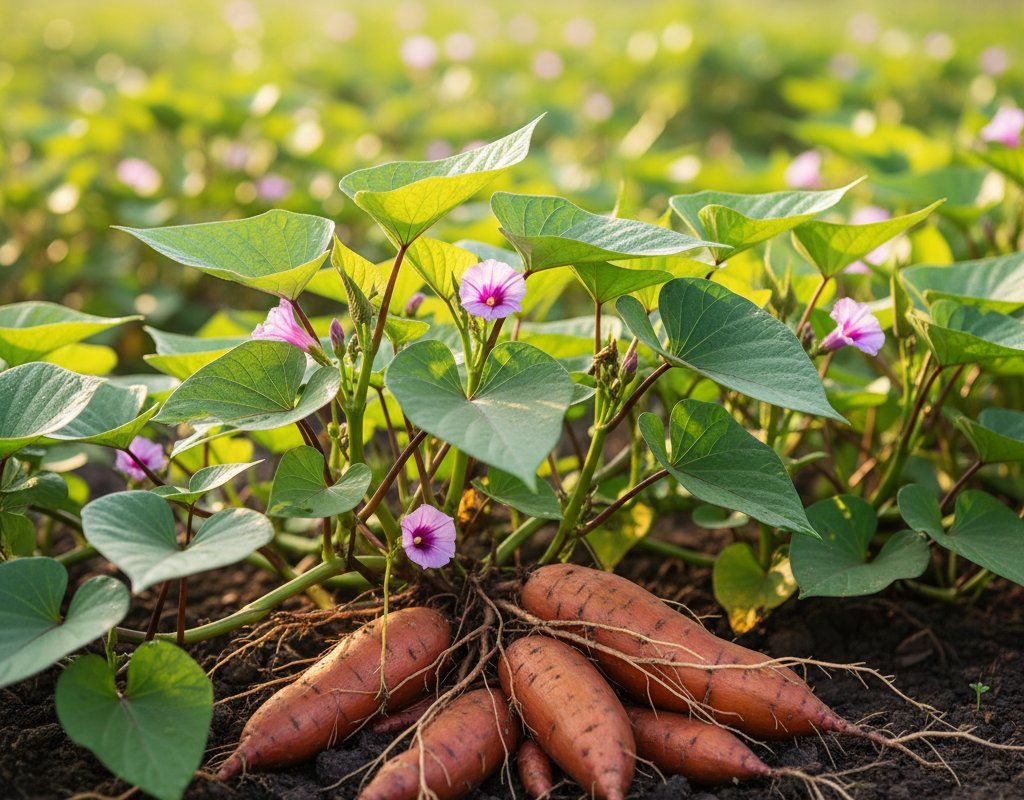
Sweet Potato in Zone 8B — Desert Southwest
Ipomoea batatas · Your Complete 2026 Planting Guide
Missed Seed Starting? No Problem!
Wait for starts to become available.
What to Do
Starts will be available at nurseries in 14 days (around March 18).
How to Plant Sweet Potato in Zone 8B — Desert Southwest
Here are all your options for getting sweet potato in the ground, from the easiest method to more advanced approaches.
Buy Starts
RecommendedMid March through early April
around March 18
Plant purchased starts after last frost (February 25).
Plant slips (rooted sprouts) after soil is warm. Buy slips or grow your own from a sweet potato.
Start Seeds Indoors
Works WellMid January through early February
around January 21
Then transplant: Mid March through early April
Start seeds 8-10 weeks before transplanting outdoors.
Direct Sow Seeds
ChallengingDirect sowing is not typical for Sweet Potato.
Transplant Outdoors
Timing InfoMid March through early April
around March 18
Wait until nighttime temperatures stay above 50°F.
Plan to transplant within a few weeks of your target date.
Overview
Sweet potatoes thrive in our Desert Southwest climate, making them one of the most rewarding crops you can grow in Zone 8B. These nutrient-packed tubers love our hot, dry conditions and produce impressive yields with relatively little fuss. Unlike many vegetables that struggle through our extreme heat, sweet potatoes actually benefit from our long, warm growing season and can handle the arid conditions that stress other crops.
Our 279-day growing season gives sweet potatoes plenty of time to develop those large, flavorful tubers underground. While our extreme summer heat and alkaline soils present challenges, proper timing and consistent watering make sweet potato growing quite manageable. The key is getting them established in spring before the real heat hits, then letting them cruise through summer's intensity.
Starting Seeds Indoors
Starting sweet potatoes from seed isn't the typical approach - most Desert SW gardeners work with slips (rooted sprouts) instead. However, if you're growing specialty varieties or want the full experience, you can start true potato seed indoors from mid-January through early February, about 8 weeks before transplanting.
Set up your seed trays in a warm spot (70-80°F) with good light. Sweet potato seeds need consistent warmth and moisture to germinate well. Use bottom watering to keep the soil evenly moist without waterlogging the tiny seeds.
More commonly, you'll either buy slips from nurseries in spring or create your own by placing a sweet potato in water and waiting for sprouts to develop. This slip method is more reliable and faster than starting from seed in our desert climate.
Transplanting Outdoors
Transplant your sweet potato slips outdoors from mid-March through early April, once soil temperatures consistently reach 65°F. Our spring comes early in the Desert Southwest, but wait until nighttime temperatures stay above 50°F to avoid shocking the tender plants.
Harden off slips gradually over a week by exposing them to outdoor conditions for increasing periods each day. Plant them 12-18 inches apart in well-draining soil, burying most of the stem with just the top leaves showing. This deep planting helps establish a strong root system before summer heat arrives.
Choose your planting spot carefully - while sweet potatoes love full sun, they'll appreciate some afternoon shade during our brutal summer months. Amend heavy clay or caliche with compost to improve drainage, as waterlogged roots rot quickly in our monsoon season.
Watering Sweet Potato in Zone 8B (Desert Southwest)
Sweet potatoes need moderate water once established, but they're surprisingly drought-tolerant compared to other garden vegetables. In our arid Desert Southwest climate, plan to provide about 1-1.5 inches of water per week through spring and early summer, then reduce to about an inch as tubers mature.
Water deeply but less frequently to encourage deep root growth. Use the finger test - stick your finger 2 inches into the soil near the plants. If it's dry at that depth, it's time to water. Always water at the base of plants rather than overhead, as our low humidity means less evaporation but also higher risk of fungal issues if leaves stay wet.
During our monsoon season, you might need to back off watering significantly. Sweet potatoes actually prefer slightly dry conditions as harvest approaches - reduce watering 3-4 weeks before you plan to dig them up. This helps concentrate sugars and prevents the tubers from cracking if they absorb too much water suddenly.
Apply 2-3 inches of mulch around plants to maintain consistent soil moisture and keep roots cool during extreme heat. Wood chips or shredded leaves work well in our climate, helping retain what moisture we do provide while keeping soil temperatures manageable.
🧪Fertilizing Sweet Potato
Feeding Schedule
Organic Fertilizer Options
Harvest Time
Your first sweet potatoes will be ready from late June through early August, about 100 days after transplanting. Unlike regular potatoes, sweet potatoes continue growing and sweetening until frost threatens, so there's no rush to harvest early tubers.
You'll know they're ready when the vines start yellowing or you see small cracks in the soil where large tubers are pushing up. Carefully dig around plants with a fork, starting about 18 inches from the main stem to avoid stabbing the tubers. Sweet potatoes bruise easily, so handle them gently.
Harvest all remaining tubers before our first frost, which typically arrives in early December. Brush off soil but don't wash them yet - damaged skin needs to heal first. Cure freshly dug sweet potatoes in a warm (80-85°F), humid location for 1-2 weeks. This process converts starches to sugars and helps cuts heal over.
After curing, properly stored sweet potatoes keep for months in a cool, dark place around 55-60°F. Unlike summer vegetables that need immediate use, sweet potatoes actually improve in flavor and storage life when properly cured first.
Common Problems in Zone 8B (Desert Southwest)
Sweet Potato Weevils These small, dark beetles create holes in tubers and their larvae tunnel through the flesh, leaving brown trails and a bitter taste. Adult weevils are about 1/4 inch long with a distinctive snout, while larvae are white grubs with brown heads. In our warm Desert Southwest climate, these pests can have multiple generations per year, making them particularly troublesome. Prevent infestations by rotating crops, removing all plant debris after harvest, and checking stored tubers regularly. Avoid planting sweet potatoes in the same area for at least 3 years.
Wireworms These thin, yellowish-brown larvae create small holes and tunnels in sweet potato tubers, often going unnoticed until harvest. They're especially problematic in Desert Southwest gardens where soil stays warm year-round, allowing continuous pest activity. Wireworms thrive in areas that were previously grassland or have lots of organic matter. Reduce populations by deep cultivation in late fall and early spring, and avoid planting sweet potatoes where grass grew recently. Beneficial nematodes applied to soil can help control wireworm larvae naturally.
Cracking Sweet potato tubers develop splits or cracks in their skin, either in circles around the tuber or as lines radiating from one end. These cracks expose the flesh to rot and storage problems. Cracking happens when tubers absorb water quickly after dry periods - our monsoon rains following hot, dry spells create perfect conditions for this issue. Maintain consistent soil moisture through regular deep watering and mulching. Reduce watering 3-4 weeks before harvest to minimize water uptake during tuber maturation.
Desert Southwest Specific Challenges: Our extreme summer heat can stress even heat-loving sweet potatoes if they're not well-established first. The combination of low humidity and intense sun can cause leaf scorch on young plants. Additionally, our alkaline soils can tie up nutrients, making regular soil amendments with compost essential for healthy growth. Plan for extra shade cloth protection during extreme heat waves over 110°F.
Best Companions for Sweet Potato
Plant these nearby for healthier Sweet Potato and better harvests.


Keep Away From
Companion Planting Details
Sweet potatoes pair perfectly with corn and beans in a desert version of the traditional "three sisters" planting. Corn provides natural shade for sweet potato vines during our extreme summer heat, while the vines spread as a living mulch to conserve soil moisture. Beans fix nitrogen in the soil, feeding both the corn and sweet potatoes throughout the growing season.
Plant bush beans around sweet potato hills rather than pole beans, as the aggressive sweet potato vines can overwhelm climbing structures. Avoid planting sweet potatoes near other spreading crops like winter squash, as competition for space and water becomes intense in our water-scarce environment. The combination works best when you give each crop adequate spacing to handle our hot, dry growing conditions.
🌸Best Flowers to Plant with Sweet Potato
These flowers protect your Sweet Potato from pests and attract pollinators for better harvests.
For Pest Control




Get a Reminder When It's Time to Plant
We'll email you when key planting windows open for your zone.