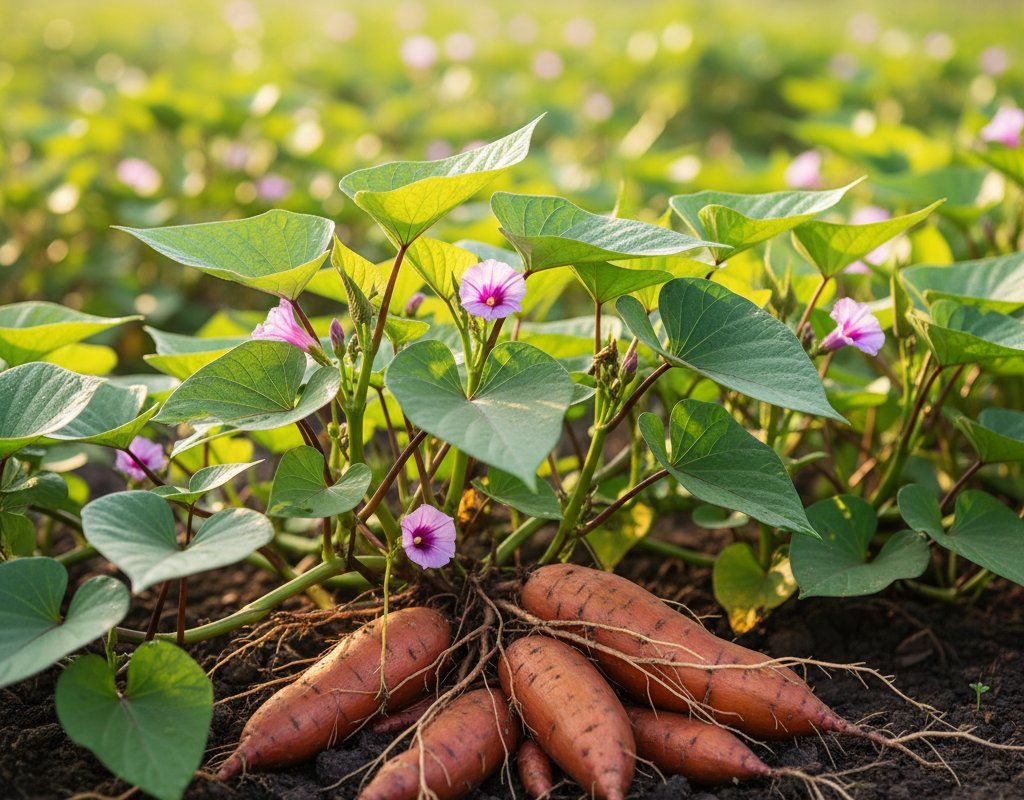
Sweet Potato in Zone 9B — Southern California
Ipomoea batatas · Your Complete 2026 Planting Guide
Time to Buy Starts!
Seed starting window passed, but starts are available now.
Buy Starts Now
Head to your local nursery, Home Depot, or farmers market for transplants.
- Look for stocky plants with dark green leaves
- Avoid leggy seedlings or plants already flowering
- Check that roots aren't circling the pot (rootbound)
How to Plant Sweet Potato in Zone 9B — Southern California
Here are all your options for getting sweet potato in the ground, from the easiest method to more advanced approaches.
Buy Starts
RecommendedMid February through early March
around February 15
Plant purchased starts after last frost (January 25).
Plant slips (rooted sprouts) after soil is warm. Buy slips or grow your own from a sweet potato.
Start Seeds Indoors
Works WellMid December through early January
around December 21
Then transplant: Mid February through early March
Start seeds 8-10 weeks before transplanting outdoors.
Direct Sow Seeds
ChallengingDirect sowing is not typical for Sweet Potato.
Transplant Outdoors
Timing InfoMid February through early March
around February 15
Wait until nighttime temperatures stay above 50°F.
Plan to transplant within a few weeks of your target date.
Overview
Sweet potatoes thrive in Southern California's warm, extended growing season, making them one of the most rewarding crops for Zone 9B gardeners. With our 334-day growing season and reliable summer heat, you can grow impressive harvests of these nutritious, versatile tubers that store beautifully through our mild winters. The natural sweetness intensifies with proper curing, and nothing beats the satisfaction of digging up your own orange treasures after months of watching those vigorous vines spread across your garden.
While our semi-arid climate and occasional water restrictions might seem challenging, sweet potatoes are actually quite drought-tolerant once established. The key is getting your timing right with our very early spring planting window and managing water wisely through the hot summer months inland.
Starting Seeds Indoors
Starting sweet potatoes from seed isn't the typical approach—most SoCal gardeners work with slips (rooted sprouts) instead. However, if you want to try growing from true seed, start them indoors from mid-December through early January, about 8 weeks before you plan to transplant outdoors.
Set up your seed trays in a warm spot since sweet potato seeds need consistent temperatures around 75-80°F to germinate well. Use bottom watering to keep the soil evenly moist without waterlogging the seeds. You'll need grow lights or a very bright south-facing window during our short winter days.
Keep in mind that seed-grown sweet potatoes won't be true to type and take much longer to produce than slips. Most local nurseries carry sweet potato slips in late winter, which is often the more practical choice for our very early spring planting season.
Transplanting Outdoors
Transplant your sweet potato slips outdoors from mid-February through early March, after soil temperatures consistently reach 60°F and our last frost window has passed. Sweet potatoes are tender and won't tolerate even light frost, so wait for stable mild weather rather than risking an early start.
Harden off your slips gradually over a week, starting with a few hours of morning sun and building up to full outdoor exposure. Space them 12-18 inches apart with plenty of room for the vines to spread—they'll need at least 3-4 feet of growing space per plant. Plant slips deep, burying about two-thirds of the stem to encourage strong root development.
Choose a sunny, well-draining spot since sweet potatoes hate wet feet, especially important during our winter-wet season. The soil should be loose and not too rich—overly fertile soil produces more leaves and fewer tubers.
Watering Sweet Potato in Zone 9B (Southern California)
Sweet potatoes need moderate, consistent water to get established, but become surprisingly drought-tolerant as they mature—perfect for our water-wise Southern California gardens. During the first month after transplanting, water deeply twice a week to help roots develop, then gradually reduce to once weekly as summer heat builds.
In our typical 92°F summer weather with low-to-moderate humidity, established sweet potato vines need about 1 inch of water per week. Use the finger test—stick your finger 2 inches into the soil, and water when it feels dry at that depth. Water at the base of plants rather than overhead to conserve water and prevent foliar diseases in our dry air.
Reduce watering significantly 3-4 weeks before harvest to concentrate the sugars and prevent the tubers from cracking. This timing works perfectly with our natural summer-to-fall transition. A 2-3 inch layer of mulch helps maintain even soil moisture during our hot, dry summers and reduces water needs.
Watch for signs of stress: wilted leaves in early morning (underwatered) or yellowing foliage with soggy soil (overwatered). Sweet potatoes prefer to be on the drier side rather than too wet, especially as harvest approaches.
🧪Fertilizing Sweet Potato
Feeding Schedule
Organic Fertilizer Options
Harvest Time
Your first sweet potatoes will be ready from late May through early July, about 100 days after transplanting. Unlike many vegetables, sweet potatoes don't give obvious visual clues when they're ready—you'll need to do a bit of detective work by carefully digging around the base of one plant to check tuber size.
Harvest becomes urgent as our first frost window approaches in late December. Sweet potato foliage is extremely frost-sensitive, and damaged vines can lead to rotting tubers underground. Plan your final harvest for early to mid-December to stay ahead of any cold snaps.
Dig carefully with a garden fork, starting about 18 inches from the base of the plant and working inward to avoid piercing the tubers. Sweet potatoes bruise easily, so handle them gently and brush off soil rather than washing immediately. Cure them in a warm (80-85°F), humid place for 1-2 weeks to develop their sweet flavor and improve storage life.
Any tubers you accidentally nick during harvest should be used first, as damaged sweet potatoes won't store well. Properly cured sweet potatoes can last 6-8 months in cool, dark storage—perfect for enjoying through our mild winter months.
Common Problems in Zone 9B (Southern California)
Sweet Potato Weevils These small, dark beetles create pinhole entry wounds in the tubers, and their grubs tunnel through the flesh, leaving dark, bitter-tasting streaks. Adult weevils are about 1/4 inch long with a distinctive snout and metallic blue-black color.
Hot, dry conditions common in inland Southern California can stress plants and make them more susceptible to weevil damage. The pests thrive in our warm climate year-round, unlike colder regions where winter kills them off.
Rotate sweet potato plantings to different areas of your garden each year, and remove all plant debris after harvest. Inspect tubers carefully during harvest and cure—destroy any showing weevil damage to prevent spreading. Some gardeners cover developing tubers with soil mounds to create a physical barrier.
Wireworms These shiny, hard-bodied larvae create small round holes in sweet potato tubers, often with dark, rotted areas around the entry points. The damage looks similar to weevil damage but the holes are typically cleaner and more perfectly round.
Wireworms are the larvae of click beetles and thrive in our Mediterranean climate, especially in areas that were previously lawn or weedy. They're particularly problematic in newly converted garden beds.
Work compost into the soil before planting to encourage beneficial predators, and avoid planting sweet potatoes in areas that were recently grass. Beneficial nematodes can help control wireworm populations, and keeping the soil evenly moist (but not waterlogged) makes it less attractive to egg-laying adults.
Cracking Sweet potato tubers split open with cracks that can expose the orange flesh to rot and pest entry. The splits usually run lengthwise along the tuber and may be shallow or deep.
Inconsistent watering causes the most cracking—common in Southern California when gardeners overwater after our tubers have gone through dry periods, or when Santa Ana winds quickly dry out the soil. The tuber absorbs water faster than the skin can expand.
Maintain consistent soil moisture throughout the growing season using mulch and regular deep watering. Reduce irrigation 3-4 weeks before planned harvest to help prevent late-season cracking. Harvest promptly when tubers reach full size rather than leaving them in the ground.
Southern California Specific Challenges Our hot, dry summers and winter-wet pattern create unique challenges for sweet potato growing. The combination of extreme heat inland and low-to-moderate humidity can stress plants and make them more susceptible to pests, while our concentrated winter rainfall followed by dry periods can lead to cracking issues. Santa Ana wind events can rapidly dry out soil and stress plants, making consistent mulching and water management especially important for success.
Best Companions for Sweet Potato
Plant these nearby for healthier Sweet Potato and better harvests.


Keep Away From
Companion Planting Details
Sweet potatoes pair beautifully with beans and corn in a modified Three Sisters planting that works well in Southern California's warm climate. Beans fix nitrogen in the soil, which sweet potatoes appreciate early in the season, while corn provides vertical structure that doesn't compete with the spreading sweet potato vines. The sweet potato vines act as living mulch, helping retain moisture during our hot, dry summers while suppressing weeds.
Avoid planting sweet potatoes near tomatoes or other nightshades, as they can compete for similar nutrients and space. The vigorous sweet potato vines can also overwhelm smaller vegetable plants, so give them plenty of room or pair them with tall, sturdy companions that won't be smothered by the spreading growth.
🌸Best Flowers to Plant with Sweet Potato
These flowers protect your Sweet Potato from pests and attract pollinators for better harvests.
For Pest Control




Get a Reminder When It's Time to Plant
We'll email you when key planting windows open for your zone.