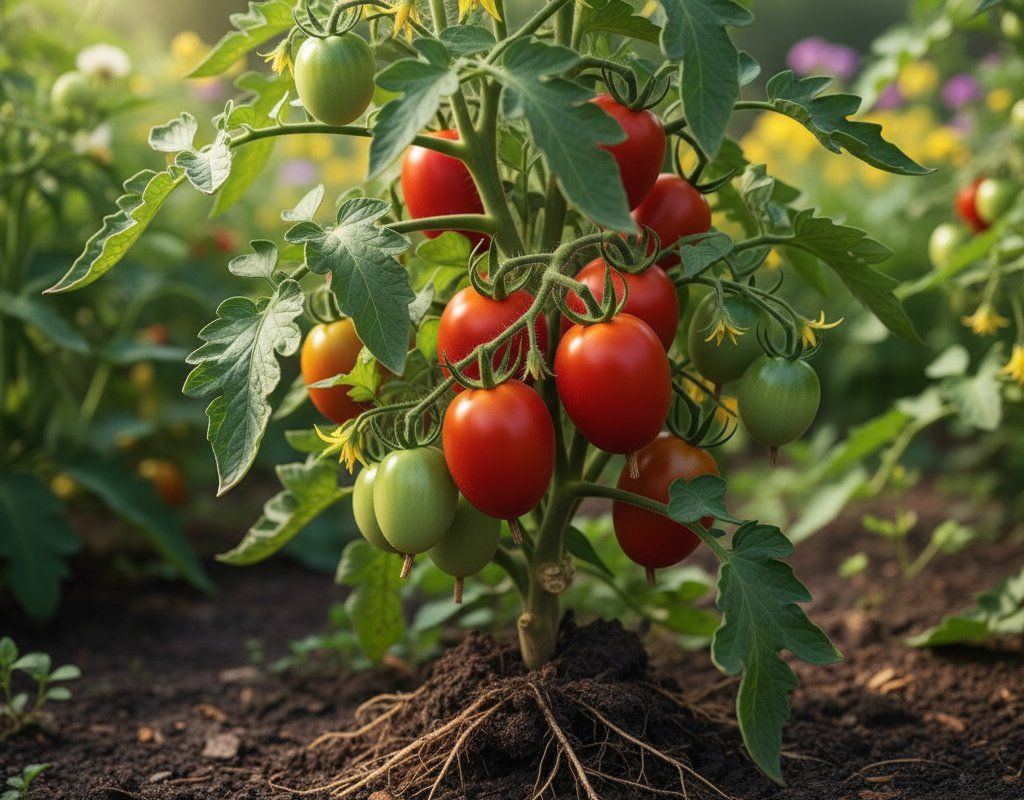
Roma Tomatoes in Zone 4B — Northeast
Solanum lycopersicum · Your Complete 2026 Planting Guide
Planning Ahead — Great!
You’re ahead of the season. Here’s when to start.
Mark Your Calendar
How to Plant Roma Tomatoes in Zone 4B — Northeast
Here are all your options for getting roma tomatoes in the ground, from the easiest method to more advanced approaches.
Start Seeds Indoors
RecommendedEarly to late April
around April 12
Then transplant: Late May through late June
Start seeds 6-8 weeks before transplanting outdoors.
Buy Starts
Works WellLate May through late June
around May 24
Plant purchased starts after last frost (May 10).
Direct Sow Seeds
ChallengingDirect sowing is not typical for Roma Tomatoes.
Transplant Outdoors
Timing InfoLate May through late June
around May 24
Wait until nighttime temperatures stay above 50°F.
You have a nice window — no need to rush.
Overview
Roma tomatoes are a paste tomato treasure for Northeast gardeners willing to make the most of our productive but brief summer. These meaty, low-moisture fruits excel in our cool nights, which intensify their rich flavor while reducing the pest pressure that plagues warmer regions. You'll appreciate having your own supply of thick-walled tomatoes perfect for sauce, paste, and canning—especially when you taste the difference from store-bought varieties that prioritize shipping over flavor.
Our Zone 4B Northeast climate presents the challenge of a short 138-day growing season with late spring warmth and early fall frosts. Roma tomatoes need 75 days to maturity, which means timing is everything. Start too early and your seedlings sit too long indoors; start too late and fall frost cuts short your harvest. With proper timing though, you'll have plenty of opportunity to grow these determinate plants that produce their full crop in a concentrated window—perfect for weekend sauce-making sessions.
Starting Seeds Indoors
Start your Roma tomato seeds indoors during early to late April, about 6 weeks before you plan to transplant outside. In our Northeast climate, spring arrives late and stays unpredictable, making indoor starting essential rather than optional. Set up your seed trays in a warm location (70-75°F) with good light—either a south-facing window or grow lights positioned 2-3 inches above the soil surface.
Plant seeds ¼ inch deep in quality seed-starting mix and keep soil consistently moist but not waterlogged. Bottom watering works particularly well for tomato seeds—place your seed trays in shallow pans of water and let the soil absorb moisture from below. This prevents surface crusting and reduces the risk of damping-off disease that can devastate seedlings in our often-humid spring conditions.
Once seedlings emerge (usually 7-10 days), move them to your brightest location and begin hardening them off gradually. Our late spring means you'll likely be managing seedlings indoors longer than gardeners in warmer zones, so don't rush the process. Strong, stocky seedlings transplant better than leggy ones stretched by insufficient light.
Transplanting Outdoors
Transplant your Roma tomato seedlings outdoors from late May through late June, after soil has warmed and all danger of frost has passed. In our Zone 4B Northeast region, this timing coincides with consistent nighttime temperatures staying above 50°F. Even a light frost will kill these tender plants, so patience pays off—it's better to transplant late than lose plants to an unexpected cold snap.
Begin hardening off your seedlings one week before transplanting by gradually exposing them to outdoor conditions. Start with 2-3 hours of filtered sunlight and build up to full day exposure over 7 days. This process helps plants adjust to our often-windy spring conditions and temperature fluctuations that can shock tender indoor-grown seedlings.
Space plants 24-36 inches apart in full sun locations that receive 6-8 hours of direct sunlight. The wider spacing works well in our moderate summer heat and helps air circulation in our moderate-to-humid conditions. Plant slightly deeper than the seedlings were growing in their pots—bury about two-thirds of the stem to encourage strong root development in our often-rocky New England soil.
Watering Roma Tomatoes in Zone 4B (Northeast)
Roma tomatoes have high water needs and won't tolerate drought, making consistent watering absolutely critical for success. Inconsistent watering concentrates blossom end rot problems in these elongated paste tomatoes, creating leathery black spots that ruin the fruit. In our Northeast climate with moderate summer heat and even rainfall distribution, you'll typically need to supplement natural precipitation during dry spells.
Provide 1-1.5 inches of water per week, including rainfall, applied deeply but less frequently rather than light daily sprinklings. Use the finger test—stick your finger 2 inches into the soil near the plant base. If it feels dry at that depth, it's time to water. Our moderate-to-humid conditions mean soil retains moisture reasonably well, but our often-rocky soil can also drain quickly in raised beds or amended areas.
Water at the base of plants rather than overhead to reduce disease pressure in our humid summer conditions. Early morning watering works best, giving plants time to dry before evening when cool temperatures and high humidity can encourage fungal problems. A soaker hose or drip irrigation system works particularly well for maintaining the consistent moisture these paste tomatoes demand.
Mulch heavily around plants with 2-3 inches of organic material like shredded leaves or straw to maintain even soil moisture and reduce watering frequency. This is especially important in our region where summer rain can be sporadic despite generally adequate annual totals. Watch for signs of overwatering (yellowing lower leaves, sluggish growth) or underwatering (wilting, blossom end rot, stunted fruit development).
Supporting Your Roma Tomatoes
Install cages or stakes at planting time to support Roma tomatoes through their productive season. These determinate plants grow to a manageable 3-4 feet tall, making them easier to support than indeterminate varieties. Shorter tomato cages (4-5 feet) work well, or use sturdy stakes with ties to support the heavy fruit load these plants produce.
Choose support systems that can handle weight—Roma plants may be compact, but they produce numerous heavy fruits that can break branches or topple unsupported plants. Wire cages with 6-inch openings allow easy harvest access, while stake-and-tie systems give you more control over plant shape and air circulation.
Train plants by gently guiding main stems through cage openings or tying to stakes with soft materials like cloth strips or tomato ties. Remove suckers (shoots growing between main stem and branches) to concentrate energy into fruit production, though determinate varieties like Roma require less pruning than indeterminate types.
🧪Fertilizing Roma Tomatoes
Feeding Schedule
Organic Fertilizer Options
Harvest Time
Expect your first Roma tomatoes from early August through late September, about 75 days after transplanting. These paste tomatoes develop in clusters and ripen fairly uniformly since Roma is a determinate variety that sets most of its fruit within a concentrated timeframe. This works well in our short Northeast growing season, giving you a substantial harvest for preservation projects.
Harvest when fruits show deep red color throughout with no green shoulders, and flesh gives slightly to gentle pressure while still feeling firm. Ripe Roma tomatoes detach easily from the stem with a gentle twist—if you have to pull hard, they need more time. The fruit should feel heavy for its size and have that characteristic tomato aroma at the stem end.
Since Roma is determinate, you'll get most of your harvest within a 2-3 week window rather than continuous production. This concentrated harvest works perfectly for sauce-making and canning projects. Pick regularly to encourage the plant to ripen remaining fruit and to prevent overripe tomatoes from attracting pests.
As first frost approaches in late September, harvest all remaining fruit regardless of ripeness. Green and partially ripe Roma tomatoes ripen well indoors when stored in a warm location (65-70°F) away from direct sunlight. Wrap individual fruits in newspaper or place in paper bags with a ripe banana to speed the ripening process—many will continue developing good flavor and color off the vine.
Common Problems in Zone 4B (Northeast)
Blossom End Rot This appears as sunken, dark brown or black leathery patches on the bottom (blossom end) of developing fruit, often affecting the first fruits of the season most severely. You'll notice it as small dark spots that enlarge and become concave as the fruit grows. This isn't a disease but a calcium deficiency caused by inconsistent watering—our Northeast spring and early summer weather patterns with alternating wet and dry spells create perfect conditions for this problem. Fix it by maintaining consistent soil moisture through regular deep watering and heavy mulching. Avoid over-fertilizing with nitrogen, which interferes with calcium uptake, and remove affected fruit to redirect plant energy.
Early Blight Brown spots with distinctive concentric rings (bullseye or target pattern) appear first on lower leaves, then spread upward as leaves yellow and drop. This fungal disease thrives in our warm, humid Northeast summer conditions and spreads when soil splashes onto lower leaves during watering or rain. Our moderate-to-humid climate provides ideal conditions for early blight development. Remove and destroy affected leaves immediately (don't compost them), mulch heavily to prevent soil splash, and water at the base rather than overhead. Improve air circulation through proper spacing and remove lower branches touching the ground. Copper fungicide can slow spread if applied early.
Fusarium Wilt Wilting typically starts on one side of the plant, with leaves yellowing and dropping from bottom up. Cut stems show brown streaking inside, and the condition spreads regardless of adequate watering. This soil-borne fungus persists for years and enters through root damage, thriving in our gradually warming summer soils. There's no cure once infected—remove and destroy the entire plant. Prevent future problems by planting resistant varieties (look for 'F' on seed labels), rotating crops on a 4-year cycle, and maintaining soil pH above 6.5 which suppresses the fungus.
Northeast Specific Challenges: Our moderate summer heat and even rainfall create excellent conditions for fungal diseases, while our short growing season means every plant counts. The combination of cool nights and moderate-to-humid days that benefits tomato flavor also favors disease development, making prevention through proper spacing, air circulation, and base watering especially important.
Best Companions for Roma Tomatoes
Plant these nearby for healthier Roma Tomatoes and better harvests.
View Full Companion Planting Chart →



Companion Planting Details
Plant basil near your Roma tomatoes—it naturally repels aphids and thrips while supposedly improving tomato flavor (though the science is debatable, the pest control benefits are real). Carrots make excellent companions since their deep taproots don't compete with tomato roots, and they help break up our often-compacted Northeast soils. Marigolds planted nearby deter nematodes and many flying pests, while parsley attracts beneficial insects that prey on tomato hornworms and other pests.
Avoid planting brassicas (cabbage, broccoli, cauliflower) near tomatoes since they're heavy nitrogen feeders that compete for nutrients, and their different watering needs don't mesh well. Skip fennel entirely—it inhibits tomato growth through allelopathic compounds in its roots. Corn attracts the same hornworms that plague tomatoes, and in our moderate Northeast climate where pest pressure builds gradually through summer, you don't want to create pest highways between related host plants.
🌸Best Flowers to Plant with Roma Tomatoes
These flowers protect your Roma Tomatoes from pests and attract pollinators for better harvests.
For Pest Control



For Pollinators

Get a Reminder When It's Time to Plant
We'll email you when key planting windows open for your zone.