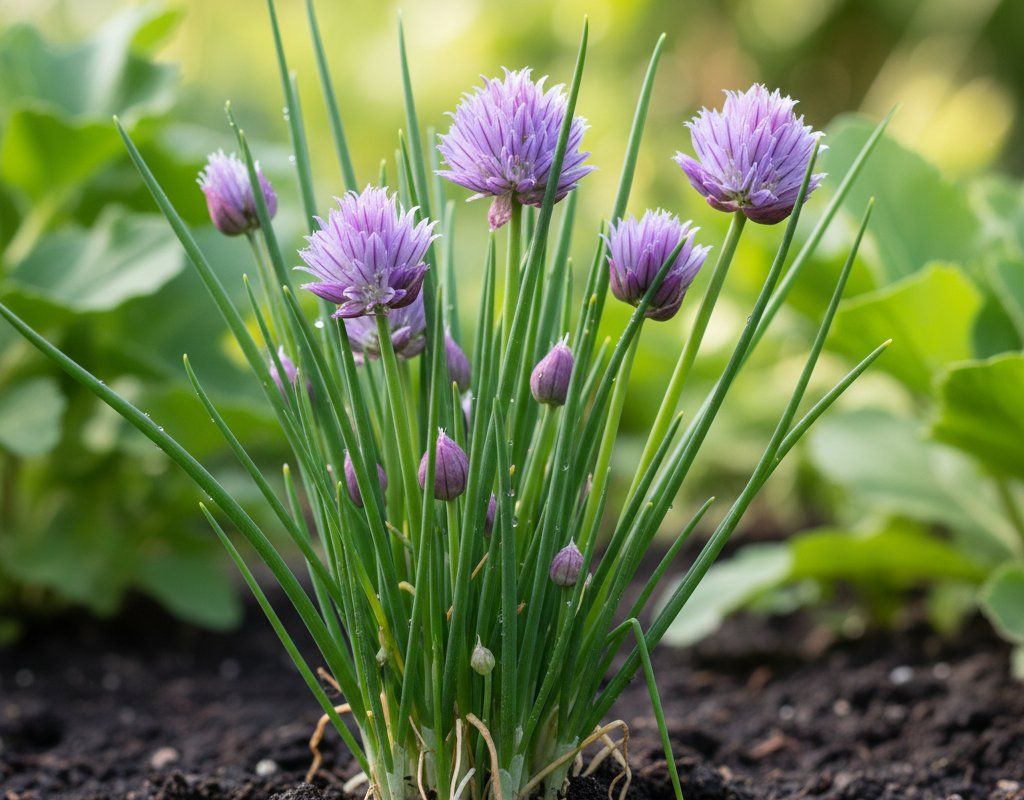
Chives in Zone 4B — Midwest
Allium schoenoprasum · Your Complete 2026 Planting Guide
Last Call for Seed Starting!
Indoor seed starting window closes in 11 days.
Start Seeds This Week
Start seeds now for transplanting later.
Or Wait for Starts
If you don’t want to start seeds, starts will be available around April 26.
How to Plant Chives in Zone 4B — Midwest
Here are all your options for getting chives in the ground, from the easiest method to more advanced approaches.
Direct Sow Seeds
RecommendedMid April through late June
around April 12
Consider succession planting every 2-3 weeks for continuous harvest.
Slow to establish from seed. Divisions or starts are faster.
Start Seeds Indoors
RecommendedLate February through mid March
around March 1
Then transplant: Late April through late May
Start seeds 8-10 weeks before transplanting outdoors.
Buy Starts
Works WellLate April through late May
around April 26
Plant purchased starts after last frost (May 10).
Buying starts or dividing existing clumps is much faster than seed.
Transplant Outdoors
Timing InfoLate April through late May
around April 26
Can tolerate light frost, but wait for soil to be workable.
You have a nice window — no need to rush.
Overview
Chives are a fantastic addition to any Midwest garden. Their mild onion flavor elevates everything from scrambled eggs to baked potatoes, and they’re incredibly easy to grow in our fertile soil. Plus, the cheerful purple blossoms are a welcome sight in the garden after our long winters.
Our Midwest weather can be unpredictable, with late frosts and occasional summer heat spells, but chives are quite hardy and adaptable. With a little attention to timing within our 138-day growing season, you'll be enjoying fresh chives all summer long.
Starting Seeds Indoors
Starting chives indoors isn't strictly necessary, but it can give you a head start, especially if you're impatient like me. If you want to get a jump on the season, start your seeds indoors from late February through mid March, about eight weeks before you plan to transplant them outside.
Use seed trays or small pots filled with a good seed-starting mix. Keep the soil consistently moist, and provide warmth and plenty of light – a grow light works wonders in our often-cloudy spring. I always water my seedlings from the bottom to prevent damping off.
Transplanting Outdoors
Once the danger of frost has passed, usually from late April through late May here in the Midwest, you can transplant your chives seedlings outdoors. Before planting, be sure to harden them off by gradually exposing them to the outdoor elements for about a week.
Choose a spot in full sun to partial shade, and space the plants 8-12 inches apart. Keep an eye on the weather forecast, as we sometimes get a late cold snap. Honestly, buying a small start from the garden center or dividing an existing clump is a much faster way to get established chives.
Direct Sowing
Direct sowing chives is definitely an option, but be prepared for a slower start. Sow seeds directly into the garden from mid April through late June. The soil should be at least 60°F for best germination.
Prepare the soil well, making sure it's loose and free of weeds. Sow seeds about ¼ inch deep and 8-12 inches apart. Keep the soil consistently moist until the seedlings emerge. Just be aware that it can take a while for direct-sown chives to get going; divisions or starts are usually quicker.
Watering Chives in Zone 4B (Midwest)
Chives need moderate and consistent moisture to thrive, especially in our Midwest summers. They can handle more moisture than many other herbs, but they definitely don't want to be waterlogged.
During the growing season, aim to water your chives deeply once or twice a week, depending on rainfall. Stick your finger about 2 inches into the soil – if it feels dry, it's time to water. We often get 1-2 inches of rain per week during the summer, so adjust accordingly. Watering at the base of the plant is best, as overhead watering in our moderate-to-humid climate can encourage fungal diseases.
If the leaves start to droop or turn yellow, it could be a sign of underwatering. If the leaves are yellowing and the soil is constantly soggy, you're likely overwatering. Mulching around your chives with straw or wood chips can help retain moisture and suppress weeds, which is always a win.
🧪Fertilizing Chives
Feeding Schedule
Organic Fertilizer Options
Harvest Time
You can expect your first harvest of chives from early July through early October, about 80 days after planting from seed. Look for leaves that are at least 6 inches tall.
To harvest, simply snip the leaves 1-2 inches above the base of the plant. This encourages new growth and keeps your chives producing all season long. Keep harvesting regularly, and they'll keep growing!
As the first frost approaches in late September, don't worry if you can't use all the chives. Just cut them back and let them rest for the winter. You can also dig up a clump and bring it indoors to enjoy fresh chives throughout the colder months. Plus, dividing clumps every 3 years keeps them vigorous.
Common Problems in Zone 4B (Midwest)
Even though chives are relatively easy to grow, here are a few common problems you might encounter in the Midwest:
Onion Fly *What it looks like:* Wilting or yellowing leaves, stunted growth, and small white maggots at the base of the plant or in the bulbs. *What causes it:* Onion flies lay their eggs near the base of onion family plants. The maggots hatch and feed on the roots and bulbs. *How to fix/prevent it:* Use row covers to prevent flies from laying eggs. Remove and destroy any infested plants. Rotate crops to avoid building up populations in the soil.
Rust *What it looks like:* Rusty orange, yellow, or brown pustules on leaves and stems, mostly on undersides. Leaves yellow and drop prematurely. *What causes it:* Various rust fungi that spread via wind-borne spores. Favored by warm, humid conditions with moisture on leaves. *How to fix/prevent it:* Remove affected leaves. Avoid overhead watering. Improve air circulation. Apply sulfur or copper fungicide. Don't work among wet plants. Rotate crops.
Bulb Rot in Wet Soil *What it looks like:* Yellowing or browning leaves, mushy bulbs, and a foul odor. *What causes it:* Overwatering, poor drainage, and fungal or bacterial pathogens in the soil. *How to fix/prevent it:* Ensure good drainage. Avoid overwatering. Amend heavy clay soil with compost or other organic matter. Plant in raised beds if necessary.
Midwest Specific Challenges: Our moderate-to-hot summers and moderate-to-humid conditions can create a favorable environment for rust and bulb rot, so good air circulation and well-drained soil are key. Keep an eye out for these issues, especially after periods of heavy rain.
Best Companions for Chives
Plant these nearby for healthier Chives and better harvests.


Keep Away From

Companion Planting Details
Chives are great companions for many plants in the Midwest garden. They deter pests and can even improve the flavor of certain crops.
Carrots benefit from chives because the chives repel carrot root flies. Tomatoes also love having chives nearby, as they help to deter aphids and other pests. Roses benefit from chives planted nearby, as they deter aphids and black spot. Grapes benefit from chives planted nearby, as they deter Japanese beetles.
Avoid planting chives near beans-green or peas. Chives can inhibit their growth.
🌸Best Flowers to Plant with Chives
These flowers protect your Chives from pests and attract pollinators for better harvests.
For Pest Control




Get a Reminder When It's Time to Plant
We'll email you when key planting windows open for your zone.