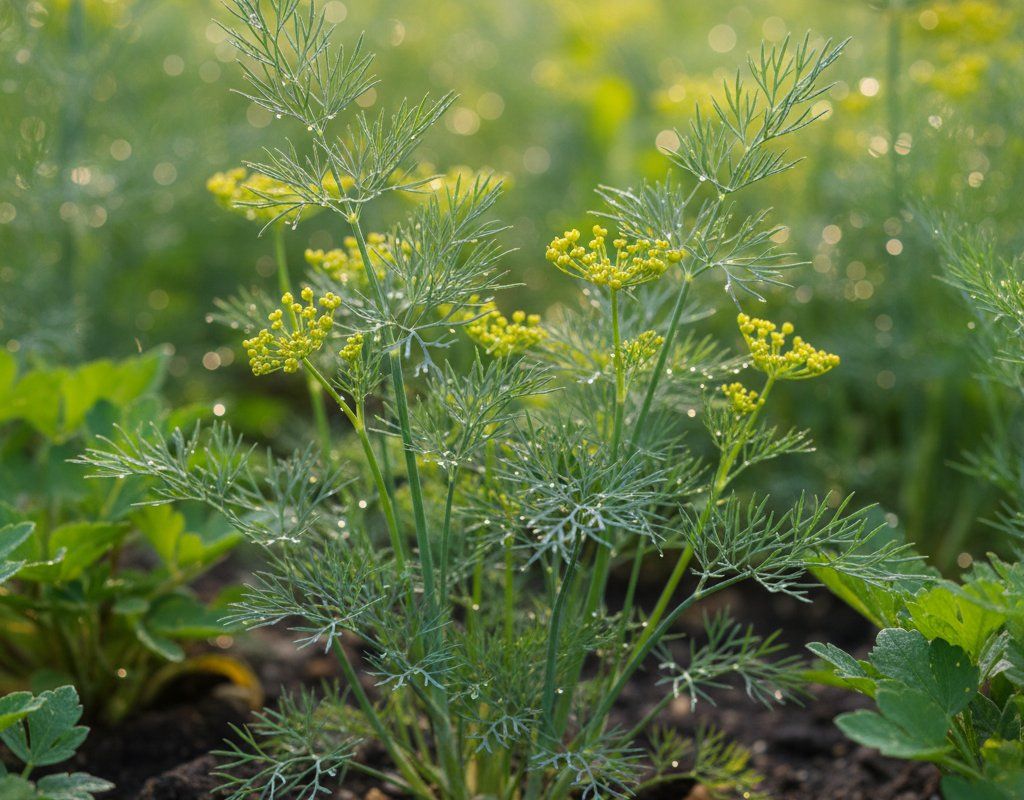
Dill in Zone 5B — Northeast
Anethum graveolens · Your Complete 2026 Planting Guide
Planning Ahead — Great!
You’re ahead of the season. Here’s when to start.
Mark Your Calendar
How to Plant Dill in Zone 5B — Northeast
Here are all your options for getting dill in the ground, from the easiest method to more advanced approaches.
Direct Sow Seeds
RecommendedLate April through mid August
around April 25
Consider succession planting every 2-3 weeks for continuous harvest.
Dill has a taproot and prefers direct sowing, but transplants work if handled carefully.
Start Seeds Indoors
RecommendedLate March through mid April
around April 4
Then transplant: Early May through mid June
Start seeds 4-6 weeks before transplanting outdoors.
Buy Starts
Works WellEarly May through mid June
around May 2
Plant purchased starts after last frost (April 25).
Transplant Outdoors
Timing InfoEarly May through mid June
around May 2
Can tolerate light frost, but wait for soil to be workable.
You have a nice window — no need to rush.
Fall Planting
Mid August through mid September
August 29 ideal · Direct sow for fall harvest
Plant a second crop in mid-summer for fall harvest. Dill actually prefers the cooling temperatures of fall.
Overview
Dill thrives in our Northeast climate, offering both tender feathery leaves and aromatic seeds that capture the essence of summer in every pinch. Our moderate summers and cool nights actually improve dill's flavor intensity, while the plant's hardy nature lets you sow early and harvest late into fall. The fresh taste difference between homegrown dill and store-bought is remarkable — your pickles, potato salad, and fish dishes will never be the same.
While our 168-day growing season might seem limiting, dill's quick 40-day maturity and ability to handle light frosts make it surprisingly adaptable here. The key is understanding that dill prefers our cooler spring and fall weather over peak summer heat, so timing your sowings right lets you harvest continuously from early June through October.
Starting Seeds Indoors
Starting dill indoors isn't the preferred method since dill develops a taproot and dislikes transplanting, but it can work if you handle seedlings carefully. If you want an early start in our late-arriving spring, sow seeds in deep containers or cell trays from late March through mid-April, about 4 weeks before your planned transplant date.
Use a quality seed-starting mix and keep soil consistently moist with bottom watering — dill seeds need steady moisture to germinate well. Place trays in a warm spot (65-70°F) until germination, then move to bright light or under grow lights. Since our springs can be unpredictable, having transplants ready gives you flexibility when conditions finally settle.
The main challenge with indoor-started dill is transplant shock. The taproot doesn't appreciate disturbance, so use biodegradable pots that can go directly in the ground, or be extremely gentle when removing seedlings from trays.
Transplanting Outdoors
Transplant your indoor-started dill seedlings from early May through mid-June, once soil has warmed and the risk of hard frost has passed. Our spring weather can be fickle, so watch the forecast and be ready to protect young plants if an unexpected cold snap threatens.
Harden off seedlings gradually over a full week before transplanting. Start with an hour outdoors in filtered light, gradually increasing exposure until they can handle full sun and cool nights. This process is crucial in our climate where spring temperatures can swing dramatically.
Space transplants 12 inches apart in well-draining soil, and plant at the same depth they were growing in containers. Water gently after transplanting and consider using row covers for the first week if nights are still dropping into the 40s. Handle the root system as little as possible during planting.
Direct Sowing
Direct sowing is actually dill's preferred planting method since it avoids disturbing that sensitive taproot. In our region, you can sow from late April through mid-August, giving you multiple opportunities for succession plantings throughout the growing season.
Wait until soil temperature reaches at least 50°F — usually late April in our zone. Prepare your planting area by working compost into the rocky New England soil to improve drainage. Sow seeds ¼ inch deep and 12 inches apart, or plant more densely and thin later. Keep soil consistently moist until germination, which takes 7-14 days in cool spring conditions.
The beauty of direct sowing dill here is that you can make succession plantings every 2-3 weeks through summer. This ensures continuous harvest since each planting matures quickly and tends to bolt in hot weather. Your late summer sowings (through mid-August) will provide excellent fall harvests when cool nights return.
Watering Dill in Zone 5B (Northeast)
Dill needs consistent moisture but not waterlogged soil — think "evenly moist" rather than "soggy." In our Northeast climate with 40-50 inches of annual rainfall spread fairly evenly, you'll find that spring and fall plantings need less supplemental watering than summer sowings.
Check soil moisture by inserting your finger 2 inches deep near the base of plants. During our moderate summers, aim for about 1 inch of water per week, including rainfall. Water at the base of plants rather than overhead — our moderate-to-humid conditions can promote foliar diseases if leaves stay wet too long, especially during muggy July and August weather.
Summer plantings need the most attention since dill bolts quickly when stressed by heat and drought. Our typical highs around 82°F aren't extreme, but combined with humidity, they can stress dill if the soil dries out. Watch for signs of stress: wilting leaves, premature flowering, or yellowing foliage.
A 2-inch layer of organic mulch around plants helps retain moisture and keep roots cool during summer heat. Straw or shredded leaves work well in our climate, breaking down slowly and improving the soil structure in our often rocky ground.
🧪Fertilizing Dill
Feeding Schedule
Organic Fertilizer Options
Harvest Time
You can start harvesting dill's feathery leaves about 40 days after sowing, which means early June for spring plantings and continuous harvests through mid-October if you succession plant. Cut outer leaves first, leaving the center growing point intact for continued production.
For fresh leaves, harvest in the morning after dew dries but before the day gets hot. Cut stems just above a leaf node to encourage branching. If you want dill seed, let some plants flower — the umbrella-shaped flower heads will turn brown and dry in late summer, usually 6-8 weeks after flowering begins.
To harvest seeds, wait until flower heads are completely brown and dry, then cut the entire head into a paper bag and shake vigorously. The seeds will fall out easily when ready. Our fall weather is perfect for seed development, with cool nights and moderate humidity preventing mold issues.
Keep succession planting every 2-3 weeks through mid-August for continuous fresh dill. As first frost approaches in early October, harvest remaining fresh growth for freezing or cut seed heads for winter storage.
Common Problems in Zone 5B (Northeast)
Bolting shows up as a sudden flower stalk shooting up from the center of your dill plant, followed by rapidly declining leaf quality. The feathery foliage becomes coarse and bitter once flowering begins. In our region, this typically happens during hot spells in July and August, especially if plants experience drought stress combined with our longer summer days. Plant during cooler periods (spring and late summer), keep soil consistently moist, and choose slower-bolting varieties. Consider this normal behavior for summer plantings — just succession plant every few weeks.
Aphids appear as clusters of tiny green or black insects on stems and under leaves, often accompanied by sticky honeydew and distorted new growth. Our moderate-to-humid summers create good conditions for aphid reproduction, especially on nitrogen-rich plants. Knock them off with a strong water spray early in the day so leaves can dry before evening. Encourage beneficial insects like ladybugs with diverse plantings, and use insecticidal soap for heavy infestations.
Caterpillars from various moths and butterflies chew holes in dill foliage, with parsley worms (black caterpillars with yellow stripes) being particularly fond of dill. Hand-pick larger caterpillars in the morning, and use Bt (Bacillus thuringiensis) spray for persistent problems. Many of these caterpillars become beneficial butterflies, so consider leaving a few plants as sacrifice crops if you have space.
Northeast Specific Challenges: Our moderate summers and even rainfall actually reduce many common dill problems compared to hotter regions. However, the short growing season means timing is everything — late spring frosts can damage early plantings, while early fall frosts end the season abruptly. Rocky soil drainage helps prevent root rot but makes consistent watering more important during dry spells.
Best Companions for Dill
Plant these nearby for healthier Dill and better harvests.


Keep Away From
Companion Planting Details
Dill makes an excellent companion for cabbage family crops, naturally repelling cabbage worms and aphids while attracting beneficial insects with its umbrella-shaped flowers. Plant it near cucumbers to deter cucumber beetles and improve growth, or alongside onions which help mask dill's scent from pests. Lettuce appreciates dill's light shade during our warmer summer days, and the two crops use garden space efficiently since lettuce prefers cooler spots.
Avoid planting dill near carrots — they're in the same family and compete for nutrients, plus dill can inhibit carrot growth. Keep it away from tomatoes too, as mature dill plants can actually stunt tomato development, though young dill seedlings near tomatoes can help with pest control early in the season.
🌸Best Flowers to Plant with Dill
These flowers protect your Dill from pests and attract pollinators for better harvests.
For Pest Control




Get a Reminder When It's Time to Plant
We'll email you when key planting windows open for your zone.