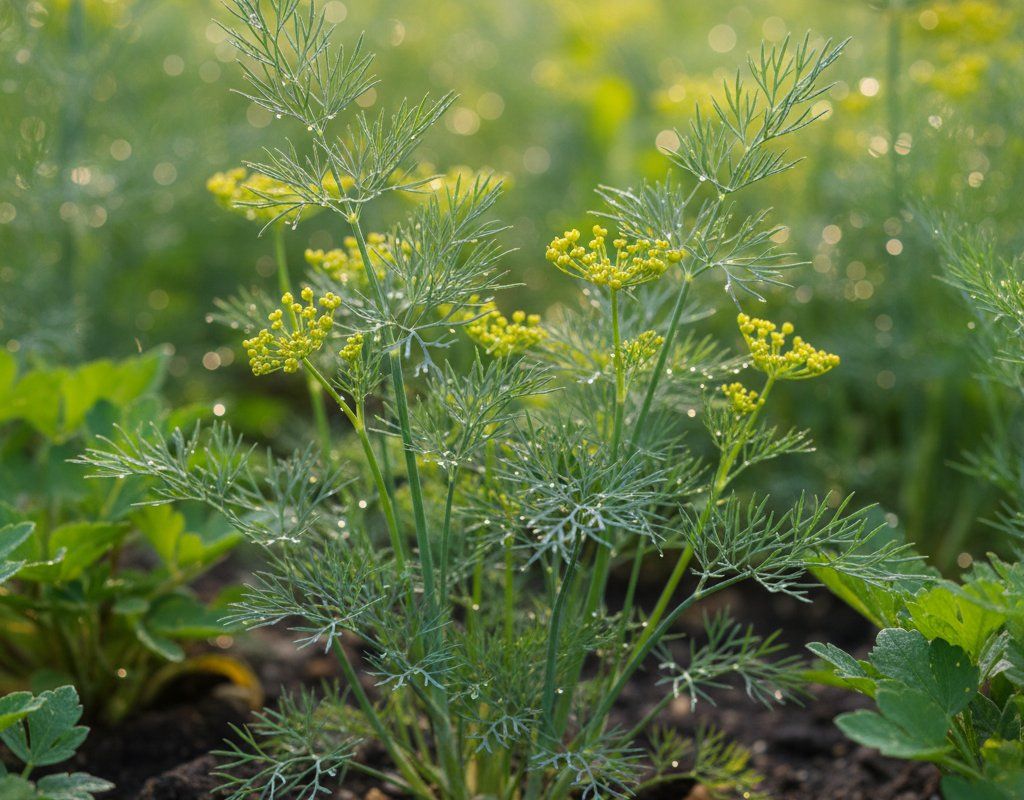
Dill in Zone 8B — Desert Southwest
Anethum graveolens · Your Complete 2026 Planting Guide
Time to Buy Starts!
Seed starting window passed, but starts are available now.
Buy Starts Now
Head to your local nursery, Home Depot, or farmers market for transplants.
- Look for stocky plants with dark green leaves
- Avoid leggy seedlings or plants already flowering
- Check that roots aren't circling the pot (rootbound)
How to Plant Dill in Zone 8B — Desert Southwest
Here are all your options for getting dill in the ground, from the easiest method to more advanced approaches.
Direct Sow Seeds
RecommendedLate February through early October
around February 25
Consider succession planting every 2-3 weeks for continuous harvest.
Dill has a taproot and prefers direct sowing, but transplants work if handled carefully.
Start Seeds Indoors
RecommendedLate January through mid February
around February 4
Then transplant: Early March through mid April
Start seeds 4-6 weeks before transplanting outdoors.
Buy Starts
Works WellEarly March through mid April
around March 4
Plant purchased starts after last frost (February 25).
Transplant Outdoors
Timing InfoEarly March through mid April
around March 4
Can tolerate light frost, but wait for soil to be workable.
You have a nice window — no need to rush.
Fall Planting
Early October through early November
October 20 ideal · Direct sow for fall harvest
Plant a second crop in mid-summer for fall harvest. Dill actually prefers the cooling temperatures of fall.
Overview
Dill transforms Desert Southwest cooking with its bright, tangy flavor that cuts through rich summer dishes and complements our region's Mexican and southwestern cuisine. Unlike store-bought dried dill, fresh dill from your garden delivers aromatic leaves perfect for fish, pickles, and cooling yogurt sauces that help beat our extreme heat. The feathery foliage also attracts beneficial insects during our two growing seasons, making it both culinary gold and garden helper.
Yes, our brutal summers and arid conditions challenge many herbs, but dill's timing works beautifully in our 279-day growing season. Plant it during our mild winters and early spring, then again in fall when temperatures drop below the century mark. Skip the summer months entirely – dill bolts fast once we hit triple digits, but you'll get excellent harvests during our cooler periods.
Starting Seeds Indoors
Starting dill indoors makes sense when you want early spring harvests or precise timing for succession plantings. Sow seeds in late January through mid-February, about four weeks before our last frost window. Our very early spring character means you can transplant outdoors sooner than most regions.
Use seed-starting trays with good drainage and keep soil consistently moist through bottom watering – this prevents damping off in our low humidity conditions. Place trays in a warm spot (65-70°F) until germination, then provide bright light or grow lights. Since dill has a taproot, use deeper cells if possible and avoid disturbing roots during transplant.
The main advantage of indoor starting here is controlling timing for your first harvest. You'll have tender dill leaves ready by early April when outdoor direct-sown seeds are just emerging.
Transplanting Outdoors
Transplant your indoor-started dill seedlings from early March through mid-April, after hardening them off for a week. Our spring weather can swing dramatically – you might have 80°F days followed by 40°F nights – so gradual outdoor exposure prevents shock.
Space transplants 12 inches apart in well-draining soil. Dill's taproot doesn't love being disturbed, so handle seedlings gently and transplant while still small. Plant them slightly deeper than they were in their containers to encourage strong root development in our alkaline soil.
Choose your location carefully during transplant time. Full sun works well in spring, but consider spots that get afternoon shade for plants that will face late spring heat. Our extreme UV intensity can stress young transplants even in March.
Direct Sowing
Direct sowing works beautifully for dill in the Desert Southwest since it avoids root disturbance and gives you stronger plants. Sow from late February through early October, skipping the brutal summer months of June through August when seeds struggle in extreme heat.
Prepare soil by working in compost to improve drainage – dill hates wet feet, especially important in our clay-heavy caliche layers. Sow seeds ¼ inch deep and 12 inches apart in rows. Seeds germinate best when soil temperatures reach 60-65°F, which happens quickly here once our mild winter ends.
Spring sowings (February through April) give the longest harvest window before summer heat forces bolting. Fall plantings from early October through early November provide fresh dill through winter since the plants handle our light frosts beautifully. Succession plant every 2-3 weeks for continuous harvests.
Watering Dill in Zone 8B (Desert Southwest)
Dill needs consistent moisture without waterlogged soil – tricky in our desert conditions where it's either bone dry or monsoon flooding. Water deeply once or twice weekly during spring and fall, providing about 1 inch total including any rainfall. Our arid climate means water evaporates quickly, so check soil moisture regularly using the finger test 2 inches deep.
During our mild winter months, reduce watering frequency but don't let plants dry completely. Spring brings our windiest weather, which strips moisture from soil and leaves faster than you'd expect. Mulch around plants with wood chips or gravel mulch to slow evaporation, but keep mulch away from plant stems to prevent rot in our low-humidity environment.
Summer survival requires different tactics if you're growing fall plantings under shade cloth. Even with 50% shade protection, you'll need daily watering during extreme heat periods. Water at soil level rather than overhead – our intense sun can cause leaf scorch on wet foliage, and overhead watering wastes precious water to evaporation.
Watch for bolting signs during hot spells. Inconsistent watering triggers premature flowering, so maintain steady soil moisture. Overwatering causes root rot, especially problematic in our alkaline soil that doesn't drain well. Signs of overwatering include yellowing leaves and musty-smelling soil; underwatered dill shows gray-green leaves and stunted growth.
🧪Fertilizing Dill
Feeding Schedule
Organic Fertilizer Options
Harvest Time
Your first dill harvest begins around early April for early plantings, continuing through early December with succession sowings and fall plants. The 40-day maturity window means spring-planted dill gives you fresh leaves before summer heat hits, while fall plantings provide winter harvests.
Harvest feathery leaves anytime once plants reach 6 inches tall by cutting outer stems first. This keeps the central growing point active for continuous production. For fresh use, cut stems in early morning when essential oils are strongest – important in our hot, dry climate where afternoon heat can diminish flavor intensity.
For dill seed, let some plants bolt naturally (or plant specifically for seeds in late fall). Flower heads turn brown and papery when ready, usually 60-90 days from sowing. Cut entire heads into paper bags and shake to release seeds. Our low humidity helps seeds dry quickly without mold issues common in humid regions.
As temperatures drop toward our early December frost dates, make final harvests or let late plants self-seed for volunteer crops. Our mild winters often allow scattered dill plants to overwinter and provide early spring greens before you even start new sowings.
Common Problems in Zone 8B (Desert Southwest)
Bolting appears as tall flower stalks shooting up from the center of your dill plant, with feathery leaves becoming sparse and bitter. Once bolting starts, leaf production essentially stops as the plant focuses energy on seed production. In the Desert Southwest, bolting happens fast once daytime temperatures consistently hit 85°F or higher, which can occur as early as late April.
Our extreme heat and intense sunlight trigger bolting more aggressively than in cooler regions. Combat this by planting dill during cooler months only – avoid April through September sowings entirely. Use shade cloth (30-50%) during late spring to extend harvests, and keep soil consistently moist since drought stress accelerates bolting. Choose slow-bolt varieties like 'Fernleaf' for longer harvests.
Aphids show up as clusters of tiny green or black insects on stem tips and leaf undersides, leaving sticky honeydew residue that attracts ants. New growth curls and distorts, and plants look generally unhealthy. Our warm winter temperatures allow aphid populations to build earlier than cold-winter regions, and they explode during spring warming.
Desert Southwest's low humidity actually helps here – aphids struggle more in arid conditions than humid climates. Blast them off with strong water sprays in early morning so plants dry quickly. Encourage native predators like ladybugs and lacewings by avoiding broad-spectrum pesticides. For heavy infestations, insecticidal soap works well in our low-humidity environment without causing leaf burn.
Caterpillars, particularly parsley worms (black swallowtail butterfly larvae), munch through dill foliage rapidly. You'll see green caterpillars with black stripes and yellow spots, plus obvious chewed leaves and dark droppings. These beautiful caterpillars prefer dill and other carrot family plants, often appearing during our two growing seasons.
Hand-picking works best for small numbers – these caterpillars become stunning butterflies that benefit desert gardens. For larger populations, Bt (Bacillus thuringiensis) provides organic control without harming beneficial insects. Check plants weekly during active growing periods, especially after monsoon rains when butterfly activity increases.
Desert Southwest Specific Challenges: Our extreme heat forces dill into bolting faster than anywhere else, while intense UV can scorch leaves even during cooler months. Alkaline soil may cause yellowing between leaf veins, requiring sulfur amendments or iron chelate. Plan plantings around our unique climate – treat dill as a cool-season crop only, and embrace the two-season approach rather than fighting summer conditions.
Best Companions for Dill
Plant these nearby for healthier Dill and better harvests.


Keep Away From
Companion Planting Details
Dill pairs beautifully with cabbage family plants like broccoli and kale during our winter growing season – its flowers attract beneficial wasps that control cabbage worms, while the feathery foliage provides light shade for lettuce and spinach roots. Plant dill near cucumbers and squash during spring sowings since it repels cucumber beetles and squash bugs, common pests in Desert Southwest gardens. The aromatic oils also help mask the scent of susceptible plants from flying pests.
Avoid planting dill near carrots since both attract similar pests and compete for nutrients as fellow carrot family members. Skip pairing with tomatoes and peppers – dill's shallow roots compete poorly with these deep-rooted summer crops, plus their different water needs don't match our irrigation scheduling. In our two-season gardening approach, grow dill with cool-season crops in fall through spring, then remove it before planting heat-loving summer vegetables in the same space.
🌸Best Flowers to Plant with Dill
These flowers protect your Dill from pests and attract pollinators for better harvests.
For Pest Control




Get a Reminder When It's Time to Plant
We'll email you when key planting windows open for your zone.