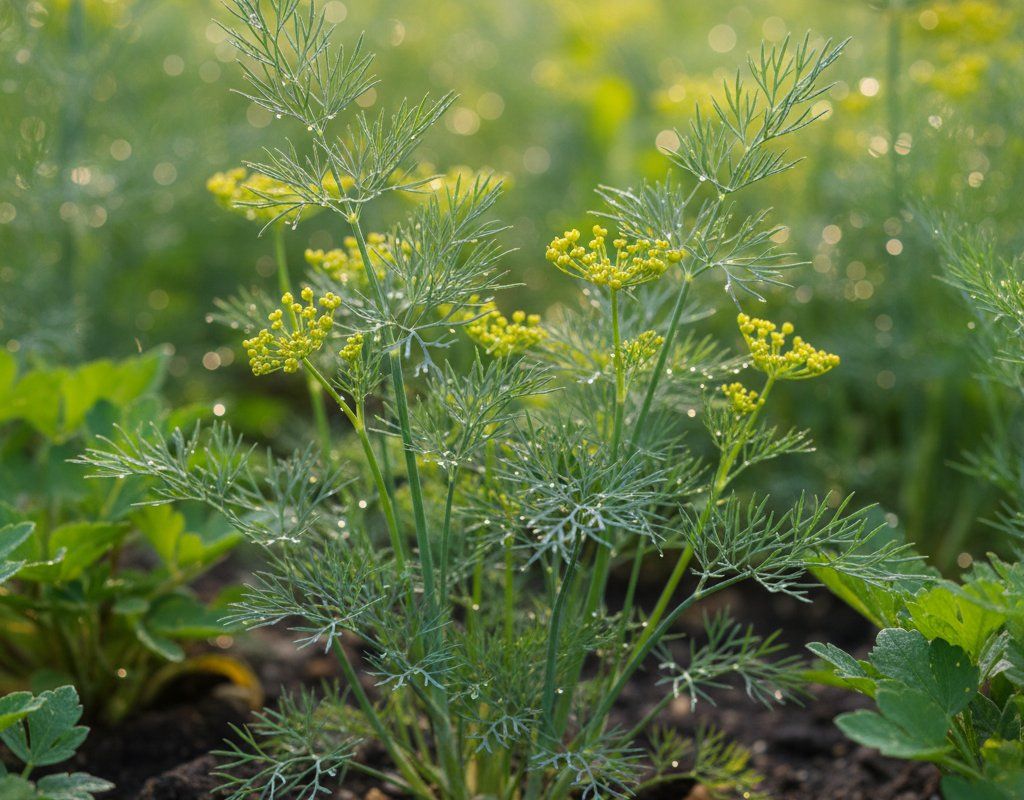
Dill in Zone 9B — Florida
Anethum graveolens · Your Complete 2026 Planting Guide
Harvest Time!
Your Dill should be producing now!
Harvest Tips
Harvest in the morning after dew dries for the best flavor.
How to Plant Dill in Zone 9B — Florida
Here are all your options for getting dill in the ground, from the easiest method to more advanced approaches.
Direct Sow Seeds
RecommendedMid January through early November
around January 20
Consider succession planting every 2-3 weeks for continuous harvest.
Dill has a taproot and prefers direct sowing, but transplants work if handled carefully.
Start Seeds Indoors
RecommendedLate December through mid January
around December 30
Then transplant: Late January through early March
Start seeds 4-6 weeks before transplanting outdoors.
Buy Starts
Works WellLate January through early March
around January 27
Plant purchased starts after last frost (January 20).
Transplant Outdoors
Timing InfoLate January through early March
around January 27
Can tolerate light frost, but wait for soil to be workable.
You have a nice window — no need to rush.
Fall Planting
Early November through early December
November 18 ideal · Direct sow for fall harvest
Plant a second crop in mid-summer for fall harvest. Dill actually prefers the cooling temperatures of fall.
Overview
Dill brings that distinctive bright, tangy flavor to your Florida garden year-round, making it invaluable for pickling those cucumbers you'll harvest through our extended growing season. Unlike many herbs that struggle with our subtropical climate, dill actually thrives during our cooler months when most other places can't grow it fresh - giving you a real advantage over store-bought options that often taste like dried grass.
Our intense summer heat and humidity do challenge dill, as it bolts quickly when temperatures soar into the 90s. But with Florida's remarkable 344-day growing season, you can time plantings perfectly to avoid the worst heat and enjoy fresh dill from fall through spring when the plant performs its best.
Starting Seeds Indoors
Starting dill seeds indoors makes sense mainly if you want an early spring crop or live in an area prone to late cold snaps. Sow seeds in seed trays from late December through mid-January, about 4 weeks before your planned transplant date. Use a quality seed starting mix and keep trays consistently moist with bottom watering to prevent fungal issues in our humid climate.
Since Florida's spring is actually our transition into summer heat, indoor starting gives you a head start on the growing season. Place trays in a warm spot (70-75°F) and provide bright light once seeds germinate in 7-14 days. However, dill has a long taproot and doesn't love transplanting, so direct sowing often works better unless you're trying to beat specific timing.
Transplanting Outdoors
If you've started dill indoors, transplant seedlings outdoors from late January through early March, when nighttime temperatures consistently stay above 40°F. Spend a full week hardening them off gradually - our sudden temperature swings between winter and spring can shock tender seedlings if you rush this process.
Space transplants 12 inches apart in well-draining soil, as our heavy summer rains can waterlog plants if they're too close together. Handle the seedlings gently since dill's taproot doesn't recover well from damage. Choose the coolest part of this window if possible, as dill transplants establish better before our heat really kicks in.
Direct Sowing
Direct sowing works beautifully for dill in Florida and is often your best bet since the plant develops a strong taproot that prefers undisturbed soil. You have a generous window from mid-January through early November, though the sweet spot is definitely fall through spring when temperatures stay reasonable.
Prepare your soil by working in compost to improve drainage - dill won't tolerate our summer waterlogging but needs consistent moisture. Sow seeds ¼ inch deep and 12 inches apart, then keep the soil evenly moist until germination in 7-14 days. The beauty of direct sowing is you can succession plant every 2-3 weeks for continuous harvest, especially during our prime growing months from October through April.
Watering Dill in Zone 9B (Florida)
Dill needs consistent, moderate moisture but absolutely cannot tolerate wet feet during our rainy season from June through September. During the cooler months when dill thrives, water deeply about once a week, providing roughly 1 inch total including rainfall. Check soil moisture by sticking your finger 2 inches deep - it should feel slightly moist but not soggy.
Our intense humidity means you should always water at the base of plants rather than overhead to prevent fungal diseases that love Florida's muggy conditions. During summer attempts at growing dill, you'll need to water more frequently as the heat stress and rapid evaporation demand it, but honestly, this is when dill struggles most and often bolts regardless of your watering efforts.
Summer rains can actually be problematic for dill since the combination of heat and excessive moisture often triggers bolting or root rot. If growing during the wet season, ensure excellent drainage and consider raised beds or containers. A thin layer of mulch helps retain consistent moisture during dry spells but avoid thick mulching during our humid summers as it can trap too much moisture around the base.
The finger test becomes especially important here - our sandy soils drain quickly in some areas while clay holds too much water in others. Adjust your watering schedule based on your specific soil type and always err on the side of slightly drier rather than waterlogged.
🧪Fertilizing Dill
Feeding Schedule
Organic Fertilizer Options
Harvest Time
Your first dill harvest typically comes in early March if you planted in late winter, though succession plantings mean you can harvest fresh leaves from early March through early January in our extended season. Look for feathery, blue-green foliage that's aromatic when gently brushed - this indicates the essential oils are at their peak.
Harvest by snipping outer stems at the base, leaving the center growing point intact for continuous production. You can start harvesting when plants reach about 6 inches tall, and regular cutting actually encourages more leaf growth. For fresh use, morning harvest after the dew dries gives you the most flavorful leaves.
If you want dill seeds for pickling, let some plants flower and develop seed heads. The seeds are ready when the flower heads turn brown and dry, usually about 2-3 weeks after flowering. Cut the entire head and shake seeds into a paper bag - they'll continue ripening off the plant for a few days.
Plan your final plantings by early November to ensure harvest before our occasional late December frost. Dill handles light frost well, but a hard freeze will end the season, making timing crucial for winter harvests.
Common Problems in Zone 9B (Florida)
Bolting shows up as a sudden tall flower stalk shooting up from the center, with leaves becoming bitter and feathery growth stopping. This happens when dill experiences stress from heat, long days, or inconsistent watering - unfortunately common during our transition from spring into summer heat. Plant during cooler months, provide afternoon shade during warm spells, and keep soil consistently moist to delay bolting. Choose slow-bolt varieties and succession plant every 2-3 weeks rather than trying to keep one planting going through temperature extremes.
Aphids appear as clusters of tiny green or black insects on new growth and stem undersides, often accompanied by sticky honeydew and curled leaves. These sap-suckers multiply rapidly in our warm, humid conditions and are especially problematic during spring when dill is actively growing. Blast them off with a strong water spray, encourage beneficial insects like ladybugs, or use insecticidal soap for heavy infestations. Avoid over-fertilizing with nitrogen, which creates the tender growth aphids love.
Caterpillars, particularly parsley worms (swallowtail butterfly larvae), can quickly defoliate dill plants as they're in the same family as their preferred parsley. Look for large green caterpillars with black and yellow markings that can strip entire plants overnight. Hand-picking works for small numbers, but Bt (Bacillus thuringiensis) provides organic control for larger infestations without harming beneficial insects.
Florida Specific Challenges: Our combination of intense heat, extreme humidity, and heavy summer rains creates the perfect storm for dill problems. The high humidity encourages fungal issues while rapid temperature changes stress plants into bolting. Focus on fall through spring growing when our climate works with you rather than against you.
Best Companions for Dill
Plant these nearby for healthier Dill and better harvests.


Keep Away From
Companion Planting Details
Dill makes an excellent companion for cabbage family crops like broccoli and kale during our cool season, as it attracts beneficial wasps that control cabbage worms - a major problem in Florida's year-round growing climate. Plant it near cucumbers and lettuce too, where dill's flowers provide habitat for predatory insects while its taproot doesn't compete with shallow-rooted crops.
Avoid planting dill near carrots, as they're in the same family and can cross-pollinate, affecting carrot flavor. Keep it away from tomatoes as well, since dill can actually stunt tomato growth and attract pests that damage both plants. In our intensive Florida growing season, strategic companion planting becomes even more important for maximizing limited cool-weather space.
🌸Best Flowers to Plant with Dill
These flowers protect your Dill from pests and attract pollinators for better harvests.
For Pest Control




Get a Reminder When It's Time to Plant
We'll email you when key planting windows open for your zone.