
Fennel in Zone 4A — Northeast
Foeniculum vulgare · Your Complete 2026 Planting Guide
Planning Ahead — Great!
You’re ahead of the season. Here’s when to start.
Mark Your Calendar
How to Plant Fennel in Zone 4A — Northeast
Here are all your options for getting fennel in the ground, from the easiest method to more advanced approaches.
Direct Sow Seeds
RecommendedMid May through early July
around May 15
Consider succession planting every 2-3 weeks for continuous harvest.
Fennel has a taproot and bolts easily when transplanted. Direct sow only.
Buy Starts
Works WellMid May through mid June
around May 15
Plant purchased starts after last frost (May 15).
Start Seeds Indoors
ChallengingThis plant is typically not started indoors.
Transplant Outdoors
Timing InfoMid May through mid June
around May 15
Can tolerate light frost, but wait for soil to be workable.
You have a nice window — no need to rush.
Overview
Growing fennel here in the Northeast is a real treat. The bulbs you pull from your own garden have a crisp, sweet licorice flavor that is worlds away from what you find in the store. Our cool nights really help concentrate those sugars and essential oils, making for an intensely flavorful harvest. It's a versatile vegetable you can shave raw into salads, roast until caramelized, or braise for a side dish.
With our short 128-day growing season, success with fennel is all about timing. You need to get it in the ground after the last frost but give it enough time to mature before our summer heat really settles in. It's a cool-season crop at heart, so managing that window is the key to getting beautiful, swollen bulbs instead of bolted flower stalks.
Transplanting Outdoors
While direct sowing is the preferred method, you can transplant fennel starts if you're very careful. Aim to get them in the ground between mid-May and mid-June, once the danger of hard frost has passed and the soil has warmed.
Make sure to harden off your seedlings for about a week, gradually exposing them to outdoor conditions. Fennel has a sensitive taproot, and any disturbance can trigger bolting. When you plant, handle the root ball as little as possible. Space the transplants 12 to 18 inches apart to give the bulbs room to develop.
Be prepared for our unpredictable late spring weather. A sudden cold snap in late May isn't uncommon, so have a row cover or some cloches on hand just in case you need to protect your young plants.
Direct Sowing
Direct sowing is the best way to grow fennel, as it completely avoids the transplant shock that can cause the plant to bolt. This is the method I recommend for a reliable harvest.
You can sow seeds anytime from mid-May through early July. This gives you a couple of options: a spring sowing for an early summer harvest, or a later sowing that will mature in the cooler weather of early fall. Prepare your bed by loosening the soil and amending it with compost, especially if you have our typical rocky New England soil. A smooth, rock-free bed helps the taproot grow straight and strong.
Plant seeds about a quarter-inch deep and a few inches apart. Once the seedlings are a few inches tall, thin them to their final spacing of 12 to 18 inches apart. This spacing is important; crowding will result in smaller, underdeveloped bulbs.
Watering Fennel in Zone 4A (Northeast)
Consistent moisture is the most important factor for growing good fennel bulbs. If the plants dry out, they become stressed, resulting in tough, stringy bulbs or premature bolting. Fennel is not drought tolerant.
Here in the Northeast, our relatively even rainfall helps a lot. You won't need to water constantly, but you will need to monitor the soil, especially during dry spells in July and August. Use the finger test: if the soil is dry two inches down, it's time to water. Aim to give your plants about an inch of water per week, including whatever rain we get.
Water deeply at the base of the plants. With our moderate-to-humid summers, overhead watering can encourage fungal diseases on the dense foliage. Watering the soil directly gets the moisture where it's needed without wetting the leaves.
A two-inch layer of straw or shredded leaf mulch is a great idea. It helps keep our rocky soil cool, conserves moisture between rains, and keeps weeds down, ensuring the fennel isn't competing for water.
🧪Fertilizing Fennel
Feeding Schedule
Organic Fertilizer Options
Harvest Time
You can expect your first harvest starting around mid-July for an early planting, continuing through late September for later sowings. Fennel typically takes about 65 days to mature from seeding.
The bulbs are ready to harvest when they are firm and about the size of a tennis ball, roughly 3 to 4 inches in diameter. Don't wait too long, as oversized bulbs can become woody. The feathery fronds can be snipped and used as an herb at any point during the growing season.
To harvest, use a sharp knife to cut the bulb off at the soil line. If you leave the roots in the ground, you may get some small, tender shoots that can be used in salads, but you won't get another full-sized bulb.
As our first frost approaches in mid-September, make sure to harvest any remaining mature bulbs. Fennel is semi-hardy and can handle a light frost, which often improves the flavor, but it won't survive a hard freeze.
Common Problems in Zone 4A (Northeast)
- What it looks like: A flower stalk suddenly shoots up from the center of the plant. The bulb stops swelling and the base becomes tough.
- What causes it: Fennel is a cool-season crop. When our summer days consistently get into the 80s, the plant gets stressed and shifts its energy from bulb production to reproduction (flowering).
- How to fix/prevent it: Timing is everything. Plant early so bulbs mature before the peak heat of late July, or plant a second crop in early summer for a fall harvest. Mulching heavily helps keep the soil cool. If you see a stalk forming, harvest the bulb immediately, as it will only get tougher.
- What it looks like: This isn't a problem for the fennel itself, but for its neighbors. Plants like tomatoes, peppers, or beans planted too close to fennel will appear stunted and unhealthy.
- What causes it: Fennel releases chemicals from its roots that inhibit the growth of many other common garden vegetables.
- How to fix/prevent it: Give fennel its own dedicated space. Plant it at the end of a bed or in a container, far from sensitive plants. Don't add fennel debris to a compost pile that you plan to use in your main vegetable garden soon.
- What it looks like: Small, soft-bodied green or black insects clustered on the tender new growth and fronds. You may also see a sticky residue called "honeydew."
- What causes it: These common pests thrive in the new growth of many plants. Our moderate summers are generally favorable for them to reproduce.
- How to fix/prevent it: Often, a strong spray of water from the hose is enough to knock them off. We have a good population of ladybugs and other predators that usually keep them in check. For a heavy infestation, use insecticidal soap.
For us, the biggest challenge with fennel is fitting its 65-day growth cycle into our season to avoid summer heat stress. Our cool nights are a major advantage for developing sweet, crisp bulbs. While deer will occasionally browse the fronds, they usually leave the bulbs alone. Amending our often rocky, acidic soil with compost is key to providing the loose texture fennel needs to bulb up properly.
Best Companions for Fennel
Plant these nearby for healthier Fennel and better harvests.
View Full Companion Planting Chart →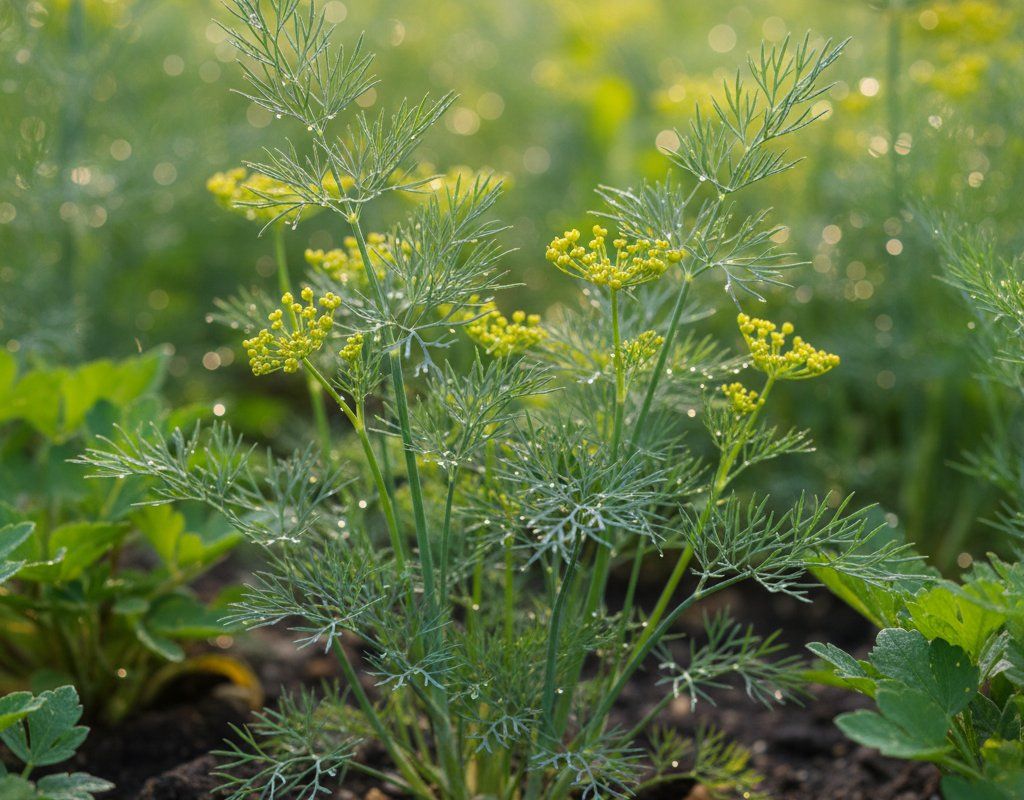



Companion Planting Details
Fennel is a tricky neighbor in the garden and generally does best with a bit of its own space. It's known to inhibit the growth of many plants, so careful placement is important to make the most of our short growing season.
If you do plant a companion, dill is one of the few that gets along well with fennel. Both are in the carrot family and attract beneficial insects like parasitic wasps and ladybugs, which can help control aphid populations on the fennel and other nearby plants. Avoid planting fennel near tomatoes, bush beans, peppers, or carrots, as it can significantly stunt their growth. It's often best to place your fennel patch at the far end of a garden bed where it won't interfere with these staples.
🌸Best Flowers to Plant with Fennel
These flowers protect your Fennel from pests and attract pollinators for better harvests.


Get a Reminder When It's Time to Plant
We'll email you when key planting windows open for your zone.