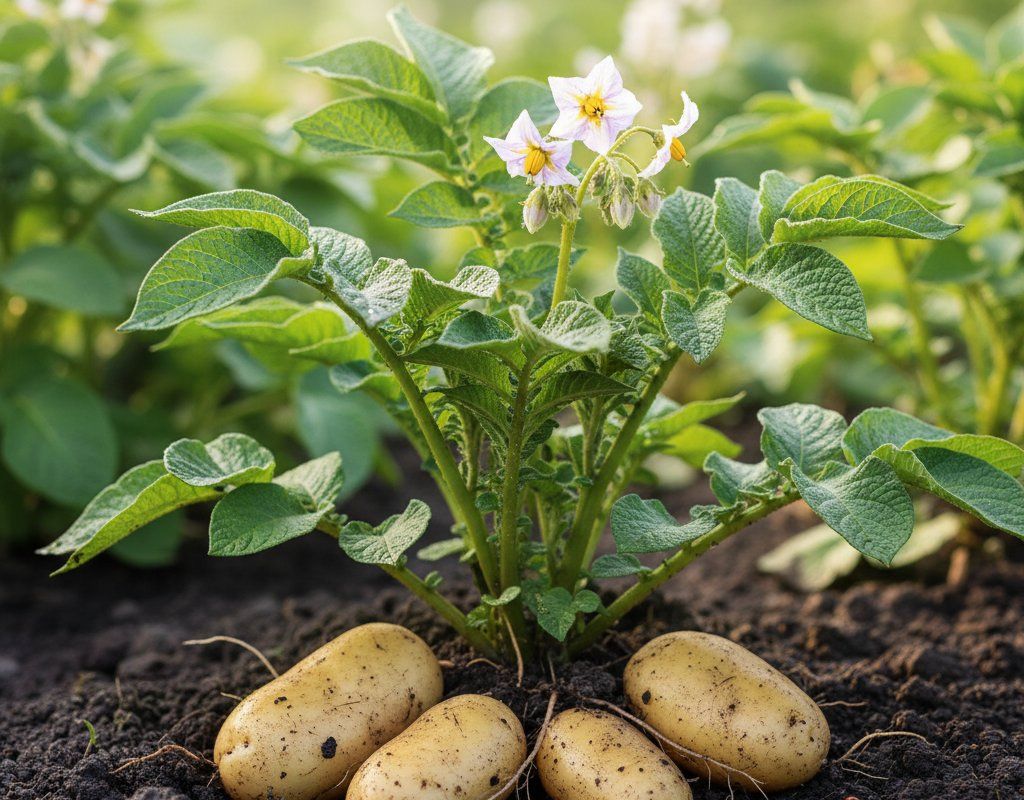
Potato in Zone 10A — Desert Southwest
Solanum tuberosum · Your Complete 2026 Planting Guide
Still Time to Sow!
The sowing window is still open for Potato.
Sow Seeds Soon
Plant seed potatoes directly in the ground. Not grown from true seed.
How to Plant Potato in Zone 10A — Desert Southwest
Here are all your options for getting potato in the ground, from the easiest method to more advanced approaches.
Direct Sow Seeds
RecommendedEarly January through mid September
around January 6
Consider succession planting every 2-3 weeks for continuous harvest.
Plant seed potatoes directly in the ground. Not grown from true seed.
Buy Starts
Works WellEarly to late January
around January 6
Plant purchased starts after last frost (January 20).
Start Seeds Indoors
ChallengingThis plant is typically not started indoors.
Transplant Outdoors
Timing InfoEarly to late January
around January 6
Can tolerate light frost, but wait for soil to be workable.
Plan to transplant within a few weeks of your target date.
Overview
Growing potatoes in the Desert Southwest gives you complete control over variety and freshness that store-bought spuds can't match. Your harvest timing perfectly aligns with our mild winters, letting you enjoy creamy new potatoes during the pleasant months when outdoor cooking and grilling are at their peak. The satisfaction of digging your own fingerlings or russets from our desert soil makes every backyard barbecue more rewarding.
Our extreme summer heat and arid conditions do present challenges for potato growing, but our 339-day growing season offers multiple planting opportunities to work around the harshest months. The key is timing your plantings to avoid the brutal summer heat while taking advantage of our mild winters and long growing seasons.
Transplanting Outdoors
Starting potatoes from transplants isn't the typical approach since seed potatoes go directly into the ground. However, if you're growing from true potato seeds (rare but available), you can transplant seedlings from early to late January when our winter temperatures are mild and stable.
Before moving any potato transplants outside, harden them off gradually over a week. Start with 2-3 hours of morning sun, then gradually increase their outdoor exposure. Our January weather can swing from pleasant 70°F days to occasional frosty nights, so watch the forecast closely.
Space transplanted potato seedlings 12 inches apart in well-prepared soil. Plant them at the same depth they were growing in containers, and hill soil around the stems as they grow to encourage more tuber production.
Direct Sowing
Direct sowing seed potatoes is the preferred method in the Desert Southwest, and you have flexibility with timing from early January through mid-September. Plant seed potatoes when soil temperature reaches 45°F, which happens by early January in most Desert SW areas. Our alkaline soil needs amendment with compost or sulfur to lower pH for better tuber development.
Cut seed potatoes into pieces with at least two eyes each, then let them cure for 24-48 hours before planting. This prevents rot in our variable winter moisture conditions. Plant pieces 4-6 inches deep and 12 inches apart, with eyes facing up. Our rocky desert soil often requires breaking through caliche layers, so prepare planting areas well in advance.
Hill soil around plants as they grow, covering stems but leaving top leaves exposed. This protects developing tubers from sunscald during our intense spring sunshine and encourages more potato production. Plan your planting timing so harvest occurs before extreme heat arrives or during our cooler fall months.
Watering Potato in Zone 10A (Desert Southwest)
Potatoes need consistent moisture but never waterlogged soil in our arid Desert Southwest climate. During the growing season, provide about 1-2 inches of water weekly through deep, infrequent irrigation. Check soil moisture using the finger test - if dry 2 inches down, it's time to water. Our low humidity means soil dries faster than in humid climates, so monitor closely.
Water at soil level rather than overhead to conserve precious water and prevent foliar diseases. Drip irrigation or soaker hoses work perfectly for potato beds. During tuber formation when plants flower, maintain even moisture - irregular watering in our extreme heat causes hollow heart and cracked potatoes. Never let plants completely dry out during this critical period.
Reduce watering significantly about two weeks before harvest to prevent tuber rot and improve storage quality. Wet soil at harvest time leads to disease problems that our warm soil temperatures can accelerate. Light mulching with gravel or inorganic materials helps retain moisture without creating pest habitats in our desert environment.
During monsoon season, adjust your watering schedule based on natural rainfall. Our heavy summer storms can saturate soil quickly, so watch for signs of overwatering like yellowing lower leaves or soft, mushy tubers forming near the surface.
🧪Fertilizing Potato
Feeding Schedule
Organic Fertilizer Options
Harvest Time
Your first potato harvest typically begins around early April, about 90 days after January plantings. For new potatoes, harvest when plants begin flowering - these tender, thin-skinned beauties are perfect for immediate use in spring cooking. Gently dig around plants without disturbing the main root system to grab a few early tubers.
For storage potatoes, wait until foliage completely dies back naturally. This signals that tubers have reached full maturity and developed proper skin thickness for storage. In our Desert Southwest, this usually happens by early summer for spring plantings or late fall for summer plantings, depending on your timing.
Use a garden fork to carefully lift entire plants, working from one side to avoid spearing tubers. Brush off soil but don't wash potatoes destined for storage - our low humidity helps cure them naturally. Let freshly harvested potatoes sit in a shaded, well-ventilated area for 7-10 days to cure and heal any small cuts.
Plan your final harvest before our first frost arrives in late December. Any remaining plants should be harvested regardless of maturity stage, as frost will damage both foliage and any exposed tubers. Green potatoes from sun exposure should be discarded as they contain harmful solanine.
Common Problems in Zone 10A (Desert Southwest)
Colorado potato beetle appears as orange-yellow striped beetles and their orange egg masses on leaf undersides. Adult beetles and their soft-bodied larvae chew large holes in potato leaves, potentially defoliating entire plants. In the Desert Southwest, these pests often arrive during our spring growing season when temperatures moderate.
The beetles thrive in our mild winter conditions and can overwinter successfully in garden debris. Hand-picking adults and crushing egg masses provides good control in small plantings. For larger areas, apply beneficial nematodes to soil or use targeted organic sprays during early morning when beetles are less active in our heat.
Late blight shows as large, dark green-gray water-soaked spots on leaves with white fuzzy growth on undersides during humid conditions. This devastating disease spreads rapidly during our monsoon season when humidity spikes and temperatures moderate. Entire plantings can be destroyed within days once established.
Prevent late blight through excellent air circulation, avoid overhead watering, and plant resistant varieties when possible. Remove and bag affected plants immediately - never compost diseased material. Apply copper-based fungicides preventatively before monsoon season arrives, as treatment after infection begins proves largely ineffective.
Scab creates rough, corky patches on tuber surfaces that make potatoes unsightly but still edible. Our alkaline desert soil naturally favors scab development, especially when soil pH exceeds 7.0. Inconsistent watering during our variable spring weather also promotes this bacterial disease.
Lower soil pH with sulfur amendments before planting and maintain consistent soil moisture throughout the growing season. Choose scab-resistant varieties for long-term success. Avoid fresh manure applications, which can raise soil pH and provide bacteria-friendly conditions in our warm desert soil.
Desert Southwest Specific Challenges: Our extreme summer heat can cause sunscald on exposed tubers, while rapid temperature swings during spring stress plants and promote disease. Inconsistent monsoon moisture creates perfect conditions for both drought stress and sudden bacterial problems when rains finally arrive.
Best Companions for Potato
Plant these nearby for healthier Potato and better harvests.

Keep Away From

Companion Planting Details
Plant beans near your potatoes to fix nitrogen in our nutrient-poor desert soil while providing natural pest deterrence. Corn makes an excellent companion, offering afternoon shade during our intense spring sunshine while potatoes help break up compacted soil for corn roots. Brassicas like cabbage and broccoli grow well in the same cool-season timing, and their strong scents can confuse Colorado potato beetles.
Avoid planting tomatoes, squash, cucumbers, or sunflowers near potatoes. These plants share similar pest and disease vulnerabilities, particularly to late blight during monsoon season. Sunflowers and squash family plants also compete heavily for water - a precious resource in our arid climate that potatoes need consistently during tuber formation.
🌸Best Flowers to Plant with Potato
These flowers protect your Potato from pests and attract pollinators for better harvests.


Get a Reminder When It's Time to Plant
We'll email you when key planting windows open for your zone.