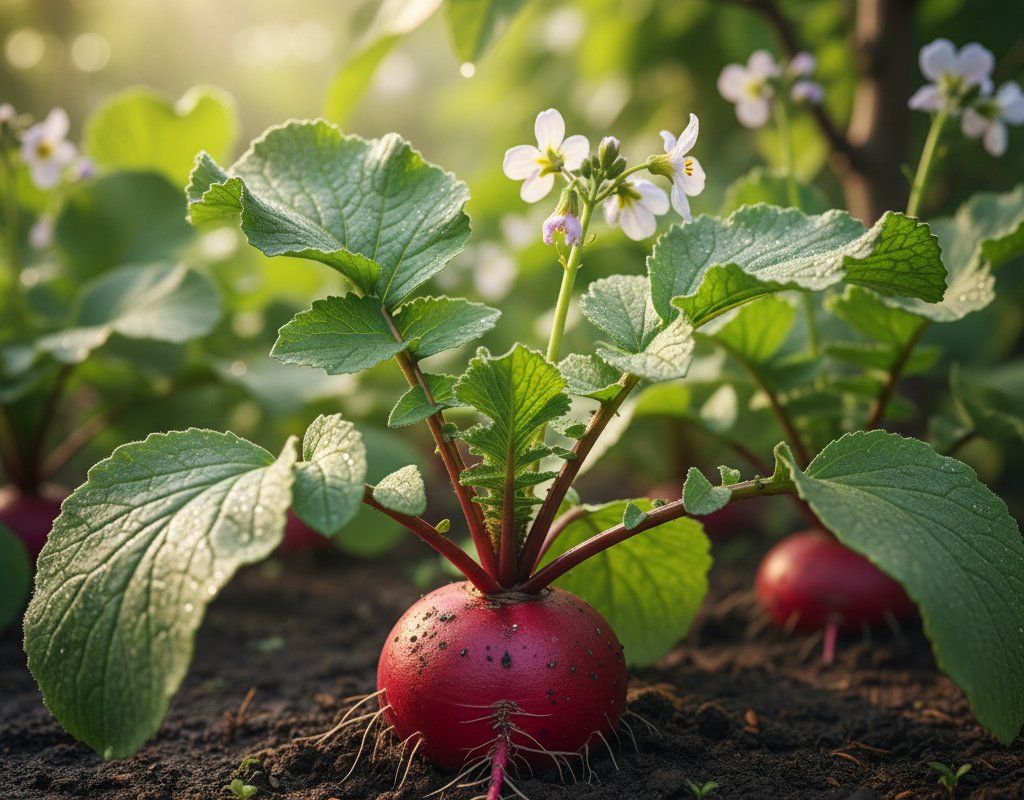
Radish in Zone 10A — Desert Southwest
Raphanus sativus · Your Complete 2026 Planting Guide
Harvest Time!
Your Radish should be producing now!
Harvest Tips
Check size by brushing soil away from crown. Pull when ready.
How to Plant Radish in Zone 10A — Desert Southwest
Here are all your options for getting radish in the ground, from the easiest method to more advanced approaches.
Direct Sow Seeds
RecommendedLate December through mid November
around December 23
Consider succession planting every 2-3 weeks for continuous harvest.
Fast-growing and easy. No reason to start indoors.
Buy Starts
Works WellLate December through early February
around December 23
Plant purchased starts after last frost (January 20).
Start Seeds Indoors
ChallengingThis plant is typically not started indoors.
Transplant Outdoors
Timing InfoLate December through early February
around December 23
Can tolerate light frost, but wait for soil to be workable.
You have a nice window — no need to rush.
Fall Planting
Late October through late November
November 13 ideal · Direct sow for fall harvest
Plant a second crop in mid-summer for fall harvest. Radish actually prefers the cooling temperatures of fall.
Overview
Radishes are the perfect gateway crop for Desert Southwest gardeners, delivering crisp, peppery roots in just 25 days when you time them right. In our Zone 10A climate, these fast-growing brassicas shine during our mild winter months, providing fresh, homegrown crunch when grocery store radishes are woody and expensive. Their quick turnaround means you can succession plant every two weeks for continuous harvests throughout our extended cool season.
While our extreme summer heat makes radish growing impossible from May through September, our 339-day growing season offers plenty of opportunities for multiple plantings. The key is working with our desert climate rather than against it—plant during our mild winters when soil temperatures stay cool and consistent, avoiding the temperature swings that can stress these fast-maturing roots.
Transplanting Outdoors
Though radishes prefer direct sowing, you can transplant seedlings if you started them indoors during a winter cold snap. Your transplant window runs from late December through early February, when our desert nights stay cool enough to prevent bolting. Start the hardening off process about a week before transplanting by gradually exposing seedlings to outdoor conditions for increasing periods each day.
Space transplants 2-4 inches apart in well-amended soil, giving the larger varieties more room to develop. Handle the delicate tap roots carefully during transplanting, as damaged roots often fork or become misshapen. Plant them at the same depth they were growing in their containers, and water thoroughly to help them establish in our dry desert air.
Our winter weather during transplant season is generally mild, but watch for unexpected cold snaps that can drop temperatures below freezing. While radishes handle frost well, newly transplanted seedlings need a few days to recover their root systems before facing temperature stress.
Direct Sowing
Direct sowing is absolutely the way to go with radishes in the Desert Southwest—they're fast, easy, and hate having their roots disturbed anyway. Your sowing window stretches from late December through mid-November, taking advantage of our cool winter months when soil temperatures stay between 45-65°F. Wait until the worst of our summer heat breaks in October, then begin your succession plantings.
Prepare your soil by working in compost to improve drainage and water retention—both crucial in our desert conditions. Plant seeds ½ inch deep and 2-4 inches apart, with rows spaced 6 inches apart. The smaller salad radishes can handle closer spacing, while daikon and other storage varieties need the full 4 inches to develop properly.
Keep the soil consistently moist until germination, which happens quickly in 3-5 days when conditions are right. Our low desert humidity means the soil surface dries out fast, so check daily and water gently to maintain even moisture. Once established, radishes are surprisingly tolerant of our alkaline soil and will be ready to harvest before you know it.
Watering Radish in Zone 10A (Desert Southwest)
Consistent moisture is absolutely critical for growing sweet, crisp radishes in our arid Desert Southwest climate. Unlike many crops that can handle some drought stress, radishes turn woody and fiery-hot when water-stressed, ruining their texture and making them nearly inedible. With only 8-15 inches of annual rainfall and bone-dry air year-round, you'll be providing all their moisture needs through irrigation.
Water deeply 2-3 times per week during our cool growing season, providing about 1 inch of total water weekly. Check soil moisture using the finger test—stick your finger 2 inches down, and water when the soil feels barely moist at that depth. Our fast-draining desert soils mean you'll likely need to water more frequently than gardeners in other regions, especially during warm spells when temperatures climb into the 80s.
Water at soil level rather than overhead to avoid encouraging fungal issues, though our low humidity makes disease pressure minimal compared to more humid regions. Signs of underwatering include cracked shoulders, pithy centers, and excessive heat in the roots. Overwatering shows up as split roots and poor flavor development—though this is less common in our desert environment.
A thin layer of organic mulch helps retain soil moisture between waterings and keeps roots cool during temperature swings. Avoid heavy mulching that might interfere with the radishes pushing their shoulders above ground as they mature.
🧪Fertilizing Radish
Feeding Schedule
Organic Fertilizer Options
Harvest Time
Your first radish harvest begins in mid to early January when planted during the optimal winter window, though succession plantings extend this season considerably. These speedy roots reach maturity in just 25 days under ideal conditions, making them one of the quickest crops in your desert garden. Watch for the telltale sign of readiness—the radish shoulders pushing up above the soil surface, showing you the size developing below ground.
Pull spring radishes when they reach about 1 inch in diameter for the best texture and mildest flavor. Larger varieties like daikon can grow much bigger while maintaining quality, but don't let any radish sit too long in the ground—they become woody and develop an unpleasant pithy texture surprisingly quickly. Test-pull one radish to check size and quality before harvesting the entire planting.
Harvest by grasping the leaves close to the soil and pulling straight up with a gentle twisting motion. The entire root should come up easily in our well-prepared desert soil. If you encounter resistance, loosen the soil around the radish first to avoid breaking the root.
As first frost approaches in late December, harvest any remaining radishes since they won't survive extended freezing temperatures, despite their general frost hardiness. However, our desert winters are mild enough that you can often continue harvesting right through the season with proper timing of your plantings.
Common Problems in Zone 10A (Desert Southwest)
Flea Beetles These tiny dark beetles create characteristic round holes (shot-hole pattern) in radish leaves, giving them a peppered appearance. You'll see the small jumping insects when you disturb the plants, and damage is worst on young seedlings during their vulnerable first few weeks. In our desert climate, flea beetles are most active during warm spells and can quickly overwhelm small plants.
The beetles are attracted to stressed plants, which is common in our low-humidity environment where young seedlings struggle with moisture retention. Cover vulnerable seedlings with lightweight row covers during the first 2-3 weeks after germination. You can also delay planting until plants are larger or apply kaolin clay coating to leaves. Interplanting with basil or catnip helps repel these pests naturally.
Root Maggots Small white tunnels through your radish roots indicate root maggot damage, often accompanied by wilted, stunted plants above ground. These are the larvae of small flies that lay eggs in the soil near brassica plants, and our warm desert soil provides ideal breeding conditions. Affected radishes become unmarketable and often rot in storage.
Root maggots thrive in moist soil conditions, which makes consistent watering a double-edged sword in desert gardening. Prevent problems by using row covers immediately after planting to block egg-laying flies. Crop rotation helps break the lifecycle, and beneficial nematodes applied to soil can control larvae populations effectively.
Pithy Roots Radishes develop woody, spongy centers instead of crisp, solid flesh—a common problem in our desert heat and low humidity conditions. This usually results from inconsistent watering, temperature stress, or leaving radishes in the ground too long past maturity. The outer root may look fine, but the interior becomes unpalatable and tough.
Prevent pithy roots by maintaining consistent soil moisture and harvesting promptly at maturity. Our extreme temperature swings between day and night can stress plants, so plant during the coolest months and provide afternoon shade if needed. Fast-growing varieties are less prone to this problem than slower-maturing types.
Desert Southwest Specific Challenges Our extreme heat, arid air, and alkaline soil create unique challenges for radish growing. The combination of intense sun and low humidity can quickly stress plants, while our monsoon pattern means inconsistent natural moisture. Plant only during cool months, ensure consistent irrigation, and consider afternoon shade cloth during warm spells to maintain optimal growing conditions.
Best Companions for Radish
Plant these nearby for healthier Radish and better harvests.


Keep Away From
Companion Planting Details
Radishes make excellent companions for carrots in desert gardens—their quick growth breaks up compacted soil for the slower-developing carrot roots, while the radishes are harvested before competing for space. Plant lettuce nearby to take advantage of the same cool-season irrigation schedule and similar spacing requirements. Both crops appreciate consistent moisture and benefit from the same organic soil amendments that help retain water in our fast-draining desert soils.
Peas and radishes work well together since peas fix nitrogen that benefits the quick-growing radishes, though plant peas on the north side to avoid shading your radishes during our low winter sun angles. Cucumbers can follow radishes in the same bed as temperatures warm, taking advantage of the improved soil structure. Avoid planting near hyssop, which can stunt radish growth and affect flavor development—particularly problematic when you're trying to maximize every growing day in our limited cool season.
🌸Best Flowers to Plant with Radish
These flowers protect your Radish from pests and attract pollinators for better harvests.



Get a Reminder When It's Time to Plant
We'll email you when key planting windows open for your zone.