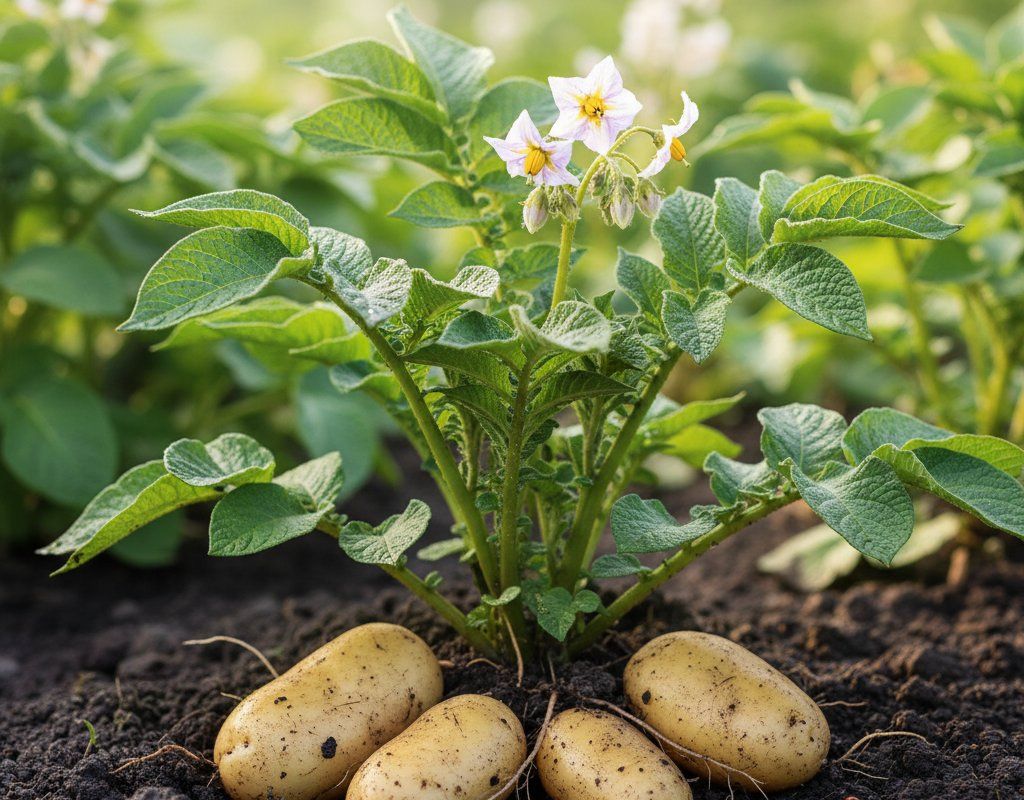
Potato in Zone 8A — Pacific Northwest
Solanum tuberosum · Your Complete 2026 Planting Guide
Planning Ahead — Great!
You’re ahead of the season. Here’s when to start.
Mark Your Calendar
How to Plant Potato in Zone 8A — Pacific Northwest
Here are all your options for getting potato in the ground, from the easiest method to more advanced approaches.
Direct Sow Seeds
RecommendedLate March through mid July
around March 27
Consider succession planting every 2-3 weeks for continuous harvest.
Plant seed potatoes directly in the ground. Not grown from true seed.
Buy Starts
Works WellLate March through mid April
around March 27
Plant purchased starts after last frost (April 10).
Start Seeds Indoors
ChallengingThis plant is typically not started indoors.
Transplant Outdoors
Timing InfoLate March through mid April
around March 27
Can tolerate light frost, but wait for soil to be workable.
Plan to transplant within a few weeks of your target date.
Overview
Homegrown potatoes in the Pacific Northwest offer something store-bought varieties simply can't match — the ability to harvest creamy new potatoes in midsummer or let them develop into full-sized storage spuds with complex flavors that improve through our long, mild fall. Our cool nights and moderate summer temperatures create ideal conditions for potato development, allowing tubers to form steadily without the stress that hot climates bring.
While late blight can challenge potato growers in our region, and our cool spring soils mean a slower start than warmer zones, your 203-day growing season gives you plenty of flexibility for successive plantings. Plant your first seed potatoes when soil warms in late spring, then continue planting through midsummer for a continuous harvest that can extend well into early winter.
Transplanting Outdoors
Transplanting isn't the typical method for potatoes since you'll be planting seed potatoes directly, but if you've started potato slips or small plants indoors, you can transplant them outdoors from late March through mid-April. Harden off your potato plants gradually over a week by exposing them to outdoor conditions for increasing periods each day.
Space transplants 12 inches apart in rows, giving them room to develop their underground tuber systems. Be prepared for our unpredictable spring weather — late March through April can bring sudden cold snaps or extended cloudy periods that slow establishment.
Keep transplants protected with row covers if temperatures threaten to drop below 40°F, and ensure they have good drainage since our wet spring conditions can lead to root rot in poorly draining soil.
Direct Sowing
Direct sowing seed potatoes is the recommended method in the Pacific Northwest, giving you a planting window from late March through mid-July. Wait until soil temperatures reach at least 45°F consistently — our cool spring soils often need extra time to warm compared to other Zone 8A regions.
Plant seed potatoes 4-6 inches deep in well-draining soil, spacing them 12 inches apart. Cut larger seed potatoes into pieces with at least two eyes each, letting the cut surfaces cure for 24-48 hours before planting to prevent rot. Our mild, overcast spring days provide perfect conditions for this curing process.
Hill soil around the stems as plants grow, keeping developing tubers covered to prevent them from turning green. The beauty of our long growing season means you can plant early varieties in late March for summer harvest, then plant again in May or June for fall storage potatoes that mature in our excellent fall weather.
Watering Potato in Zone 8A (Pacific Northwest)
Potatoes need consistent moisture throughout the growing season, requiring about 1-2 inches of water weekly including rainfall. In our dry summer months, you'll likely need to supplement with irrigation since we typically receive little rain from July through September.
Use the finger test — stick your finger 2 inches into the soil near the plants. If it feels dry at that depth, it's time to water deeply at the base of plants rather than overhead watering, which can promote late blight in our occasionally humid conditions.
Pay special attention during flowering, when tubers are actively forming underground. This is when consistent moisture matters most for good yields. However, reduce watering significantly about two weeks before harvest to prevent tuber rot and improve storage quality.
Watch for signs of stress: wilting during our mild afternoon heat indicates underwatering, while yellowing lower leaves in well-watered plants might signal overwatering. A 2-3 inch layer of organic mulch helps maintain even soil moisture and keeps our summer weeds at bay during the dry months.
🧪Fertilizing Potato
Feeding Schedule
Organic Fertilizer Options
Harvest Time
You can begin harvesting new potatoes in late June through early July, about 60-70 days after planting, when plants start flowering. These small, thin-skinned potatoes are perfect for immediate use and showcase the superior flavor that our cool nights provide.
For full-sized storage potatoes, wait until plant foliage dies back completely — typically 90 days from planting or by late September through early November. The dying foliage signals that tubers have reached maturity and developed proper skin thickness for storage.
Harvest on a dry day by carefully digging around plants with a garden fork, working from the outside in to avoid spearing tubers. Brush off excess soil but don't wash them yet — curing in a cool, dark place for 7-10 days allows their skins to toughen for better storage.
With our first frost typically arriving in late October, you have plenty of time for late plantings to mature. However, harvest all potatoes before hard frost hits, as frozen tubers quickly turn to mush and become inedible.
Common Problems in Zone 8A (Pacific Northwest)
Colorado Potato Beetle These distinctive yellow-orange beetles with black stripes, along with their orange egg masses and red larvae, can quickly defoliate potato plants. Adult beetles overwinter in garden debris and emerge in late spring to feed and reproduce. Hand-pick beetles, eggs, and larvae in small plantings, or use row covers early in the season. Beneficial insects like ladybugs and parasitic wasps help control populations naturally in our region.
Late Blight Large, irregularly shaped dark green-gray water-soaked spots appear on leaves, with white fuzzy growth on leaf undersides during humid weather. This devastating disease thrives in our cool, wet spring conditions and can destroy entire plantings within days. Remove and destroy affected plants immediately — bag them rather than composting. Apply copper-based fungicides preventatively and ensure good air circulation between plants. Plant resistant varieties like 'Mountain Pride' or 'Iron Lady' that perform well in Pacific Northwest conditions.
Scab Rough, corky brown spots or patches develop on tuber surfaces, making potatoes unsightly though still edible. This bacterial disease flourishes in alkaline soils and dry conditions followed by moisture. Maintain soil pH between 5.0-6.0, avoid fresh manure which raises pH, and keep soil evenly moist throughout the growing season rather than allowing it to dry out then flooding it.
Pacific Northwest Specific Challenges: Our mild summers and dry-summer conditions actually benefit potato growing compared to hotter regions, but late blight remains our biggest challenge due to cool, wet springs. The combination of morning fog, cool temperatures, and high humidity creates perfect conditions for this disease to establish before our dry summer weather arrives.
Best Companions for Potato
Plant these nearby for healthier Potato and better harvests.

Keep Away From

Companion Planting Details
Plant potatoes with beans, which fix nitrogen in the soil that potatoes will use later in the season, and corn, which provides natural windbreaks without competing for underground space. Brassicas like cabbage and broccoli make excellent companions since they mature at different times and help break pest cycles, while horseradish planted at row ends can deter Colorado potato beetles with its strong scent.
Avoid planting potatoes near tomatoes, peppers, or eggplant since they're all nightshade family members susceptible to the same diseases, particularly late blight which spreads rapidly between these crops in our cool, moist spring conditions. Keep them away from squash, cucumbers, and sunflowers too, as these vigorous spreaders compete heavily for soil nutrients that your potato tubers need for proper development.
🌸Best Flowers to Plant with Potato
These flowers protect your Potato from pests and attract pollinators for better harvests.



Get a Reminder When It's Time to Plant
We'll email you when key planting windows open for your zone.