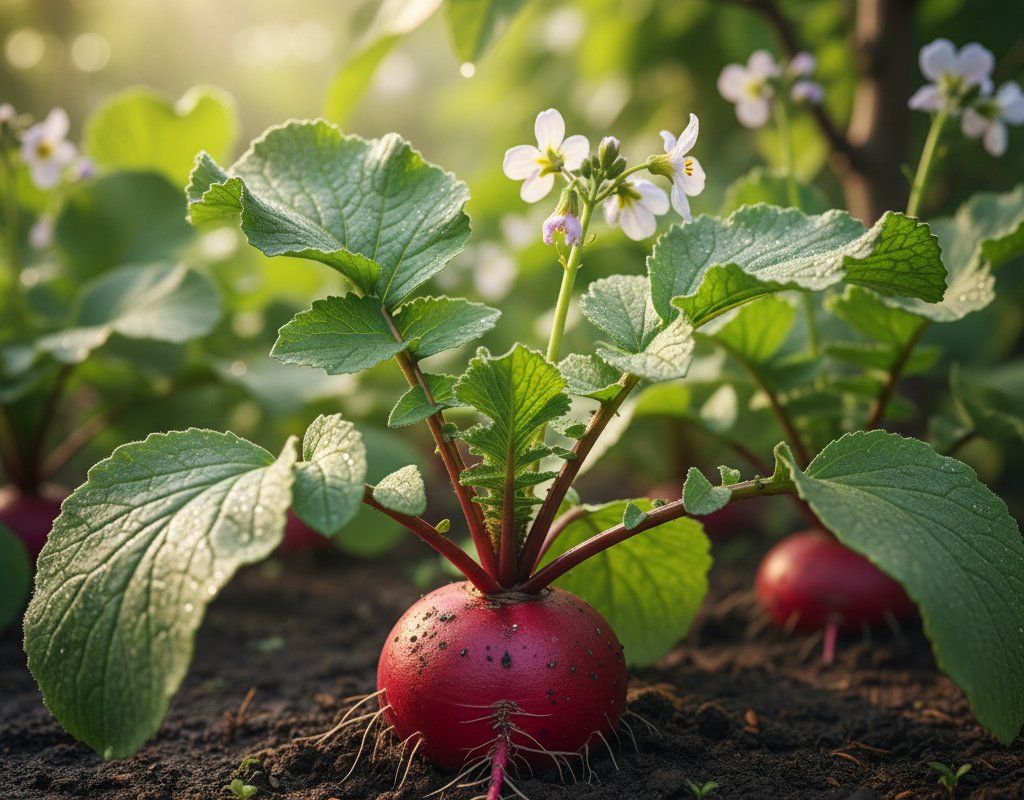
Radish in Zone 10B — Desert Southwest
Raphanus sativus · Your Complete 2026 Planting Guide
Harvest Time!
Your Radish should be producing now!
Harvest Tips
Check size by brushing soil away from crown. Pull when ready.
How to Plant Radish in Zone 10B — Desert Southwest
Here are all your options for getting radish in the ground, from the easiest method to more advanced approaches.
Direct Sow Seeds
RecommendedMid December through late November
around December 18
Consider succession planting every 2-3 weeks for continuous harvest.
Fast-growing and easy. No reason to start indoors.
Buy Starts
Works WellMid December through late January
around December 18
Plant purchased starts after last frost (January 15).
Start Seeds Indoors
ChallengingThis plant is typically not started indoors.
Transplant Outdoors
Timing InfoMid December through late January
around December 18
Can tolerate light frost, but wait for soil to be workable.
You have a nice window — no need to rush.
Fall Planting
Early November through early December
November 18 ideal · Direct sow for fall harvest
Plant a second crop in mid-summer for fall harvest. Radish actually prefers the cooling temperatures of fall.
Overview
In the Desert Southwest, radishes are our earliest success story in a region where timing everything perfectly can feel like an art form. These crisp, peppery roots mature in just 25 days, giving you a quick harvest of garden-fresh satisfaction when many other crops are still weeks away from producing. Their natural cold tolerance makes them perfect for our mild winters, and their fast growth means you can squeeze in multiple plantings throughout our extended growing season.
Desert gardening means working with extreme heat and arid conditions, but radishes actually thrive in our challenging climate when planted at the right time. With our 349-day growing season, you have plenty of opportunities to grow successive crops from mid-December all the way through late November. The key is avoiding our brutal summer months and capitalizing on our two distinct growing seasons when temperatures stay reasonable.
Transplanting Outdoors
While radishes can be transplanted, it's rarely worth the extra effort in our desert climate. These fast-growing roots prefer to stay put once planted, and transplant shock can cause them to bolt prematurely or develop woody, bitter roots. If you do need to transplant seedlings started indoors, plan to move them outdoors between mid-December and late January when our winter temperatures are most stable.
Give transplants a full week of gradual hardening off, starting with just 2-3 hours of morning sun and gradually increasing their outdoor exposure. Our intense desert sun can scorch even cold-hardy seedlings if they're not properly acclimated. Space transplants 2-4 inches apart in well-draining soil, and expect them to need about a week to establish before showing strong growth.
Direct Sowing
Direct sowing is absolutely the way to go with radishes in the Desert Southwest. Sow seeds from mid-December through late November, avoiding only our peak summer months when soil temperatures stay too hot even for these quick growers. The beauty of radishes is their speed – you'll see germination within 3-5 days in our warm desert soil, even during our cooler winter months.
Prepare your soil by working in compost to improve drainage, which is crucial in our heavy clay and caliche conditions. Radish seeds need soil temperatures between 45-85°F to germinate well, which covers most of our growing season except the extreme heat period. Sow seeds ¼ inch deep and space them 2-4 inches apart – closer spacing gives you smaller, more tender radishes perfect for salads.
The fast 25-day maturity means there's simply no advantage to starting these indoors. Direct sowing eliminates transplant shock and gets you eating garden-fresh radishes sooner. With our long growing season, you can easily succession plant every 2-3 weeks for continuous harvests.
Watering Radish in Zone 10B (Desert Southwest)
Radishes need consistent moisture throughout their short growing cycle, which means paying close attention to watering in our arid climate. These roots are not drought tolerant despite their tough appearance – irregular watering creates pithy, overly spicy radishes that crack and split. In our Desert Southwest conditions, plan to water deeply 2-3 times per week, providing about 1 inch of water weekly.
Use the finger test religiously with radishes: stick your finger 2 inches into the soil, and if it's dry at that depth, it's time to water. Our low humidity pulls moisture from the soil faster than in more humid regions, so you'll likely need to water more frequently than gardeners in other Zone 10B areas. Water at the base of plants rather than overhead – our arid air means foliage dries quickly, but targeted watering is more efficient.
During our cooler winter growing season, you can often stretch watering to every 3-4 days, but don't let the soil dry completely. Summer plantings (if you're brave enough to try them with shade cloth) need daily attention. Signs of underwatering include wilted leaves and hot, woody roots, while overwatering shows as yellowing leaves and soft, rotting roots.
A thin layer of mulch helps retain soil moisture in our dry climate, but keep it light – heavy mulch can create pest problems and interfere with the radishes pushing up through the soil as they mature.
🧪Fertilizing Radish
Feeding Schedule
Organic Fertilizer Options
Harvest Time
Your first radish harvest will be ready between mid to early January if you planted in our ideal December window, though the exact timing depends on variety and weather conditions. These fast growers live up to their 25-day reputation in our Desert Southwest climate, often maturing even quicker during warm spells. Watch for the characteristic shoulder of the radish pushing above the soil surface – this is your cue that they're sizing up nicely.
Pull radishes when they reach about 1 inch in diameter for the classic spring types, though smaller sizes often have better flavor and crispness. Don't wait too long to harvest – our warm soil temperatures can cause radishes to become woody and overly pungent quickly. Unlike tomatoes or peppers, radishes won't improve after pulling, so timing your harvest right is crucial.
Use a gentle twisting motion to pull radishes straight up, or loosen the soil around them first if your desert clay is compacted. Harvest in the cooler morning hours to preserve crispness, and get them into cool storage immediately. With our mild winters, you can often leave radishes in the ground for a few extra days if needed, but don't push it too far.
As our first frost approaches in late December, harvest any remaining radishes regardless of size. These cold-hardy plants can handle light frost, but prolonged cold will damage the roots. Plan your final plantings about 30 days before expected frost to ensure a full harvest.
Common Problems in Zone 10B (Desert Southwest)
Flea Beetles Small, round holes scattered across radish leaves in a shot-hole pattern indicate flea beetles – tiny, dark beetles that jump like fleas when disturbed. Young seedlings suffer the most damage, sometimes having their leaves completely riddled before they can establish. In our Desert Southwest climate, flea beetles are most active during warm spells in late fall and early spring when temperatures hit 70-80°F.
These jumping pests thrive in our dry conditions and can multiply quickly without natural predators. Protect vulnerable seedlings with lightweight row covers during the first 2-3 weeks after germination. Kaolin clay spray creates a barrier that deters feeding, and interplanting with aromatic herbs like basil can help confuse these pests.
Root Maggots Stunted growth and wilting plants may signal root maggots tunneling through your radish roots, leaving brown, rotting channels behind. These small white larvae are the offspring of flies that lay eggs near the base of brassica plants, and they're particularly problematic in our desert soils that warm up quickly in spring.
The flies prefer moist soil and organic matter, so avoid over-mulching and ensure good drainage in our heavy clay soils. Beneficial nematodes applied to the soil can help control larvae, and row covers prevent adult flies from laying eggs. Crop rotation is essential – don't plant radishes or other brassicas in the same spot for at least two years.
Pithy Roots Radishes that look normal on the outside but have dry, spongy, flavorless interiors are suffering from inconsistent watering or heat stress. This problem is especially common in our Desert Southwest when plants experience drought stress followed by heavy watering, or when they're exposed to temperature swings.
Maintain consistent soil moisture throughout the growing period, and consider light shade cloth during unexpectedly warm winter days. Plant varieties suited to warmer conditions during shoulder seasons, and harvest promptly – leaving mature radishes in our warm soil will cause them to become pithy even with perfect watering.
Desert Southwest Specific Challenges Our extreme heat, intense sun, and alkaline soils create unique challenges for radish growing. The rapid temperature swings common in desert climates can shock these quick-growing plants, while our alkaline pH can interfere with nutrient uptake. Combat these issues with consistent watering, light shade during heat spells, and soil amendment with sulfur to lower pH naturally.
Best Companions for Radish
Plant these nearby for healthier Radish and better harvests.


Keep Away From
Companion Planting Details
Radishes make excellent companions for carrots in our Desert Southwest gardens – their quick growth helps break up compacted clay soil for slower-developing carrot roots, while their harvest timing means they're gone before carrots need the space. Plant lettuce nearby to take advantage of the light shade radishes provide during unexpectedly warm winter days, and both crops appreciate similar watering schedules in our arid climate.
Peas and radishes work well together during our cooler months, with peas fixing nitrogen that benefits the radishes' leafy growth. Cucumbers planted later in the season can follow radishes in the same space, making efficient use of our precious garden real estate. Avoid planting radishes near hyssop, which can inhibit their growth and interfere with their already short growing window – in our challenging desert conditions, radishes need all the advantages they can get.
🌸Best Flowers to Plant with Radish
These flowers protect your Radish from pests and attract pollinators for better harvests.



Get a Reminder When It's Time to Plant
We'll email you when key planting windows open for your zone.