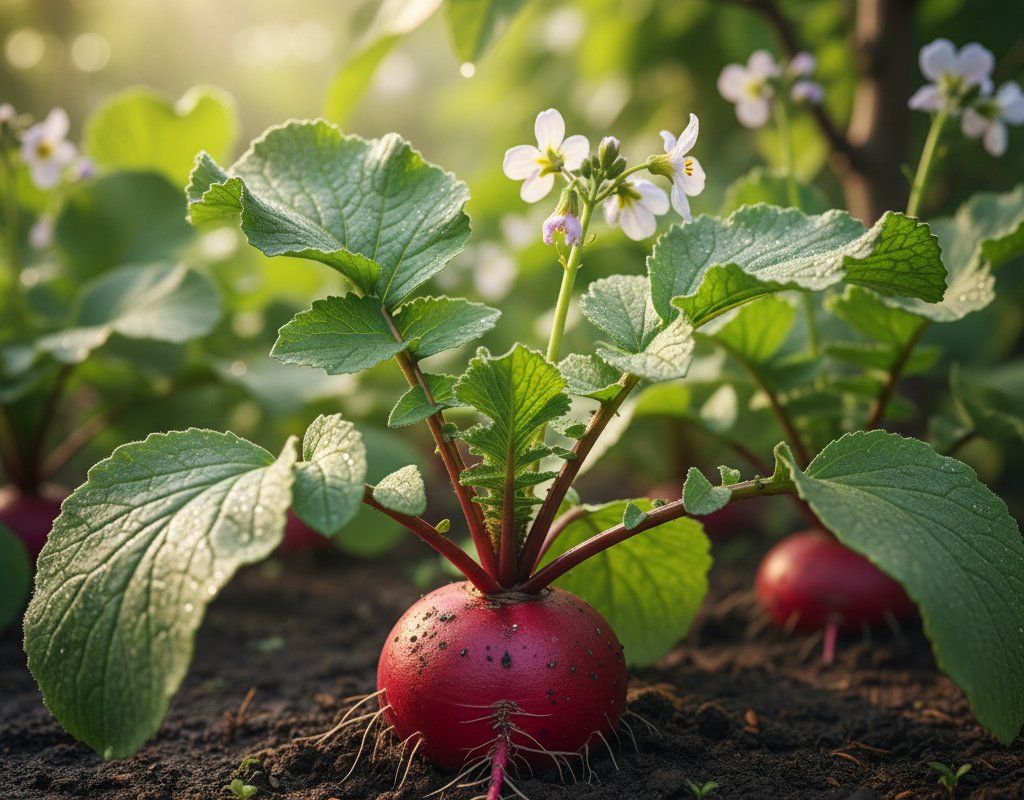
Radish in Zone 5B — Midwest
Raphanus sativus · Your Complete 2026 Planting Guide
Planning Ahead — Great!
You’re ahead of the season. Here’s when to start.
Mark Your Calendar
How to Plant Radish in Zone 5B — Midwest
Here are all your options for getting radish in the ground, from the easiest method to more advanced approaches.
Direct Sow Seeds
RecommendedLate March through early September
around March 28
Consider succession planting every 2-3 weeks for continuous harvest.
Fast-growing and easy. No reason to start indoors.
Buy Starts
Works WellLate March through early May
around March 28
Plant purchased starts after last frost (April 25).
Start Seeds Indoors
ChallengingThis plant is typically not started indoors.
Transplant Outdoors
Timing InfoLate March through early May
around March 28
Can tolerate light frost, but wait for soil to be workable.
You have a nice window — no need to rush.
Fall Planting
Mid August through mid September
August 29 ideal · Direct sow for fall harvest
Plant a second crop in mid-summer for fall harvest. Radish actually prefers the cooling temperatures of fall.
Overview
Radishes are perfect for Midwest gardeners who want quick satisfaction from their plots. These crisp, peppery roots go from seed to harvest in just 25 days, making them ideal for our 168-day growing season when you want multiple succession plantings. Our fertile Midwest soil grows tender, mild radishes that put grocery store varieties to shame, and they thrive in both our cool spring weather and the milder temperatures of early fall.
The beauty of radishes in Zone 5B is their incredible flexibility with our variable spring weather. While other crops sit waiting for soil to warm up, radishes actually prefer the cool conditions that follow our last frost in late April. They're hardy enough to handle those unexpected cold snaps that catch us off guard, and fast enough to beat the summer heat that makes them bolt and turn woody.
Transplanting Outdoors
While you *can* transplant radishes, there's really no compelling reason to start them indoors in the Midwest. These fast-growing roots prefer to be sown directly where they'll grow, and our spring weather cooperates beautifully for direct seeding.
If you do have transplants from late March through early May, harden them off gradually over a week before planting out. Space them 2-4 inches apart in loose, well-draining soil. Watch for those late spring temperature swings that can stress young transplants—a light row cover helps during unexpectedly cold nights.
The main challenge with transplanting radishes is their taproot, which doesn't appreciate being disturbed. Direct sowing gives you stronger plants and better root development in our clay-heavy Midwest soils.
Direct Sowing
Direct sowing is absolutely the way to go with radishes in our region. You can start sowing from late March through early September, taking advantage of our long growing season. The soil doesn't need to be particularly warm—radishes actually prefer cool conditions around 50-65°F, which describes most of our spring perfectly.
Prepare your bed by working compost into the top 6 inches, especially if you're dealing with heavy clay soil common in the Midwest. Sow seeds ¼ to ½ inch deep, spacing them about 2-4 inches apart. In our fertile soil, they'll germinate quickly—usually within a week when conditions are right.
The beauty of successive planting means you can sow new rows every 10-14 days through spring, then pick up again in mid-August through mid-September for fall crops. This timing works perfectly with our climate, avoiding the hottest summer weeks when radishes become pithy and overly peppery.
Watering Radish in Zone 5B (Midwest)
Consistent moisture is absolutely critical for growing mild, crisp radishes in our Midwest climate. Even though we typically receive 30-40 inches of rainfall annually, the timing doesn't always align with what fast-growing radishes need. Drought stress—even brief periods—causes roots to become pithy and fiery hot instead of tender and mildly peppery.
During our spring growing season, aim for about 1 inch of water per week, including rainfall. Check soil moisture by sticking your finger 2 inches deep—if it's dry at that level, it's time to water. Our moderate-to-humid conditions mean you can water at the base of plants without worrying too much about fungal issues, though morning watering is still preferable.
Summer heat spells require extra attention since radishes are shallow-rooted and dry out quickly. During those stretches where temperatures hit the upper 80s, you might need to water every other day. Signs of underwatering include stunted growth and overly spicy roots, while overwatering shows up as splitting or soft, mushy roots.
A light layer of grass clippings or chopped leaves helps retain moisture in our clay soils and keeps roots from getting stressed during temperature swings. Just remember that with such a short growing period—only 25 days—there's no time to recover from watering mistakes.
🧪Fertilizing Radish
Feeding Schedule
Organic Fertilizer Options
Harvest Time
Your first radishes will be ready from late April through mid-October, depending on when you planted. After just 25 days from sowing, start checking for harvest readiness—you'll see the shoulders of spring radishes pushing up above the soil surface when they're about 1 inch in diameter.
Pull them up by grasping the greens close to the root and giving a firm, straight tug. Don't let them sit in the ground too long thinking they'll get bigger—they'll just become woody and unpleasantly sharp. The window for perfect radishes is only about a week, so check your plantings daily once they start sizing up.
For fall plantings in our Midwest climate, harvest becomes a race against our first frost in early October. Radishes can handle light frosts, but a hard freeze will damage the roots. If a killing frost threatens, pull all remaining radishes regardless of size—the small ones are still perfectly edible, just more tender.
Unlike tomatoes or peppers, radishes won't continue ripening once pulled, so timing is everything. The good news is that with succession planting every couple of weeks, you'll always have a fresh crop coming along to replace what you've harvested.
Common Problems in Zone 5B (Midwest)
Flea Beetles You'll recognize flea beetle damage by the tiny round holes that pepper radish leaves, creating a distinctive shot-hole pattern. These small, dark beetles jump like fleas when disturbed and can quickly defoliate young seedlings. They're particularly troublesome during our variable spring weather when plants are still small and vulnerable.
Flea beetles thrive in the warm, dry conditions that sometimes follow our wet Midwest springs. The best prevention is protecting seedlings with lightweight row covers during their first few weeks. You can also delay planting until late spring when plants establish more quickly, or dust young leaves with kaolin clay to deter feeding.
Root Maggots Root maggot damage shows up as stunted, yellowing plants with roots that have been tunneled through by small white larvae. You might not notice the problem until harvest, when you find brown, corky tunnels running through otherwise healthy-looking radishes. These pests are the larvae of small flies that lay eggs in the soil around brassica crops.
Our cool, moist spring conditions in the Midwest create ideal conditions for root maggot flies. Crop rotation is essential—avoid planting radishes or other brassicas in the same spot year after year. Row covers immediately after planting prevent adult flies from laying eggs, and beneficial nematodes can help control larvae in the soil.
Pithy Roots Pithy radishes feel spongy instead of crisp and taste overly hot and unpleasant. This happens when roots grow too fast during hot weather, when they're left in the ground too long, or when they experience water stress. The rapid temperature swings common in Midwest weather can trigger this condition.
Consistent watering and harvesting at the right time prevent most pithy root problems. During summer heat spells, consider skipping radish plantings until late August when cooler weather returns. Choose slower-maturing varieties for summer sowings, as they're less prone to developing pithy centers.
Midwest Specific Challenges Our moderate-to-humid summers with periodic heat spells create the perfect storm for radish problems. The combination of clay soil that stays wet in spring, followed by hot, dry periods, stresses these shallow-rooted crops. Focus on soil drainage improvement and consistent moisture to grow the best radishes our fertile region can produce.
Best Companions for Radish
Plant these nearby for healthier Radish and better harvests.


Keep Away From
Companion Planting Details
Radishes make excellent companions for slower-growing crops in Midwest gardens. Plant them alongside carrots—the quick-maturing radishes will be harvested just as carrots need more space to develop. Lettuce and radishes share similar cool-weather preferences and watering needs, making them natural partners for spring and fall plantings.
Peas and radishes work beautifully together since peas fix nitrogen in the soil that benefits the leafy growth of radish greens. Cucumbers actually benefit from radishes planted nearby, as radishes can help break up heavy clay soil with their taproots while deterring cucumber beetles. Avoid planting radishes near hyssop, which can stunt their growth and affect their flavor development.
🌸Best Flowers to Plant with Radish
These flowers protect your Radish from pests and attract pollinators for better harvests.



Get a Reminder When It's Time to Plant
We'll email you when key planting windows open for your zone.