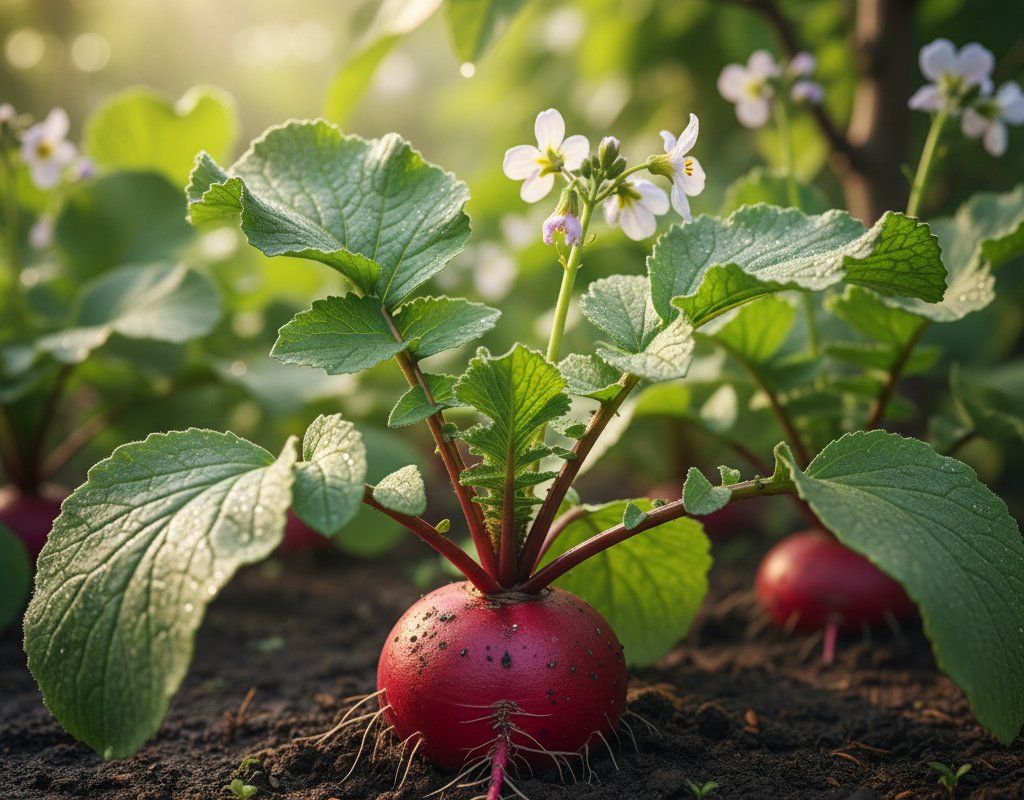
Radish in Zone 8A — Desert Southwest
Raphanus sativus · Your Complete 2026 Planting Guide
Harvest Time!
Your Radish should be producing now!
Harvest Tips
Check size by brushing soil away from crown. Pull when ready.
How to Plant Radish in Zone 8A — Desert Southwest
Here are all your options for getting radish in the ground, from the easiest method to more advanced approaches.
Direct Sow Seeds
RecommendedEarly February through mid October
around February 5
Consider succession planting every 2-3 weeks for continuous harvest.
Fast-growing and easy. No reason to start indoors.
Buy Starts
Works WellEarly February through mid March
around February 5
Plant purchased starts after last frost (March 5).
Start Seeds Indoors
ChallengingThis plant is typically not started indoors.
Transplant Outdoors
Timing InfoEarly February through mid March
around February 5
Can tolerate light frost, but wait for soil to be workable.
You have a nice window — no need to rush.
Fall Planting
Late September through late October
October 14 ideal · Direct sow for fall harvest
Plant a second crop in mid-summer for fall harvest. Radish actually prefers the cooling temperatures of fall.
Overview
Radishes are the perfect gateway crop for Desert Southwest gardeners, delivering crisp, peppery satisfaction in just 25 days from seed to harvest. In our arid climate, these fast-growing roots provide instant gratification when longer-season crops are still getting established, and their quick turnaround means you can squeeze in multiple plantings throughout our extended growing season.
Our extreme heat and 265-day growing season actually work in radishes' favor if you time it right. While summer planting is off the table when temperatures soar past 105°F, you have generous windows in spring and fall to grow multiple crops, taking advantage of our mild winters and two distinct growing seasons that make desert gardening so rewarding.
Transplanting Outdoors
Transplanting radishes is rarely worth the effort since they're such reliable direct-sowers, but if you're starting from nursery plants, get them in the ground from early February through mid-March. This timing catches the sweet spot after our last frost risk but before the intense heat arrives.
Give transplants a week of gradual hardening off, starting with morning sun only and building up to full exposure. Space them 2-4 inches apart in rows or scatter them throughout your beds. Our spring weather can swing from chilly mornings to warm afternoons, so be ready to provide temporary shade cloth if temperatures jump unexpectedly.
The main advantage of transplanting is getting a head start on your first spring harvest, but honestly, direct-sown radishes planted at the same time will catch up quickly and often outperform transplants in our desert conditions.
Direct Sowing
Direct sowing is hands-down the best way to grow radishes in the Desert Southwest, and you have an incredibly long window from early February through mid-October to keep succession plantings going. Skip the summer months when our extreme heat will bolt them straight to seed, but take advantage of our mild winters and extended fall season.
Plant seeds ¼ inch deep in loose, well-draining soil - our caliche layer can cause wonky root development, so work in plenty of compost if you're dealing with hardpan. Soil temperature isn't critical since radishes germinate in cool conditions, making them perfect for early spring planting when the ground is still chilly. Space seeds 2-4 inches apart, or scatter them and thin later.
The beauty of radishes in desert gardening is their speed - you'll have harvestable roots before the extreme heat hits if you plant in February, and fall plantings from late September through October give you fresh radishes well into winter. No fussing with indoor starts needed when direct sowing is this reliable.
Watering Radish in Zone 8A (Desert Southwest)
Consistent moisture is absolutely critical for growing crisp, mild radishes in our arid Desert Southwest climate. Unlike drought-tolerant crops that can handle our 8-15 inches of annual rainfall, radishes need steady water throughout their short 25-day growing cycle - let them dry out and you'll get woody, fiery-hot roots that are barely edible.
Water deeply when the top 2 inches of soil feel dry to your finger, which in our low humidity environment means checking every other day during spring and fall, and potentially daily during hot spells. Aim for about 1 inch of water per week, delivered slowly at soil level rather than overhead - our arid air will evaporate surface moisture before it can soak in effectively.
Watch for signs of water stress: wilted leaves during the heat of the day (normal) versus wilted leaves in morning or evening (problem). Overwatering shows up as yellowing leaves and slow growth, while underwatered radishes develop that characteristic harsh bite that makes them unpleasant to eat raw.
A thin layer of mulch helps retain soil moisture in our desert heat, but don't pile it thick around the developing roots - radishes need good air circulation and can rot if mulch holds too much moisture against their shoulders. Take advantage of monsoon moisture when it arrives, but don't count on it for consistent watering.
🧪Fertilizing Radish
Feeding Schedule
Organic Fertilizer Options
Harvest Time
Your first radishes will be ready from early March through early December, depending on when you planted - spring sowings mature quickly in our warming weather, while fall plantings take a bit longer as temperatures cool. Start checking at 20 days by gently brushing soil away from the shoulders, looking for roots about 1 inch in diameter.
The telltale sign is when radish shoulders push above the soil surface, showing you their size without having to dig. Pull them promptly when they reach full size - radishes don't improve with age and will quickly turn woody and pithy if left in the ground too long, especially during temperature swings common in desert spring.
Harvest by grasping the greens close to the soil and pulling straight up with a gentle twisting motion. If the tops break off, use a garden fork to loosen the soil around the root. Morning harvest gives you the crispest radishes since they'll be fully hydrated from overnight cooling.
As our first frost approaches in late November, harvest any remaining radishes regardless of size - they won't survive freezing temperatures, and smaller radishes are often sweeter anyway. Unlike many crops, radishes don't store well, so plan to use them fresh or pickle them within a few days of harvest.
Common Problems in Zone 8A (Desert Southwest)
Flea Beetles Small, round holes that look like someone shot your radish leaves with tiny buckshot, plus small dark beetles that jump away when you disturb the plants. These pests are most destructive to young seedlings when leaves are tender and small. In our desert climate, flea beetles often emerge earlier than expected during warm spells and can devastate a planting before you notice them. Cover young plantings with lightweight row covers until plants are established, or delay planting until seedlings can grow large enough to withstand damage. Kaolin clay spray creates a protective barrier, and interplanting with aromatic herbs like basil can help deter them.
Root Maggots Stunted, yellowing plants with small white maggots tunneling through the roots, leaving brown, rotted channels. These fly larvae thrive in moist soil conditions and are attracted to the cabbage family. Our irrigation practices in the desert can create perfect conditions if soil stays too wet. Prevent problems by avoiding fresh manure, rotating planting areas, and using row covers during peak fly activity in spring. Yellow sticky traps can help monitor adult fly populations.
Pithy Roots Hard, woody radishes with a cotton-like texture inside instead of crisp, juicy flesh. This is typically caused by inconsistent watering, extreme heat, or leaving radishes in the ground too long. Our extreme temperature swings and arid conditions make this particularly common in the Desert Southwest - radishes that experience drought stress followed by heavy watering often develop this texture. Maintain consistent soil moisture, plant during cooler weather windows, and harvest promptly when roots reach maturity.
Desert Southwest Specific Challenges: Our extreme heat and low humidity create unique stresses for radishes, making timing absolutely critical. The combination of intense sun and dry air can cause rapid moisture loss from both soil and plants, while our alkaline soils may slow germination. Plant during our cooler seasons and provide consistent irrigation to avoid the bitter, woody roots that result from heat and drought stress.
Best Companions for Radish
Plant these nearby for healthier Radish and better harvests.


Keep Away From
Companion Planting Details
Radishes make excellent companions for carrots in Desert Southwest gardens because their quick growth breaks up compacted soil before carrots develop their deeper taproots, and you can harvest the radishes before they compete for space. Lettuce and radishes share similar water needs and growing seasons, making them perfect bed partners that maximize your productive space during our cooler months.
Plant radishes near peas and other legumes to take advantage of the nitrogen fixation, and the radishes will be harvested before the peas need full space to vine. Cucumbers benefit from radishes planted nearby since the radish roots help break up our often-compacted desert soils, improving drainage for cucumber's shallow root system. Avoid planting near hyssop, which can inhibit radish germination and growth through allelopathic compounds.
🌸Best Flowers to Plant with Radish
These flowers protect your Radish from pests and attract pollinators for better harvests.



Get a Reminder When It's Time to Plant
We'll email you when key planting windows open for your zone.