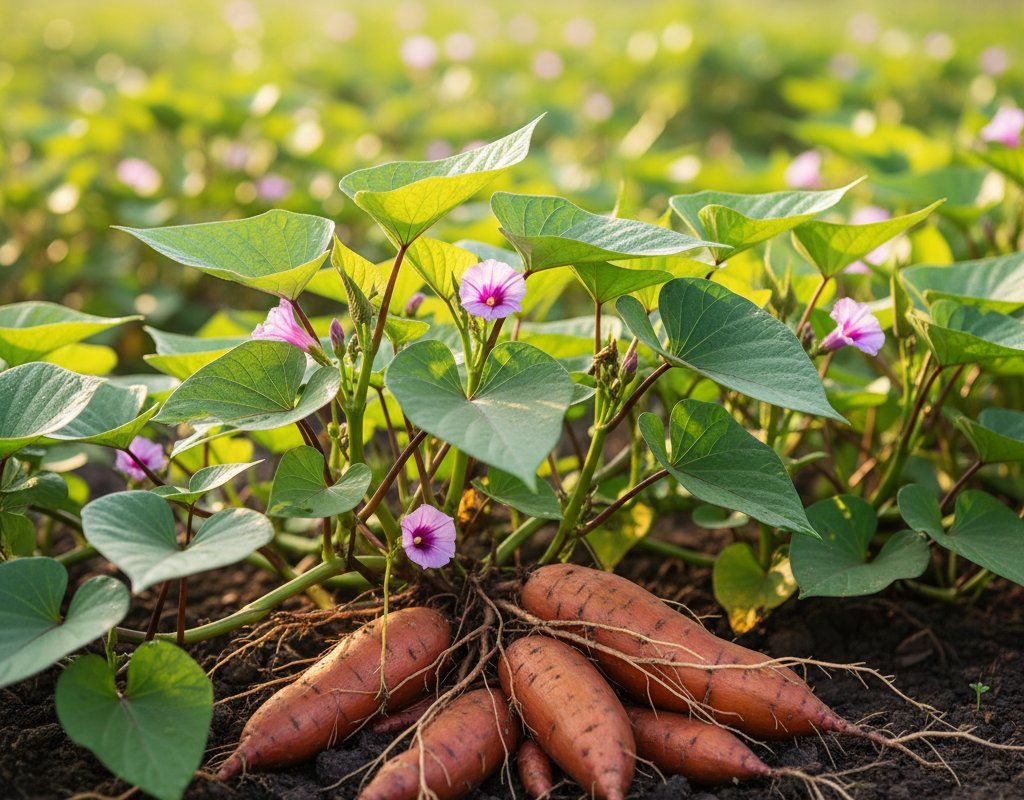
Sweet Potato in Zone 8A — Desert Southwest
Ipomoea batatas · Your Complete 2026 Planting Guide
Missed Seed Starting? No Problem!
Wait for starts to become available.
What to Do
Starts will be available at nurseries in 22 days (around March 26).
How to Plant Sweet Potato in Zone 8A — Desert Southwest
Here are all your options for getting sweet potato in the ground, from the easiest method to more advanced approaches.
Buy Starts
RecommendedLate March through mid April
around March 26
Plant purchased starts after last frost (March 5).
Plant slips (rooted sprouts) after soil is warm. Buy slips or grow your own from a sweet potato.
Start Seeds Indoors
Works WellLate January through mid February
around January 29
Then transplant: Late March through mid April
Start seeds 8-10 weeks before transplanting outdoors.
Direct Sow Seeds
ChallengingDirect sowing is not typical for Sweet Potato.
Transplant Outdoors
Timing InfoLate March through mid April
around March 26
Wait until nighttime temperatures stay above 50°F.
Plan to transplant within a few weeks of your target date.
Overview
Sweet potatoes thrive in our Desert Southwest heat, making them one of the most reliable warm-season crops for Zone 8A gardeners. These nutritious tubers actually prefer our hot, dry summers once established, and their sprawling vines provide excellent ground cover to suppress weeds and retain soil moisture. Unlike many vegetables that struggle through our extreme heat, sweet potatoes hit their stride when temperatures soar above 100°F.
Our 265-day growing season gives sweet potatoes plenty of time to develop those large, flavorful tubers we're after. While the extreme heat and alkaline soils present challenges, proper timing makes sweet potato growing surprisingly manageable here. Plant them early enough in spring to get established before the worst heat hits, and they'll reward you with a substantial harvest by late summer.
Starting Seeds Indoors
Starting sweet potatoes from seeds isn't the typical approach – most Desert Southwest gardeners grow them from slips (rooted sprouts from existing sweet potatoes). However, if you want to try seed starting, begin in late January through mid-February, about 8 weeks before your transplant window.
Set up seed trays in a warm spot (75-80°F) with grow lights, as sweet potato seeds need consistent warmth to germinate. Use bottom watering to keep soil evenly moist without waterlogging the surface. The dry indoor air during our winter months means you'll need to monitor moisture levels closely.
Keep in mind that growing from slips gives more predictable results and faster establishment. You can purchase slips from nurseries in spring or create your own by placing a sweet potato in water until sprouts develop roots.
Transplanting Outdoors
Transplant your sweet potato slips outdoors from late March through mid-April, once nighttime temperatures consistently stay above 60°F and soil has warmed. This timing works perfectly with our very early spring pattern, getting plants established before the extreme heat arrives.
Harden off slips gradually over a week, starting with 2-3 hours of morning sun and extending exposure daily. Space plants 12-18 inches apart in rows, giving those vigorous vines room to spread. Choose a spot with full sun and well-draining soil – sweet potatoes hate wet feet, especially in our heavy clay and caliche soils.
Plant slips deeper than you might expect, burying about two-thirds of the stem. This encourages strong root development and helps plants anchor against our spring winds. Water thoroughly after transplanting, then back off to let roots establish without becoming waterlogged.
Watering Sweet Potato in Zone 8A (Desert Southwest)
Sweet potatoes need moderate water to get established, but become surprisingly drought-tolerant once their root systems develop. During the first month after transplanting, water deeply twice weekly to encourage roots to penetrate our challenging soils. Use the finger test – check soil moisture 2 inches deep before watering.
Once established by late May, sweet potatoes can handle our extreme summer heat with weekly deep watering of about 1 inch. Water at the base rather than overhead, as our arid climate means foliage dries quickly but root zones need that deep moisture. The sprawling vines actually help shade and cool the soil naturally.
Take advantage of monsoon moisture when it arrives in July and August, but don't rely on it completely. Our 8-15 inches of annual rainfall isn't enough for consistent production. Watch for wilting in extreme heat above 105°F – even drought-tolerant sweet potatoes appreciate extra water during heat waves.
Stop or drastically reduce watering 3-4 weeks before harvest to concentrate sugars in the tubers and prevent cracking. Yellowing leaves often indicate it's time to back off watering as harvest approaches. A 2-3 inch layer of organic mulch helps maintain even soil moisture and reduces water needs significantly.
🧪Fertilizing Sweet Potato
Feeding Schedule
Organic Fertilizer Options
Harvest Time
Your first sweet potatoes will be ready from early July through mid-August, about 100 days after transplanting. Unlike above-ground vegetables, sweet potatoes don't give obvious visual cues when ready – you'll need to carefully dig around plants to check tuber size.
Harvest before our first frost, which typically arrives in late November, giving you a generous harvest window. Dig carefully with a garden fork, starting 12 inches from the plant base to avoid puncturing tubers. Sweet potato skin is surprisingly delicate when freshly dug, so handle gently to prevent damage that leads to rot.
Brush off soil but don't wash sweet potatoes immediately after harvest. Instead, cure them in a warm (80-85°F), humid location for 1-2 weeks. In our dry climate, you might need to create humidity by covering tubers with damp towels or placing them in a slightly open plastic bag.
The long harvest window means you can dig tubers as needed rather than harvesting all at once. Smaller tubers can stay in the ground longer to size up, while larger ones should come out first to prevent overcrowding. Just remember that our November frost will kill the vines and signal the end of the growing season.
Common Problems in Zone 8A (Desert Southwest)
Sweet Potato Weevils These small, dark beetles with long snouts create tunnels in your tubers, leaving behind holes and damaged flesh. Adult weevils lay eggs in cracks in the sweet potato skin, and larvae tunnel through the tubers as they develop. You'll see small holes in harvested sweet potatoes, often with dark tunnels inside.
The warm, dry conditions of our Desert Southwest provide ideal breeding conditions for these pests. Prevent problems by planting certified disease-free slips, rotating sweet potato locations annually, and harvesting promptly when tubers reach maturity. Remove any cracked or damaged tubers immediately, as these provide entry points for egg-laying.
Wireworms These thin, hard-bodied larvae create small holes in sweet potato tubers, similar to weevil damage but typically cleaner punctures. Wireworms are the larval stage of click beetles and live in soil for several years before becoming adults. Our alkaline soils and dry conditions can harbor these pests.
Improve soil drainage and avoid planting in areas that were previously in grass or weeds, as these attract egg-laying adults. Till soil deeply in fall to expose overwintering larvae to freezing temperatures and predators. Consider beneficial nematodes as a biological control option for persistent problems.
Cracking Sweet potato tubers split open, creating deep fissures that expose the flesh to rot and pest entry. This typically happens when heavy watering or monsoon rains follow a dry period, causing tubers to absorb water faster than their skin can expand to accommodate growth.
Maintain consistent soil moisture throughout the growing season using mulch and regular deep watering. Our extreme temperature swings and unpredictable monsoon patterns make this challenging, but even moisture is key. Reduce watering 3-4 weeks before harvest to minimize late-season cracking when tubers are nearly mature.
Desert Southwest Specific Challenges: Our extreme heat combined with alkaline soils and intense UV radiation can stress sweet potato plants despite their heat tolerance. Afternoon shade cloth during peak summer (July-August) helps prevent sunscald on exposed tubers, while organic matter additions help buffer our alkaline pH and improve water retention in sandy soils.
Best Companions for Sweet Potato
Plant these nearby for healthier Sweet Potato and better harvests.


Keep Away From
Companion Planting Details
Sweet potatoes pair excellently with the traditional "Three Sisters" crops in our Desert Southwest gardens. Plant beans nearby to fix nitrogen in our typically nutrient-poor soils, while corn provides natural shade structure during the most intense summer heat. Winter squash works well as a companion since both crops spread across the ground and appreciate similar growing conditions.
Avoid planting sweet potatoes near root vegetables like carrots or beets, as they compete for the same soil space and nutrients. The sprawling sweet potato vines can also overwhelm smaller plants, so give them plenty of room or pair them with equally vigorous companions. Their dense ground cover actually helps suppress weeds and conserve soil moisture – a significant advantage in our water-scarce environment.
🌸Best Flowers to Plant with Sweet Potato
These flowers protect your Sweet Potato from pests and attract pollinators for better harvests.
For Pest Control




Get a Reminder When It's Time to Plant
We'll email you when key planting windows open for your zone.