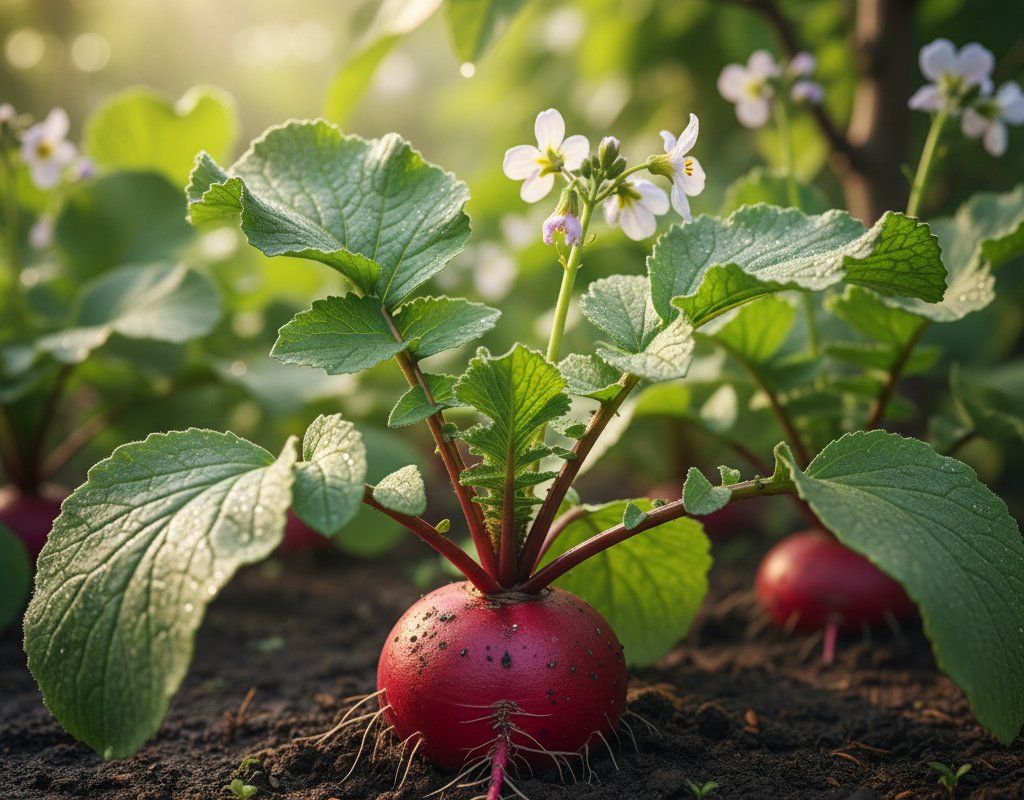
Radish in Zone 8B — Desert Southwest
Raphanus sativus · Your Complete 2026 Planting Guide
Harvest Time!
Your Radish should be producing now!
Harvest Tips
Check size by brushing soil away from crown. Pull when ready.
How to Plant Radish in Zone 8B — Desert Southwest
Here are all your options for getting radish in the ground, from the easiest method to more advanced approaches.
Direct Sow Seeds
RecommendedLate January through late October
around January 28
Consider succession planting every 2-3 weeks for continuous harvest.
Fast-growing and easy. No reason to start indoors.
Buy Starts
Works WellLate January through mid March
around January 28
Plant purchased starts after last frost (February 25).
Start Seeds Indoors
ChallengingThis plant is typically not started indoors.
Transplant Outdoors
Timing InfoLate January through mid March
around January 28
Can tolerate light frost, but wait for soil to be workable.
You have a nice window — no need to rush.
Fall Planting
Early October through early November
October 20 ideal · Direct sow for fall harvest
Plant a second crop in mid-summer for fall harvest. Radish actually prefers the cooling temperatures of fall.
Overview
Radishes are a desert gardener's secret weapon for quick satisfaction and year-round fresh flavor. In our Desert Southwest climate, these fast-growing roots deliver crisp, peppery goodness in just 25 days, making them perfect for succession planting through our extended growing season. Their speed means you can squeeze harvests between the extreme heat periods, and their cold tolerance lets you enjoy fresh radishes all winter long when other crops struggle.
While our arid climate and temperature swings can challenge many vegetables, radishes are surprisingly adaptable when you time them right. Our 279-day growing season gives you multiple opportunities to grow these quick crops, avoiding only the most brutal summer months when even cool-season vegetables suffer. With proper timing and consistent moisture, you'll discover why radishes thrive in our desert conditions.
Transplanting Outdoors
While you can transplant radishes in late January through mid-March, there's honestly little reason to start these speedy vegetables indoors first. Radishes prefer direct seeding and grow so quickly that transplanting often creates more work than benefit in our desert climate.
If you do choose to transplant, harden off your seedlings over a week with gradually increasing outdoor exposure. Our winter temperature swings can shock tender transplants, so start with just an hour or two outside during the warmest part of the day. Plant them 2-4 inches apart once nighttime temperatures consistently stay above the mid-20s.
Watch for those surprise late-season cold snaps that sometimes hit the Desert Southwest in early March. A quick frost protection setup with row covers or milk jugs can save your transplants if an unexpected freeze threatens.
Direct Sowing
Direct sowing is absolutely the way to go with radishes in our desert climate. You can plant from late January all the way through late October, skipping only the extreme heat months of June through August when even these hardy roots struggle. Plant seeds about ½ inch deep in loose, well-draining soil when temperatures are consistently above 45°F.
Space your seeds 2-4 inches apart, or plant them closer and thin as they grow. Radishes actually help break up our notorious caliche hardpan with their taproots, so they're doing double duty in desert soils. The key is keeping that top inch of soil consistently moist until germination, which happens quickly in our warm spring and fall conditions.
Start your first plantings in late January if you're eager for early spring radishes, then continue succession planting every 2-3 weeks through late February for continuous harvests. Resume planting in early October when temperatures drop back into the manageable range for another round of fall and winter radishes.
Watering Radish in Zone 8B (Desert Southwest)
Consistent moisture is absolutely critical for radishes in our arid Desert Southwest climate. These fast-growing roots need steady water to stay crisp and mild – let them dry out and you'll get woody, fiery-hot radishes that nobody wants to eat. Our low humidity means soil moisture evaporates quickly, so check daily during their short 25-day growing period.
Give radishes about 1 inch of water per week, delivered in 2-3 deep soakings rather than daily light sprinkles. Use the finger test by pushing 2 inches down into the soil – if it's dry at that depth, it's time to water. In our extreme heat periods (spring and fall plantings), you might need to water every other day to maintain that crucial even moisture.
Water at the base of the plants rather than overhead, especially during our windy spring months when water evaporates before it can soak in. Drip irrigation or soaker hoses work beautifully for radishes. Overhead watering isn't necessarily harmful in our arid climate, but it's wasteful of our precious water resources.
A thin layer of organic mulch helps retain soil moisture, but keep it light around these small plants. Signs of underwatering include wilted leaves and increasingly hot, woody roots. Overwatering shows up as splitting radishes and yellowing leaves – though this is less common in our well-draining desert soils than in heavier climates.
🧪Fertilizing Radish
Feeding Schedule
Organic Fertilizer Options
Harvest Time
Your first radishes will be ready for harvest in late February if you planted in late January, continuing through early December for fall plantings. The beauty of these 25-day wonders is you'll see the shoulders of spring radishes pushing up through the soil surface when they're ready – usually when they reach about 1 inch in diameter for standard round varieties.
Pull radishes when they're young and tender rather than letting them sit in the ground. In our desert heat, even cool-season radishes can quickly turn woody and develop that unpleasant pithy texture if left too long. Give the tops a gentle tug, or carefully dig around the root if you're unsure of the size.
Check your radishes daily once they approach maturity because they don't hold well in our fluctuating desert temperatures. Morning harvest is best when the roots are fully hydrated from overnight moisture retention. If you notice any cracking or splitting, harvest immediately regardless of size.
As early December approaches and our first frost threatens, harvest any remaining radishes since they won't ripen further once damaged by cold. Unlike some root vegetables, radishes don't improve with frost exposure and should be pulled before temperatures drop into the mid-20s.
Common Problems in Zone 8B (Desert Southwest)
Flea Beetles These tiny dark beetles create characteristic shot-hole patterns in radish leaves, jumping away when you disturb the plants. Young seedlings suffer the most damage, sometimes getting completely defoliated before they can establish strong root systems. In our Desert Southwest climate, flea beetles are most problematic during the milder spring and fall months when both the beetles and your radishes are active.
Flea beetles thrive in our warm, dry conditions and can quickly overwhelm small plants. Row covers provide excellent protection during the vulnerable seedling stage – just remove them once plants are established since radishes don't need pollination. Kaolin clay spray creates a protective barrier, while healthy soil and consistent watering help plants outgrow minor damage.
Root Maggots Small white maggots tunnel through radish roots, leaving brown, rotting channels that make the entire root inedible. You'll notice wilting plants and find the larvae when you pull damaged radishes. These pests are less common in our arid climate but can appear during the monsoon season when soil moisture levels rise.
Root maggots are attracted to moist, organic-rich soils and can overwinter in our mild desert conditions. Crop rotation helps break the cycle, while row covers during the egg-laying period provide protection. Beneficial nematodes applied to moist soil can control larvae, though our dry conditions often naturally suppress these pests.
Pithy Roots Radishes develop a woody, cotton-like texture inside when stressed, making them inedible despite looking fine from the outside. This happens most often when soil dries out between waterings or when radishes are left in the ground too long during temperature swings. Our arid climate and intense sun make consistent moisture even more critical than in humid regions.
Prevent pithy roots by maintaining steady soil moisture and harvesting promptly when radishes reach maturity. Mulching helps retain moisture, while succession planting every 2-3 weeks ensures you always have tender young radishes rather than overmatured ones.
Desert Southwest Specific Challenges Our extreme heat, low humidity, and alkaline soils create unique growing conditions for radishes. The rapid moisture loss from our arid air means daily monitoring of soil moisture, while our intense sun can stress plants even during the "cool" season. Monsoon rains bring relief but can also create sudden moisture fluctuations that cause splitting, so consistent irrigation management becomes even more important than in regions with steady rainfall patterns.
Best Companions for Radish
Plant these nearby for healthier Radish and better harvests.


Keep Away From
Companion Planting Details
Radishes make excellent companions for carrots in our desert gardens because they mature quickly and break up compacted soil for the slower-growing carrot roots. Plant radishes between carrot rows – by the time your carrots need the space, you'll have harvested the radishes. Lettuce also pairs beautifully with radishes since both prefer cooler conditions and similar watering schedules during our mild winter months.
Peas and radishes work well together in early spring plantings, with the peas providing light shade for radish leaves during those warming March days. Cucumbers benefit from radishes planted nearby as pest deterrents, though you'll want to harvest radishes before cucumber vines spread. Avoid planting radishes near hyssop, which can inhibit their growth and intensify their already peppery flavor in our intense desert sun.
🌸Best Flowers to Plant with Radish
These flowers protect your Radish from pests and attract pollinators for better harvests.



Get a Reminder When It's Time to Plant
We'll email you when key planting windows open for your zone.