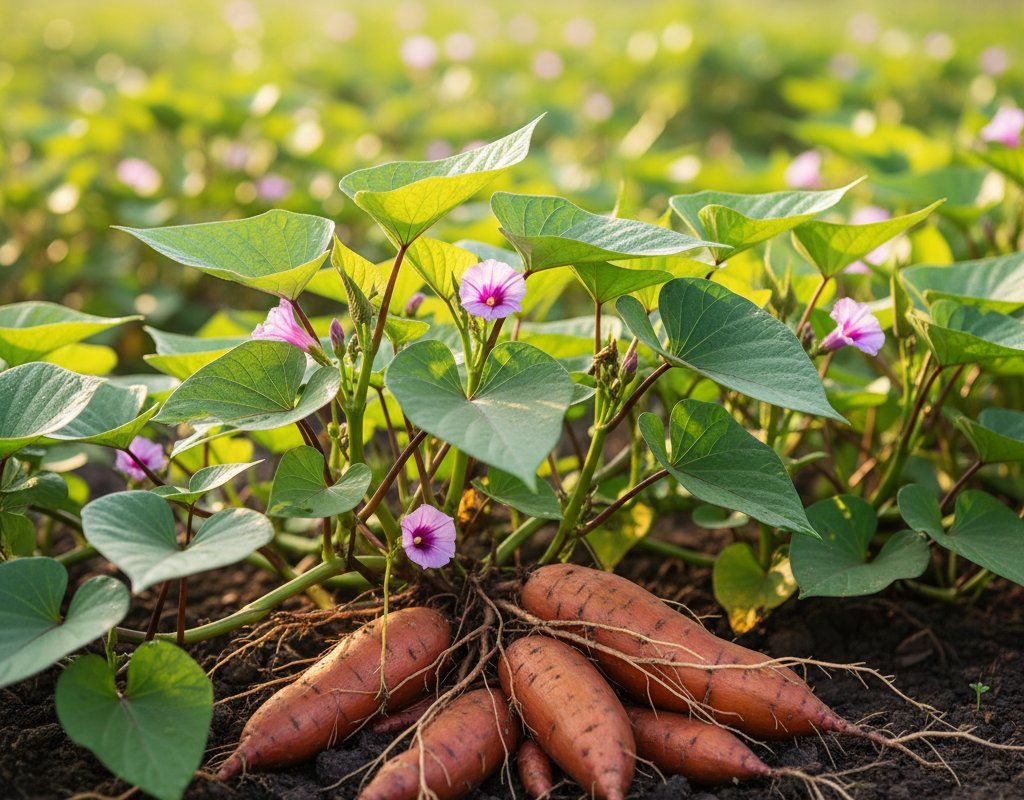
Sweet Potato in Zone 10B — Florida
Ipomoea batatas · Your Complete 2026 Planting Guide
Check Planting Details Below
See the full planting guide for timing information.
How to Plant Sweet Potato in Zone 10B — Florida
Here are all your options for getting sweet potato in the ground, from the easiest method to more advanced approaches.
Buy Starts
RecommendedLate January through mid February
around January 26
Plant purchased starts after last frost (January 5).
Plant slips (rooted sprouts) after soil is warm. Buy slips or grow your own from a sweet potato.
Start Seeds Indoors
Works WellLate November through mid December
around December 1
Then transplant: Late January through mid February
Start seeds 8-10 weeks before transplanting outdoors.
Direct Sow Seeds
ChallengingDirect sowing is not typical for Sweet Potato.
Transplant Outdoors
Timing InfoLate January through mid February
around January 26
Wait until nighttime temperatures stay above 50°F.
Plan to transplant within a few weeks of your target date.
Overview
Sweet potatoes thrive in Florida's warm climate and offer incredible versatility in the kitchen – from classic casseroles to crispy fries, these nutritious tubers store well and provide steady harvests. Here in Zone 10B, our year-round growing season means you can enjoy fresh sweet potatoes while northern gardeners are still dealing with frozen soil. The vines also make attractive ground cover during their growing season, and nothing beats the satisfaction of digging up your own perfectly cured sweet potatoes.
Florida's extreme humidity and sandy soil can challenge some crops, but sweet potatoes actually appreciate our warm conditions once established. With our 360-day growing season, you'll plant slips in late winter and harvest before the summer heat becomes overwhelming. The key is working with our reversed growing calendar – what feels like early spring to transplant is actually prime sweet potato planting season here.
Starting Seeds Indoors
While you can start sweet potato slips from seed indoors, most Florida gardeners find it easier to grow their own slips from store-bought sweet potatoes or purchase certified disease-free slips. If you do want to try seeds, start them during late November through mid December, about 8 weeks before your transplant window.
Set up seed trays with a good seed starting mix and keep them consistently warm – around 75-80°F works well. Your seeds will need bright light once they germinate, so position them near a south-facing window or under grow lights. Use bottom watering to avoid fungal issues in our humid climate, letting the soil absorb moisture from below rather than watering from the top.
Remember that Florida's spring character is reversed from northern regions, so while December feels like winter, you're actually preparing for your spring planting season. The timing takes some adjustment when you're used to traditional gardening calendars.
Transplanting Outdoors
Transplant your sweet potato slips outdoors during late January through mid February, once soil temperatures stay consistently above 60°F. Sweet potatoes need warm soil to establish properly, so don't rush this timing even if air temperatures feel comfortable. In Florida, this window usually coincides with our brief cool season ending.
Harden off your slips gradually over about a week, giving them increasing outdoor exposure each day. Start with a few hours of morning sun and work up to full days outside. Space your slips 12-18 inches apart in rows, planting them deep enough so only the top leaves show above soil level.
Keep an eye on weather during transplant time – late January and February can bring unexpected cold snaps to Florida. Have row covers or sheets ready to protect young plants if temperatures drop below 50°F overnight. Once established, sweet potato vines spread quickly in our warm conditions.
Watering Sweet Potato in Zone 10B (Florida)
Sweet potatoes need moderate water to get established but become surprisingly drought-tolerant once their root systems develop. During the first month after transplanting, water consistently to help slips establish – about 1 inch per week including rainfall. Use the finger test, checking soil moisture 2 inches deep before watering.
Florida's wet summer season usually provides plenty of natural irrigation, but you'll need to supplement during dry spells. Water at the base of plants rather than overhead – our extreme humidity already creates perfect conditions for fungal diseases, so avoid adding moisture to the leaves. Early morning watering works best, giving plants time to dry before evening.
As harvest approaches in late spring, reduce watering significantly during the final 3-4 weeks. This helps concentrate sugars in the tubers and prevents them from becoming watery. Our typical summer rainfall pattern of 50-65 inches means you'll likely need to protect sweet potatoes from too much water rather than too little.
Apply 2-3 inches of organic mulch around plants to maintain consistent soil moisture and suppress weeds. In Florida's sandy soil, mulch also helps retain the moderate moisture sweet potatoes prefer without creating waterlogged conditions.
🧪Fertilizing Sweet Potato
Feeding Schedule
Organic Fertilizer Options
Harvest Time
Expect your first sweet potato harvest during early May through mid June, about 100 days after transplanting slips. The timing works perfectly in Florida – you'll harvest before summer heat becomes overwhelming and well before any chance of frost damage. Sweet potato leaves may start yellowing slightly as tubers reach maturity.
Harvest indicators include tubers that have reached good size (usually 3-6 inches long) and skin that has developed its characteristic color. Dig carefully with a fork or spade, working from the outside of the vine toward the center. Sweet potatoes bruise easily, so handle them gently and avoid nicking the skin with tools.
Unlike many crops, sweet potatoes don't ripen further once harvested, so timing matters. Dig on a dry day when soil isn't muddy, and brush off excess dirt without washing the tubers. Any damaged sweet potatoes should be used immediately rather than stored.
Since Florida's first frost doesn't typically arrive until late December, you have plenty of time for a full growing season. However, summer heat can stress the vines, so that early May through mid June harvest window usually produces the best quality tubers. Cure your harvested sweet potatoes in a warm (80-85°F), humid place for 1-2 weeks before long-term storage.
Common Problems in Zone 10B (Florida)
Sweet Potato Weevils These small, dark beetles create holes in sweet potato tubers and can destroy entire crops. Adult weevils lay eggs on vines and in soil cracks, with larvae boring into developing tubers. You'll notice small holes in harvested sweet potatoes, often with tunneling damage inside.
Florida's warm, humid climate provides ideal conditions for sweet potato weevils year-round. The insects overwinter in plant debris and spread quickly in our extended growing season. Prevent problems by using certified disease-free slips, rotating crops to different garden areas each year, and removing all plant debris after harvest. Avoid storing sweet potatoes near the garden where weevils might be present.
Wireworms These thin, hard-bodied larvae of click beetles tunnel into sweet potato tubers, creating narrow holes and channels. Damaged sweet potatoes often show small round holes on the surface with tunneling damage inside. Wireworms are particularly problematic in Florida's sandy soils.
Sandy soil conditions throughout much of Florida provide perfect habitat for wireworms, and our year-round warmth means they stay active longer than in northern climates. Combat wireworms by working compost into planting areas to improve soil structure and encourage beneficial organisms. Avoid planting sweet potatoes in areas that were previously in sod or weedy ground cover where wireworm populations build up.
Cracking Sweet potato tubers develop splits or cracks in their skin, either as concentric circles or radial lines from one end. While not immediately harmful to the plant, cracking exposes flesh to rot organisms and reduces storage life. You'll typically notice this problem during harvest or shortly after.
Inconsistent watering causes most cracking issues – when dry soil is suddenly saturated, tubers absorb water faster than their skin can expand. Florida's wet summer rainfall pattern can trigger cracking if preceded by dry periods. Maintain consistent soil moisture with mulch and regular watering schedules. Some sweet potato varieties are more crack-resistant than others.
Florida Specific Challenges: Our extreme humidity and wet summers create perfect conditions for fungal diseases, while sandy soils drain quickly and can stress plants during dry spells. Nematodes thrive in Florida's warm conditions and can damage sweet potato roots, so choose nematode-resistant varieties when possible and practice good crop rotation.
Best Companions for Sweet Potato
Plant these nearby for healthier Sweet Potato and better harvests.


Keep Away From
Companion Planting Details
Sweet potatoes pair well with beans and corn in Florida gardens, creating a productive three-sisters style planting. Beans fix nitrogen in the soil that sweet potato vines can use, while corn provides vertical structure that doesn't compete with the spreading sweet potato vines. The sweet potato vines act as living mulch, suppressing weeds and retaining soil moisture during our hot, humid summers.
Avoid planting sweet potatoes near other root vegetables like regular potatoes or carrots, as they may compete for soil nutrients and space. However, this isn't usually a major concern since most Florida gardeners grow root crops during different seasons. Sweet potato vines spread extensively, so give them plenty of room or train them along garden edges where their vigorous growth won't overwhelm smaller plants.
🌸Best Flowers to Plant with Sweet Potato
These flowers protect your Sweet Potato from pests and attract pollinators for better harvests.
For Pest Control




Get a Reminder When It's Time to Plant
We'll email you when key planting windows open for your zone.