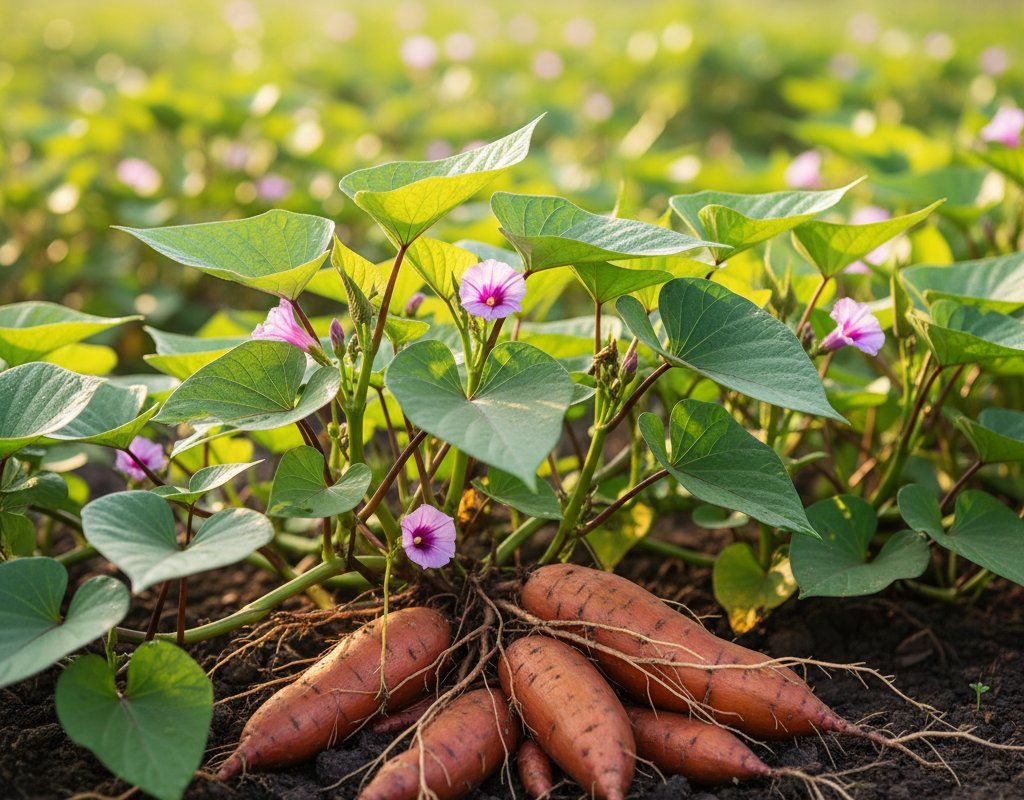
Sweet Potato in Zone 6A — Great Plains
Ipomoea batatas · Your Complete 2026 Planting Guide
Ideal Time: Start Seeds Indoors!
This is the perfect time for the biggest, best harvest.
Start Seeds Now
- Start seeds in trays or pots with seed-starting mix
- Keep soil moist and warm (70-80°F)
- Transplant outdoors Early to late May
Not Starting from Seed?
Buy starts around May 6 — that works great too!
How to Plant Sweet Potato in Zone 6A — Great Plains
Here are all your options for getting sweet potato in the ground, from the easiest method to more advanced approaches.
Buy Starts
RecommendedEarly to late May
around May 6
Plant purchased starts after last frost (April 15).
Plant slips (rooted sprouts) after soil is warm. Buy slips or grow your own from a sweet potato.
Start Seeds Indoors
Works WellEarly to late March
around March 11
Then transplant: Early to late May
Start seeds 8-10 weeks before transplanting outdoors.
Direct Sow Seeds
ChallengingDirect sowing is not typical for Sweet Potato.
Transplant Outdoors
Timing InfoEarly to late May
around May 6
Wait until nighttime temperatures stay above 50°F.
Plan to transplant within a few weeks of your target date.
Overview
Sweet potatoes thrive in our Great Plains heat and intense sunshine, producing nutrient-dense tubers that store beautifully through winter. These vining plants love our hot summers and actually perform better here than in more humid regions, with our dry air reducing disease pressure significantly. The deep, fertile prairie soil gives them room to spread their roots and develop those satisfying, orange-fleshed tubers.
While sweet potatoes need our full growing season and won't tolerate frost, our 188-day season gives them just enough time to mature if you get the timing right. The key is starting with slips (rooted sprouts) rather than seeds, and protecting them from our notorious spring temperature swings during the critical transplant period.
Starting Seeds Indoors
Starting sweet potatoes from seed isn't the typical approach most Plains gardeners take, but it's possible if you want to try unusual varieties not available as slips. Start seeds in early to late March, about 8 weeks before your transplant window opens in May.
Sweet potato seeds need consistent warmth (75-80°F) and take 2-3 weeks to germinate, so bottom heat from a heating mat helps significantly. Use seed trays with quality potting mix and keep soil consistently moist through bottom watering to prevent damping off. With our variable spring weather swinging from cold snaps to warm spells, maintaining steady indoor temperatures is crucial.
Most Plains gardeners find buying slips or growing their own from stored sweet potatoes more reliable than starting from seed, especially given our shorter season compared to the Deep South.
Transplanting Outdoors
Wait until early to late May to transplant your sweet potato slips outdoors, when soil temperature stays consistently above 60°F and nighttime lows remain above 50°F. Our spring temperature swings can fool you with a warm week in April, but sweet potatoes are extremely frost-tender and will die if caught by a late cold snap.
Harden off slips gradually over a full week, starting with just 2-3 hours of outdoor exposure and building up daily. Space plants 12-18 inches apart in rows, giving those vines room to spread across our prairie soil. Plant slips deeper than you might expect - bury about two-thirds of the stem, leaving just the top leaves exposed.
Wind protection is essential during their first few weeks as they establish. Even a temporary windbreak of cardboard or fabric can prevent our constant Plains winds from drying out these tender transplants before their root systems take hold.
Watering Sweet Potato in Zone 6A (Great Plains)
Sweet potatoes need moderate water to get established but become surprisingly drought-tolerant once their deep root system develops - perfect for our variable rainfall patterns. During the first month after transplanting, water deeply once or twice per week, providing about an inch total. Check soil moisture with the finger test, inserting your finger 2 inches deep; water when it feels dry at that depth.
Our hot summers with temperatures reaching 93°F mean you'll need to water more frequently than gardeners in cooler zones, but our low-to-moderate humidity actually helps prevent many fungal issues. Water at the base of plants rather than overhead to keep foliage dry, though this is less critical here than in more humid regions. Once established, sweet potatoes can handle dry spells well, making them ideal for our unpredictable rainfall.
Reduce watering significantly during the last 3-4 weeks before harvest to concentrate sugars and prevent tubers from cracking. Overwatered sweet potatoes often crack when they absorb too much moisture late in the season. Signs of underwatering include wilted vines that don't recover in evening; overwatering shows as yellowing leaves and stunted growth.
A 3-4 inch layer of organic mulch helps maintain consistent soil moisture through our temperature swings and reduces the watering frequency you'll need during peak summer heat.
🧪Fertilizing Sweet Potato
Feeding Schedule
Organic Fertilizer Options
Harvest Time
Your first sweet potatoes will be ready from mid-August through late September, typically 100 days after transplanting. Unlike regular potatoes, sweet potatoes continue growing until frost kills the vines, so timing your harvest around our mid-October first frost date is crucial for maximum yield.
Watch for yellowing vines as a sign that tubers are maturing, but don't wait for complete vine death if frost threatens. Dig carefully with a garden fork, starting about 18 inches from the plant center and working inward to avoid spearing tubers. Sweet potato skin is thin and easily damaged, so handle gently during harvest.
Brush off soil but don't wash tubers immediately after digging. Instead, cure them in a warm (80-85°F), humid location for 1-2 weeks to toughen the skin and convert starches to sugars. A basement or garage works well, or create a humid environment by placing tubers in boxes with damp newspaper.
If an unexpected early frost threatens, harvest immediately even if tubers seem small. Sweet potatoes won't continue ripening off the vine like tomatoes, so what you get at harvest is what you'll have for storage.
Common Problems in Zone 6A (Great Plains)
Sweet Potato Weevils What it looks like: Small, dark beetles on vines and small holes in stored tubers with tunnels inside. Adult weevils are about 1/4 inch long with a distinctive snout. What causes it: These pests overwinter in soil and emerge when temperatures warm, particularly problematic in areas where sweet potatoes are grown repeatedly. Our hot Plains summers can increase their reproduction rate. How to fix/prevent it: Rotate sweet potato crops to different areas of your garden each year. Remove and destroy any damaged tubers immediately. Clean up all plant debris after harvest since weevils overwinter in old vines.
Wireworms What it looks like: Smooth, hard, yellowish worms about 1 inch long that tunnel into tubers, creating holes similar to weevil damage but typically larger. What causes it: These are click beetle larvae that thrive in prairie soil, especially in areas that were previously grassland. They're particularly common in newly cultivated gardens. How to fix/prevent it: Work soil thoroughly in fall to expose larvae to winter kill. Plant trap crops like corn or wheat nearby to attract them away from sweet potatoes. Beneficial nematodes can help control populations in severe cases.
Cracking What it looks like: Splits in sweet potato skin, either as concentric circles around the tuber or radial lines spreading from one end. Cracks expose flesh to rot and storage problems. What causes it: Heavy watering or sudden rainfall after a dry period causes tubers to absorb water faster than their skin can expand. Our variable Plains rainfall makes this especially common. How to fix/prevent it: Water consistently throughout the growing season to avoid dry/wet cycles. Mulch heavily to maintain even soil moisture. Reduce watering 3-4 weeks before harvest to prevent late-season cracking.
Great Plains Specific Challenges: Our extreme temperature swings stress sweet potato plants, while sudden heavy rains after drought periods increase cracking risk. However, our intense sunshine and low disease pressure from dry air generally make sweet potatoes easier to grow here than in more humid regions, as long as you manage water consistently and provide wind protection.
Best Companions for Sweet Potato
Plant these nearby for healthier Sweet Potato and better harvests.


Keep Away From
Companion Planting Details
Sweet potatoes work well with the traditional "Three Sisters" combination - plant them alongside corn and beans for mutual benefit. The corn provides natural windbreaks that sweet potatoes desperately need in our Plains conditions, while beans fix nitrogen that sweet potatoes can use. The sweet potato vines spread as a living mulch, suppressing weeds and conserving moisture that benefits all three crops.
Avoid planting sweet potatoes near tomatoes or other nightshades, as they can compete for the same nutrients and attract similar pests. In our challenging Plains climate, focus companion plantings on providing wind protection and efficient water use rather than pest control, since our dry air naturally keeps many common sweet potato pests at manageable levels.
🌸Best Flowers to Plant with Sweet Potato
These flowers protect your Sweet Potato from pests and attract pollinators for better harvests.
For Pest Control




Get a Reminder When It's Time to Plant
We'll email you when key planting windows open for your zone.