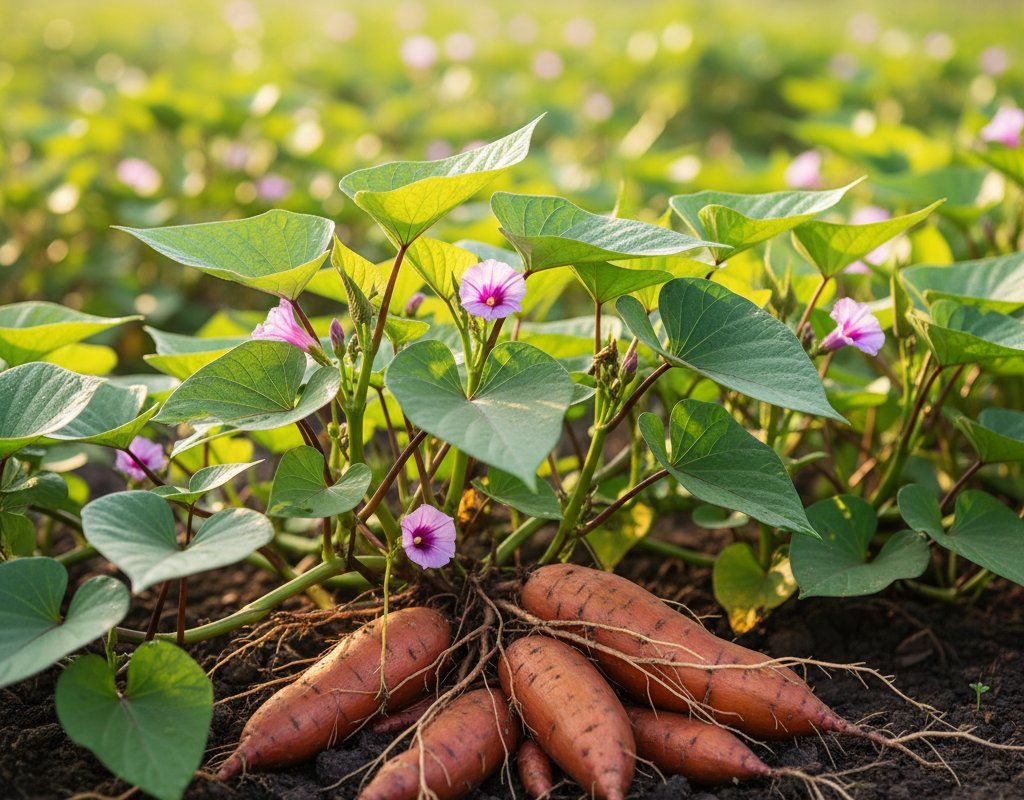
Sweet Potato in Zone 7A — Desert Southwest
Ipomoea batatas · Your Complete 2026 Planting Guide
Missed Seed Starting? No Problem!
Wait for starts to become available.
What to Do
Starts will be available at nurseries in 42 days (around April 15).
How to Plant Sweet Potato in Zone 7A — Desert Southwest
Here are all your options for getting sweet potato in the ground, from the easiest method to more advanced approaches.
Buy Starts
RecommendedMid April through early May
around April 15
Plant purchased starts after last frost (March 25).
Plant slips (rooted sprouts) after soil is warm. Buy slips or grow your own from a sweet potato.
Start Seeds Indoors
Works WellMid February through early March
around February 18
Then transplant: Mid April through early May
Start seeds 8-10 weeks before transplanting outdoors.
Direct Sow Seeds
ChallengingDirect sowing is not typical for Sweet Potato.
Transplant Outdoors
Timing InfoMid April through early May
around April 15
Wait until nighttime temperatures stay above 50°F.
Plan to transplant within a few weeks of your target date.
Overview
Sweet potatoes thrive in our Desert Southwest climate, giving you nutritious, versatile tubers that store beautifully through winter. These heat-loving vines actually appreciate our intense summer sun and can handle the temperature swings that challenge other crops. The orange flesh is packed with vitamins, and nothing beats the satisfaction of digging up a cache of sweet potatoes you've grown yourself in our challenging desert conditions.
While sweet potatoes are tender and need warm soil to get started, our long 230-day growing season gives them plenty of time to develop those prize-worthy tubers. The key is getting transplants established before our extreme heat kicks in, then letting them cruise through summer with minimal fuss. They're surprisingly drought-tolerant once established, making them a smart choice for water-conscious desert gardeners.
Starting Seeds Indoors
Starting sweet potatoes from seed isn't the typical approach—most desert gardeners grow their own slips from stored sweet potatoes or buy slips from suppliers. However, if you want to try seeds, start them indoors from mid-February through early March, about 8 weeks before transplanting.
Set up seed trays with a good seed-starting mix and keep them warm—sweet potatoes need soil temperatures around 75-80°F to germinate well. Bottom watering works best to avoid disturbing the small seeds and prevents fungal issues that can develop in our dry indoor air when you water from above.
The more common method is creating your own slips by placing a sweet potato half in water around late January through mid-February. Keep it in a warm, bright spot and harvest the rooted sprouts (slips) that emerge for transplanting. This matches our very-early spring character perfectly and gives you healthier transplants.
Transplanting Outdoors
Transplant your sweet potato slips outdoors from mid-April through early May, after soil temperatures consistently stay above 60°F and nighttime temperatures don't drop below 50°F. Your slips need about a week of hardening off—gradually increasing their outdoor exposure time to adapt them to our intense desert sun and dry air.
Space plants 12-18 inches apart to give the vines room to spread. Sweet potatoes form tubers along buried portions of the vine, so slightly deeper planting than other transplants helps. Plant on a calm day if possible, as our spring winds can stress newly transplanted slips.
Watch for late cold snaps during this transplant window—while rare in late April, unexpected cool nights can set back these heat-loving plants. Having row covers ready provides insurance against those surprise temperature drops that can happen even as our growing season gets underway.
Watering Sweet Potato in Zone 7A (Desert Southwest)
Sweet potatoes need moderate water to get established, then become surprisingly drought-tolerant as they mature. In our Desert Southwest climate, start with deep watering twice weekly during the establishment phase in late spring, providing about 1-1.5 inches total per week.
Once established by early summer, you can reduce to deep watering once weekly, letting the soil dry down 2 inches deep between waterings—use the finger test to check. The vines can handle our extreme heat and arid conditions better than most crops. During monsoon season, reduce supplemental watering and let natural rainfall help, but don't let them sit in waterlogged soil.
Water at the base rather than overhead watering, which works well in our low-humidity climate and prevents leaf diseases. Signs of underwatering include wilted vines that don't recover by evening, while overwatering shows as yellowing leaves or mushy stems. A thin layer of mulch helps maintain even moisture without creating too much humidity around the plants.
About 3-4 weeks before your planned harvest, reduce watering to help the tubers cure in the ground. This concentrates the sugars and improves storage quality—particularly important in our region where we want sweet potatoes to last through winter.
🧪Fertilizing Sweet Potato
Feeding Schedule
Organic Fertilizer Options
Harvest Time
Your first sweet potatoes will be ready from late July through early September, roughly 100 days after transplanting. The vines will start yellowing and dying back naturally as tubers reach maturity, though in our desert heat, some yellowing might just be summer stress rather than harvest readiness.
Check by carefully digging around one plant to see tuber size and skin condition. Mature sweet potatoes have firm, well-colored skin that doesn't easily scratch off with your fingernail. The tubers should feel solid and heavy, not spongy or lightweight.
Harvest on a dry day by digging carefully with a fork, starting about 12 inches from the plant center to avoid spearing tubers. Sweet potatoes can extend surprisingly far from the main plant in our loose desert soils. Brush off excess soil but don't wash them—you want the skins to cure properly.
Plan to complete your harvest well before our first frost in early November. Unlike some crops, sweet potatoes stop growing and can be damaged by cold soil, so don't wait too long. After digging, cure them in a warm (80-85°F), humid place for 1-2 weeks to heal any skin nicks and improve their sweetness and storage life.
Common Problems in Zone 7A (Desert Southwest)
Sweet potato weevils appear as small, dark beetles that create holes in both vines and tubers. You'll see entry holes in the sweet potatoes themselves, often with dark, tunneling damage inside that makes them inedible. These pests are particularly problematic in warm climates like ours and can destroy entire crops. Prevent by rotating crops yearly, removing all plant debris after harvest, and avoiding planting near previous sweet potato locations. Some gardeners use beneficial nematodes in the soil as a biological control.
Wireworms create small, round holes in your sweet potatoes and tunnel through the flesh, similar to weevil damage but typically with cleaner, more organized tunneling patterns. These are actually beetle larvae that live in soil for several years and are common in desert soils, especially in areas that were previously grassland. Till soil in fall to expose them to cold and predators, avoid planting in areas with heavy wireworm populations, and consider trap crops like potatoes planted early to draw them away from sweet potatoes.
Cracking shows as splits in the sweet potato skin—either circular cracks around the middle or radial splits running lengthwise. This exposes the flesh to rot and storage problems. Heavy watering or monsoon rains after dry periods cause the flesh to swell faster than the skin can stretch. Maintain consistent soil moisture throughout the season, mulch to even out moisture levels, and consider reducing irrigation before monsoon season arrives to prevent the dry-to-wet cycle that triggers cracking.
Desert Southwest Specific Challenges: Our extreme heat and intense UV can cause sunscald on exposed tubers, so ensure adequate vine coverage. The alkaline soil common in caliche areas can limit nutrient uptake—amend with compost and ensure good drainage. Our arid climate actually helps prevent many fungal diseases that plague sweet potatoes in humid regions, giving us a real advantage in growing healthy crops.
Best Companions for Sweet Potato
Plant these nearby for healthier Sweet Potato and better harvests.


Keep Away From
Companion Planting Details
Sweet potatoes work well with beans, corn, and squash—the traditional "three sisters" combination adapted for desert conditions. Beans fix nitrogen that sweet potatoes can use later in the season, while corn provides some afternoon shade that can help during extreme heat periods. Squash leaves help shade the soil and retain moisture, reducing water competition.
Avoid planting sweet potatoes near plants that need frequent shallow watering, as sweet potatoes prefer deeper, less frequent irrigation once established. They also spread widely, so give them space or partner them with upright plants rather than other sprawling crops. The main consideration in our Desert Southwest climate is ensuring companion plants have similar water needs and can handle the intense summer sun that sweet potatoes love.
🌸Best Flowers to Plant with Sweet Potato
These flowers protect your Sweet Potato from pests and attract pollinators for better harvests.
For Pest Control




Get a Reminder When It's Time to Plant
We'll email you when key planting windows open for your zone.