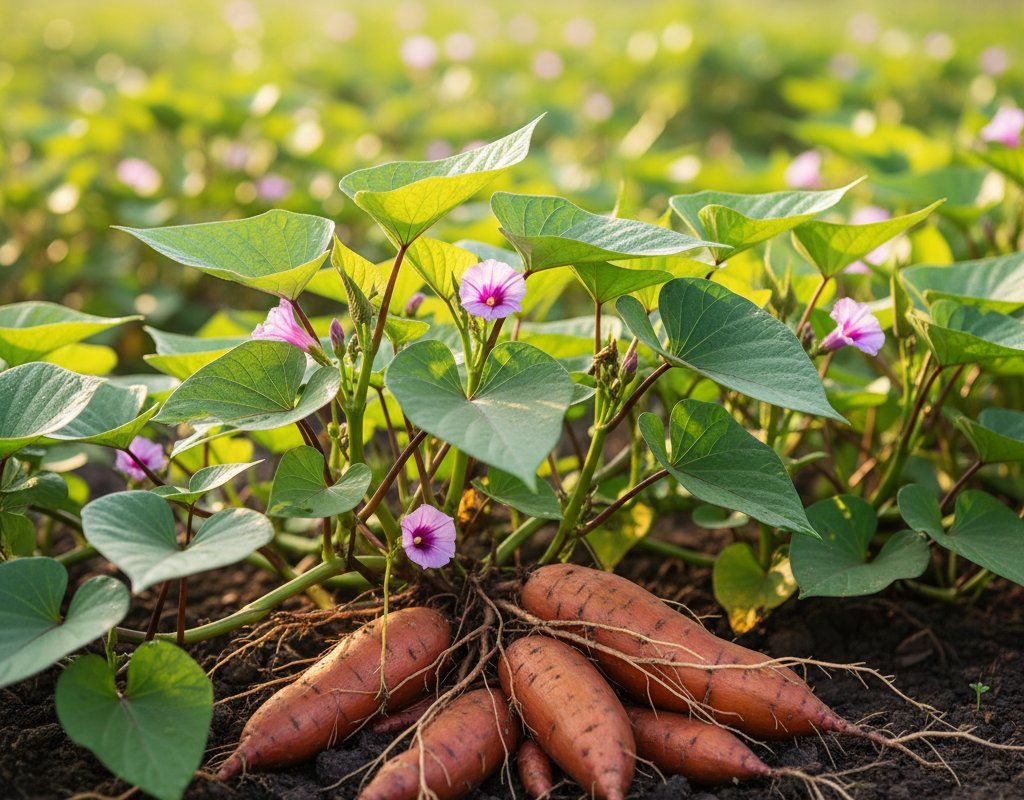
Sweet Potato in Zone 7A — Midwest
Ipomoea batatas · Your Complete 2026 Planting Guide
Ideal Time: Start Seeds Indoors!
This is the perfect time for the biggest, best harvest.
Start Seeds Now
- Start seeds in trays or pots with seed-starting mix
- Keep soil moist and warm (70-80°F)
- Transplant outdoors Early to late May
Not Starting from Seed?
Buy starts around May 1 — that works great too!
How to Plant Sweet Potato in Zone 7A — Midwest
Here are all your options for getting sweet potato in the ground, from the easiest method to more advanced approaches.
Buy Starts
RecommendedEarly to late May
around May 1
Plant purchased starts after last frost (April 10).
Plant slips (rooted sprouts) after soil is warm. Buy slips or grow your own from a sweet potato.
Start Seeds Indoors
Works WellLate February through mid March
around March 6
Then transplant: Early to late May
Start seeds 8-10 weeks before transplanting outdoors.
Direct Sow Seeds
ChallengingDirect sowing is not typical for Sweet Potato.
Transplant Outdoors
Timing InfoEarly to late May
around May 1
Wait until nighttime temperatures stay above 50°F.
Plan to transplant within a few weeks of your target date.
Overview
Sweet potatoes thrive in our Midwest climate, delivering tender, flavorful tubers that store beautifully through our cold winters. These nutritious vines produce impressive yields in our fertile soil, and our summer heat spells actually help develop their natural sweetness. You'll find homegrown sweet potatoes have a creamy texture and complex flavor that puts store-bought versions to shame.
While sweet potatoes need warm conditions and our variable spring weather requires careful timing, our 193-day growing season gives them plenty of time to mature. The key is starting with slips (rooted sprouts) after soil temperatures warm up - patience in late spring pays off with abundant harvests by early fall.
Starting Seeds Indoors
Starting sweet potatoes from true seed isn't the standard approach - most Midwest gardeners work with slips instead. However, if you want to try growing from seed for variety exploration, start indoors during late February through mid-March, about 8 weeks before transplanting.
Set up seed trays in a warm spot (75-80°F) with good light. Sweet potato seeds need consistent warmth and moisture to germinate, so bottom watering works well to maintain even soil moisture without creating soggy conditions. With our moderate-to-late spring start, indoor growing gives you the head start these heat-loving plants need.
The more common approach is buying slips or creating your own from a sweet potato tuber placed in water during this same timeframe. This method is more reliable and faster than seed starting.
Transplanting Outdoors
Wait until early to late May to transplant sweet potato slips outdoors - the soil needs to be consistently warm (at least 60°F) for these tender plants. Our Midwest springs can be unpredictable with late cold snaps, so don't rush this timing even if you're eager to get growing.
Harden off your slips gradually over a week, bringing them outdoors for longer periods each day. Plant them 12-18 inches apart in loose, well-draining soil - our clay soil often needs amendment with compost to prevent waterlogged conditions. Set slips deeper than other transplants, burying about two-thirds of the stem to encourage strong root development.
Choose a spot with full sun and good drainage. Sweet potatoes form their tubers underground, so they need room to spread and soil that won't become compacted during our summer rains.
Watering Sweet Potato in Zone 7A (Midwest)
Sweet potatoes need moderate water to get established, but they're surprisingly drought-tolerant once their root systems develop. In our Midwest climate with 30-40 inches of annual rainfall, you'll often find natural precipitation handles much of their water needs during our wet summers.
Water deeply but less frequently, checking soil moisture with your finger about 2 inches down. During typical Midwest summers, aim for about 1 inch of water per week including rainfall. Our moderate-to-humid conditions mean you can water at the base of plants without worrying too much about disease issues, though good air circulation still helps.
Watch for signs of stress during heat spells - wilting leaves that don't recover by evening indicate they need water. Overwatering shows up as yellowing leaves and poor tuber development. Our clay soil retains moisture longer than sandy soils, so adjust accordingly.
About 3-4 weeks before your planned harvest, reduce watering significantly. This helps concentrate sugars in the tubers and prevents them from becoming waterlogged. A 2-3 inch layer of organic mulch helps maintain consistent soil moisture throughout the season.
🧪Fertilizing Sweet Potato
Feeding Schedule
Organic Fertilizer Options
Harvest Time
Your first sweet potatoes will be ready for harvest from early August through mid-September, about 100 days after transplanting. Unlike other root vegetables, you can't judge ripeness by looking at the tubers - timing and vine condition are your best indicators.
Start checking for mature tubers when the vines begin to yellow and die back, or when you reach that 100-day mark. Dig carefully with a garden fork, starting about 18 inches from the main stem to avoid spearing the tubers. Sweet potatoes bruise easily, so handle them gently and brush off soil rather than washing immediately.
Harvest all tubers before our first frost in mid-October, even if some seem small. Unlike regular potatoes, sweet potatoes won't continue developing once frost hits the vines. Cure your harvest in a warm (80-85°F), humid location for 1-2 weeks - this develops their sweetness and helps small nicks heal over.
After curing, store sweet potatoes in a cool, dark place around 55-60°F. Properly cured and stored sweet potatoes keep well through our Midwest winters, giving you homegrown nutrition when fresh garden produce is scarce.
Common Problems in Zone 7A (Midwest)
Sweet potato weevils show up as small holes in tubers and dark, sunken areas on the surface. Adult weevils are small, dark beetles that lay eggs in the tubers. In the Midwest, these pests are less common than in southern regions, but they can still appear during warm summers. Rotate crops yearly and inspect tubers carefully at harvest. Remove and destroy any affected tubers immediately to prevent spread.
Wireworms create small, round holes throughout the tubers, making them look like they've been shot with tiny bullets. These are the larvae of click beetles and thrive in our clay soil conditions. They're especially problematic in areas that were previously in grass or weeds. Work compost into planting areas and avoid freshly turned sod spots. Beneficial nematodes applied to soil can help control populations.
Cracking appears as splits in the tuber skin, either as concentric circles or radial lines from the center. This happens when heavy watering or our summer thunderstorms follow dry periods - the tubers absorb water faster than the skin can expand. Maintain consistent soil moisture with mulch and avoid the wet-dry cycles that trigger cracking. Harvest promptly when tubers reach maturity.
Midwest Specific Challenges: Our moderate-to-humid summers with wet-season rainfall create ideal conditions for fungal issues if drainage is poor. Clay soil can become waterlogged during heavy rains, leading to rot problems. The key is improving soil structure with organic matter and ensuring good drainage before planting.
Best Companions for Sweet Potato
Plant these nearby for healthier Sweet Potato and better harvests.


Keep Away From
Companion Planting Details
Sweet potatoes work well in the traditional "Three Sisters" planting with beans and corn, though they need more space than typical companion plants. The beans fix nitrogen that feeds the sweet potato vines, while corn provides vertical structure. Plant sweet potatoes around the edges where their sprawling vines won't compete directly with corn roots. Squash family plants also complement sweet potatoes well - both need similar warm conditions and their different root depths don't compete.
Avoid planting sweet potatoes near tomatoes or other nightshades, as they can compete for similar nutrients and space. Their sprawling growth habit means they need room to roam, so keep smaller vegetables like lettuce or herbs at a distance where the vines won't shade them out during our productive Midwest summers.
🌸Best Flowers to Plant with Sweet Potato
These flowers protect your Sweet Potato from pests and attract pollinators for better harvests.
For Pest Control




Get a Reminder When It's Time to Plant
We'll email you when key planting windows open for your zone.