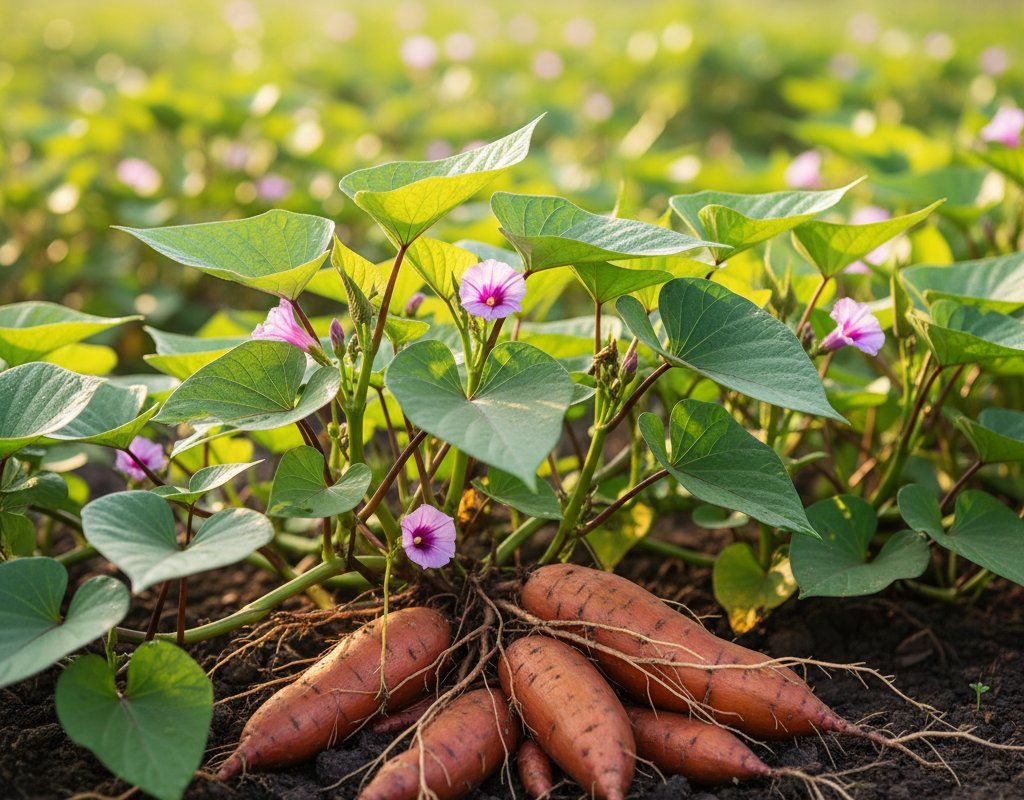
Sweet Potato in Zone 8B — Pacific Northwest
Ipomoea batatas · Your Complete 2026 Planting Guide
Last Call for Seed Starting!
Indoor seed starting window closes in 11 days.
Start Seeds This Week
Start seeds now for transplanting later.
Or Wait for Starts
If you don’t want to start seeds, starts will be available around April 26.
How to Plant Sweet Potato in Zone 8B — Pacific Northwest
Here are all your options for getting sweet potato in the ground, from the easiest method to more advanced approaches.
Buy Starts
RecommendedLate April through mid May
around April 26
Plant purchased starts after last frost (April 5).
Plant slips (rooted sprouts) after soil is warm. Buy slips or grow your own from a sweet potato.
Start Seeds Indoors
Works WellLate February through mid March
around March 1
Then transplant: Late April through mid May
Start seeds 8-10 weeks before transplanting outdoors.
Direct Sow Seeds
ChallengingDirect sowing is not typical for Sweet Potato.
Transplant Outdoors
Timing InfoLate April through mid May
around April 26
Wait until nighttime temperatures stay above 50°F.
Plan to transplant within a few weeks of your target date.
Overview
Sweet potatoes offer Pacific Northwest gardeners a rewarding crop that thrives in our mild summer climate. While they need warmth to develop their signature sweet, creamy tubers, our long growing season and cool nights actually concentrate their sugars beautifully. You'll get dense, flavorful potatoes that store well through our wet winters—a satisfying harvest that's both nutritious and versatile for roasting, baking, or making into fries.
Our 210-day growing season gives sweet potatoes plenty of time to mature, though you'll need to work with our cool spring soil and shorter heat window. Starting with slips (rooted sprouts) rather than direct seeding, and timing your planting for late spring warmth, makes sweet potato success totally achievable here in Zone 8B.
Starting Seeds Indoors
While most gardeners buy sweet potato slips, you can start your own from a sweet potato tuber if you plan ahead. Begin this process in late February through mid-March, about 8 weeks before you'll transplant outdoors. Sweet potatoes need consistent warmth to sprout—around 75-80°F—which can be challenging during our cool, overcast spring days.
Set up your sweet potato in a warm spot with bottom heat if possible, either suspended in water or partially buried in moist potting mix. The tuber will develop sprouts (slips) that you'll later twist off and root separately. This method works well, but buying slips from a reputable supplier often gives more reliable results in our climate.
Keep the setup consistently moist using bottom watering to avoid disturbing developing sprouts. Provide bright light once slips emerge, using grow lights if needed during our dim spring months.
Transplanting Outdoors
Transplant your sweet potato slips outdoors from late April through mid-May, once soil temperatures consistently reach 60°F and nighttime temperatures stay above 50°F. Our cool spring soil can stress these heat-loving plants, so waiting for genuine warmth pays off better than rushing the season.
Harden off slips gradually over a full week, starting with just 2-3 hours outdoors in filtered light. Sweet potatoes are particularly sensitive to temperature shock, so take this process slowly. Choose a sheltered spot for the first few days of hardening off.
Space slips 12-18 inches apart in full sun with well-draining soil. Plant them deeper than they grew in containers, burying about two-thirds of the stem to encourage strong root development. Our mild summer temperatures mean they'll establish well once soil warms up, though growth will be slower than in hotter climates.
Watering Sweet Potato in Zone 8B (Pacific Northwest)
Sweet potatoes need moderate, consistent water to establish, but become quite drought-tolerant once their vines spread. In our dry summer months, they typically need about 1-1.5 inches of water weekly, though you can often stretch this longer than with other crops due to their drought tolerance.
Check soil moisture using the finger test—stick your finger 2 inches deep near the base of the plant. If it's dry at that depth, it's time to water. Water at the base rather than overhead to keep foliage dry and reduce disease risk in our humid spring conditions.
During July and August, established sweet potatoes can handle some dryness between waterings, especially if you've mulched around them. This actually helps concentrate sugars in developing tubers. However, avoid letting them get bone dry, as stress can reduce yields.
Reduce watering 3-4 weeks before your planned harvest in early fall. This helps the tubers cure naturally and concentrates their sweetness. The timing works well with our typical September weather patterns, when natural rainfall often decreases anyway.
🧪Fertilizing Sweet Potato
Feeding Schedule
Organic Fertilizer Options
Harvest Time
Your first sweet potatoes will be ready from early August through mid-September, about 100 days after transplanting. Unlike regular potatoes, sweet potatoes continue growing and sweetening until frost threatens, so there's no rush to harvest early tubers unless you need them.
You'll know they're ready when the vines start yellowing slightly and tubers feel firm when you carefully brush soil away from one or two test plants. The skin should be smooth and well-colored according to your variety—orange, purple, or cream.
Harvest carefully by digging from the side with a spading fork, working outward from the main plant. Sweet potato tubers can extend surprisingly far from the original slip and bruise easily. Brush off soil gently but don't wash them yet.
Plan to harvest all remaining tubers before our first frost in early November. Even a light frost will damage the vines and can cause tubers to develop off-flavors. After digging, cure your sweet potatoes in a warm (80-85°F), humid place for 1-2 weeks to develop their full sweetness and storage life.
Common Problems in Zone 8B (Pacific Northwest)
Sweet Potato Weevils Small dark beetles that create tunnels in tubers, leaving bitter-tasting damage throughout the flesh. Adult weevils are about 1/4 inch long with a distinctive long snout and create small holes in tubers. The larvae tunnel inside, making sweet potatoes inedible.
These pests overwinter in stored tubers and crop debris, then emerge when soil warms. Crop rotation helps significantly—don't plant sweet potatoes in the same spot for 3-4 years. Clean up all vine debris after harvest and inspect stored tubers regularly, removing any with holes or soft spots immediately.
Wireworms Hard, yellow-brown larvae about 1/2 to 1 inch long that bore smooth holes into developing tubers. You'll find them inside the sweet potatoes at harvest time, along with their characteristic round tunnels. Damaged tubers often develop rot where wireworms have fed.
These are actually click beetle larvae that live in soil for several years, feeding on roots and tubers. They're more common in areas that were previously in grass or weeds. Till soil thoroughly in fall to expose larvae to winter weather, and consider beneficial nematodes as a biological control option.
Cracking Tubers split open with deep cracks that expose the flesh to rot and pest entry. Cracks can be circular around the tuber or run lengthwise along it. This typically happens during the final weeks of growth when tubers are sizing up rapidly.
Heavy watering or sudden rainfall after a dry period causes tubers to absorb water faster than their skin can expand. In our climate, this often happens when September rains arrive after a dry August. Maintain consistent soil moisture with mulch and avoid overwatering late in the season.
Pacific Northwest Specific Challenges: Our cool soil in spring can delay establishment, while our relatively short warm season means sweet potatoes need every bit of heat they can get. The combination of wet springs and dry summers can create inconsistent soil moisture that contributes to cracking problems. Focus on soil warming techniques early in the season and consistent watering practices through summer.
Best Companions for Sweet Potato
Plant these nearby for healthier Sweet Potato and better harvests.


Keep Away From
Companion Planting Details
Sweet potatoes work beautifully in the traditional "three sisters" planting alongside beans and corn, though you'll need to plan spacing carefully for our smaller growing plots. Beans fix nitrogen that feeds the sweet potatoes throughout the season, while corn provides vertical structure that doesn't compete for ground space. The sweet potato vines create living mulch that suppresses weeds and conserves moisture during our dry summer months.
Avoid planting sweet potatoes near other root crops like regular potatoes or carrots, as they can compete for soil space and nutrients. Also skip planting them too close to heavy feeders like tomatoes or squash, which might outcompete the slower-establishing sweet potatoes for nutrients during our cool spring growing period.
🌸Best Flowers to Plant with Sweet Potato
These flowers protect your Sweet Potato from pests and attract pollinators for better harvests.
For Pest Control




Get a Reminder When It's Time to Plant
We'll email you when key planting windows open for your zone.