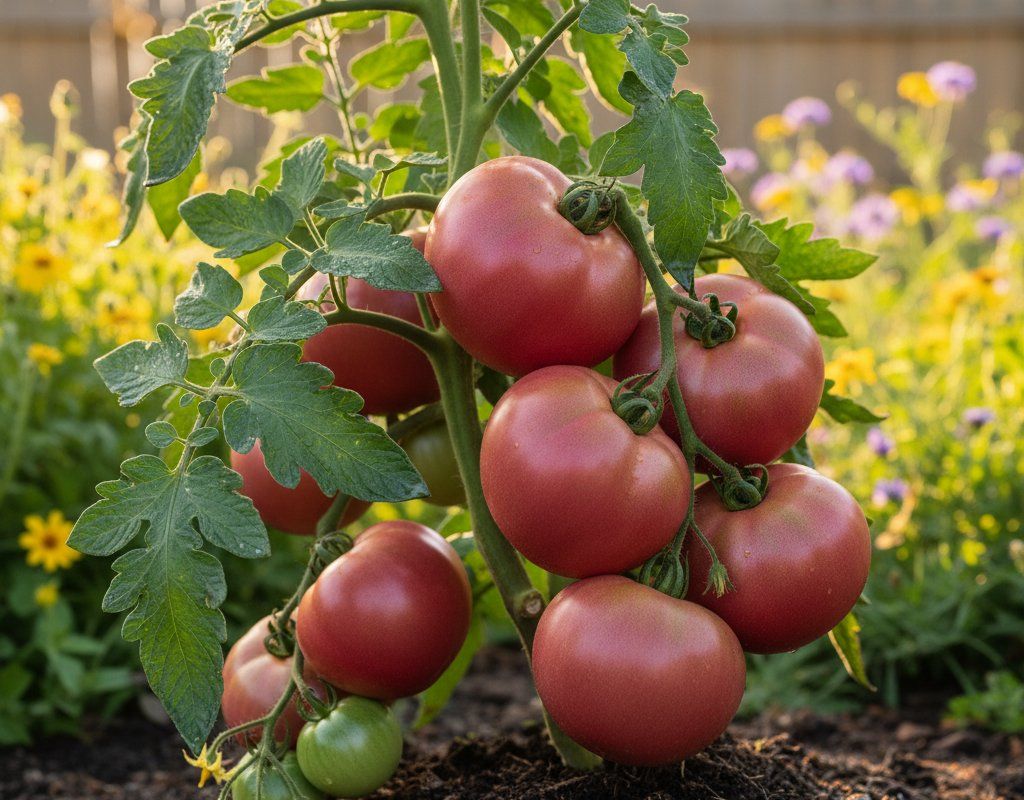
Brandywine Tomatoes in Zone 5A — Mountain West
Solanum lycopersicum · Your Complete 2026 Planting Guide
Planning Ahead — Great!
You’re ahead of the season. Here’s when to start.
Mark Your Calendar
How to Plant Brandywine Tomatoes in Zone 5A — Mountain West
Here are all your options for getting brandywine tomatoes in the ground, from the easiest method to more advanced approaches.
Start Seeds Indoors
RecommendedEarly to late April
around April 12
Then transplant: Late May through mid June
Start seeds 6-8 weeks before transplanting outdoors.
Buy Starts
Works WellLate May through mid June
around May 24
Plant purchased starts after last frost (May 10).
Direct Sow Seeds
ChallengingDirect sowing is not typical for Brandywine Tomatoes.
Transplant Outdoors
Timing InfoLate May through mid June
around May 24
Wait until nighttime temperatures stay above 50°F.
Plan to transplant within a few weeks of your target date.
Overview
Brandywine tomatoes reward Mountain West gardeners with unmatched flavor that showcases what a real tomato should taste like. These large, pink-red heirlooms develop incredible sweetness and complex flavor in our intense sun and cool nights—conditions that concentrate sugars while the plant isn't stressed by extreme heat. At 90 days to maturity, you'll have generous harvests of 1-2 pound fruits perfect for slicing, canning, or simply eating warm from the vine with just a sprinkle of salt.
Our Zone 5A mountain climate does present challenges—late spring frosts, a short 138-day growing season, and cool nights that can slow growth early on. But Brandywine's timing works well with our mountain rhythm when you start seeds indoors and wait for soil to truly warm. The key is patience in spring and consistent care through our intense but relatively brief summer growing season.
Starting Seeds Indoors
Start your Brandywine seeds indoors during early to late April, about 6 weeks before you plan to transplant outside. In our mountain climate, spring arrives late and stays cool, so indoor starting is essential for getting these 90-day tomatoes to full harvest before our late September frost.
Set up seed trays with quality seed-starting mix and keep them warm—aim for 70-75°F soil temperature for good germination. A heating mat helps significantly in our cool spring homes. Once seedlings emerge, provide bright light from south-facing windows or grow lights positioned 2-3 inches above the plants. Bottom watering works best to prevent damping-off fungal issues while keeping humidity around the seedlings appropriate for our dry climate.
As seedlings develop their first true leaves, transplant to individual 4-inch pots. Keep them in bright, warm conditions indoors while nighttime temperatures outside are still dropping into the 30s and 40s—typical for our mountain spring weather patterns.
Transplanting Outdoors
Wait until late May through mid-June to transplant your Brandywine seedlings outdoors, after both soil and air temperatures have warmed consistently. Soil should be at least 60°F, and nighttime lows should stay above 50°F—conditions that typically arrive later in our mountain zone than in lower elevations.
Hardening off is crucial in our intense mountain sun and temperature swings. Start with 1-2 hours of filtered morning sun, gradually increasing exposure over 7-10 days. Our UV intensity at altitude can shock tender seedlings quickly, and temperature differences between day and night can stress plants that haven't adapted gradually.
Space Brandywine plants 36-48 inches apart to allow for their vigorous indeterminate growth and improve air circulation in our low-humidity climate. Plant after the soil has warmed thoroughly—cold soil will stunt growth and delay harvest, something you can't afford with our short growing season. Consider using black plastic mulch or water-filled tomato cages to warm soil faster if you're pushing the early end of the planting window.
Watering Brandywine Tomatoes in Zone 5A (Mountain West)
Brandywine tomatoes need consistent, deep watering throughout our mountain growing season, especially given our typical 10-20 inches of annual rainfall. These large-fruited heirlooms are particularly prone to cracking when water levels fluctuate, so maintaining steady soil moisture is more critical than with smaller-fruited varieties.
Water deeply 2-3 times per week rather than light daily watering, providing about 1-2 inches per week total. Check soil moisture using the finger test—stick your finger 2 inches deep near the plant base. If it's dry at that depth, it's time to water. In our low-humidity climate, surface soil can appear dry while deeper roots still have moisture, so this deeper check prevents overwatering.
Water at the base of plants rather than overhead to reduce evaporation in our dry air and prevent fungal issues. Soaker hoses or drip irrigation work excellently here. Our moderate summer temperatures (typically peaking around 85°F) mean less intense water stress than in hotter climates, but our low humidity and intense sun still pull moisture from both soil and plants quickly.
Apply 2-3 inches of organic mulch around plants to maintain consistent soil moisture and reduce watering frequency. Grass clippings, straw, or shredded leaves work well in our climate. Signs of underwatering include wilting during the heat of the day and smaller fruit development. Overwatering shows as yellowing lower leaves and increased disease pressure—though our dry climate makes overwatering less common than in humid regions.
Supporting Your Brandywine Tomatoes
Brandywine tomatoes absolutely require strong support systems due to their vigorous indeterminate growth and heavy 1-2 pound fruits. Install sturdy 6-8 foot tall cages or stakes at planting time, before the root system spreads—trying to add support later risks damaging established plants.
Heavy-duty tomato cages work well, but ensure they're tall enough and made from thick wire that won't bend under the weight of a fully loaded plant. For staking, use 8-foot tall, 2-inch thick stakes driven 2 feet into the ground. Tie plants loosely with soft materials every 12-18 inches as they grow, allowing room for the stems to thicken.
Brandywine's potato-leaf foliage provides less natural shade than regular-leaf varieties, which can be advantageous in our intense mountain sun for ripening but means you'll need to check support ties more frequently. The combination of vigorous growth and heavy fruit clusters in our windy mountain conditions makes sturdy support essential from day one.
Pruning & Maintaining Brandywine Tomatoes
Prune Brandywine tomatoes moderately throughout the growing season to maintain good air circulation and direct energy toward fruit production. Remove suckers (shoots growing between the main stem and branches) when they're 2-4 inches long, especially lower suckers that won't receive adequate light in our intense sun conditions.
Focus on removing lower leaves that touch the ground and any yellowing or damaged foliage throughout the season. Brandywine is more susceptible to diseases than modern hybrids, so this preventive pruning helps significantly in maintaining plant health. In our low-humidity climate, good air circulation prevents the few fungal issues that can develop.
As first frost approaches in late September, top the plants (remove growing tips) about 4-6 weeks before expected frost. This directs the plant's energy into ripening existing fruit rather than developing new flowers that won't have time to mature. Remove any new flower clusters that form in late August to ensure existing tomatoes reach full size and begin ripening before cold weather arrives.
🧪Fertilizing Brandywine Tomatoes
Feeding Schedule
Organic Fertilizer Options
Harvest Time
Your first Brandywine tomatoes will be ready for harvest from late August through late September, about 90 days from transplanting. Watch for the characteristic pink-red color development with slight softness when gently squeezed—the shoulders may remain slightly green, which is normal for this variety and doesn't indicate underripeness.
Harvest by gently twisting and pulling the fruit with a slight upward motion, or use clean pruning shears to cut the stem about 1/4 inch above the fruit. Check plants every 2-3 days during peak season, as ripe tomatoes left on the vine too long become prone to cracking and splitting, especially after watering or mountain thunderstorms.
Brandywine produces continuously through our growing season, so keep harvesting regularly to encourage continued fruit set. The plants will keep producing new flowers and fruit until our first frost, typically arriving in late September. As frost threatens, harvest all mature green tomatoes—Brandywine ripens well indoors when picked at the mature green stage.
Place green tomatoes in a warm area (65-70°F) out of direct sunlight to ripen gradually. They'll continue developing flavor and color for several weeks after harvest, extending your fresh tomato season well into October despite our short mountain growing season. Check ripening tomatoes daily and use them promptly once they reach full color and slight softness.
Common Problems in Zone 5A (Mountain West)
Cracking Brandywine tomatoes show characteristic splits in the skin—either circular rings around the stem end or radiating lines from stem to blossom end. The cracks expose the inner flesh and can lead to rot if not harvested quickly. In our mountain climate, this often occurs after heavy thunderstorms following dry periods, or when irrigation patterns are inconsistent. Our intense daily sun followed by cool nights can worsen the problem by causing rapid temperature fluctuations in the fruit. Maintain consistent soil moisture with regular deep watering and 2-3 inch mulch layer. Harvest promptly when fruits show first signs of color change rather than waiting for full ripeness on the vine.
Low Yields Plants appear healthy with good foliage but produce fewer tomatoes than expected, sometimes only 3-5 large fruits per plant instead of the 8-12 typical for Brandywine. Our cool mountain nights during early summer can reduce pollination effectiveness, and insufficient heat units early in the season slow fruit development. Additionally, our short growing season limits the number of fruit cycles the plant can complete. Use row covers or Wall O' Water to increase warmth around plants during cool periods. Ensure adequate spacing (36-48 inches) and avoid over-fertilizing with nitrogen, which promotes leaf growth over fruiting. Hand-pollinate flowers during cool weather by gently tapping flower clusters.
Disease Susceptibility Brandywine shows increased vulnerability to fungal issues like early blight and bacterial problems compared to hybrid varieties. You'll notice brown or black spots on lower leaves that gradually spread upward, or wilting despite adequate moisture. Our low humidity typically prevents many fungal diseases, but mountain thunderstorms and overhead watering can create conditions for problems to develop. Space plants widely for air circulation, water at soil level rather than on foliage, and remove affected leaves immediately. Apply copper-based fungicides preventively if you've had disease issues in previous seasons.
Catfacing Fruits develop deep crevices, scars, and lumpy deformations, particularly at the blossom end, making them appear severely misshapen though still edible. This occurs when cool nighttime temperatures (below 55°F) during flowering disrupt proper pollination and fruit formation. Our mountain climate's characteristic cool nights, even in summer, make Brandywine particularly susceptible to this problem. Plant after soil and air temperatures stabilize consistently above 60°F. Use season extension techniques like row covers during cool spells in early summer. The deformed fruits are perfectly safe to eat and often have excellent flavor despite their appearance.
Mountain West Specific Challenges: Our combination of intense UV, cool nights, and dry air creates unique stress patterns for Brandywine tomatoes. While the moderate daytime temperatures reduce heat stress, the significant day-night temperature swings can slow growth and affect fruit development. The low humidity that prevents many fungal diseases also increases water stress, making consistent irrigation even more critical than in other regions.
Best Companions for Brandywine Tomatoes
Plant these nearby for healthier Brandywine Tomatoes and better harvests.
View Full Companion Planting Chart →



Companion Planting Details
Plant basil near your Brandywine tomatoes—it helps repel aphids and hornworms while thriving in similar conditions. The aromatic oils actually seem to improve tomato flavor when grown together. Carrots work well as ground-level companions since they don't compete for space or nutrients, and their deep taproots help break up our sometimes compacted mountain soils. Parsley provides beneficial insect habitat and doesn't interfere with tomato growth.
Avoid planting brassicas (cabbage, broccoli, cauliflower) near Brandywine tomatoes, as they can stunt tomato growth and attract pests that also target tomatoes. Skip fennel entirely—it inhibits tomato growth through root secretions. Corn creates too much shade for these sun-loving plants and can harbor similar pest insects. In our intense mountain sun, your Brandywine plants need all available light to develop their full flavor potential, so choose low-growing companions that won't create competition.
🌸Best Flowers to Plant with Brandywine Tomatoes
These flowers protect your Brandywine Tomatoes from pests and attract pollinators for better harvests.
For Pest Control

Get a Reminder When It's Time to Plant
We'll email you when key planting windows open for your zone.