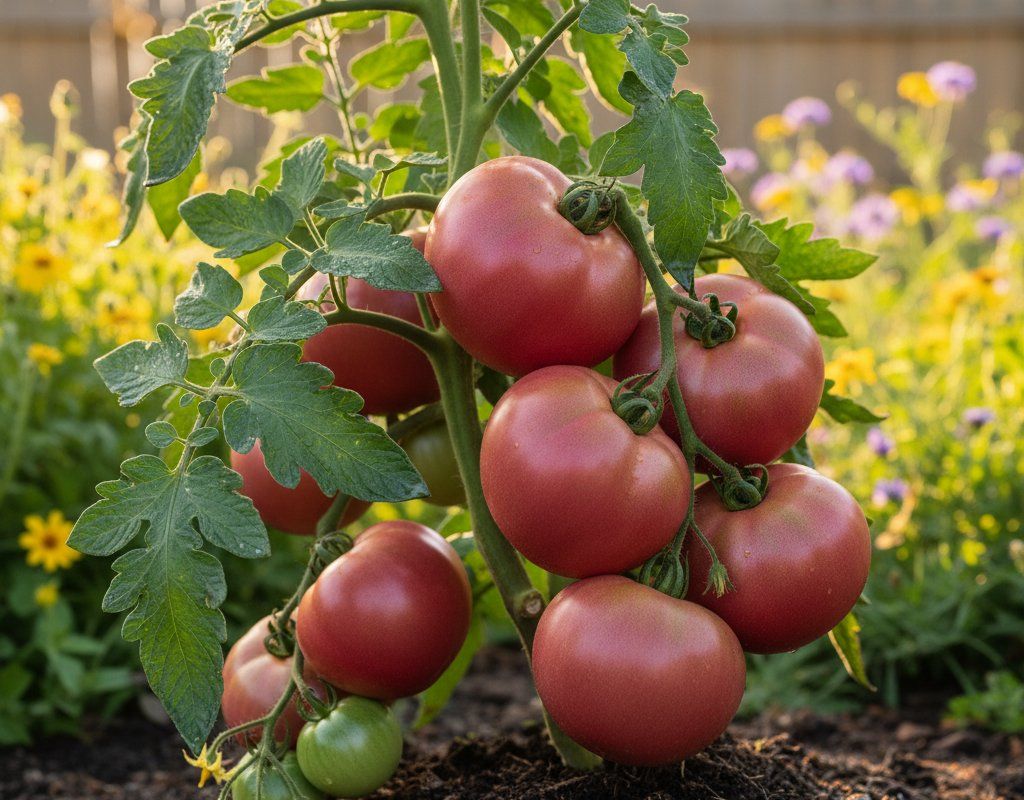
Brandywine Tomatoes in Zone 5B — Northeast
Solanum lycopersicum · Your Complete 2026 Planting Guide
Planning Ahead — Great!
You’re ahead of the season. Here’s when to start.
Mark Your Calendar
How to Plant Brandywine Tomatoes in Zone 5B — Northeast
Here are all your options for getting brandywine tomatoes in the ground, from the easiest method to more advanced approaches.
Start Seeds Indoors
RecommendedLate March through mid April
around March 28
Then transplant: Early to late May
Start seeds 6-8 weeks before transplanting outdoors.
Buy Starts
Works WellEarly to late May
around May 9
Plant purchased starts after last frost (April 25).
Direct Sow Seeds
ChallengingDirect sowing is not typical for Brandywine Tomatoes.
Transplant Outdoors
Timing InfoEarly to late May
around May 9
Wait until nighttime temperatures stay above 50°F.
Plan to transplant within a few weeks of your target date.
Overview
Brandywine tomatoes are the gold standard for flavor among heirloom varieties, and they're absolutely worth the extra effort here in Zone 5B. These beefsteak beauties deliver that rich, complex tomato taste that makes store-bought varieties seem like cardboard – perfect for showcasing in late-summer dishes when our cool nights concentrate the sugars. While they're not the easiest tomato to grow, the incredible flavor and satisfaction of growing a true heirloom makes them a favorite among Northeast gardeners who appreciate quality over convenience.
Our 168-day growing season presents some challenges for these 90-day beauties, especially with late spring warmth and early fall frost threatening both ends of the season. However, with proper indoor starting and attention to timing, you can absolutely succeed with Brandywines in our climate. The key is working with our Northeast rhythm – starting early enough indoors to beat our late spring, then protecting and supporting these vigorous plants through our brief but productive summer.
Starting Seeds Indoors
Start your Brandywine seeds indoors from late March through mid-April, about 6 weeks before you plan to transplant outside. This timing works perfectly with our late Northeast spring, giving your seedlings time to develop strong root systems before facing our variable May weather. Use seed-starting trays filled with quality potting mix, and keep them in a warm spot around 70-75°F for best germination.
Bottom watering works especially well for tomato seedlings – place your seed trays in a larger tray and add water to the bottom, letting the soil absorb moisture from below. This prevents damping-off disease and encourages strong root development. Once your seeds germinate, move them under grow lights or to your brightest south-facing window.
As your seedlings develop their first true leaves, you can transplant them into larger 4-inch pots. Keep them warm and gradually introduce them to slightly cooler temperatures as transplant time approaches in early May. Your goal is stocky, healthy plants with thick stems – better to have smaller, sturdy seedlings than tall, leggy ones when it's time to move outside.
Transplanting Outdoors
Plan to transplant your Brandywines outdoors from early to late May, once nighttime temperatures consistently stay above 50°F and all danger of frost has passed. In our Zone 5B climate, this timing usually aligns with when our soil has warmed adequately and our unpredictable spring weather has settled into a more reliable pattern. Remember that even a brief cold snap can set back tomato plants significantly, so err on the side of caution.
Harden off your seedlings for a full week before transplanting by gradually exposing them to outdoor conditions. Start with just an hour or two outside in a protected spot, then increase exposure daily until they're spending full days outdoors. This process helps them adjust to our variable spring temperatures and breezy conditions that can shock greenhouse-grown plants.
Space your Brandywine plants 36-48 inches apart – these indeterminate vines will fill that space quickly once our summer heat arrives. Plant them deep, burying about two-thirds of the stem to encourage strong root development. This extra root mass will serve you well during our sometimes-dry August periods and help support the heavy fruit load these plants can produce.
Watering Brandywine Tomatoes in Zone 5B (Northeast)
Brandywine tomatoes need consistent, deep watering throughout our growing season, requiring about 1-2 inches per week including rainfall. In our Northeast climate with moderate summer heat and fairly reliable precipitation, you'll often need to supplement natural rainfall during dry spells, particularly in July and August when our weather can turn surprisingly dry. Check soil moisture by inserting your finger 2 inches deep – if it's dry at that level, it's time to water.
Our moderate-to-humid summers mean you should water at the base of the plants rather than overhead to prevent fungal diseases. Soaker hoses or drip irrigation work perfectly, or simply water slowly at the base with a watering wand. Morning watering is ideal, giving plants time to dry before our humid nights arrive. This is especially important for Brandywines, which are more disease-susceptible than modern hybrids.
Watch for signs of inconsistent watering – yellowing lower leaves often indicate underwatering, while splitting fruit (which Brandywines are prone to) usually means you've gone from too dry to too wet too quickly. Our typical summer rainfall pattern of periodic thunderstorms can create this boom-bust cycle, so maintaining steady soil moisture between rain events is crucial.
Apply 2-3 inches of organic mulch around your plants to help retain moisture and moderate soil temperature swings. In our rocky New England soil, mulch also helps create a more hospitable environment for the extensive root system these vigorous plants develop. Good mulching can reduce your watering frequency significantly while improving overall plant health.
Supporting Your Brandywine Tomatoes
Brandywine tomatoes absolutely require strong support from the moment you transplant them – these indeterminate vines can easily reach 6-8 feet tall and produce large, heavy fruit that will snap unsupported branches. Install sturdy tomato cages (at least 5 feet tall) or strong wooden stakes at planting time to avoid damaging established root systems later. The investment in quality support pays off when you're harvesting pound-plus tomatoes in late summer.
Heavy-duty cages work well for most home gardeners, but if you're using stakes, choose 8-foot posts driven 2 feet into the ground. Tie the main stem loosely with soft materials like cloth strips or tomato ties, adding new ties every 12-18 inches as the plant grows. Brandywine's potato-leaf foliage provides less shade than regular tomato leaves, so the fruit gets excellent sun exposure but the stems need extra support.
Train your plants by gently weaving the main stems through cage openings or tying them to stakes weekly during peak growing season. Our cool nights and moderate summer temperatures mean steady, consistent growth rather than explosive spurts, giving you time to stay ahead of the support needs without weekend panic sessions trying to prop up collapsing vines.
Pruning & Maintaining Brandywine Tomatoes
Prune Brandywine tomatoes moderately to improve air circulation while maintaining enough foliage for photosynthesis and fruit protection. Remove suckers (shoots growing between the main stem and leaf branches) when they're small, focusing especially on lower suckers that won't produce fruit before our first frost in early October. This helps direct energy into fruit production rather than excessive vegetative growth.
Remove lower leaves that touch the ground or show signs of disease, and continue removing the lowest leaf clusters as the plant grows upward. This improves air circulation around the base – important in our moderate-to-humid climate where fungal diseases can take hold quickly. However, don't over-prune Brandywines; these heirlooms need adequate foliage to support their large fruit.
As early fall approaches, pinch the growing tips of your main stems in late August to encourage existing fruit to ripen before our first frost. This "topping" redirects energy from new growth into ripening the tomatoes already on the vine, maximizing your harvest window in our shorter growing season. You can also remove any flower clusters that appear after mid-August, since they won't have time to develop and ripen.
🧪Fertilizing Brandywine Tomatoes
Feeding Schedule
Organic Fertilizer Options
Harvest Time
Your first Brandywine tomatoes will typically be ready from early August through mid-September, depending on when you transplanted and how our summer weather develops. These 90-day tomatoes need our full summer heat to reach their potential, so be patient – the incredible flavor is worth waiting for. Look for fruits that have developed their characteristic pink-red color with a slight give when gently pressed.
Don't worry if the shoulders (top portion) of your Brandywines remain green or have green streaks – this is normal for this variety and doesn't affect ripeness or flavor. Harvest when the bottom portion is fully colored and the fruit has a slight softness but still feels substantial. Pick them in the early morning when they're cool and full of moisture for the best flavor and longest storage life.
Continue harvesting regularly throughout the season to encourage continued production. Brandywines will keep producing new fruit clusters until frost, so removing ripe tomatoes promptly signals the plant to keep flowering. Handle these large, thin-skinned tomatoes gently – they bruise more easily than thick-skinned hybrids but the delicate skin contributes to their superior eating quality.
As our first frost approaches in early October, harvest any tomatoes that have started to turn color and ripen them indoors on a sunny windowsill or in paper bags. Green tomatoes larger than golf ball size will ripen successfully off the vine, extending your harvest well into fall. Just before the first hard freeze, pick all remaining fruit – even the small green ones can be used for fried green tomatoes or relish.
Common Problems in Zone 5B (Northeast)
Cracking Brandywine tomatoes show their susceptibility to cracking through splits in the skin, either as concentric circles around the stem end or radial cracks running from top to bottom. You might notice shallow surface cracks or deep splits that expose the flesh to rot and insect damage. This problem typically appears on the largest, most mature fruits and can ruin otherwise perfect tomatoes just as they reach peak ripeness.
Cracking happens when heavy watering or sudden rainfall follows a dry period, causing the fruit to absorb water faster than the skin can expand. Our Northeast weather pattern of periodic thunderstorms after dry spells creates perfect conditions for this problem. Maintain consistent soil moisture through regular watering and mulching, avoiding the dry-wet cycle that causes fruit to swell rapidly. Harvest promptly once tomatoes start coloring to prevent cracks from developing.
Low Yields Despite healthy-looking plants, your Brandywines may produce fewer tomatoes than expected, especially compared to hybrid varieties. You'll see plenty of foliage and flowers but limited fruit set, or small fruit that don't size up properly. This can be particularly frustrating when you've invested time in growing these premium heirlooms.
Heirloom varieties like Brandywine are naturally lower-yielding than modern hybrids, but poor pollination in our cool spring weather can worsen the problem. Cool nights during flowering (below 55°F) can prevent proper pollen formation. Ensure adequate spacing for air circulation, provide consistent moisture, and avoid high-nitrogen fertilizers that promote leaf growth over fruit production. Accept that you'll get fewer but much more flavorful tomatoes than from typical garden varieties.
Disease Susceptibility Brandywine plants are more prone to fungal and bacterial diseases than hybrid varieties, showing up as brown spots on leaves, yellowing from the bottom up, or black lesions on stems and fruit. Early blight, late blight, and bacterial diseases can devastate these plants more quickly than disease-resistant varieties, sometimes appearing seemingly overnight during humid weather.
Heirloom varieties lack the disease resistance genes bred into modern hybrids, making prevention crucial in our moderate-to-humid climate. Improve air circulation through proper spacing and pruning, water at soil level rather than overhead, and apply organic mulch to prevent soil splash onto lower leaves. Remove affected foliage immediately and consider preventative organic fungicide sprays during humid periods.
Catfacing Your Brandywine tomatoes may develop deep crevices, scars, and deformities on the blossom end, creating lumpy, misshapen fruit that looks almost alien. These malformed tomatoes are perfectly edible but unmarketable, and the deep crevices can harbor insects and promote rot. Large-fruited varieties like Brandywine are particularly susceptible to this problem.
Catfacing results from cool temperatures during flowering, which interferes with proper pollination and fruit development. Our unpredictable late spring weather, with cool nights even after warm days, creates ideal conditions for this deformity. Plant after nighttime temperatures consistently stay above 55°F, use row covers during cool snaps, and choose sheltered locations for your tomato beds. The problem typically resolves once consistent summer weather arrives.
Northeast Specific Challenges Our moderate summer temperatures and moderate-to-humid conditions create a perfect storm for fungal diseases on susceptible varieties like Brandywine, while our short growing season puts pressure on these 90-day tomatoes to perform quickly. The even rainfall pattern can mask watering needs, leading to either drought stress during dry weeks or overwatering during wet periods, both of which stress these sensitive plants and reduce their natural disease resistance.
Best Companions for Brandywine Tomatoes
Plant these nearby for healthier Brandywine Tomatoes and better harvests.
View Full Companion Planting Chart →



Companion Planting Details
Plant basil near your Brandywines – it naturally repels aphids and hornworms while thriving in the same warm, well-drained conditions your tomatoes prefer. Carrots make excellent companions since their deep taproots don't compete with tomato roots and they help break up our often-rocky Northeast soil. Parsley planted around the base attracts beneficial insects and provides a living mulch that helps retain moisture during our variable summer rainfall. Marigolds scattered throughout the tomato patch deter nematodes and add bright color while requiring minimal care in our climate.
Avoid planting brassicas like cabbage, broccoli, or kale near your Brandywines – they're heavy nitrogen feeders that will compete for nutrients and prefer different soil pH levels. Keep fennel away from tomatoes as it can inhibit their growth through allelopathic compounds. Also avoid corn, which attracts the same hornworms that devastate tomatoes and creates too much shade for proper fruit ripening in our moderate-light summer conditions.
🌸Best Flowers to Plant with Brandywine Tomatoes
These flowers protect your Brandywine Tomatoes from pests and attract pollinators for better harvests.
For Pest Control

Get a Reminder When It's Time to Plant
We'll email you when key planting windows open for your zone.