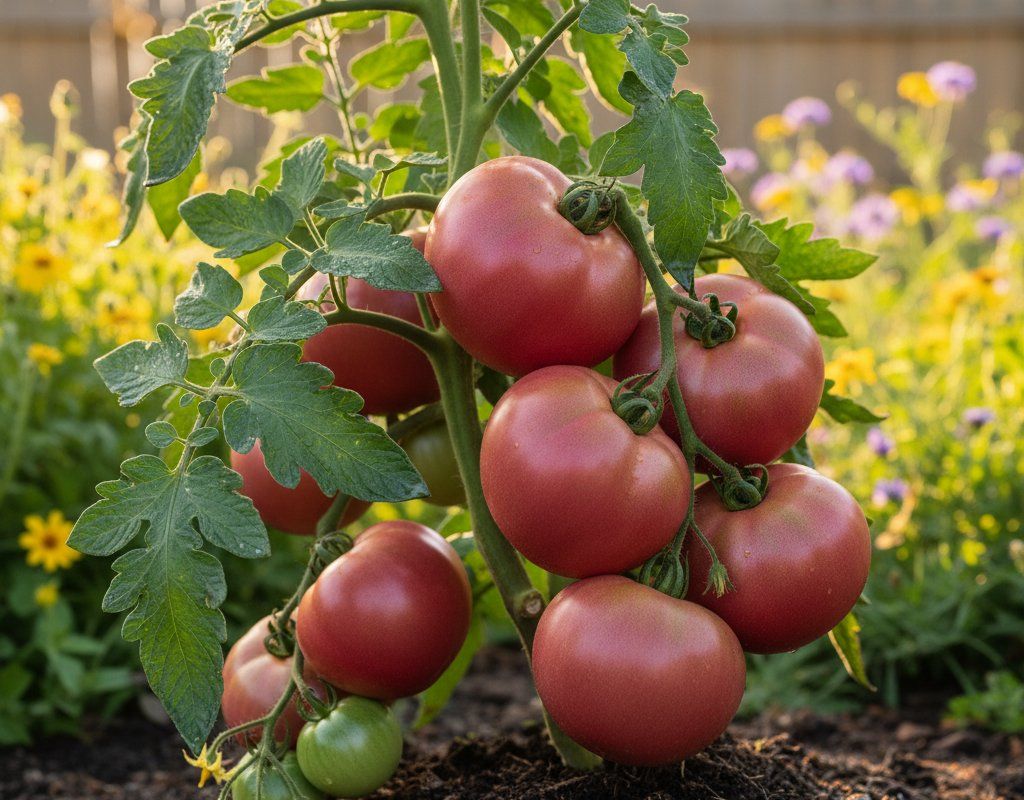
Brandywine Tomatoes in Zone 9B — Southern California
Solanum lycopersicum · Your Complete 2026 Planting Guide
Check Planting Details Below
See the full planting guide for timing information.
How to Plant Brandywine Tomatoes in Zone 9B — Southern California
Here are all your options for getting brandywine tomatoes in the ground, from the easiest method to more advanced approaches.
Start Seeds Indoors
RecommendedLate December through mid January
around December 28
Then transplant: Early February through early March
Start seeds 6-8 weeks before transplanting outdoors.
Buy Starts
Works WellEarly February through early March
around February 8
Plant purchased starts after last frost (January 25).
Direct Sow Seeds
ChallengingDirect sowing is not typical for Brandywine Tomatoes.
Transplant Outdoors
Timing InfoEarly February through early March
around February 8
Wait until nighttime temperatures stay above 50°F.
Plan to transplant within a few weeks of your target date.
Overview
Brandywine tomatoes are the crown jewel of heirloom varieties, and Southern California's year-round growing season makes them absolutely worth the effort. These large, pink-red beauties deliver that old-fashioned tomato flavor that puts grocery store varieties to shame, with their rich, complex taste and meaty texture that's perfect for fresh eating or preserving. Our mild winters and long warm season give you the luxury of starting early and harvesting well into fall.
Yes, Brandywines are more challenging than hybrid varieties and demand consistent water in our semi-arid climate, but your 334-day growing season means you have plenty of time to get the timing right. With proper planning around our winter-wet, summer-dry pattern, you can enjoy months of spectacular harvests from these disease-prone but absolutely delicious giants.
Starting Seeds Indoors
Start your Brandywine seeds indoors from late December through mid-January, about 6 weeks before your planned transplant date. This timing works perfectly with Southern California's very early spring character, giving you strong seedlings ready to go out when the risk of our occasional late January frost has passed. Set up seed trays with a quality seed-starting mix and place them in a warm spot—the top of your refrigerator works well for maintaining the 70-75°F soil temperature these seeds need.
Use bottom watering to keep the soil consistently moist without disturbing the delicate seedlings. Place your seed trays on a larger tray filled with water and let the soil wick up moisture naturally. Once your seedlings emerge, provide bright light either from a sunny south-facing window or under grow lights for 12-14 hours daily.
Move the seedlings to individual 4-inch pots once they develop their first true leaves. This gives their roots room to develop the strong foundation they'll need for our intense summer heat inland and the vigorous growth these indeterminate vines are known for.
Transplanting Outdoors
Transplant your Brandywine seedlings outdoors from early February through early March, once nighttime temperatures consistently stay above 50°F and our last frost window has passed. Southern California's mild winter transition means you can often get away with earlier planting than other Zone 9B regions, but watch for those occasional temperature swings that can still surprise us.
Harden off your seedlings gradually over a week before transplanting. Start with an hour of morning sun and gradually increase their outdoor time, bringing them in if nighttime temperatures drop unexpectedly. This process is especially important for tender tomato transplants that need to adjust to our sometimes gusty conditions and intense UV.
Space your Brandywine plants 36-48 inches apart—these indeterminate giants need room for air circulation, which is crucial in our low-to-moderate humidity climate. The wider spacing also makes summer watering more efficient and helps prevent the disease issues these heirlooms are prone to developing.
Watering Brandywine Tomatoes in Zone 9B (Southern California)
Brandywine tomatoes have high water needs and are not drought tolerant, making consistent irrigation absolutely critical in Southern California's semi-arid climate. During our hot summers with typical highs around 92°F and low humidity, these plants need about 1-2 inches of water per week, delivered deeply and consistently. The key is maintaining even soil moisture to prevent the fruit cracking that Brandywines are more prone to than hybrid varieties.
Use the finger test to check soil moisture: stick your finger 2 inches deep into the soil near the base of the plant. If it feels dry at that depth, it's time to water. During our intense summer heat, this might mean watering every other day, while in our mild winters, twice weekly may be sufficient. Always water at the base of the plant rather than overhead—our low-to-moderate humidity means fungal issues are less of a concern than in humid regions, but consistent soil moisture is still your priority.
Since we get most of our 10-20 inches of annual rainfall in winter, you'll need to supplement heavily through spring and summer. Install a drip irrigation system or soaker hoses to deliver water efficiently and comply with water restrictions. Watch for signs of stress: wilting during the heat of the day is normal, but if plants don't perk up by evening, increase your watering frequency.
Apply a 2-3 inch layer of organic mulch around your plants to help retain moisture and moderate soil temperature swings. In our climate, this mulch layer is your best friend for maintaining the consistent moisture these water-hungry plants demand while conserving our precious water resources.
Supporting Your Brandywine Tomatoes
Install sturdy 6-8 foot tomato cages or stake-and-string systems at planting time—Brandywine's indeterminate growth habit and large fruit size demand strong support from day one. These plants can easily reach 6 feet tall with heavy, pound-plus tomatoes that will snap unsupported branches, especially during our Santa Ana wind events. Heavy-duty cages work better than flimsy store-bought versions that collapse under the weight.
For staking, use 8-foot stakes driven 2 feet into the ground, then tie the main stem every 12 inches as it grows using soft plant ties or strips of fabric. Train the vines upward and outward to maximize air circulation—this is especially important for disease-prone Brandywines in our climate. The potato-leaf foliage of Brandywines provides less natural shade than regular tomato varieties, so good training helps protect developing fruit.
Check and adjust your support system regularly throughout the growing season, particularly before and after our windy periods. Properly supported Brandywine plants not only produce better but are much easier to harvest and maintain through our long growing season.
Pruning & Maintaining Brandywine Tomatoes
Prune Brandywine tomatoes moderately by removing suckers (shoots that grow between the main stem and branches) and the lower leaves that touch the soil. Start sucker removal when plants are about 12 inches tall and continue throughout the season, but don't over-prune—these heirlooms need adequate foliage for photosynthesis and fruit protection from our intense sun. Remove suckers when they're small and tender to avoid stressing the plant.
Focus your pruning efforts on improving air circulation, which is crucial for preventing the disease issues Brandywines are more susceptible to than modern hybrids. Remove any yellowing or diseased foliage immediately, and clear away lower branches that might be splashed with soil during watering. This is particularly important during our occasional humid spells or marine layer periods.
As your first frost approaches in late December, consider topping the plants (cutting the growing tip) to direct energy toward ripening existing fruit rather than developing new flowers. This end-of-season strategy helps you maximize your harvest before winter weather arrives, though in Southern California's mild climate, you may be able to continue harvesting well into the new year.
🧪Fertilizing Brandywine Tomatoes
Feeding Schedule
Organic Fertilizer Options
Harvest Time
Your first Brandywine tomatoes will be ready from early May through mid-June, about 90 days from transplanting. These large beauties ripen from the bottom of the plant upward, turning from green to pink-red with a slight softness when gently squeezed. Don't worry if the shoulders (top portion) stay slightly green—this is completely normal for Brandywines and doesn't affect flavor or ripeness.
Harvest by gently twisting and pulling, or use clean pruning shears to cut the stem if the fruit doesn't release easily. Check your plants every 2-3 days during peak season, as ripe tomatoes left on the vine too long are prone to cracking or attracting birds. The beauty of our long growing season is that you'll have continuous harvests from late spring through fall, often right up until first frost in late December.
If you have green tomatoes when frost threatens, harvest them and ripen indoors on a windowsill or in paper bags with a banana. Brandywines ripen well off the vine, though vine-ripened fruit always has superior flavor. During our extended warm season, you can often get a second flush of production by providing extra water and fertilizer in late summer.
With proper care and our favorable climate, a single Brandywine plant can produce 10-15 pounds of fruit over the season—making all that early season attention absolutely worthwhile.
Common Problems in Zone 9B (Southern California)
Cracking Fruit splits appear as either concentric circles around the stem or radial lines spreading from the top. The cracks often expose the flesh and can lead to rot, making your beautiful Brandywines unmarketable. This is especially frustrating with large heirloom varieties like Brandywine that take so long to mature.
This happens when plants get a heavy drink of water after a dry spell—the fruit absorbs moisture faster than the skin can expand. In Southern California's boom-or-bust watering patterns, this is common when gardeners underwater during hot spells then overcompensate. Maintain consistent soil moisture through drip irrigation or soaker hoses, and mulch heavily to buffer moisture swings. Water deeply but less frequently rather than shallow daily watering.
Low Yields Your Brandywine plants look healthy and vigorous but produce disappointingly few tomatoes compared to hybrid varieties. The plants may be all foliage with few flower clusters, or flowers that don't set fruit properly.
Heirloom varieties like Brandywine are naturally lower-yielding than modern hybrids, but poor pollination or too much nitrogen can make it worse. Our dry air actually helps pollination compared to humid regions, but lack of beneficial insects or excessive nitrogen fertilizer (causing lush growth at fruit expense) are common culprits. Reduce nitrogen after initial growth, ensure adequate phosphorus for flowering, and consider hand-pollinating with a small brush during windless periods.
Disease Susceptibility Brandywines show multiple disease issues throughout the season—leaf spots, wilting, or stem cankers that rarely affect hybrid varieties in the same garden. The plants may struggle even with good care, showing more problems than your other tomato varieties.
Heirloom varieties lack the disease resistance genes bred into modern hybrids, making them more vulnerable to fungal and bacterial problems. In Southern California's climate, focus on prevention through wider spacing (48 inches apart), aggressive pruning for air circulation, and avoiding overhead watering. Apply preventative organic fungicides early in the season and remove affected foliage immediately. Consider this the trade-off for superior flavor.
Catfacing Deep crevices, scars, and lumpy deformities appear on the blossom end of your tomatoes, making them look like they have a cat's face. The fruit is often severely misshapen and unmarketable, though still edible.
Cool nighttime temperatures during flowering (below 55°F) cause incomplete pollination, leading to these deformities. Large-fruited varieties like Brandywine are especially prone to this issue. If you transplant too early in our sometimes-variable spring weather, you may see catfacing on early fruit. Wait for consistently warm nights before transplanting, or use row covers during cool snaps to maintain warmth around developing flowers.
Southern California Specific Challenges Our hot, dry summers and water-conscious gardening approach can stress these water-hungry plants, while our Santa Ana winds can damage heavy fruit clusters and dry out soil rapidly. The low humidity that helps with disease prevention also means plants lose moisture quickly, requiring vigilant irrigation management. Focus on mulching, windbreaks for exposed sites, and efficient irrigation systems to keep these demanding but delicious tomatoes thriving.
Best Companions for Brandywine Tomatoes
Plant these nearby for healthier Brandywine Tomatoes and better harvests.
View Full Companion Planting Chart →



Companion Planting Details
Plant basil around your Brandywines—it naturally repels aphids and whiteflies while thriving in the same warm conditions and water schedule. Carrots work well as living mulch beneath tomato plants, their deep taproots helping break up compacted soil while their feathery foliage shades the root zone. Parsley attracts beneficial insects that help with pest control, and marigolds planted nearby deter nematodes and other soil pests that can plague tomatoes in our year-round growing climate.
Avoid planting brassicas like cabbage or broccoli near your Brandywines, as they compete for similar nutrients and can harbor pests that also attack tomatoes. Fennel should be kept far from tomato plants as it can stunt their growth through allelopathic compounds. Corn creates too much shade and competes heavily for water—something your thirsty Brandywines can't afford in our water-conscious Southern California gardens.
🌸Best Flowers to Plant with Brandywine Tomatoes
These flowers protect your Brandywine Tomatoes from pests and attract pollinators for better harvests.
For Pest Control

Get a Reminder When It's Time to Plant
We'll email you when key planting windows open for your zone.