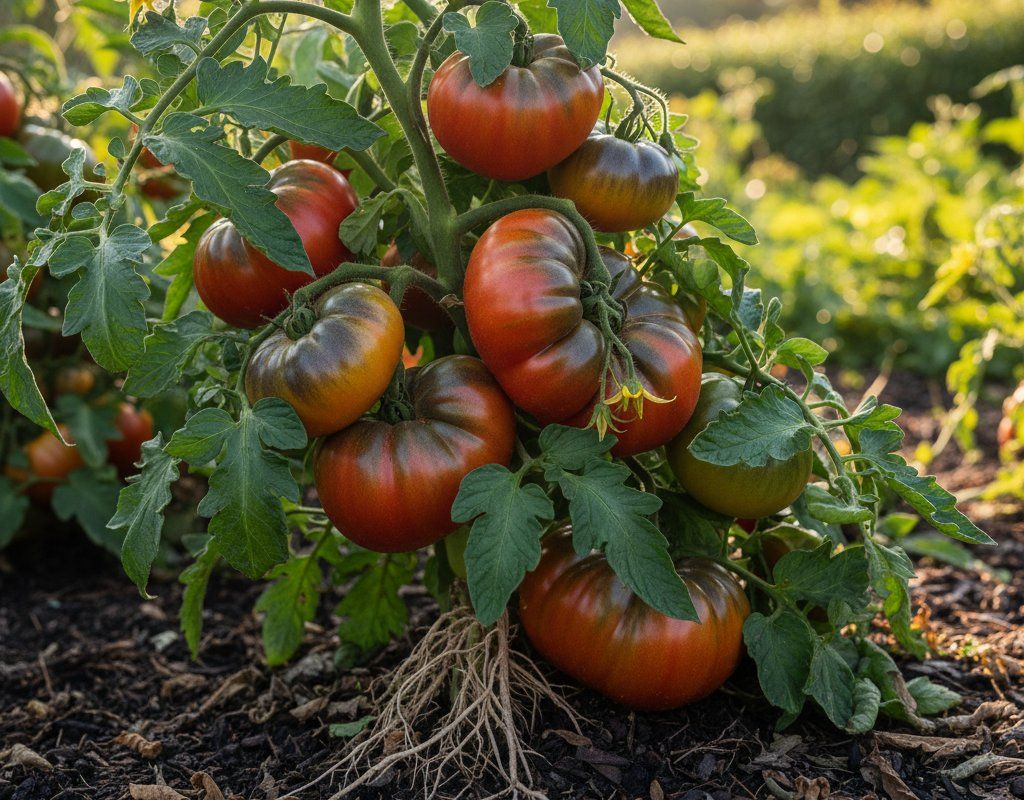
Heirloom Tomatoes in Zone 5A — Mountain West
Solanum lycopersicum · Your Complete 2026 Planting Guide
Planning Ahead — Great!
You’re ahead of the season. Here’s when to start.
Mark Your Calendar
How to Plant Heirloom Tomatoes in Zone 5A — Mountain West
Here are all your options for getting heirloom tomatoes in the ground, from the easiest method to more advanced approaches.
Start Seeds Indoors
RecommendedEarly to late April
around April 12
Then transplant: Late May through late June
Start seeds 6-8 weeks before transplanting outdoors.
Buy Starts
Works WellLate May through late June
around May 24
Plant purchased starts after last frost (May 10).
Direct Sow Seeds
ChallengingDirect sowing is not typical for Heirloom Tomatoes.
Transplant Outdoors
Timing InfoLate May through late June
around May 24
Wait until nighttime temperatures stay above 50°F.
You have a nice window — no need to rush.
Overview
Growing heirloom tomatoes in our Mountain West Zone 5A gardens rewards you with flavors that make store-bought varieties taste like cardboard. These open-pollinated treasures offer incredible diversity—from the sweet complexity of Cherokee Purples to the meaty richness of Brandywines—while our intense high-altitude sun and cool nights actually enhance their flavor development. The low humidity here means less disease pressure than gardeners in muggy climates face, giving heirlooms a real advantage in our dry mountain air.
Our short 138-day growing season and late spring frosts do require some planning, but starting seeds indoors gives you plenty of time to grow spectacular tomatoes. While heirlooms take longer to mature than hybrids and need consistent moisture in our dry climate, the payoff in taste and variety makes the extra effort worthwhile. With proper timing and support, you'll be harvesting incredible tomatoes from mid-August right up to our first frost in late September.
Starting Seeds Indoors
Start your heirloom tomato seeds indoors during early to late April, about six weeks before you plan to transplant them outside after the last frost danger passes. Our mountain springs arrive late and stay cool, making indoor starting essential—direct sowing simply won't work with our short season and tender tomato plants.
Set up seed trays with quality potting mix in a warm spot (70-75°F works best), then place them under grow lights or in your sunniest south-facing window. The intense UV at our altitude actually helps seedlings develop strong stems once they're established. Water from the bottom by placing trays in shallow pans of water, which prevents damping-off disease and encourages strong root development.
Keep the soil consistently moist but not waterlogged, and thin to the strongest seedling per cell once they develop their first true leaves. Our cool spring nights mean you'll want to maintain indoor warmth until transplant time—those temperature swings that are normal here can shock young seedlings if they're exposed too early.
Transplanting Outdoors
Wait to transplant your heirloom tomato seedlings until late May through late June, after all danger of frost has passed and nighttime temperatures consistently stay above 50°F. Our mountain weather can throw surprise cold snaps even into early June, so patience pays off—a single cold night can set back or kill tender tomato plants.
Spend a full week hardening off your seedlings by gradually exposing them to outdoor conditions. Start with just a few hours in a protected spot, then increase exposure daily while bringing them in at night. This process is especially important in our intense high-altitude sun and low humidity, which can quickly stress plants that aren't acclimated.
Space your heirloom plants 36-48 inches apart to ensure good air circulation in our dry climate—closer spacing can create microclimates that hold moisture and increase disease risk. Plant them deeply, burying about two-thirds of the stem to encourage strong root development. The combination of our alkaline soil and intense sun means they'll need every advantage to establish quickly.
Watering Heirloom Tomatoes in Zone 5A (Mountain West)
Heirloom tomatoes need consistent, deep watering throughout our dry mountain growing season, requiring about 1-2 inches per week including any rainfall we receive. Our typical 10-20 inches of annual precipitation means you'll be doing most of the watering yourself, especially during our intense but moderate summer heat when temperatures reach the mid-80s.
Check soil moisture by inserting your finger 2 inches deep near the base of plants—if it's dry at that depth, it's time to water deeply. Water at soil level rather than overhead to maximize efficiency in our low humidity and reduce evaporation from our intense UV exposure. A soaker hose or drip irrigation works perfectly for consistent moisture delivery.
Watch for signs of inconsistent watering, which causes more problems for heirlooms than other varieties. Underwatering shows as wilting during the heat of the day even when soil seems moist, while overwatering causes yellowing lower leaves and slow growth. The real danger is the dry-then-wet cycle that causes fruit cracking—heirlooms are especially prone to splitting when they absorb water quickly after drought stress.
Apply 2-3 inches of organic mulch around plants to conserve moisture and moderate soil temperature swings. Our cool mountain nights and hot sunny days create temperature fluctuations that stress plants, but mulch helps buffer these changes while reducing water needs by 30-50%.
Supporting Your Heirloom Tomatoes
Install sturdy cages or stakes at planting time since most heirloom varieties are indeterminate and will grow 6-8 feet tall throughout our growing season. Heavy-duty tomato cages (at least 6 feet tall) or strong wooden stakes with soft ties work best—the irregular, often large fruit that makes heirlooms special also makes them heavy and prone to breaking branches.
Heirloom tomatoes produce vigorous growth in our intense mountain sun, so they need support that can handle both height and weight. Tie stems loosely every 12-18 inches as they grow, using soft materials like cloth strips or tomato ties that won't cut into the stems. Our occasional hailstorms make strong support even more critical, as damaged stems are entry points for disease.
Train the main stem upward and secure major branches that develop heavy fruit clusters. The combination of our cool nights and intense daytime sun creates strong growth spurts that can overwhelm weak support systems by mid-season.
Pruning & Maintaining Heirloom Tomatoes
Remove suckers (shoots that grow between the main stem and branches) when they're 2-3 inches long throughout the growing season to focus energy on fruit production rather than excess foliage. Heirloom varieties tend to be more vigorous than hybrids, and our intense mountain sun encourages lots of leafy growth that can overshadow developing fruit.
Prune off the bottom 12 inches of branches once plants are established to improve air circulation and prevent soil-borne diseases from splashing onto leaves during watering. This is especially important in our low-humidity climate where good airflow helps prevent the few disease issues that do occur. Remove any yellowing or damaged leaves promptly.
As we approach our first frost in late September, top the plants by removing growing tips to redirect energy into ripening existing fruit rather than developing new flowers that won't have time to mature. About 4-6 weeks before expected frost, stop all pruning except removing obviously diseased material—the plant needs its remaining leaves to ripen the final harvest.
🧪Fertilizing Heirloom Tomatoes
Feeding Schedule
Organic Fertilizer Options
Harvest Time
Your first ripe heirloom tomatoes will be ready from mid-August through late September, about 80 days after transplanting. Unlike hybrids that ripen uniformly, heirlooms often show their readiness through slight softening and easy separation from the vine when gently lifted and twisted—the stem should break cleanly at the joint.
Don't rely solely on color since many heirloom varieties have unique coloring patterns, green shoulders, or unusual hues when ripe. Learn your specific variety's characteristics, but generally look for slight give when gently squeezed and that sweet tomato aroma developing near the stem end. The intense flavor development from our cool nights and bright days means even slightly underripe heirlooms will continue developing flavor after picking.
Harvest regularly to encourage continued production—leaving overripe fruit on the vine signals the plant to slow new fruit development. During peak season in late August and early September, check plants every 2-3 days since our temperature swings can cause rapid ripening.
As our first frost approaches in late September, harvest all mature green tomatoes and bring them indoors to ripen on counters or in paper bags. Green tomatoes with a hint of color will ripen well indoors, while completely green ones can be used for cooking. This end-of-season harvest often provides 20-30% of your total crop in our short growing season.
Common Problems in Zone 5A (Mountain West)
Fruit Cracking Heirloom tomatoes develop splits in their skin, either in concentric circles around the stem (concentric cracking) or in lines radiating outward (radial cracking). The cracks expose the flesh and create entry points for rot and insects. This happens when fruit absorbs water faster than the skin can expand, typically after heavy watering or rain following a dry period. Our dry mountain climate makes this especially common when irrigation is inconsistent. Maintain steady soil moisture through regular deep watering and mulching. Harvest fruit promptly when ripe and choose crack-resistant varieties like Mountain Fresh Plus for problem areas.
Disease Susceptibility Plants develop various fungal and bacterial diseases throughout the season, showing as yellowing leaves, brown spots, wilting, or fruit rot. Heirloom varieties lack the disease resistance genes bred into modern hybrids, making them more vulnerable despite our generally low disease pressure. Our cool nights and intense days can create moisture conditions that favor some diseases. Improve air circulation through proper spacing (36-48 inches) and pruning lower branches. Water at soil level rather than overhead, and remove affected plant material immediately. Rotate tomato family crops annually and consider copper-based fungicides for persistent problems.
Lower Yields Heirloom plants produce fewer tomatoes per plant compared to hybrid varieties, with some large varieties yielding only 10-15 fruits per plant versus 30+ for determinate hybrids. This is the trade-off for flavor and genetic diversity—heirlooms put energy into developing complex flavors rather than maximum production. Our short 138-day growing season can further limit yields if plants start slowly. Maximize your harvest by starting seeds early, providing consistent care, and choosing varieties suited to our season length. Focus on quality over quantity—one perfect heirloom tomato often provides more satisfaction than several bland hybrids.
Irregular Shapes Fruit develops unusual shapes, deep ridges, bumps, or uneven development that looks nothing like supermarket tomatoes. This is often a characteristic feature of heirloom varieties rather than a problem—varieties like Cherokee Purple and Brandywine are naturally ribbed and irregular. Cool temperatures during fruit set (common with our cold mountain nights) can also cause unusual shapes. Embrace the character—these "ugly" tomatoes often have the most complex flavors. If uniform appearance matters for preserving or presentation, choose paste varieties like San Marzano or more uniform heirlooms like Stupice.
Mountain West Specific Challenges Our intense high-altitude UV can cause sunscald on developing fruit, especially during heat waves—use shade cloth during extreme periods. The alkaline soil common in our region can cause calcium deficiency, leading to blossom end rot. Amend soil with compost and ensure consistent moisture to prevent this. Our occasional hailstorms can shred leaves and damage fruit, so consider row cover or shade structures during storm season.
Best Companions for Heirloom Tomatoes
Plant these nearby for healthier Heirloom Tomatoes and better harvests.
View Full Companion Planting Chart →



Companion Planting Details
Plant basil near your heirloom tomatoes to improve flavor and help repel aphids and hornworms—the aromatic oils actually seem to enhance tomato taste when grown together. Carrots make excellent ground-level companions since their taproots don't compete with tomato roots, and parsley attracts beneficial insects that prey on tomato pests. Marigolds planted around the tomato bed help deter nematodes and other soil pests while adding bright color, though keep them at the bed edges to avoid root competition.
Avoid planting brassicas (cabbage, broccoli, cauliflower) near tomatoes since they're heavy feeders that compete for nutrients and can stunt tomato growth in our already challenging short season. Skip fennel entirely—it inhibits tomato growth through chemical compounds in its roots. Corn seems like it would work, but it attracts the same hornworms that devastate tomatoes, creating a pest magnet effect that's especially problematic in our concentrated mountain growing spaces.
🌸Best Flowers to Plant with Heirloom Tomatoes
These flowers protect your Heirloom Tomatoes from pests and attract pollinators for better harvests.
For Pest Control

Get a Reminder When It's Time to Plant
We'll email you when key planting windows open for your zone.