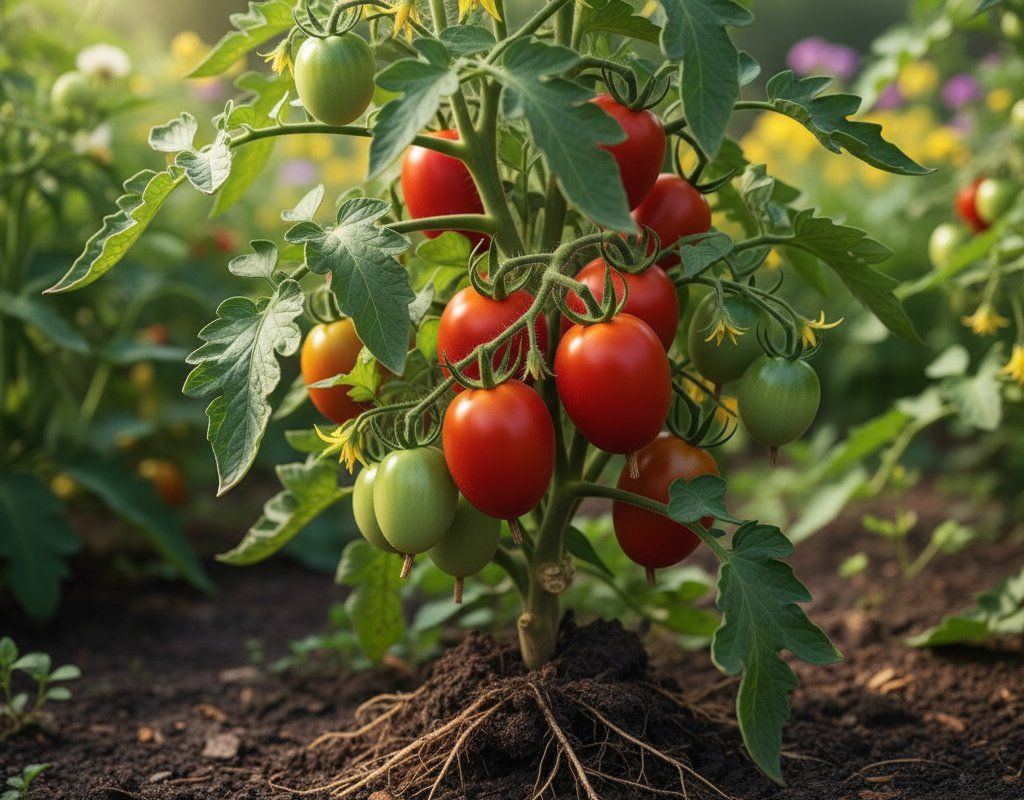
Roma Tomatoes in Zone 7B — Desert Southwest
Solanum lycopersicum · Your Complete 2026 Planting Guide
Missed Seed Starting? No Problem!
Wait for starts to become available.
What to Do
Starts will be available at nurseries in 25 days (around March 29).
How to Plant Roma Tomatoes in Zone 7B — Desert Southwest
Here are all your options for getting roma tomatoes in the ground, from the easiest method to more advanced approaches.
Start Seeds Indoors
RecommendedEarly February through early March
around February 15
Then transplant: Late March through late April
Start seeds 6-8 weeks before transplanting outdoors.
Buy Starts
Works WellLate March through late April
around March 29
Plant purchased starts after last frost (March 15).
Direct Sow Seeds
ChallengingDirect sowing is not typical for Roma Tomatoes.
Transplant Outdoors
Timing InfoLate March through late April
around March 29
Wait until nighttime temperatures stay above 50°F.
You have a nice window — no need to rush.
Overview
Roma tomatoes are a desert gardener's dream for sauce-making and preserving. These determinate paste tomatoes concentrate their harvest into a manageable window, perfect for our Desert Southwest climate where extreme heat limits summer growing. Their meaty, low-moisture flesh makes them ideal for salsas, sauces, and canning — essential skills when you're dealing with monsoon-season abundance and the need to preserve food during our long, hot summers.
Growing Romas successfully here means working with our 245-day growing season and two distinct planting windows. Yes, our extreme heat and arid conditions present challenges, but proper timing turns these obstacles into advantages. Plant early enough to harvest before the worst summer heat hits, and you'll enjoy abundant, flavorful tomatoes that store beautifully through our mild winters.
Starting Seeds Indoors
Start your Roma seeds indoors during early February through early March, about 6 weeks before your planned transplant date. This timing takes advantage of our very-early spring character, giving plants enough time to establish before extreme heat arrives. Our consistent winter sunshine makes indoor starting easier here than in cloudier regions.
Set up seed trays in a warm spot (65-70°F) with good light — a south-facing window works well in our desert climate. Use bottom watering to prevent damping-off disease; simply place seed trays in shallow pans of water and let the soil absorb moisture from below. This method works particularly well in our low-humidity environment where surface watering can lead to crusty soil.
Seeds germinate in 7-10 days under these conditions. Once seedlings develop their second set of true leaves, transplant them into individual 4-inch pots. Keep them in bright light and maintain consistent moisture — they'll be ready for outdoor transplanting by late March through late April.
Transplanting Outdoors
Transplant your Roma seedlings outdoors from late March through late April, after soil temperatures consistently reach 60°F and night temperatures stay above 50°F. This window works perfectly with our Desert Southwest climate patterns, getting plants established before extreme heat arrives. Wait too long, and you'll struggle with heat stress during the critical establishment period.
Harden off seedlings gradually over one week before transplanting. Start with 2-3 hours of filtered morning sun, gradually increasing exposure. Our intense desert sun can shock tender seedlings, so shade cloth during this process helps prevent sunscald. By week's end, they should handle full morning sun with afternoon protection.
Space plants 24-36 inches apart to ensure good air circulation — crucial in our climate where heat stress concentrates around poorly ventilated plants. Choose your sunniest spot but consider afternoon shade during summer months. Plant slightly deeper than the seedlings were growing in pots, burying part of the stem to encourage strong root development.
Watering Roma Tomatoes in Zone 7B (Desert Southwest)
Consistent watering makes or breaks Roma tomatoes in the Desert Southwest. These high-water-need plants cannot tolerate our natural boom-bust moisture cycles, and inconsistent watering concentrates blossom end rot on their elongated fruit. In our arid climate with 8-15 inches annual rainfall, you'll provide most of their water needs through irrigation.
Water deeply 2-3 times per week rather than daily light watering. Apply 1-2 inches weekly during spring establishment, increasing to 2-3 inches during fruit development and extreme summer heat. Use the finger test — soil should feel moist 2 inches deep. In our 105°F summers, plants may need daily watering despite deep soaking.
Water at the base, never overhead. Our arid conditions mean foliar diseases aren't as problematic as in humid regions, but overhead watering wastes precious water through evaporation and can cause fruit cracking. Drip irrigation or soaker hoses work perfectly for our climate. Apply a 3-inch layer of mulch to retain moisture and keep soil temperatures manageable during extreme heat.
Signs of underwatering include wilting during afternoon heat (normal) that doesn't recover by evening (problematic), and dry soil more than 2 inches deep. Overwatering shows as yellowing lower leaves and constantly soggy soil — rare in our climate but possible with heavy clay or poor drainage.
Supporting Your Roma Tomatoes
Install cages or stakes at planting time to avoid disturbing established root systems later. Roma tomatoes are determinate varieties that stay more compact than indeterminate types, so shorter 4-5 foot cages work perfectly. Their heavy fruit load still benefits from support — a single plant can produce 10-15 pounds of tomatoes during harvest season.
Sturdy wire cages handle our desert winds better than flimsy store-bought versions. If staking, use 6-foot stakes and tie plants loosely with soft materials like cloth strips or tomato ties. Avoid tight ties that can cut into stems as plants grow and sway in our frequent wind.
Train plants by gently tucking branches inside cage wires as they grow. Remove suckers (shoots growing between main stem and branches) to direct energy into fruit production. In our extreme heat, some afternoon shade from strategically placed branches actually helps prevent sunscald on developing fruit.
🧪Fertilizing Roma Tomatoes
Feeding Schedule
Organic Fertilizer Options
Harvest Time
Expect your first Roma harvest from mid-June through late July, roughly 75 days from transplant. This timing works perfectly in the Desert Southwest — you'll have most of your harvest before August's most extreme heat arrives. The concentrated harvest period means you can process large batches for sauces and preserving at once.
Ripe Romas show deep red color throughout the fruit with no green shoulders. The flesh feels firm but yields slightly to gentle pressure. Most importantly, ripe fruit detaches easily from the stem with a gentle twist — forcing unripe fruit damages both fruit and plant. Harvest during cooler morning hours when possible to reduce heat stress on plants.
Unlike indeterminate varieties, Romas produce their entire crop over 2-3 weeks rather than continuously. This concentrated harvest suits our climate perfectly — you're not struggling to keep plants alive through months of extreme heat. Pick fruit as soon as it's ripe to encourage the plant to finish its remaining fruit quickly.
As first frost approaches in mid-November, harvest all remaining fruit regardless of ripeness. Green Romas ripen well indoors when stored in a cool, dark place with good air circulation. Wrap individual fruits in newspaper or place in paper bags with a ripe banana to speed ripening.
Common Problems in Zone 7B (Desert Southwest)
Blossom End Rot What it looks like: Dark brown or black sunken patches on the bottom (blossom end) of fruit, often affecting the first fruits of the season. The patches feel leathery and may cover up to half the tomato.
What causes it: Calcium deficiency caused by inconsistent watering — the biggest challenge for Desert Southwest gardeners. Our extreme heat and arid conditions create perfect conditions for drought-stress cycles that prevent calcium uptake, even when soil calcium levels are adequate.
How to fix/prevent it: Water consistently above all else. Maintain even soil moisture with deep, regular watering and heavy mulching. Avoid over-fertilizing with nitrogen, which blocks calcium uptake. Remove affected fruit immediately to redirect plant energy. Foliar calcium sprays provide minimal help — consistent watering solves 90% of cases.
Early Blight What it looks like: Brown spots with distinctive concentric rings (bullseye pattern) on lower leaves first, gradually spreading upward. Affected leaves turn yellow and drop, weakening the plant during critical fruit development.
What causes it: Fungal disease that spreads through soil splash onto lower leaves. While less common in our arid climate than humid regions, monsoon rains and overhead watering create perfect conditions for soil-borne spores to infect plants.
How to fix/prevent it: Remove affected leaves immediately and destroy them (never compost). Mulch heavily to prevent soil splash during monsoon rains. Water at plant base only, never overhead. Space plants properly for air circulation — especially important during our humid monsoon season. Copper-based fungicides slow spread if applied early.
Fusarium Wilt What it looks like: Wilting that starts on one side of the plant, gradually spreading to the entire plant. Leaves yellow starting from one side, and cutting the stem reveals brown streaking inside.
What causes it: Soil-borne fungus that thrives in warm soil temperatures — common in our Desert Southwest climate. The fungus can persist in soil for years and enters through root wounds, spreading through the plant's vascular system.
How to fix/prevent it: No cure exists once plants are infected — remove and destroy affected plants immediately. Plant resistant varieties marked with 'F' on seed packets. Rotate tomato family crops on 4-year cycles minimum. Our intense summer heat can actually help through soil solarization — cover moist soil with clear plastic during July-August to kill soil-borne pathogens.
Desert Southwest Specific Challenges: Our extreme heat intensifies all these problems by stressing plants and making consistent watering more critical. However, our arid climate reduces many fungal diseases common in humid regions. The key is maintaining consistent soil moisture during temperature swings and protecting plants from our intense UV radiation that can weaken plant immunity.
Best Companions for Roma Tomatoes
Plant these nearby for healthier Roma Tomatoes and better harvests.
View Full Companion Planting Chart →



Companion Planting Details
Plant basil alongside your Roma tomatoes — it thrives in similar heat conditions and may help repel aphids and whiteflies common in our desert climate. Carrots work well as a space-efficient ground cover that won't compete for nutrients, and their deep roots help break up caliche layers. Marigolds planted around tomato beds deter nematodes, which can be problematic in our sandy desert soils, while parsley attracts beneficial insects that help with pest control during the growing season.
Avoid planting brassicas (cabbage, broccoli, kale) near tomatoes — they're heavy nitrogen feeders that compete directly with your already high-demand tomatoes. Skip fennel entirely, as it releases compounds that inhibit tomato growth. Corn creates too much shade and wind blockage for proper tomato development, plus it attracts armyworms that readily move to tomato plants in our Desert Southwest growing conditions.
🌸Best Flowers to Plant with Roma Tomatoes
These flowers protect your Roma Tomatoes from pests and attract pollinators for better harvests.
For Pest Control



For Pollinators

Get a Reminder When It's Time to Plant
We'll email you when key planting windows open for your zone.