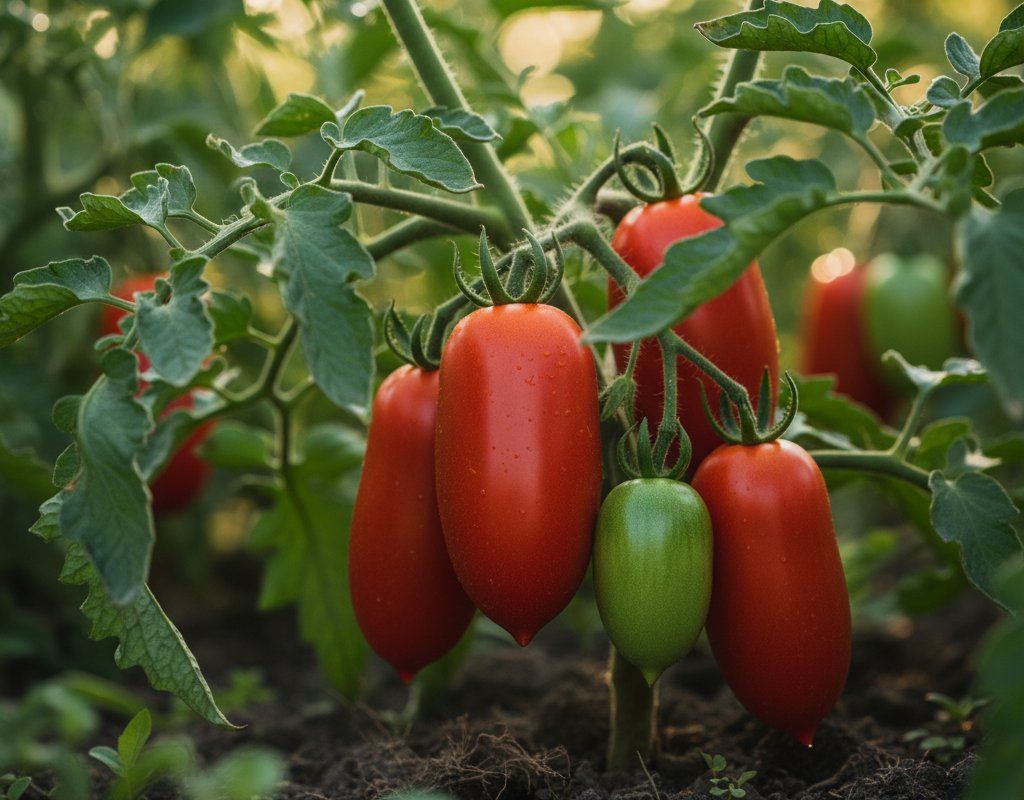
San Marzano Tomatoes in Zone 10A — Desert Southwest
Solanum lycopersicum · Your Complete 2026 Planting Guide
Check Planting Details Below
See the full planting guide for timing information.
How to Plant San Marzano Tomatoes in Zone 10A — Desert Southwest
Here are all your options for getting san marzano tomatoes in the ground, from the easiest method to more advanced approaches.
Start Seeds Indoors
RecommendedMid December through early January
around December 23
Then transplant: Early February through early March
Start seeds 6-8 weeks before transplanting outdoors.
Buy Starts
Works WellEarly February through early March
around February 3
Plant purchased starts after last frost (January 20).
Direct Sow Seeds
ChallengingDirect sowing is not typical for San Marzano Tomatoes.
Transplant Outdoors
Timing InfoEarly February through early March
around February 3
Wait until nighttime temperatures stay above 50°F.
You have a nice window — no need to rush.
Overview
San Marzano tomatoes are the gold standard for paste tomatoes, offering unmatched flavor for sauces, paste, and canning that makes the effort worthwhile here in the Desert Southwest. These elongated Italian heirlooms develop incredible sweetness and low acidity when grown in our intense sun, creating sauce with depth that store-bought varieties simply can't match. Your desert-grown San Marzanos will outshine anything from the grocery store.
Our extreme heat and arid conditions do present challenges for these heat-sensitive plants, but the timing works perfectly in Zone 10A. With our 339-day growing season, you can start early and harvest before the brutal summer heat arrives. Plant them right and you'll be making authentic marinara sauce by late spring while other regions are still dealing with frost.
Starting Seeds Indoors
Start your San Marzano seeds indoors from mid-December through early January, about six weeks before your planned transplant date. In our Desert Southwest climate, this indoor start is essential since direct sowing simply won't work with our temperature extremes and these tender plants need controlled conditions to establish properly.
Set up seed trays with quality seed-starting mix and place them in a warm spot around 70-75°F. A heat mat helps tremendously during our cooler winter nights. Bottom watering works best here – place trays in shallow pans of water and let the soil draw moisture up from below to prevent damping-off disease.
Once seedlings emerge, provide bright light from grow lights or a south-facing window. Our very early spring means you'll be transplanting while other zones are still indoor gardening, so these plants need to be strong and ready for our February planting window.
Transplanting Outdoors
Transplant your San Marzano seedlings outdoors from early February through early March, timing it for after our last frost risk in mid-January. These plants are completely frost-tender, so wait until nighttime temperatures stay consistently above 40°F before moving them outside permanently.
Harden off seedlings gradually over a week by placing them outside for increasing periods each day, bringing them in if temperatures drop unexpectedly. Our February weather can swing dramatically, so watch for those sudden cold snaps that can damage tender transplants.
Space plants 24-36 inches apart to allow for good air circulation in our low-humidity environment. The wider spacing also helps each plant access adequate water in our arid soil conditions. Plant them slightly deeper than they were in their containers to encourage strong root development.
Watering San Marzano Tomatoes in Zone 10A (Desert Southwest)
San Marzanos have high water needs and zero drought tolerance, making consistent watering absolutely critical in our arid Desert Southwest climate. These paste tomatoes are particularly prone to blossom end rot when water levels fluctuate, so establishing a reliable routine from day one prevents major headaches later.
During our mild winter growing months, water deeply twice weekly, providing about 1-1.5 inches total. Use the finger test – stick your finger 2 inches into the soil, and if it feels dry, it's time to water. Always water at the base of plants rather than overhead since our low humidity means water on leaves evaporates quickly without benefit.
As temperatures climb toward summer, increase to every other day watering before extreme heat arrives. Watch for wilting in late afternoon (normal stress response) versus morning wilting (needs water immediately). Yellowing lower leaves often signals inconsistent watering rather than disease in our climate.
Apply a 3-4 inch layer of mulch around plants to conserve moisture and moderate soil temperature swings. In our intense sun and low humidity, unmulched soil can go from saturated to bone-dry within days, creating the exact conditions that trigger blossom end rot in San Marzanos.
Supporting Your San Marzano Tomatoes
San Marzanos are vigorous indeterminate varieties that easily reach 6-8 feet tall with heavy clusters of elongated fruit, requiring strong support systems from planting day. Heavy-duty tomato cages or sturdy stakes with ties work best – avoid flimsy supports that'll collapse under the weight of mature plants loaded with paste tomatoes.
Install support structures at transplant time to avoid disturbing established root systems later. For staking, use 6-foot metal or wooden stakes driven 12-18 inches deep, then tie plants loosely with soft material every 12-15 inches as they grow. Cages should be at least 5 feet tall and made from heavy-gauge wire.
Train main stems upward weekly, gently weaving growth through cage openings or securing to stakes with figure-8 ties. The goal is supporting the weight while allowing some movement in our occasional desert winds. Strong support becomes even more critical as fruit clusters develop – these plants can produce prolifically when happy.
Pruning & Maintaining San Marzano Tomatoes
Remove suckers (shoots growing between main stem and branches) regularly throughout the growing season to direct energy into fruit production rather than excessive foliage. Focus on lower suckers first, then manage upper ones to maintain 2-3 main stems for optimal fruit size and plant health.
Strip off lower leaves that touch the ground to prevent soil-borne disease issues and improve air circulation around the plant base. In our low-humidity environment, good airflow helps prevent the few fungal problems that can develop during monsoon season moisture.
As your first frost approaches in late December, stop removing suckers and instead focus on removing any new flower clusters that won't have time to mature. This redirects the plant's energy into ripening existing fruit rather than starting new ones that won't finish before cold weather arrives.
🧪Fertilizing San Marzano Tomatoes
Feeding Schedule
Organic Fertilizer Options
Harvest Time
Your first San Marzano tomatoes will be ready from late April through mid-June, about 80 days after transplanting in our early spring planting window. Look for deep red color, firm texture, and the characteristic elongated shape – ripe fruit should detach easily from the vine with gentle twisting.
Harvest in early morning when temperatures are cooler and fruit is fully hydrated. San Marzanos develop their best flavor when allowed to ripen completely on the vine, turning from green to pale yellow to deep red. The shoulders should lose any green tinge and the entire fruit should give slightly to gentle pressure.
Continue harvesting regularly to encourage ongoing production throughout the growing season. These indeterminate plants will keep producing new fruit clusters as long as growing conditions remain favorable. In our climate, you'll typically get steady harvests through early summer before extreme heat shuts down production.
If first frost threatens in late December while fruit remains on the vine, harvest all mature green tomatoes and ripen them indoors at room temperature. Place them in a single layer away from direct sunlight – they'll continue ripening over several weeks, extending your harvest season even further.
Common Problems in Zone 10A (Desert Southwest)
Blossom End Rot Dark, sunken spots on the bottom (blossom end) of developing fruit, starting small and expanding into large black patches. This calcium deficiency shows up most on first fruit clusters and during rapid growth periods. Inconsistent watering in our arid climate disrupts calcium uptake even when soil calcium levels are adequate. Maintain steady soil moisture through deep, regular watering and heavy mulching. Remove affected fruit immediately and focus on consistent watering schedules.
Early Blight Brown spots with distinctive concentric rings (bullseye pattern) appear on lower leaves first, gradually working upward until leaves yellow and drop. This fungal disease thrives during our brief periods of higher humidity, especially during monsoon season. Remove affected leaves immediately and destroy them (don't compost). Water at soil level rather than overhead, maintain good spacing for air circulation, and apply mulch to prevent soil splash onto lower leaves.
Fusarium Wilt Wilting that starts on one side of the plant, often during the heat of the day, progressing to permanent wilting and yellowing. Cut stems show brown streaking inside. This soil-borne fungus loves our warm soil temperatures and persists for years once established. No cure exists once plants are infected – remove and destroy entire plants immediately. Choose resistant varieties marked with "F" on seed packets and rotate planting areas on a 4-year cycle.
Desert Southwest Specific Challenges Our extreme heat and intense UV radiation can cause sunscald on developing fruit, especially during unexpected early heat waves. The combination of alkaline soil and inconsistent moisture from our boom-bust rainfall pattern creates perfect conditions for blossom end rot. Our long, hot summers mean timing is everything – these plants must be established and producing before June heat arrives, or they'll struggle to survive until fall's second growing season.
Best Companions for San Marzano Tomatoes
Plant these nearby for healthier San Marzano Tomatoes and better harvests.
View Full Companion Planting Chart →



Companion Planting Details
Basil makes an excellent companion for San Marzanos in desert conditions, providing natural pest deterrence while thriving in similar growing conditions. Plant parsley nearby for ground cover that helps retain soil moisture, and carrots work well as they don't compete for the same soil nutrients. Marigolds planted around the edges help repel aphids and other pests while adding color to your tomato patch.
Avoid planting brassicas like cabbage or broccoli near your San Marzanos as they compete heavily for water and nutrients in our resource-limited desert soil. Fennel can stunt tomato growth through allelopathic effects, and corn creates too much shade while attracting similar pests. In our intense sun and heat, every plant needs adequate space and resources to thrive.
🌸Best Flowers to Plant with San Marzano Tomatoes
These flowers protect your San Marzano Tomatoes from pests and attract pollinators for better harvests.
For Pest Control

Get a Reminder When It's Time to Plant
We'll email you when key planting windows open for your zone.